
Can You Play Chinese Mahjong with an American Set?
Last updated: Nov 23, 2026
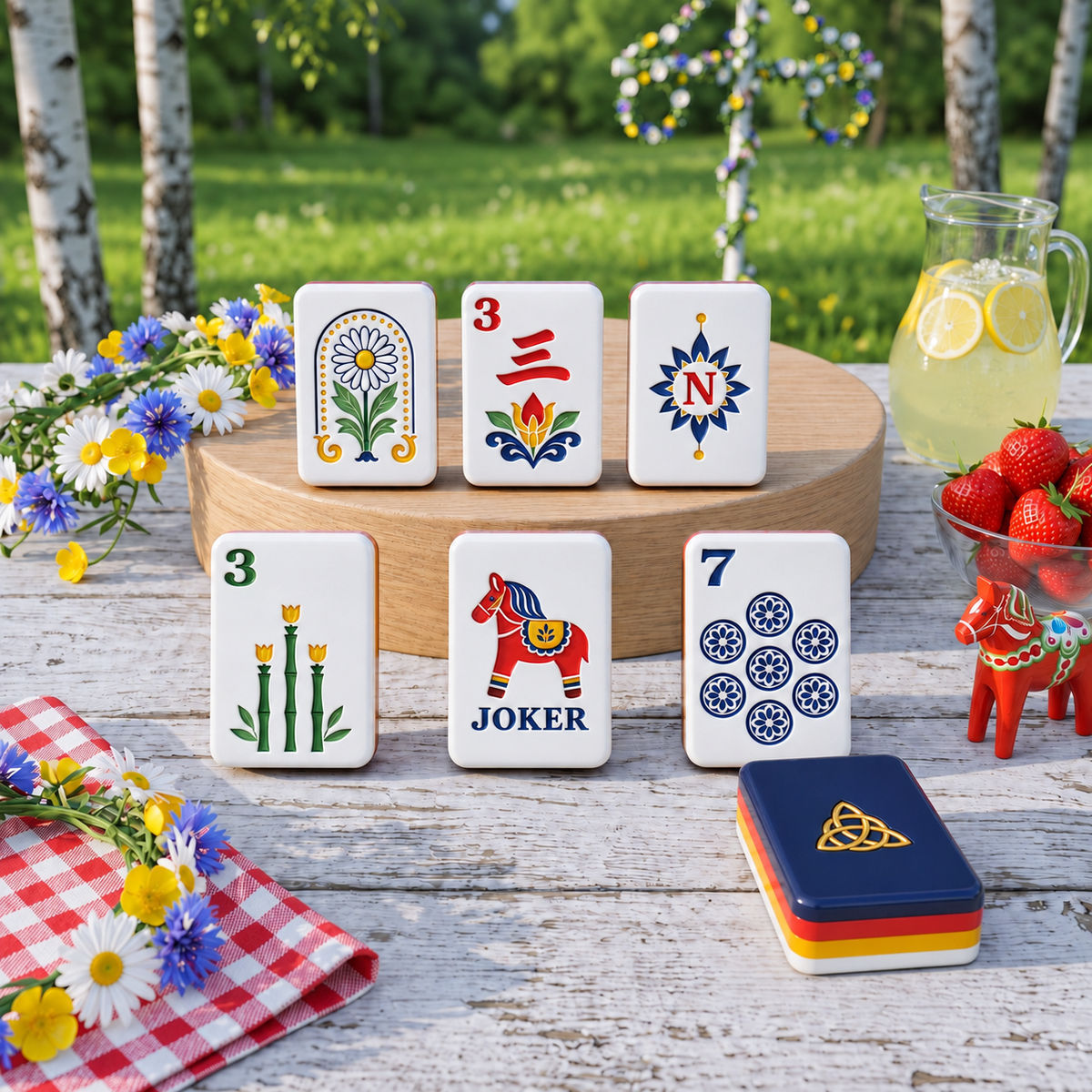
No. American mahjong uses 152 tiles with eight jokers, winds, dragons, and flowers drawn from the National Mah Jongg League card each year. Chinese mahjong uses 144 tiles with no jokers, different dragon naming, no League card, and sequences (chows) that players call and expose—mechanics that don't exist in American play. The tile sets, hand patterns, and scoring are incompatible. If you own an American set and want to learn Chinese, you'll need to buy a separate Chinese set. If you already play Chinese mahjong and want to try American, a proper best-selling American set is the right investment—it ensures you have the exact tiles, counts, and jokers the American game requires.
No. American and Chinese mahjong use completely different tile compositions, hand mechanics, and scoring systems. An American set cannot substitute for a Chinese set, and vice versa. Here's why each variant needs its own equipment—and how to know which game fits your group.
What tiles make up an American mahjong set versus Chinese?
American mahjong contains exactly 152 tiles: three suits (Bams, Craks, Dots) numbered 1–9 with four copies each, 16 winds (four of each: North, East, West, South), 12 dragons (four Red, four Green, four White), eight flowers, and eight jokers. Chinese mahjong uses 144 tiles with no jokers: three suits (Bamboo, Character, Dot) numbered 1–9 with four copies each, 16 winds, 12 dragons (Red, Green, White), and four honor tiles called Seasons. The absence of jokers in Chinese play fundamentally changes hand-building strategy and the tiles you expose to the table.

How do hand patterns differ between the two games?
American mahjong hands come only from the current year's National Mah Jongg League card—a printed guide of legal patterns renewed every spring. Players may expose pungs (three identical tiles), kongs (four identical), quints (five), and sextets (six); you cannot call or expose sequences like 1-2-3 of the same suit. Chinese mahjong allows and encourages sequences, called chows, as core hand components. In Chinese play, a winning hand needs four sets (either pungs, kongs, or chows) plus a pair. American mahjong's League card determines validity, not sequence logic; a hand that looks logical in Chinese rules may not appear on the American card and thus cannot win. This rigid pattern system exists nowhere in Chinese mahjong.
Can I use an American set to learn Chinese mahjong?
Technically, yes—if you ignore the jokers and remove them from play, you have 144 tiles that match Chinese tile names and counts. However, this workaround creates friction: you'll spend games fishing out jokers, lose track of the true hand size, and miss the tactile consistency of a proper set. Learning Chinese mahjong with a Chinese set eliminates confusion, lets you follow instructional videos and books that assume standard tiles, and respects the game's integrity. Similarly, if your group plays American mahjong, an American set with eight jokers, proper flower counts, and correct dragon labeling ensures you're playing by the rules and can reference the annual League card without second-guessing your tiles.
Which variant should a new player choose: American or Chinese?
Variant | Best for | Learning curve | Equipment need | Why it fits ---|---|---|---|--- American | Groups hosting weekly home games; League players | Moderate; card-based hands | Dedicated American set | Hands change yearly; community card drives fairness Chinese | Solo learners; communities with longstanding traditions | Steeper; sequence logic | Dedicated Chinese set | Chow-based play rewards pattern recognition; no annual updates Hong Kong | Players who want speed and flexibility | Fast; fewer tiles (108) | Separate Hong Kong set | Streamlined game; faster rounds Riichi (Japanese) | Strategy-focused players; competitive scenes | High; complex point system | Dedicated Japanese set | Melds lock and reveal; risk-managed hand calling
🀄 Shop best-selling mahjong sets →

What happens if I play American rules with a Chinese set?
You cannot reliably play American mahjong with a Chinese set because you lack eight jokers. American rules allow jokers to substitute for any tile in a pung, kong, quint, or sextet—they are the game's flexibility valve. Without them, hand-building becomes rigid, and you cannot form the exact patterns the League card calls for. Additionally, a Chinese set often lacks the flower count (eight total, two each) that American games need. You would need to add jokers and verify flower counts, which defeats the purpose of using the set you have. A proper American set with jokers avoids these headaches entirely and costs far less than improvisation time.
What should I check before buying the right set for my variant?
Before purchase, confirm:
Your group's chosen variant. Ask experienced players or search online communities for your area. American mahjong is concentrated in North America; Chinese and Hong Kong variants span Asia and diaspora communities globally.
Tile composition. American sets must include eight jokers and exactly 152 tiles (plus spares). Chinese sets should have 144 tiles and no jokers.
Durability and readability. Acrylic tiles with engraved characters (not painted) survive weekly handling for years. Check that your tiles are easy to read—worn or faded tiles frustrate players and slow the game.
Rack and mat compatibility. If you use a rack with pushers, ensure it holds your tile height comfortably. A proper mahjong mat keeps tiles organized and protects your table.
🎁 See our most-loved mahjong sets & accessories →
Why do some players switch between variants?
Many players learn American mahjong first through weekly home games or club settings in North America, then encounter Chinese or Hong Kong variants through travel, diaspora community centers, or online play. Switching works because the core principle—forming sets, discarding, and drawing—is universal. However, the rule structures are distinct enough that you cannot take a skill shortcut: learning American chow-less play does not teach you sequence logic, and Chinese hand patterns do not prepare you for the League card. Experienced players often own separate sets for each variant and keep them stored clearly to avoid mid-game confusion.
✨ Find your Mahstead set — free US shipping →
What should you buy: one versatile set or separate sets?
If you play only one variant regularly, buy a dedicated set optimized for that game. If you host different groups or travel between variants, buying separate sets eliminates rule conflicts and keeps the game moving. Many home players who entertain both American and Chinese groups maintain two sets in separate bags, labeled clearly. A mahjong travel bag or case protects each set and makes rotation simple. The cost of two proper sets is less than the frustration and lost time of mixing rules mid-game.

FAQ
Can I play American mahjong with a 144-tile Chinese set?
No. American mahjong requires exactly eight jokers to form hands from the League card. A Chinese set has no jokers, making most American hands impossible to complete. You need a full American set with all eight jokers.
Do Chinese and American mahjong use the same dragon tiles?
Both use Red, Green, and White dragons, but Chinese mahjong calls White the "White Dragon," while American play often labels it "Soap." The tiles look identical; the naming difference is minor. What differs is how they fit into hand patterns and scoring.
If I remove the jokers from an American set, can I play Chinese mahjong?
Mostly yes, but incompletely. You'll have 144 tiles that match Chinese counts, but you lose the tactile and mental consistency of a true set. You may also lack correct flower or honor tile counts. A dedicated Chinese set avoids confusion and aligns you with standard rules.
What is the National Mah Jongg League card?
An annual printed guide issued each spring that lists all legal hand patterns for American mahjong that year. Players consult it during play to verify if their hand is valid. No such card exists for Chinese mahjong; hands follow universal sequence-and-set logic instead.
Should a beginner buy an American or Chinese set?
If your local community or group plays American mahjong, buy American—you'll join an existing game quickly. If you live in or near a Chinese community or are learning from family, buy Chinese. Neither is objectively "better"; your social context determines which set serves you.
Do all American mahjong sets come with 152 tiles?
American sets are sold as 160-tile sets, which include 152 playing tiles plus spare tiles. Mahstead's sets are 160 tiles, giving you the correct playing count plus backups. Never add spare tiles to the game; only the 152 official tiles and eight jokers are played.


View More
View More
View More
