
British Mahjong Tips: How to Play the UK Game Well
Last updated: Nov 23, 2026
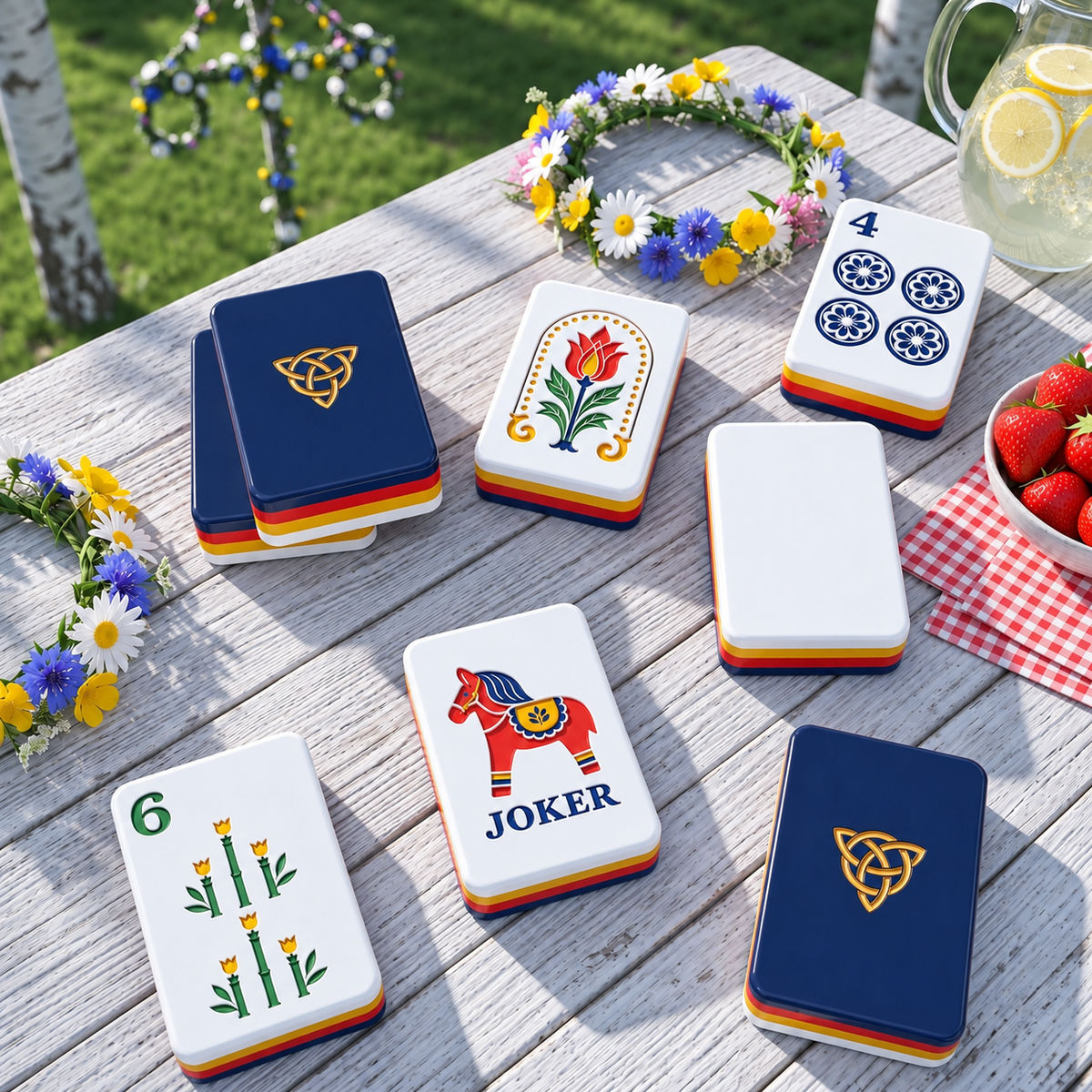
British mahjong—also called "Western" or "International" mahjong in some regions—uses the same 152-tile American set (three suits, winds, dragons, flowers, jokers) but applies Hong Kong–based scoring and hand patterns. Hands are not drawn from a seasonal card; instead, players memorize or consult hand lists showing valid combinations, typically involving pungs (three identical tiles), kongs (four), chows (sequences like 1–2–3 in one suit), and eyes (a matching pair). Winning is based on the fan (points multiplier) for each hand component rather than a points grid. Games last 15–20 minutes per round. The main challenge for American players switching to British rules is unlearning the seasonal-card system and adapting to pattern memorization and different pung/kong/chow exposure rules. British clubs typically meet weekly in community centers and leisure centers across the UK; best-selling American mahjong sets work equally well for British play since the tile composition is identical. 🀄 Shop best-selling mahjong sets →
How do British hand patterns differ from American ones?
British mahjong hands rely on fan—a scoring multiple applied to each melded or concealed group—rather than a fixed grid. A pung of 1 Bams (the bird tile) is worth 1 fan; a kong of dragons is worth 2 fan; a chow (1–2–3 of the same suit) is worth zero fan but forms the structure. You win when your hand totals a minimum fan threshold—typically 3–5 fan depending on house rules—and your score is multiplied by the hand's total fan value. American play uses a seasonal card showing exact valid hands for that year; British play relies on memorized patterns or reference sheets listing hundreds of combinations. Both systems allow jokers as wild tiles in melds (but never in a pair), and both require exactly 13 tiles to win (14 with the winning tile).

What's the biggest rule shift from American to British mahjong?
The Charleston (tile-passing ritual) and seasonal-card constraint vanish in British rules. Instead, British games typically use a simpler setup: each player draws tiles and discards freely, no pre-game pass. Hand validity is checked against memorized or written pattern lists rather than a published card. Exposure rules also differ—in American play, you can only call and expose pungs, kongs, and quints; in British play, you may expose chows as well, making the game more transparent and strategic. Some British clubs allow calling from any previous discard (not just the last), which speeds play but increases complexity. No jokers are added to play mid-hand in either variant; the difference is when and how you validate your winning hand structure.
Which tiles matter most in British mahjong strategy?
Dragons and winds are high-value melds in British mahjong. A kong (four identical tiles) of the round wind (the wind of the current round) or your seat wind is worth 2 fan; a pung of the same is 1 fan. Red Dragon (the 5 Crack tile), Green Dragon (1 Bam), and White Dragon (zero, shown as a blank) are each worth 1 fan as a pung and 2 as a kong. Flowers and seasons are worth 1 fan each and are often kept melded separately. Terminal tiles (1 and 9 of each suit) form valuable pungs and kongs and are harder for opponents to predict. Holding onto a mix of terminal and honor tiles (winds, dragons) gives you more flexibility; cycling through mid-range numbers (2–8) early helps you stay unpredictable. The key strategic difference from American play is that you're not hunting for one specific hand from a card; you're building the highest-fan combination your drawn tiles allow, so flexibility and fan counting matter more than memorizing a single target pattern.
How do you score a British mahjong hand correctly?
After winning, count the fan in each meld: a concealed pung = 1 fan, exposed pung = 1 fan, kong = 2 fan, concealed chow = zero fan, exposed chow = zero fan, pair (eyes) = zero fan. Add bonuses: winning on your own discard (self-drawn) = +1 fan; all pungs (no chows) = +1 fan; all terminals or honors = +1 fan; all one suit = +1 fan (depending on house rules). Total your fan, then multiply the base payment by that number. For example, a 4-fan hand with three exposed pungs (3 fan) plus winning on self-draw (+1 fan) earns 4× the base payment from each opponent. British scoring is more transparent than American—players can verify the hand immediately—but house rules vary widely by club and region. Always confirm the scoring threshold (minimum fan to win) and payment scale before the game starts.

What equipment do you need to play British mahjong at home?
A full 152-tile American mahjong set (the tile composition is identical across all Western variants). You'll also benefit from mahjong mats to organize tiles and protect your table, racks with pushers to hold tiles and hide your hand from opponents, and mahjong bags or cases if you're transporting sets between homes or clubs. A printed or laminated hand-pattern reference sheet (downloadable from many British mahjong associations) is essential for new players. Four players, a flat table (36–48 inches square minimum), dice to determine seating and first dealer, a pen and scoresheet, and a timer (many British clubs play with a 5–10 minute time limit per round to keep pace) round out your setup. Unlike American play, you do not need the current National Mah Jongg League card.
Item | Purpose | Why it matters |
152-tile set | Core tiles (same as American) | Tile composition is identical; any American set works |
Mat | Tile organization & table protection | Keeps tiles tidy and hides your hand from side-glances |
Racks with pushers | Hide your hand & organize melds | Standard in British clubs; racks hold 13–14 tiles upright |
Reference sheet | Pattern lookup during play | British rules require consulting valid hand lists; print or laminate |
Scoresheet & pen | Track fan and payments | Disputes vanish with written records |
Dice | Determine dealer & seating | Standard; usually two six-sided dice |
🎁 See our most-loved mahjong sets & accessories →
How do you teach a newcomer British mahjong fast?
Start with the tile set. Show them the four suits (Bams, Craks, Dots, Winds, Dragons, Flowers, Jokers), explain that each appears four times, and verify your 152-tile set is complete before play. Teach the three basic melds: pung (three matching tiles), kong (four matching), chow (three consecutive in one suit). Introduce fan: pungs and kongs score; chows don't; eyes (the winning pair) don't; dragons and winds as pungs score 1 fan, as kongs score 2. Play a demo round with open hands (tiles face-up) so learners see the flow and understand when to claim discards, when to pass, and how winning is declared. Give them a printed hand-pattern sheet and let them refer to it freely in the first 2–3 games. Avoid complex house rules (self-draw bonuses, all-pungs bonuses) until they've won a hand or two with basic scoring. Most newcomers grasp British mahjong in one evening if you let them ask questions and play slowly.
✨ Find your Mahstead set — free US shipping →
What to check before you buy a set for British play
British and American mahjong use identical tile sets, so any best-selling mahjong set works. Verify that your set includes all 152 tiles: three suits (108 tiles total, numbered 1–9 in each), 16 winds (four each direction), 12 dragons (four each color), eight flowers, and eight jokers. Count the tiles when they arrive; a few spare jokers are normal in 160-tile sets but should not be added to play. If you're hosting weekly British games, invest in a mat and racks to avoid tile-sliding disputes and to speed setup. Choose a soft-sided bag if you're transporting sets to club meetings; hard cases are overkill for occasional play. Print a hand-pattern reference sheet specific to the rule set your group uses—British clubs vary, so confirm your club's list before buying anything. Finally, check that your tiles are easy to read; acrylic or high-contrast designs work best in poor lighting, especially during evening club play.

FAQ
Can I use an American mahjong set for British play?
Yes. Both use identical 152-tile compositions (three suits, winds, dragons, flowers, jokers). The difference is hand patterns and scoring, not the tiles themselves. Any best-selling American set works for British rules.
Do I need to memorize all British hand patterns before playing?
No. Print or laminate a reference sheet listing valid patterns for your club, and keep it at the table. Most British groups allow players to consult written lists during their turn. You'll memorize common hands naturally after 5–10 games.
What's the minimum fan required to win a British mahjong hand?
Typically 3 or 5 fan, depending on house rules. Confirm this threshold with your group before the game starts. Higher thresholds (5 fan) slow the game but reward patient, strategic play.
How do jokers work differently in British mahjong compared to American?
Jokers function identically in both variants: they substitute for any tile in a pung, kong, or chow, but never appear in a pair or alone. British and American play both use eight jokers per set and never add more mid-game.
Is British mahjong faster or slower than American?
It can be either. British games often run 10–20 minutes per round depending on house rules, time limits, and how familiar players are with the hand-pattern list. American play is typically timed by the National Mah Jongg League card; British play is more flexible.
Where can I find a British mahjong club to join?
Search community centers, leisure centers, and libraries in your area, especially in cities with large British expat populations. British Mahjong Association (if you're in the UK) and online meetup boards list clubs by region; ask at local senior centers too.
Do British rules allow calling a discard from any player, or only the last discard?
House rules vary. Some British clubs allow claiming from any recent discard (often the last two or three); others enforce "last discard only" like American play. Confirm your group's convention before starting.


View More
View More
View More
