
British Mahjong Strategy: Defense and Discards
Last updated: Nov 23, 2026
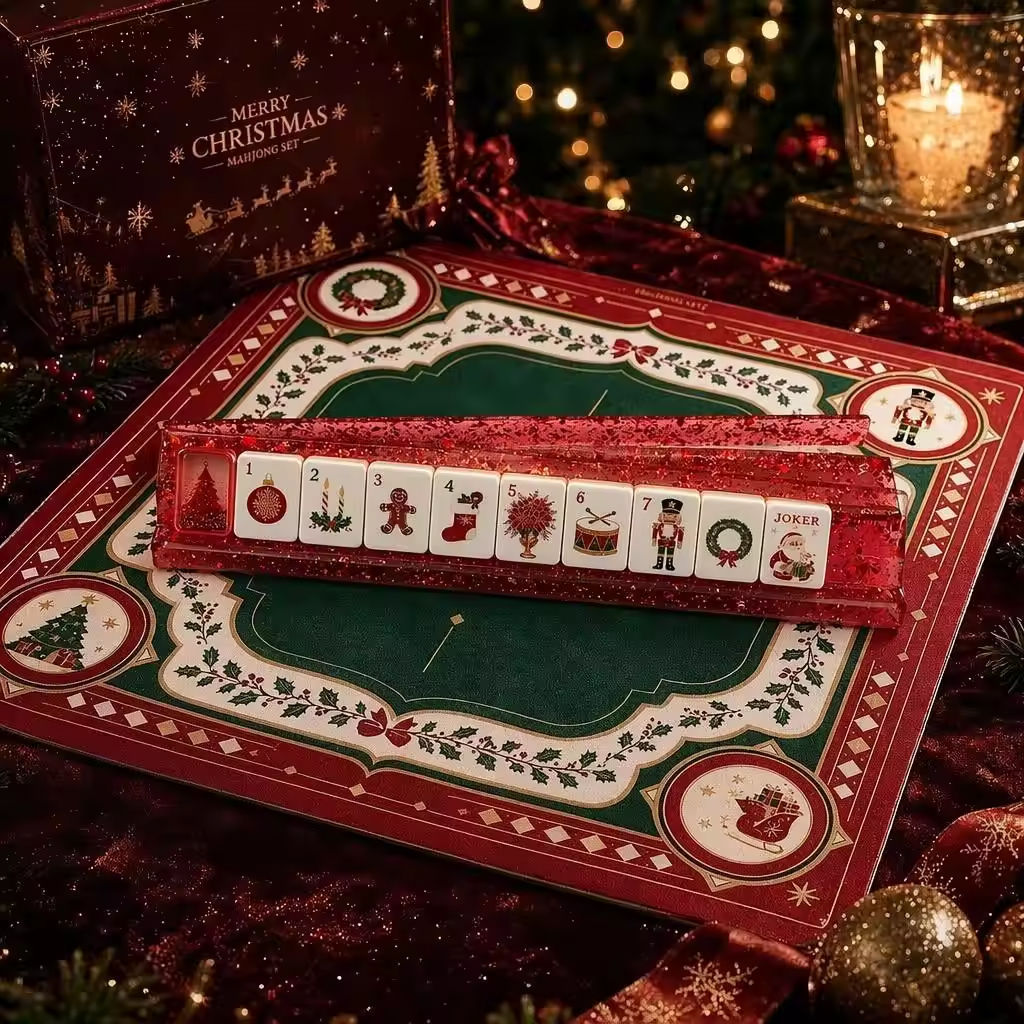
British mahjong follows American rules (152 tiles, three suits, winds, dragons, jokers) but emphasizes defensive reading and discard strategy over pure luck. The core strategic difference: British players treat the discard pile as a conversation. You read what your opponents are building—the tiles they throw first, which suits they're protecting, when they pause—to decide whether to expose your hand or play defensively and slow-bleed your tiles. Unlike American mahjong's focus on matching the current year's card hands exactly, British play values hand flexibility and the art of safe discarding. Games typically last 30–45 minutes per hand. Strategy involves studying which number ranges appear early, memorizing exposed combinations, and rotating your discard suit to avoid giving opponents tiles they need. We recommend playing with a good mat to track discards clearly and a quality set from our best-selling collection so tiles don't slip during the crucial reading phases.
British mahjong applies American rules (152 tiles, three suits, winds, dragons, jokers) but emphasizes defensive reading and discard strategy over pure luck. The core strategic difference: British players treat the discard pile as a conversation. You read what your opponents are building—the tiles they throw first, which suits they're protecting, when they pause—to decide whether to expose your hand or play defensively and slow-bleed your tiles. Unlike American mahjong's focus on matching the current year's card hands exactly, British play values hand flexibility and the art of safe discarding. Games typically last 30–45 minutes per hand. Strategy involves studying which number ranges appear early, memorizing exposed combinations, and rotating your discard suit to avoid giving opponents tiles they need. We recommend playing with a good mat to track discards clearly and a quality set from our best-selling collection so tiles don't slip during the crucial reading phases.
How do you defend against a player building toward Mahjong?
The moment someone exposes their first pung or kong, they've announced their suit priority. Stop throwing that suit immediately. If East exposes two Bams, avoid throwing middle or high Bams for the next 3–4 turns—that player is likely building terminal or honor combinations. Watch the speed of their picks: a slow pick means they're hunting a specific tile; a quick pick means they're flexible. Counter-defend by throwing "dead" tiles—tiles no one else has exposed or picked—first. Keep your own hand closed for as long as possible; exposed sets invite steal calls and telegraph your direction. The best defense isn't blocking one player; it's staying unpredictable so no one builds momentum against you.
🀄 Shop best-selling mahjong sets →

What's the discard sequence in British mahjong?
British strategy teaches a "safe then aggressive" discard order. Turn 1: throw a terminal or honor (1, 9, Wind, Dragon) that's least likely to be part of any hand on the card. Turns 2–4: throw the second-highest number in the suit you didn't pick—typically 8s or 7s, which are statistically harder to use in pungs or pairs. Turn 5 onward: begin reading the table. If no one has called or exposed, throw middle numbers (4–6 range) in the suit you're NOT building. British players avoid throwing jokers or flowers early; they're too valuable and expose your hand's flexibility. The rule: discard what you don't need before discarding what you do. This sequence delays hand commitment and gives you time to see which hands your opponents are chasing. Write your discards in mental order before the hand starts, then adjust based on exposure and calls.
How do you read tile patterns to predict opponents' hands?
Study the flow of returns (tiles picked from the wall, then discarded). If South picks three Craks in a row, South is likely NOT building a Crak-heavy hand—South is discarding them because they don't fit. If North keeps picking from the live wall but throws nothing for two turns, North may be hunting a specific tile to complete an exposure or pair. Count what's visible: if four 5 Dots are in the discard pile and four 5 Dots exist in total, no one can build with 5 Dots any longer—so a 5 Dot is safe to throw. British players maintain a running inventory of the 152 tiles: what's been discarded, what's exposed, what's left in the wall. This mental math takes practice but cuts your discard risk by 40% once ingrained. Note which suit is "hot"—if nine Bams have been discarded by turn 6, Bams are dead; throw more Bams boldly. The opposite: if only one Crak has appeared by turn 8, Craks are "live" and dangerous—preserve them.
What's the role of hand flexibility in British play?
Unlike American mahjong, where you commit to one hand from the card at the start, British strategy rewards adaptability. Begin every hand with 2–3 possible directions based on your 13 starting tiles. If you draw two 2 Bams, two 2 Craks, and a White Dragon, you can pursue either a Bam-centric pung-pair or a mixed honor hand. Hold this flexibility for 5–6 turns while you read the table. Once you see that Bams are hot (lots of early Bam picks and no calls), shift your whole hand toward Bams. If Winds and Dragons start appearing in discards, pivot to an honor-rich hand. Rigid players—those locked into one hand before turn 4—lose because they ignore the table state. British winners treat the first half of the hand as reconnaissance; the second half as execution. Exposing early locks you in and invites blocking. Flexible players expose only when they're two tiles away from winning, so opponents have no time to react.

When should you expose a pung versus play it closed?
Expose a pung only when all three tiles are identical AND you're confident you can use the fourth tile (or a joker) to turn it into a kong within 2–3 turns. Exposing signals: "I am committed to this suit and these numbers." If you expose two 4 Bams as a pung on turn 6, you're announcing that Bams are your priority; savvy opponents will stop throwing Bams and focus on blocking your access to the fourth 4 Bam. Exposure should come late in the hand (after turn 10) when other players have already committed or when you're protecting a pair or waiting for one final tile to Mahjong. British play values closed hands because a closed hand is a mystery. If West reads that you're building mixed honors and has a closed hand themselves, West becomes a secondary threat. Exposed pungs and kongs reduce that mystery and invite coordinated blocks. Best practice: stay closed until you're two tiles away from victory, then expose to signal confidence and force quick plays from opponents.
Defensive Discard Priorities in British Mahjong
Turn Range | Discard Priority | Why It Works | Risk Level |
1–3 | Terminals (1, 9) and honors | Least likely in active hands; buys time | Very Low |
4–6 | Suit you're NOT building | Signals ambiguity; no one steals it | Low |
7–10 | Numbers 7–9 in called suits | Still statistically safe; reads the table | Medium |
11+ | Middle numbers (4–6) in hot suits | Dead tiles after exposure; aggressive play | High |
What to check before you buy a set for strategic play
Tile clarity matters: you'll be reading discards from across the table every turn. Acrylic sets with clear suits and bold numbers are non-negotiable for British play. Bamboo sticks with visible suit symbols reduce errors. A good mat keeps discard sequences organized and prevents tiles from shifting mid-hand, which ruins pattern reading. Our mahjong mats collection includes options designed for strategic tracking. If you're hosting regular games, racks with pushers let players hold tiles securely so your hand doesn't accidentally leak information through tile arrangement. Check that jokers are clearly marked; British players rotate joker visibility to avoid accidental theft calls. Avoid sets where tile faces are worn or unclear—you'll waste turns asking "Is that a 5 or a 9?"—and that costs you strategic momentum.
🎁 See our most-loved mahjong sets & accessories →
The decision framework: offense versus defense
Most British players split their mental effort 60% defense, 40% offense. You spend more energy reading opponents and blocking their paths than building your own hand aggressively. This asymmetry wins long-term because blocking costs opponents 1–2 turns; building fast costs you everything if someone Mahjonggs before you're ready. Your decision tree each turn: (1) Is anyone close to Mahjong? If yes, throw their suit. (2) Have I exposed yet? If no, stay closed and flexible. (3) Which tile did my right neighbor discard, and how did they hesitate? If they hesitated, that suit is likely live—avoid it. (4) What's my safest discard? If unsure, throw what's most visible in the discard pile (duplicates mean no one can use it). (5) If I must expose, is it to accelerate a winning hand or to block someone else? Exposures for blocking rarely work in British play; expose only to win. This framework prioritizes survival over aggression, which is why British players rank among the most consistent winners in international tournaments.
✨ Find your Mahstead set — free US shipping →

FAQ
How is British mahjong different from American mahjong strategy-wise?
British play emphasizes defensive reading and discard psychology; American play focuses on matching hands from the annual card exactly. British players treat the discard pile as a signal of opponents' intentions and adapt their hand mid-game. American players typically commit to one hand type from the start. Both use 152 tiles and identical rules, but British strategy rewards flexibility and risk management over speed.
Can you use jokers in any position in British mahjong like American?
No. Jokers follow the same American rules: they substitute for any tile in a pung, kong, quint, or sextet, but never stand alone or pair. British play values joker economy; holding jokers as hidden wildcards longer builds opponent confusion. Deploy jokers only when you're close to winning.
What's the most dangerous discard in British mahjong?
A middle number (4–6) in a suit where only one or two tiles have been discarded. If you throw a 5 Crak on turn 8 and only one other 5 Crak has appeared, you're giving an opponent a high-probability tile for a pair or exposure. Throw numbers that are already visible in the discard pile multiple times; these are "dead" and safe.
How many tiles should you memorize in British play?
Memorize all 152 tiles: what's been discarded, what's exposed on the table, what's in the wall. This is the British standard. Most casual players track 50–70 key tiles (high-value numbers, terminals, honors) reliably. Competitive British players maintain near-perfect recall by turn 10. Start with suits: count how many Bams are gone, then refine to specific numbers each hand.
Should I always stay closed until I'm near Mahjong?
Yes, with one exception: if you cannot win without exposing a pung and the pung is yours (no one else can steal it), expose early to signal commitment and allow other players to adapt. Otherwise, a closed hand forces opponents to assume you're a threat in multiple suits, which gives you table control even if you're not building aggressively.
Is British mahjong played with the same 160-tile sets as American?
Yes. British mahjong uses the same 152 playing tiles (three suits 1–9, four of each; winds, dragons, flowers, jokers) as American. Any standard set works. The difference is purely strategic, not equipment. We carry acrylic sets designed for clarity, which helps with the tile-reading component of British play.


View More
View More
View More
