
Blue Mahjong Mat: How to Choose One for Your Game
Last updated: Nov 23, 2026
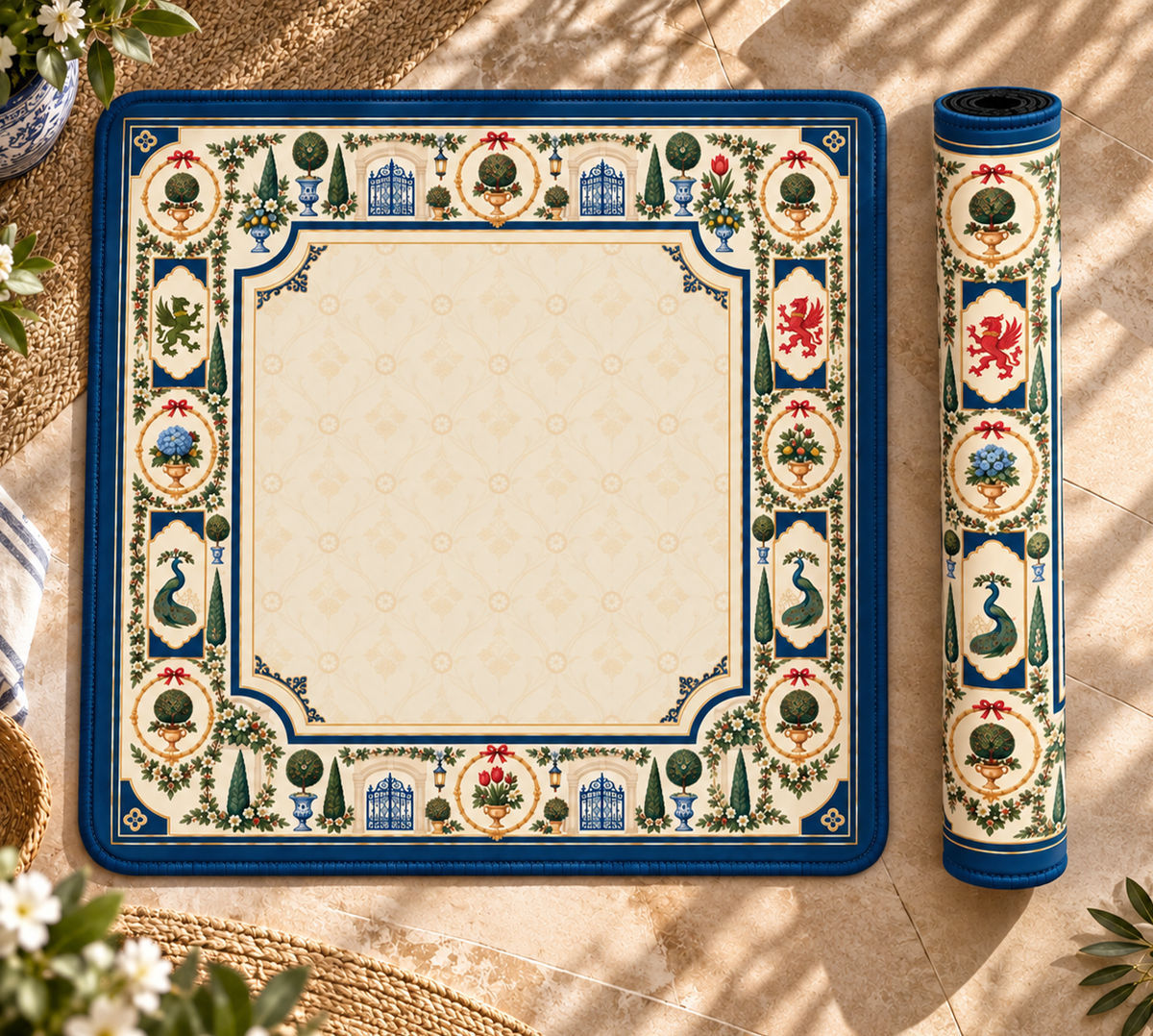
A blue mahjong mat is a felt or neoprene surface designed to protect tiles during play and organize the game layout. Most mats measure 28–32 inches square, with raised walls to contain tiles and prevent slips. Blue is the classic choice—calming, traditional, and practical for contrast. Mahstead offers acrylic sets paired with mats in multiple colors and finishes; a mat typically costs between mid-range to premium depending on material (neoprene outlasts basic felt) and custom engraving. The best mat for you depends on table size, storage space, whether you transport it, and whether you want a plain surface or one with position markers or custom designs. Avoid buying a mat sight unseen without checking the finished dimensions against your table edge-to-edge space.
A blue mat is your game's foundation. It protects your tiles from spills and scratches, keeps them from sliding across a slick table, and gives you a dedicated play zone—essential whether you're hosting a weekly foursome or a tournament. Blue has held tradition in mahjong rooms across the US for decades, and it pairs beautifully with our best-selling mahjong sets.
But choosing one isn't just about color. We'll walk you through size, material, layout options, and what actually matters on game night.
What size mat do you need?
The mat you buy must fit your table without bunching, overhang that catches tile racks, or gaps at the edges. Most American four-player games use mats between 28 and 32 inches square; some larger tables accommodate 36-inch surfaces. Measure your table's playable diameter or width, then subtract 4–6 inches to leave rim space for players' racks, scoring pad, and drinks. A mat that's too small leaves exposed table and forces tight tile placement; too large and it slides or crimps at corners. Mahstead's standard mat measures 28 inches square—a safe fit for most home tables with leaf extensions or pedestal bases. If your table is hexagonal, round, or custom, map the playable area first. Write down your table's surface dimensions, then compare that against the mat's stated finished size before ordering.
How does material affect durability and feel?
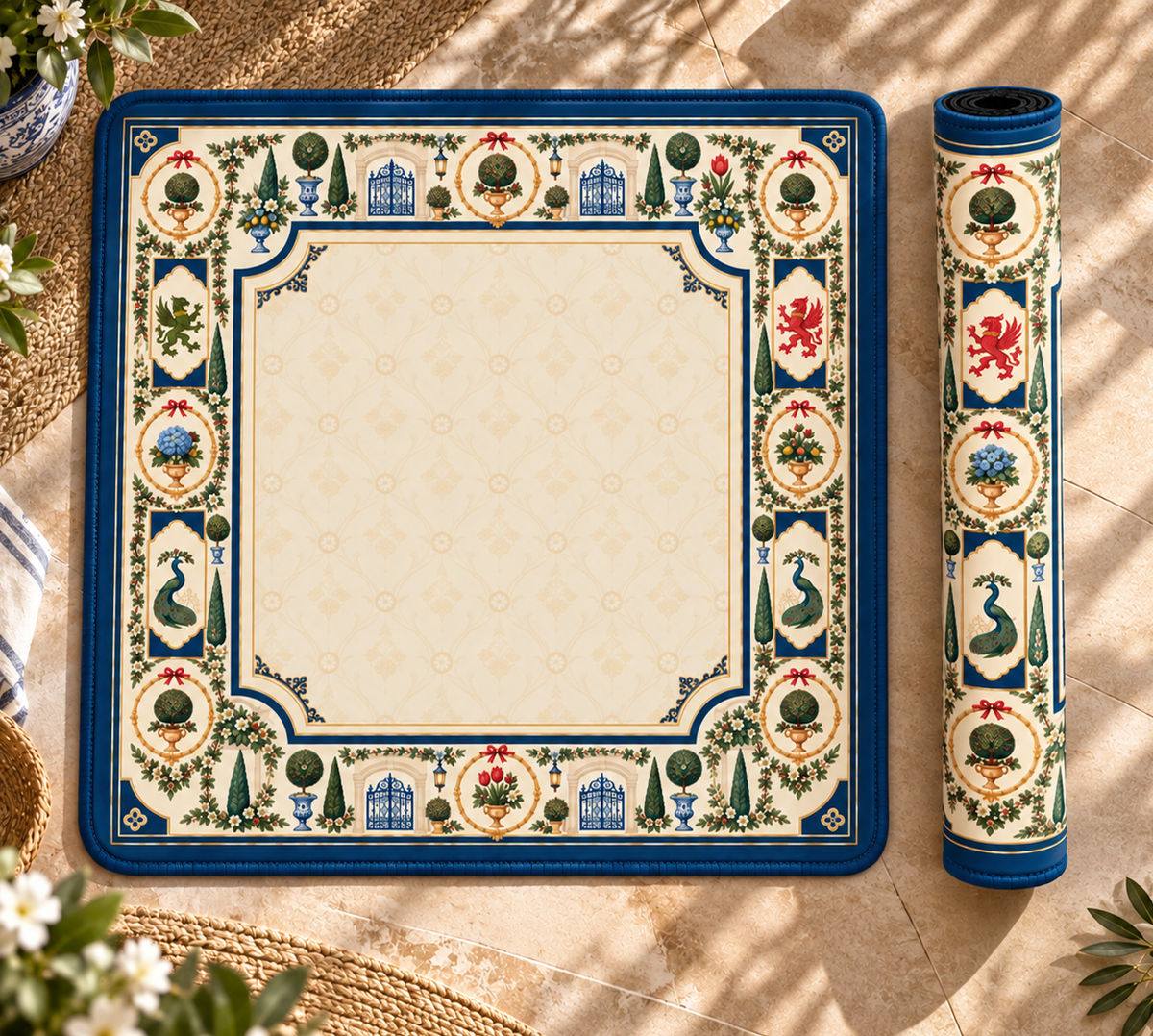
We stock mats in two primary materials: felt and neoprene. Felt is lighter, quieter when tiles drop, and affordable; it absorbs minor spills but stains easily and can pill after heavy use. Neoprene is thicker, washable, and resists wear—it lasts three to five times longer than felt in weekly games. Neoprene also has a subtle grip that keeps tiles planted during shuffles and reduces accidental movement. The trade-off is weight and storage: neoprene mats roll tighter and take up more shelf space. Choose felt if you play casually once or twice monthly and don't mind eventual replacement; pick neoprene if you host weekly games or share sets with a club. Both materials come in solid blue or with subtle patterns and custom engraving.
🀄 Shop best-selling mahjong sets →
Blue versus other colors—does it matter?
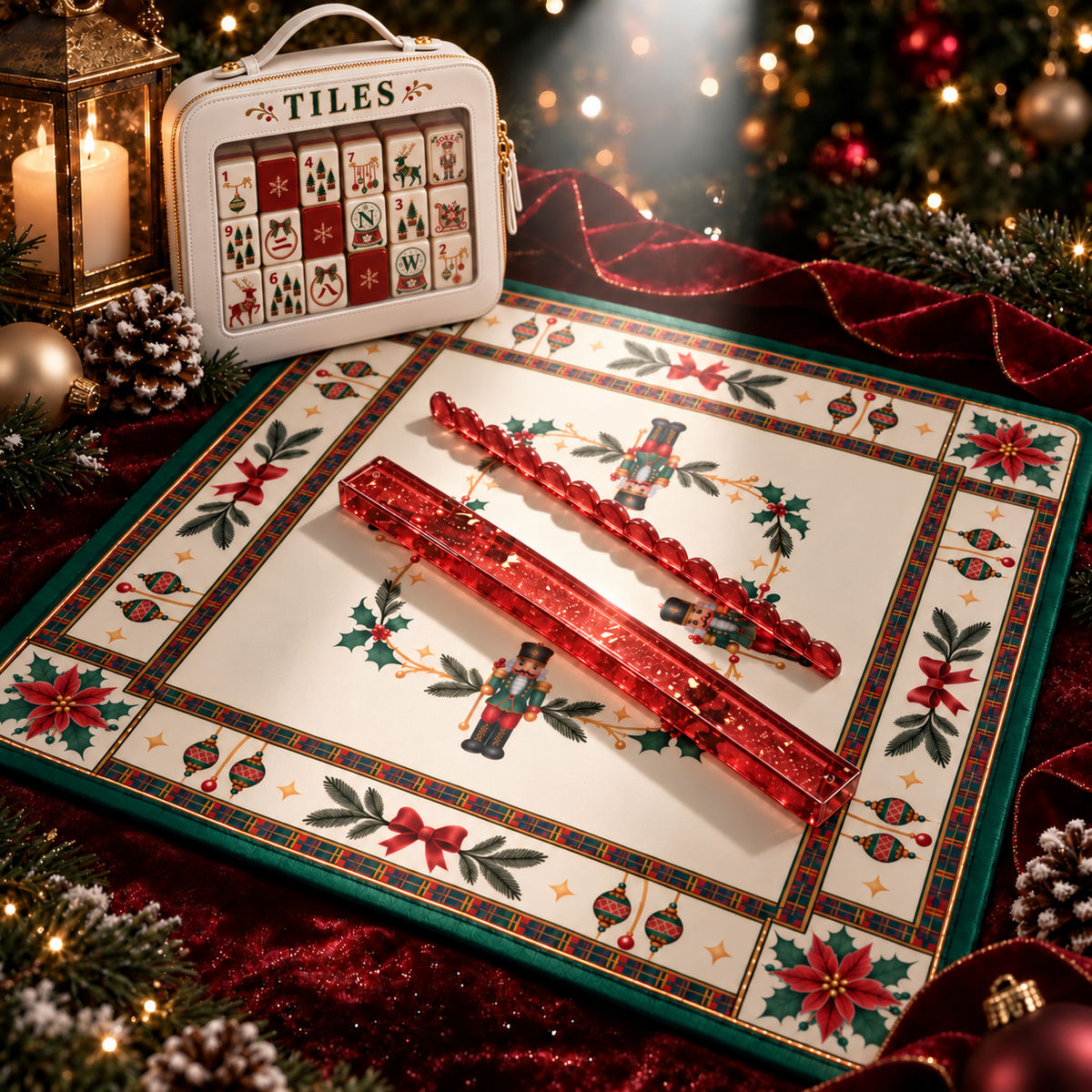
Blue dominates mahjong rooms, but Mahstead also offers green, burgundy, black, and cream. Blue has psychological advantages: it reduces eye strain during long games, signals tradition and respect for the game, and hides minor dust better than light colors. Green appeals to players who want a softer, more nature-inspired tone; black and burgundy create a formal or dramatic setting. Cream and white mats show spills and stains quickly but photograph beautifully. If you're choosing purely for function, blue is the safest bet. If you're building a themed set—say, hosting Christmas games with custom Christmas mahjong sets—a coordinating mat color ties the aesthetic together. Check your lighting: a blue mat under warm overhead lights appears slightly green; under cool LED, it stays true blue.
Marked versus blank—do you need position lines?
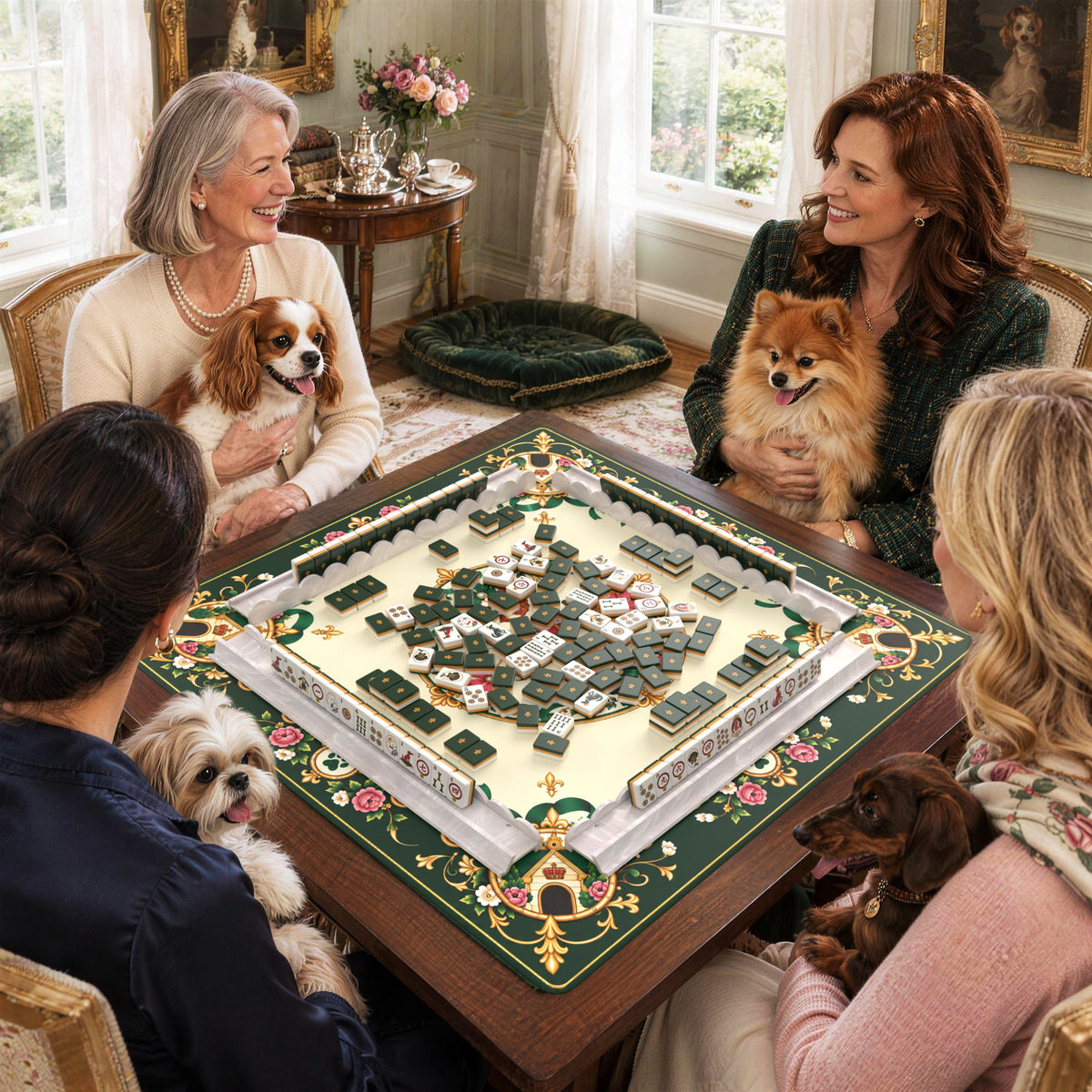
Some mats include embroidered or printed position markers: four corners labeled East, South, West, North; center cross marking the wall; lines for rack placement. These are purely convenience aids—they don't affect scoring or rules. Marked mats help newer players stay oriented, especially during the Charleston or tile deal. Blank mats are cleaner visually and work fine once players develop muscle memory. If you're teaching or hosting mixed skill levels, a marked mat is worth the marginal cost. For experienced players, blank is fine. If you're engraving your mat with a club name, family name, or year, a blank background lets the engraving stand out without visual clutter.
Mat Type | Best For | Material | Durability | Storage |
Standard blank | Weekly home games | Felt or neoprene | 2–5 years | Rolls to 4" × 28" |
Marked (position lines) | New players or clubs | Felt or neoprene | 2–5 years | Same |
Engraved (custom name/logo) | Clubs, gifts, team games | Neoprene (recommended) | 4–7 years | Rolls; thicker |
Premium (padded, edging) | Tournament hosting | Neoprene with non-slip base | 6+ years | Slightly heavier |
How do you match a mat to your tile set and racks?
Your mat, tiles, racks, and storage tell a cohesive story. If you own hand-painted ceramic or engraved acrylic tiles, a neoprene blue mat with custom engraving (your name or game group) elevates the whole setup. Pair a standard mat with our best-selling mahjong sets for casual play; add engraved tiles and matching mat for a permanent home game or club. If you travel regularly, choose a lightweight felt mat and store it in one of our mahjong bags and cases alongside a portable rack set. The goal is continuity: when your friends arrive, the mat signals quality and intention, and your tiles and racks feel like a unified set, not hand-me-downs. Mahstead's full mahjong mats collection is designed to coordinate with every tile set we offer.
🎁 See our most-loved mahjong sets & accessories →
What to check before you buy
Measure your table. Don't guess. Write down playable surface width or diameter, subtract 4–6 inches, and compare against the mat's finished dimensions.
Decide on material. Weekly play → neoprene. Casual or occasional → felt.
Choose marking style. First-time buyers or clubs → marked. Veterans → blank.
Check return policy. Mahstead ships free across the US; confirm whether a mat can be exchanged if it doesn't fit.
Pair it with your set. If you own or are buying engraved tiles, an engraved mat in the same color scheme ties the game together.
Verify finish. Ask whether the mat has a non-slip backing; this prevents sliding on glass or varnished wood tables.
✨ Find your Mahstead set — free US shipping →
FAQ
Can I use any blue fabric as a mahjong mat?
No. A proper mat has a dense felt or neoprene face to cushion tiles, a non-slip backing to anchor it, and finished edges to prevent fraying. Bed sheets or fabric scraps slide, tear, and lack the rigidity tiles need. A mat is a small investment that protects your tiles and lasts for years.
What's the difference between a mat and a table cover?
A mat is designed for active play—marked or plain, sized for the center of a table, with containment walls. A table cover is decorative or protective for storage. For gameplay, always use a mat. Read our guide on mat versus table cover for a full comparison.
How do I clean a neoprene mat?
Wipe spills immediately with a soft, damp cloth. For deeper cleaning, hand-wash with mild soap, rinse thoroughly, and air-dry flat (never wring). Neoprene resists stains better than felt, but don't use bleach or abrasive scrubbers. Store it rolled, not folded, to avoid creases.
Can I get a mat custom-engraved with my name or club logo?
Yes. Mahstead engraves mats with names, dates, and designs. Engraving is permanent and looks professional on neoprene. Turnaround and pricing vary by design complexity; see current options on the mahjong mats collection page.
What's the lifespan of a mat, and when should I replace it?
A felt mat lasts 2–3 years of weekly play before pilling or staining becomes obvious. Neoprene lasts 4–7 years or more. Replace when the surface is no longer smooth, tiles slip, or stains won't come out. A single mat is a worthwhile one-time purchase compared to replacing tile sets.
Do I need a mat if I already have a wooden mahjong table?
If your table is finished wood or varnished, a mat prevents tiles from sliding and protects the surface from scratches and spills. If you have a professional mahjong table with a built-in felt surface, a separate mat is optional but some players still use one for extra cushioning and aesthetic consistency with their set.


View More
View More
View More
