
Best Riichi Mahjong App: Play Honest, Learn Fast
Last updated: Nov 23, 2026
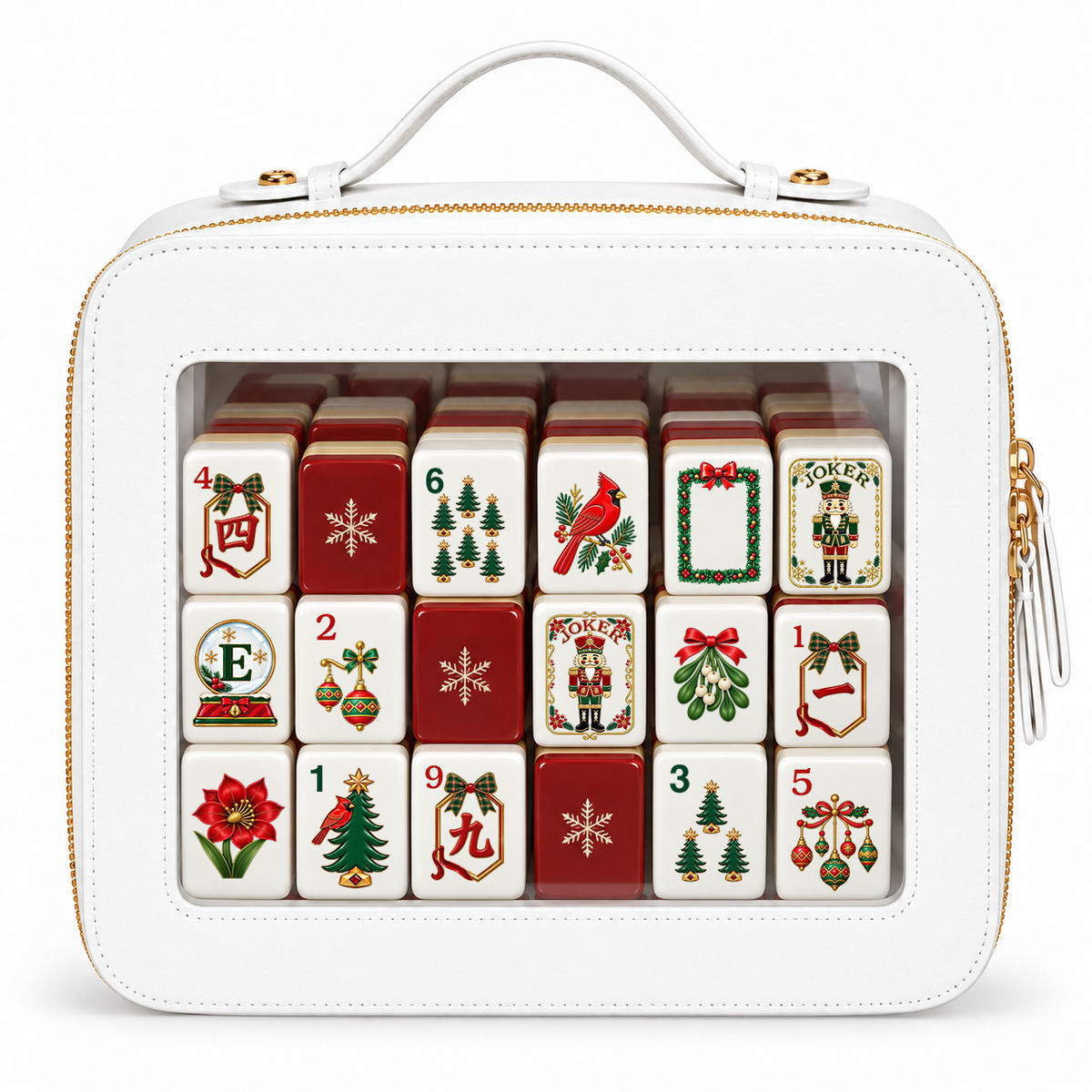
Riichi mahjong (Japanese mahjong) is played with 136 tiles—fewer than American mahjong—and uses completely different hand-building rules: sequences (chows), identical triples (pungs), honor tiles, and a mechanic called riichi, where you declare and lock your hand one tile away from winning. The best app depends on your goal: Mahjong Soul offers the largest English-speaking community with ranked matches and replay analysis; Tenhou remains the longest-running competitive platform but uses Japanese menus; MahjongWay teaches fundamentals with tutorials and slow-play modes; Jongmaster provides local offline practice. All are free or freemium. None replaces a physical table—once you've mastered patterns and hand-reading on an app, many players move to our best-selling collections of physical tile sets so they can host practice games with friends and speed up their real-table comfort.
Riichi mahjong apps are your training ground before you join a live game or casual table. Unlike American mahjong—which uses a fixed annual card and no sequences—riichi is about reading patterns, managing your hand's openness versus defensiveness, and knowing when to declare riichi. Apps let you practice these micro-decisions thousands of times without the social pressure of a real table or financial risk. We've tested dozens over years of weekly hosting. Here's what we've learned.
Why is Mahjong Soul the most popular riichi app?
Mahjong Soul dominates because it combines beginner tutorials, ranked play, and a large English-speaking player base. The UI is clean, tiles are crisp and large, and hand replays let you review your own mistakes turn by turn. You can set play speed (blitz, normal, slow), mute notifications during deep thought, and customize tile designs. No payment is required to play; cosmetics (avatar skins, tile art) are optional. Ranked matches place you against similarly skilled opponents, which teaches faster than bashing beginners. The downside: server lag during peak hours and occasional disconnect penalties. Start with Normal speed, stick to one tile design until patterns become automatic, and play at least 20 unranked games before ranked to avoid frustration.

How is Tenhou different from Mahjong Soul?
Tenhou is the original competitive riichi platform (running since 2000) and remains the standard for serious players in Japan. It uses actual tournament rules, has a deeper ranking system with dan levels (1-dan to 10-dan), and attracts stronger opponents worldwide. The trade-off: the entire interface is in Japanese, statistics are dense, and learning the menu takes hours. Tenhou has no cosmetics and no hand replay in the same way—you must memorize discards in real time. Use Tenhou after you're fluent in riichi rules and basic hand types; jump in too early and you'll lose 50 games in a row and quit. Many serious players use both: Mahjong Soul for casual ranked play and Tenhou for tournament-style preparation.
What's the fastest way to learn riichi rules on an app?
MahjongWay and similar tutorial-first apps isolate each mechanic—melds, honor tile usage, winning conditions, riichi declaration, yaku (hand patterns)—and quiz you on each before live play. This is slower than jumping into Mahjong Soul immediately, but dramatically cuts the number of confused early games where you don't understand why you lost. Run through a tutorial app for 1–2 hours, complete 10 practice rounds against AI, then switch to Mahjong Soul. This hybrid path cuts your "blank frustration" phase from 50 games to 10. Many intermediate players return to tutorial apps when learning edge cases (like the difference between pinfu and tanyao) to confirm their mental model before they cost you a ranked game.
Comparison Table: Which App Fits Your Skill Level?
App Name | Best For | Interface Language | Play Speed Options | Cost | Replay Available | Beginner Ramp |
Mahjong Soul | Ranked practice, large community | English | Blitz / Normal / Slow | Free (cosmetics paid) | Yes, detailed | Fast (start ranked week 1) |
Tenhou | Competitive serious play | Japanese | Real-time only | Free | Minimal | Slow (expert level) |
MahjongWay | Rule learning, AI practice | English | Slow / Normal / Fast | Free | Limited | Very fast (structured lessons) |
Jongmaster | Offline no-WiFi play | English | Adjustable | Free | Yes | Medium (self-paced) |
Pick Mahjong Soul if you want community and ranked growth. Pick Tenhou after 100+ Mahjong Soul games. Pick MahjongWay if you've never seen a riichi hand.

How do I know when to move from app to a live table?
You're ready for a live table when: (1) you distinguish yaku (hand types) by sight within 2 seconds; (2) you predict the next player's likely discard 60% of the time; (3) you've played ≥100 ranked Mahjong Soul games and maintain a 50%+ win rate. Live play is faster, tile handling builds muscle memory, and human reads (hesitation, pile order, chip stacks) add real noise that apps can't simulate. Many groups play casually at home first—you don't need tournament tiles or a formal mat to start; a kitchen table and a borrowed physical tile set are enough. Apps won't teach you tile speed or how to handle a discard tray, so one casual in-person game teaches more than 10 more app games. The bridge: play app in the hour before your first live game so patterns stay warm in memory.
🀄 Shop best-selling mahjong sets →
What to Check Before You Buy a Set After App Practice
Once you've logged hours on an app and want to host live riichi games, physical tiles let you read the room and speed up your real-game timing. When choosing a tile set for riichi play, ensure: tiles are large enough to read from arm's distance (acrylic sets at our shop are sized for this); bamboo or acrylic finish doesn't cause tiles to skid wildly on the mat (we make sets with textured grips); jokers are NOT in a riichi set (riichi uses only the 136 core tiles, no spares or blanks—different from American mahjong); and your set is compact enough to travel or store (many buy a carrying bag for weekly games). A matching mat dampens sound and defines discard zones, which slows sloppy play and teaches new players faster. None of this is mandatory for casual play, but it profoundly changes how seriously players treat the game.
Common Mistakes App Players Make at a Live Table
Mistake 1: Slow tile handling. Apps let you click; real tables require you to pick, evaluate, and discard in 3 seconds. Practice tile speed on an app's blitz mode, then spend your first live game accepting you will be slower. Ask for grace on your first night.
Mistake 2: Forgetting melds. In apps, your melds are displayed in a panel. At a real table, they're in front of you in physical stacks. New players often miscount their own melds or miss an opponent's. Take 30 seconds at game start to count all melds aloud. It's awkward but prevents a false win.
Mistake 3: Confusing hand position. Apps show your hand at the bottom in a neat line. Real tables require you to read tiles held in an opponent's hand from an angle or distance. Play your first few live games with your hand face-up so you learn to read angles. This feels amateur but it accelerates spatial learning.
Mistake 4: Assuming all riichi players know house rules. Apps enforce official rules. Home games vary (some allow "soft" riichi, some cap payment limits). Confirm the group's variant before you sit down. Five minutes of clarification saves a 10-minute dispute hand.
🎁 See our most-loved mahjong sets & accessories →
Why Physical Tiles Matter After App Training
An app teaches you strategy, hand-reading, and yaku recognition in the abstract. A physical set teaches you speed, pressure, and the real texture of a competitive table. Many players improve faster after one live game than 50 app games, because human opponents are unpredictable and tile-handling is a skill all its own. If you're serious about riichi—not just dabbling—commit to a physical set by month two of app practice. It doesn't have to be expensive; a standard acrylic set and a simple mat are enough to host weekly casual games with friends. The conversations and reads you build at a real table compound into the kind of deep game sense no app can grant.
✨ Find your Mahstead set — free US shipping →

FAQ
Can I play riichi mahjong on an iPad or just a phone?
All major apps (Mahjong Soul, Tenhou, MahjongWay) run on iPad with larger tile rendering. iPad is preferable for first sessions because tiles are easier to see and your hands don't block the screen. Once you're comfortable, phone play is normal.
Do riichi apps have a single "best" difficulty level for beginners?
Start Mahjong Soul on Normal speed, unranked games, against AI if available. After 5–10 comfortable unranked games, join ranked. Avoid Blitz until you've played 50+ ranked games; Blitz is for pattern experts, not learners.
Is Mahjong Soul completely free or will I get stuck behind a paywall?
Completely free for play. Cosmetics (tile designs, avatars) cost money but provide no gameplay advantage. You will never be forced to pay to learn or rank up.
How long does it typically take to move from app to live play?
3–6 weeks of daily app play (≈20–40 games per week) will teach you rules and basic strategy. Add one live casual game in week 2 or 3 to start building real-table comfort. Most players benefit from parallel play: app 4 days a week, live 1 day a week, for 8 weeks total.
Should I learn American mahjong or riichi first?
If your goal is to join a local group, ask them which they play. American mahjong is more common in the United States; riichi dominates in Japan and is growing in cities with large Japanese or younger communities. Learning either first makes the other easier because tile intuition carries over. Most serious players eventually learn both.


View More
View More
View More
