
Best Mahjong Cases for Travel & Home Storage
Last updated: Nov 23, 2026
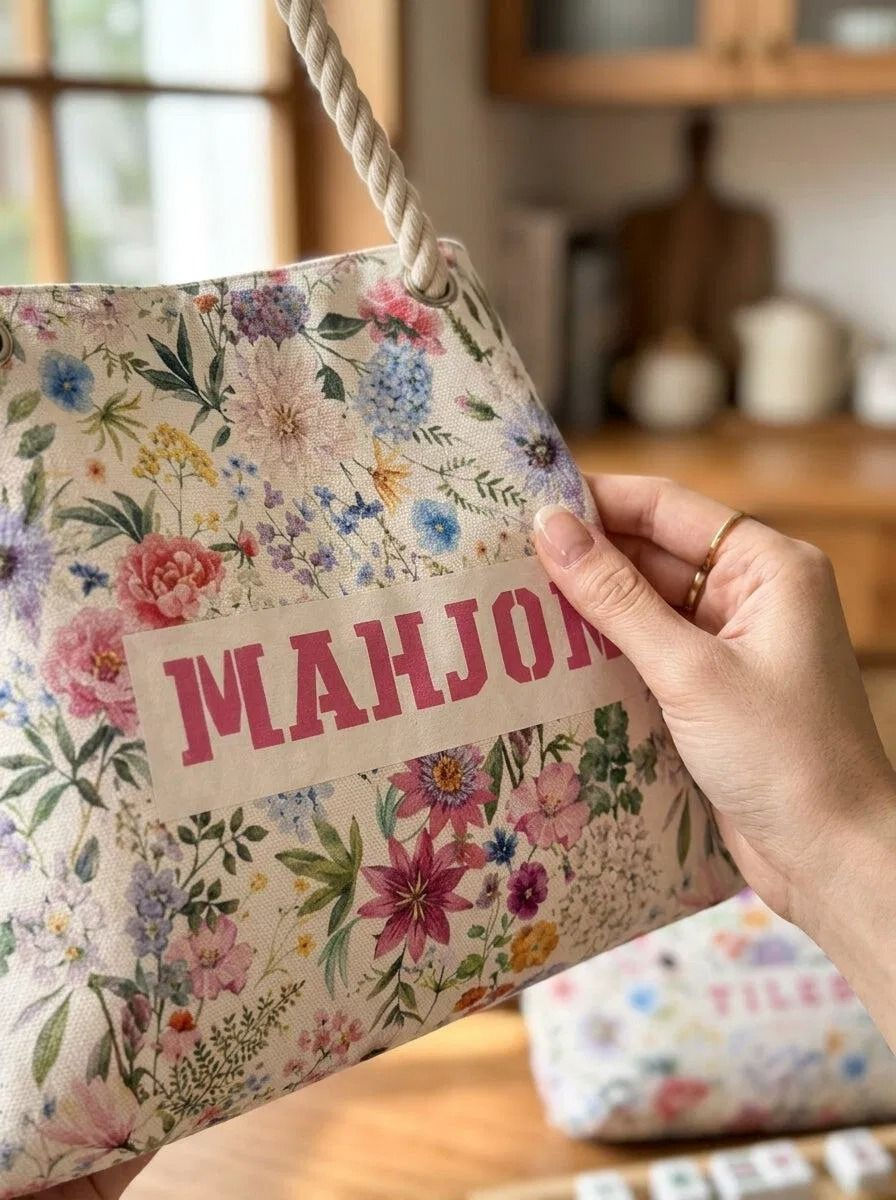
A mahjong case is a hard or soft protective container sized to hold a 152-tile set (with spare tiles), mats, racks, and accessories without crushing tiles or losing jokers. Hard cases offer maximum protection for frequent travelers; soft bags suit players who keep their set at one table. Standard cases fit a full American mahjong set; larger cases accommodate a mat and push-racks together. Depth ranges from 3–5 inches; interiors may include foam inserts, dividers, or open compartments. Cost varies by material and closure type (latches, zippers, carry handles). At Mahstead, we design travel bags and cases with reinforced stitching and proportions tested by weekly players, ensuring tiles stay organized and protected through the Charleston and transport.
What size mahjong case do I actually need?
A standard American mahjong set contains 152 tiles plus 8 jokers—roughly 160 tiles total when counting spare jokers included in 160-tile sets. A case measuring 15 × 10 × 4 inches comfortably holds a full set with room for a score pad and betting chips. If you also carry a mat and racks with pushers, you'll want a larger case (16 × 12 × 5 inches or a two-compartment design) or a soft tote that expands. Measure your set's box first: most retail sets ship in boxes 15 × 9 × 3 inches, so your case should exceed that by at least a half-inch on each dimension.

Hard case vs. soft bag—which protects better?
Hard cases with rigid shells and latch closures prevent tiles from shifting during transport and protect against spills at a coffee table or car seat. Soft nylon or canvas bags with zippers are lighter, fold away when empty, and work well if your set lives in one home and travels rarely. Hard cases cost more but preserve tiles longer if you play at multiple venues weekly; soft bags suit casual players who travel once or twice a year. We recommend hard cases for players who host on rotation or move sets between homes; soft bags for stationary game nights.
Should the case have compartments or foam inserts?
Compartments and foam dividers prevent tiles from tumbling loose inside the case, reduce noise when carrying, and make setup faster. Open interiors let you stack tiles however you prefer and fit oddly shaped accessories (extra jokers, dice in tubes, replacement pushers). If your set comes with a wooden or acrylic rack, a compartment sized for that rack keeps it safe and visible. Foam inserts take up space but are ideal if you transport your best-selling mahjong sets through rough terrain or weather. Choose compartments if you value organization; choose open interiors if you mix tile types or add custom accessories.
🀄 Shop best-selling mahjong sets →
What closure should you choose—latches, zippers, or buckles?
Latches (plastic or metal) open with one motion and are silent during the game; zippers offer weatherproofing but can jam or snag tiles if the bag is overstuffed. Velcro straps are durable but weaken over years of use. Magnetic closures are sleek and quiet but may affect electronic items near your table. Latches win for speed if you open the case ten times per game night; zippers win if you travel by car in rain or need the bag to stay closed while jostled.
How do you prevent tiles from shifting during transport?
Pack your case with the tile racks or stacking trays underneath (if included), then position the loose tile tray or stack flat on top. Surround the stack with soft cloth, bubble wrap, or the case's foam padding to dampen movement. If your case has adjustable dividers, use them to create a snug fit. Never overstuff; if the lid doesn't close without pressure, you risk warping the case and cracking tiles. A case that's 80% full protects better than one crammed tight.
Can a mahjong case fit mats and racks too?
Most standard cases hold a set and a small mat rolled or folded. Thicker mats (½ inch or more) and mahjong racks with pushers require a larger case or a separate bag. If you use a rigid rack (bamboo or plastic frame), store it flat in a compartment above or beside the tile stack. Soft mats can be rolled and placed along one edge. For weekly players who move a full setup (set + mat + racks + dice), a two-bag system or a large tote works better than cramming everything into one case.
🎁 See our most-loved mahjong sets & accessories →

What's the difference between a mahjong bag and a game table carrying case?
A mahjong bag is designed specifically for tiles, mats, and lightweight accessories; a game table carrying case is larger, heavier, and built for rigid tops or legs. Mahjong bags are 3–5 inches deep and shaped to nest tiles; game table cases are 6+ inches deep with reinforced walls and often a hard shell. If you carry only your set and mat weekly, a mahjong bag suffices. If you also transport a collapsible table or hard playing surface, invest in a larger case.
Choosing the Right Case: A Quick Comparison
Case Type | Best For | Interior Depth | Typical Closure | Durability | Portability |
Hard latch case | Frequent travelers, rotating hosts | 3.5–4.5 in | Plastic latches | 5+ years | Good (handle) |
Soft zippered bag | Home players, occasional travel | 3–4 in | Sturdy zipper | 3–4 years | Excellent (folds) |
Two-compartment soft tote | Full setup (set + mat + racks) | 4–5 in | Zipper on each section | 4–5 years | Very good (shoulder strap) |
Foam-insert hard case | Delicate sets, rough transport | 4–5 in | Magnetic or latches | 6+ years | Good (rigid) |
What to check before you buy
Interior dimensions: Measure your set's box or stack of tiles lengthwise, widthwise, and in height. The case should exceed those measurements by at least 0.5 inches per side.
Handle type and weight: If you carry the case one-handed, test the handle durability—reinforced stitching at stress points matters. Cases over 5 pounds are tiring for long walks.
Closing tightness: Latches should click firmly; zippers should glide smoothly and lock at both ends. A weak closure lets tiles shift and jokers escape.
Padding or lining: Check if foam is glued or removable (removable is easier to clean and replace). Look for tear-resistant nylon or canvas lining inside.
Warranty or guarantee: Few cases carry explicit warranties; buy from sellers who offer returns within 30 days if the case arrives damaged.
Ventilation: Hard cases can trap moisture; ensure there's airflow if you store the case in a humid garage or basement.
Where to find the right case for your setup
Visit our travel bags and cases collection to browse designs tailored to American mahjong sets, with options for single sets, mat storage, or full racks. Each case is tested by players who host weekly and move equipment between homes. We ship free across the US and include a clear photo of the interior layout so you know exactly what fits.
If you're buying your first set, match it with a case from the start—tiles packed carelessly in a cardboard box crack faster, and jokers slip into gaps. Our cases are proportioned for 160-tile sets (the standard retail size), so you won't waste money on oversized containers.
✨ Find your Mahstead set — free US shipping →
Common mistakes to avoid when choosing a case
Buying too large: A case with extra space forces tiles to rattle and shift. You end up replacing jokers and re-sorting tiles every few games.
Skipping foam padding: Unpadded hard cases transfer every bump to your tiles. Acrylic tiles can develop hairline cracks from impacts during car rides.
Assuming one case fits everything: Most single-set cases don't fit a mat and racks without significant overstuffing. Plan for two bags if you transport a complete game setup.
Ignoring zipper quality: Cheap zippers jam after 20–30 uses. Test the zipper action before purchase; it should glide smoothly without catching.
Forgetting to account for spare jokers: A 160-tile set includes extra jokers and spare tiles beyond the 152 used in play. Ensure your case depth allows for the set box or spare tile compartment.
What you'll need
If you're shipping or moving your set between multiple homes, start with travel bags and cases. If you host games at one table, a soft bag saves space; if you play at rotating venues, invest in a hard case. Pair your case with a quality mahjong mat to protect tiles during play, and consider racks with pushers to speed setup and protect fingers.

FAQ
Can I use a jewelry box or small toolbox as a mahjong case?
Only if the interior is padded and the lid closes without pressure. Unpadded boxes crack tiles; tight lids warp plastic and chip acrylic. A case designed for mahjong is safer and faster to unpack.
How do I clean the inside of a mahjong case if it gets damp?
Wipe the interior with a dry microfiber cloth, then leave the case open for 24 hours in a dry room. If foam is glued and stays damp, remove it carefully and let it air separately. Replace glued foam if mold appears.
Do I need a separate case for mahjong racks with pushers?
Most racks fit flat in a large mahjong case alongside your tile stack. If your rack is thick or rigid, a small compartment or separate soft bag keeps it scratch-free.
Will a mahjong case fit in a standard car trunk?
Standard cases (15 × 10 × 4 inches) fit easily in any trunk. Larger cases (16 × 12 × 5 inches) do too. Measure your trunk width if you have a small hatchback.
How long does a good mahjong case last?
Hard cases with reinforced stitching last 5+ years with weekly use; soft bags last 3–4 years. Latches and zippers wear first. Replace the case if the closure fails or foam crumbles, as tiles will shift during transport.
Can I use a photo camera or electronics case for mahjong tiles?
No. Camera cases are too shallow (2–3 inches) and lack tile-sized compartments. Tiles will shift and break.
What's the best way to pack a case if I'm flying with my set?
Use a hard case with latches, pack foam padding tightly around all sides, and place the case in a carry-on bag if possible. Hard cases with rigid shells survive overhead compartment pressure; soft bags do not. Check airline size limits (typically 22 × 14 × 9 inches for carry-on).


View More
View More
View More
