
Best Mahjong App for Beginners: Learn the Rules Before the Table
Last updated: Nov 23, 2026
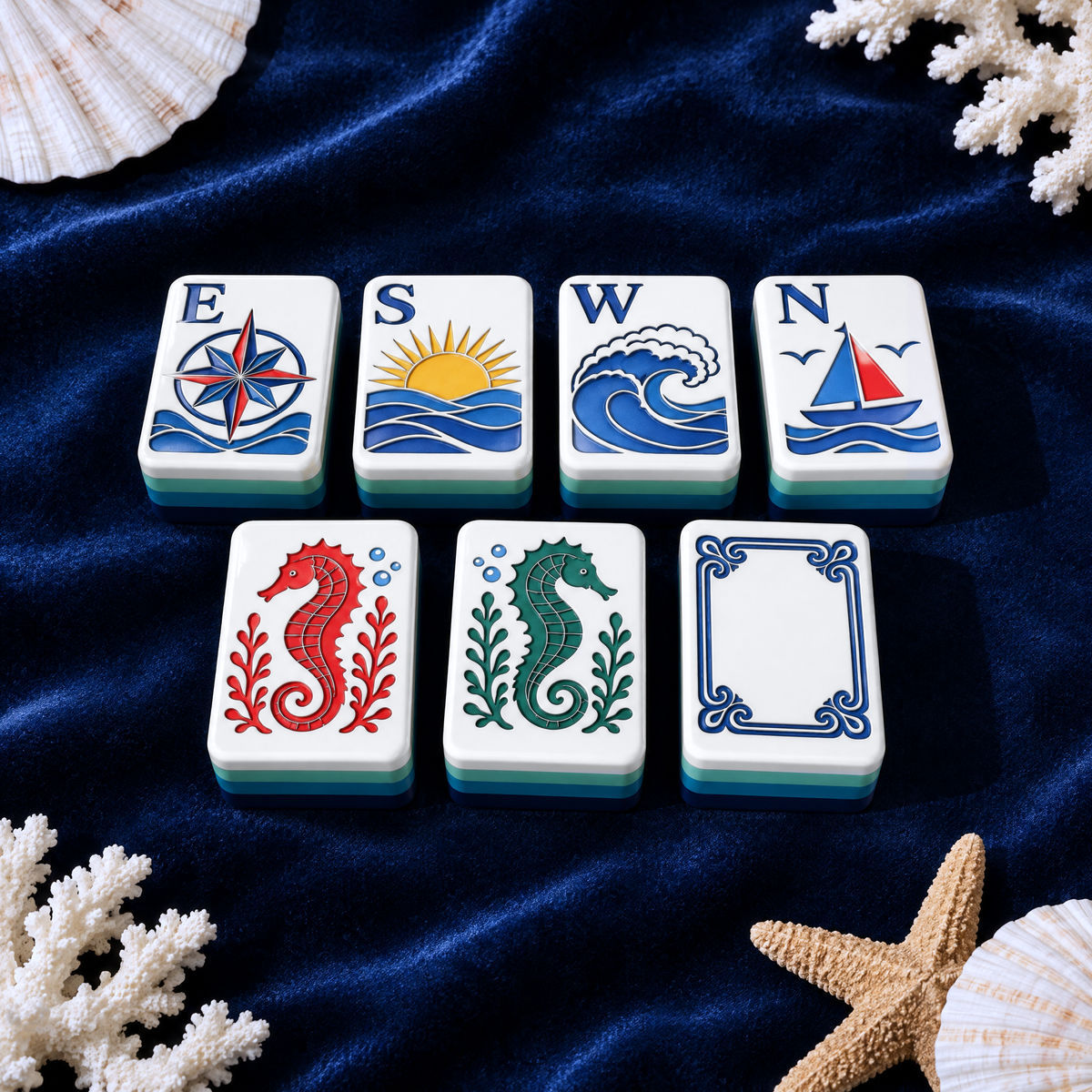
The best beginner mahjong apps combine clear rule explanations, slow-paced practice hands, and accurate American rulesets—apps like those offering tutorial modes, hands from the official National Mah Jongg League card framework, and joker-handling logic that matches real play. Most free or low-cost apps teach Chinese mahjong (simpler, older rules), so confirm whether yours covers American play before investing time; look for apps mentioning "152 tiles," "jokers," "Charleston," or "National League card." Expect 2–4 weeks of 15-minute sessions to grasp tile groupings, hand patterns, and how jokers replace missing tiles. Apps excel at memorizing suit names (Bams, Craks, Dots), wind tiles, and basic scoring—but they can't replace the tactile, speed, and social reality of a physical game. Once you recognize a pung, call a kong, and follow a hand on the official card, buy a set from our best-selling collection and join a weekly game: apps prepare your mind; tiles train your hands and instincts. 🀄 Shop best-selling mahjong sets →
Do Apps Actually Teach American Mahjong?
Most mainstream mahjong apps teach Chinese or Hong Kong variants, which use different tile counts, hand logic, and no jokers—so your app knowledge won't transfer directly to an American table. A true American mahjong app must cover: 152 tiles (three suits, winds, dragons, flowers, jokers), the Charleston (pre-game tile passing ritual), hand hands only from the current year's National League card, and the rule that jokers can never form a single tile or pair. If the app doesn't mention these specifics, you're learning a different game. The upside: Chinese rules are simpler and older, so they teach tile recognition and grouping faster. The downside: when you sit down for your first real American game, half your app knowledge becomes irrelevant. Choose an app labeled "American mahjong" or "NMJL" (National Mah Jongg League); otherwise, treat it as a fun introduction to tile games in general, not a direct path to American play.

Which Free Apps Work for Beginners?
Free apps typically offer either Chinese mahjong (solitaire-style or multiplayer) or stripped-down American tutorials. Solitaire apps let you learn tile names and matching patterns without opponents, which is ideal for your first 30 minutes—no judgment, no time pressure, just pattern recognition. Multiplayer free apps often use simplified rules or AI opponents that don't reflect real human play; expect hand logic to feel "loose" compared to the printed card. Check app store reviews for phrases like "teaches the official hand," "uses the League card," or "explains the Charleston"—if you don't see them, the app is teaching tiles, not American mahjong strategy. A solid free app path: start with a solitaire tile-matching game to learn suit names and tile counts, then move to a tutorial-heavy app that walks through one hand structure at a time. You'll hit a wall around week 2 when the app can't explain why a hand does or doesn't work with the official card—that's the moment to buy a physical set and play live.
How Paid Apps Differ (and Whether They're Worth It)
Paid apps (typically under moderate cost; check your app store for current pricing) usually include: full National League card integration, hand-by-hand tutorials with difficulty levels, live multiplayer against real opponents, offline play modes, and detailed scoring breakdowns. The paid tier removes ads and gives you faster feedback. However, even the best paid app cannot replicate the speed, discards pile management, tile distribution chaos, and bluffing psychology of a real game with four humans sitting across a table. Many players buy a paid app, play for 6–8 weeks, feel confident, then freeze up in their first live game because they forgot to track which tiles were discarded or misread a joker in the heat of the moment. Use paid apps as a supplement to weekly live play, not a replacement. If you're committed to learning American mahjong, invest in a physical set and a weekly game slot first; the app becomes a reviewing tool, not your primary teacher.
American vs. Chinese Mahjong: What the App Won't Tell You
Aspect | American | Chinese | Impact on App Learning |
Tile count | 152 tiles + 8 jokers | 136 or 144 tiles | American apps must specify 152; most free apps default to Chinese counts |
Hand source | Only hands from current year's League card | Player-created patterns | American enforces what's "legal"; Chinese allows infinite combos |
Chows (sequences) | Banned; no 1-2-3 calls | Core of the game | American apps must remove this mechanic entirely |
Joker rules | Never in single/pair; replaces any tile in a group | Limited or absent | This is where most app logic breaks; watch for it |
Player count | Always 4 players, 152 tiles total | 2–4 flexible | American app must enforce the 4-player, fixed-tile rule |
Learning curve | Steeper (card-dependent, house rules vary) | Gentler (more intuitive patterns) | Chinese apps feel faster; American apps feel rigid at first |
Beginners often find Chinese mahjong apps more "fun" because patterns are freeform; American apps feel restrictive because every hand must match the card. That restriction is the game's heart. If an app feels too rigid, you're learning real American mahjong. If it feels loose and forgiving, you're learning Chinese mahjong under an American label.

Step-by-Step: How to Use an App to Prepare for Your First Live Game
Week 1: Learn tile anatomy. Start with a solitaire or tutorial app. Spend 10–15 minutes a day. Don't memorize; just play. Learn the three suits (Bams, Craks, Dots each numbered 1–9), winds (North, East, West, South), dragons (Red, Green, White), flowers, and jokers. After 7 days, you should recognize any tile on sight without hesitation.
Week 2: Understand groupings. Move to a guided hand-builder app or tutorial level. Learn why three identical tiles form a "pung" (the basic building block), four make a "kong," and five or six make a "quint" or "sextet." Practice calling these aloud as you see them. Don't worry about the official card yet; just internalize that mahjong is about collecting identical tiles, not sequences.
Week 3: Add the Charleston and card basics. If your app includes pre-game tile passing, play a few rounds with this ritual. Then, open the official National Mah Jongg League card online (search "2026 National Mah Jongg League card PDF" if your app doesn't embed it) and sit with it for 20 minutes. Don't try to memorize; just page through and notice the sections. You'll see "Like Numbers," "Consecutive Run," "Pair + Two Patterns," etc. Get a feel for the card's organization.
Week 4: Play one app hand against the card. Pick a single hand from the official card and use your app to check if you can build it. See how jokers substitute for missing tiles. Notice how breaking one rule makes the hand "dead." This is where app learning clicks into live-play reality.
By end of week 4: Buy a physical set from our best-selling collection, find a weekly game in your area (check community centers, synagogues, libraries, or Meetup boards), and sit for your first live round. Bring your printed card. You will make mistakes. Every player does. Your 4 weeks of app time means you won't be confused about tile names or what a pung is—you'll just be learning the rhythm and psychology. That's the real game.
When to Stop Using the App and Start Playing for Real
Apps plateau fast for American mahjong. Once you can recognize every tile, understand pungs/kongs, read the card section headings, and explain why jokers matter, the app becomes a vocabulary tool, not a learning tool. The moment you're reviewing the same hands for the third time or the app's AI starts feeling predictable, quit. Playing live teaches you:
Speed: Real discard piles move fast. You'll miss tiles you memorized in the app.
Psychology: Watching a player's pause before discarding a tile teaches more than any tutorial.
House rules: Every group has tiny variations. Apps teach the rules; live play teaches the exceptions.
Tile distribution chaos: Apps shuffle fairly. Real life shuffles awkwardly, creating uneven walls and surprising redeals.
Switch to live play as soon as you stop learning from the app—usually 3–5 weeks in for American mahjong. If you keep playing the app after that, you're procrastinating on the scarier, better part: sitting with real people and real tiles.
🎁 See our most-loved mahjong sets & accessories →
What to Check Before You Buy an App
Tile count: Does it mention 152 tiles and 8 jokers? If not, it's likely Chinese mahjong.
Card reference: Can you access or reference the National Mah Jongg League card inside the app?
Charleston option: Does the tutorial explain pre-game tile passing?
Joker rules: Does the app explicitly state that jokers can't be a single tile or pair?
Hand library: Are hands labeled from the official card sections (e.g., "Consecutive Run," "Like Numbers")?
Offline mode: Can you play without WiFi or an account? (Useful for travel.)
Multiplayer: Does it include live play, or only AI opponents?
Difficulty levels: Are there beginner, intermediate, and advanced settings—or does it throw you into expert hands immediately?
Support: Is there a forum, FAQ, or email for rule questions? (A good sign of an app made by mahjong players.)
If the app fails more than two of these checks, keep looking. There are enough good apps out there that you don't have to compromise on the fundamentals.
✨ Find your Mahstead set — free US shipping →
Once you're ready for tiles, learn how to choose a physical set and understand what's inside an American mahjong set. Apps are the warm-up; real mahjong is the game.

FAQ
Can I learn American mahjong entirely from an app?
Apps teach the vocabulary and hand patterns excellently, but they can't replicate the real-game skills: speed, discarding strategy, reading opponents, and tile-pile management. Most experienced players say apps get you 70% of the way; live play teaches the other 30% and makes it stick. Expect to hit a confidence wall around week 4 if you're only playing apps.
What's the difference between an app that costs money and a free one?
Free apps often have ads, simpler rules, and limited hand libraries. Paid apps typically include the full National League card, better tutorials, live multiplayer, and no ads. Neither teaches you faster or better—paid apps just remove friction. Start free; upgrade only if you're playing daily and the ads annoy you.
Do I need the current year's League card if I'm using an app?
For app play, no—most apps embed the card. But if you plan to play live, yes, absolutely: you must own or have access to the printed card (2026 edition as of now) or an app that displays it. The card is the rulebook; every table uses it. Buy a set that includes a card, or download the PDF from the National Mah Jongg League website before your first game.
How long before I'm ready to play with real people?
Plan on 3–5 weeks of app play (15 minutes daily) to reach "beginner ready"—you'll know tile names, understand pungs, and recognize basic hand types. You'll still make rule mistakes at the live table, but you won't be helpless. Some people take 8 weeks; others are ready in 2. It depends on how much you play and whether you have someone live to ask questions.
Should I buy a physical mahjong set before I start using an app?
No. Start with the app to decide if you like the game and to learn at your own pace. Once you're confident (week 3–4), buy a set and join a weekly game. You'll need a set with high-quality tiles, a mat, and racks with pushers to play comfortably; that's an investment, so test the game first. Our best-selling sets are ready to ship once you've made that decision.
If I learn on an app, will I be embarrassed in my first live game?
Probably a little—everyone is. But app prep cuts your embarrassment in half. You'll know the tiles, know what a pung is, and know why jokers matter. You'll mess up the speed, the calls, and the card reading—normal. Every table welcomes beginners who've done homework. Play your first game as a learning experience, not a test, and you'll be fine.


View More
View More
View More
