
Best Changsha Mahjong App: Player Picks & Honest Review
Last updated: Nov 23, 2026
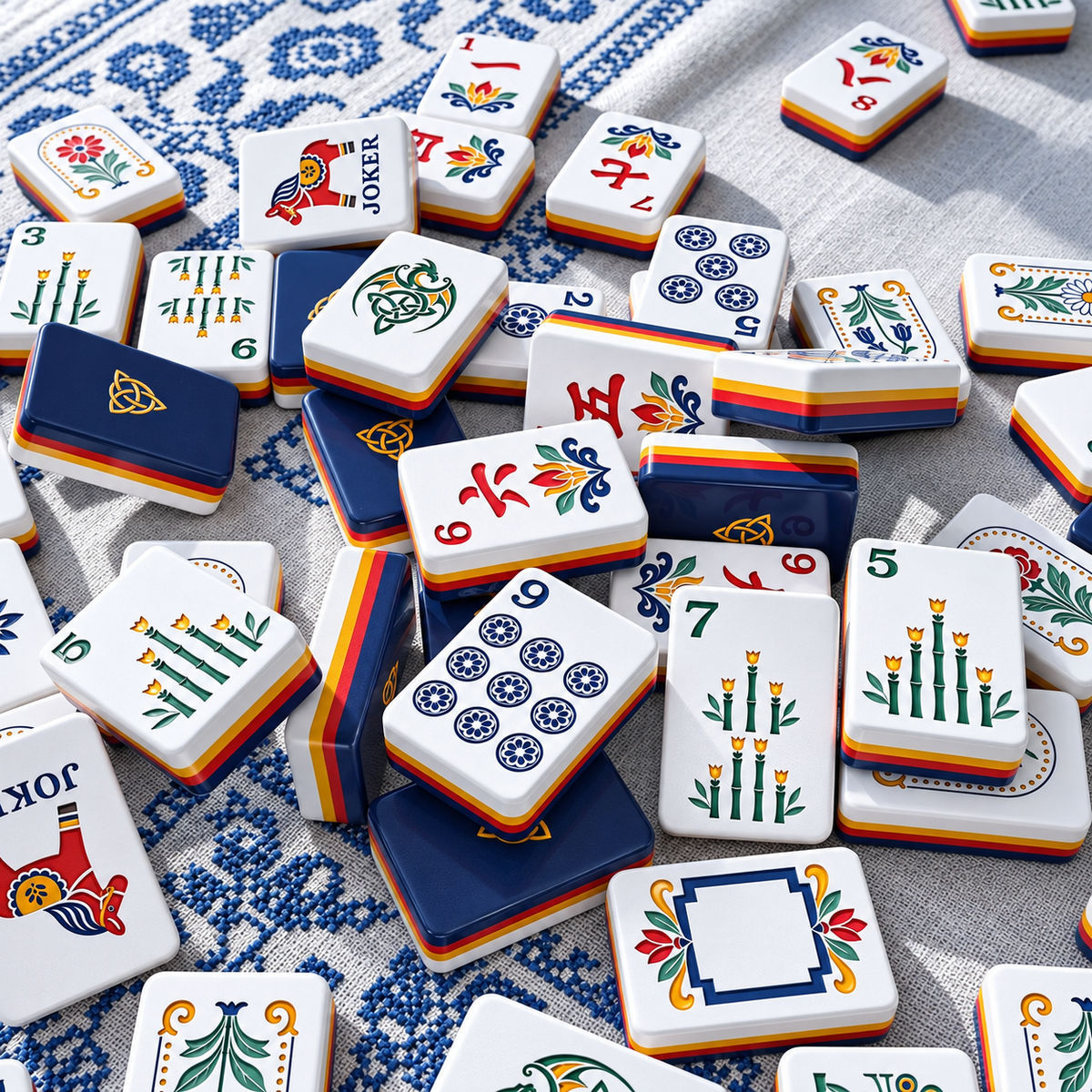
Changsha mahjong apps simulate the rapid, 3-player or 4-player variant played across Hunan province, where hand-building speed and calculated discards matter more than decorative luck. Apps like WeChat Mahjong, Mahjong Soul (featuring Changsha-house rules), and region-specific platforms available via Chinese app stores deliver real-time games with adjustable difficulty. Most run free-to-play with in-app currency optional; you'll spend 20–60 minutes per session. The trade-off: screens never replicate the tile-feel and live reading of physical play that our best-selling sets offer. Beginners benefit from apps to learn speed; regular players use apps to sharpen judgment between sessions, then gather in person for stakes and strategy depth.
What is Changsha mahjong, and why do apps differ from other variants?
Changsha mahjong (长沙麻将) is a fast, honor-driven variant from Hunan province, China. Players typically draw, discard, and form melds—triplets, sequences, honors, and dragons—within minutes per hand. Unlike American mahjong (which uses a yearly card and only specific hands), Changsha favors flexible combinations and speed. Apps capture this acceleration well: hand validation happens instantly, discard timers push pace, and algorithms flag winning odds. The flip side: digital tile-tapping lacks the muscle memory and deliberate observation that live table play builds. Apps teach rules; tables teach instinct.

Which Changsha apps are genuinely accessible to English-reading players?
WeChat Mahjong (available through WeChat's mini-program ecosystem) offers a Changsha mode with simplified English labels on core functions—draw, discard, declare—though rule explanations remain in Mandarin. Mahjong Soul, a free-to-play browser and mobile game, includes a "Changsha" rule set alongside Riichi and Hong Kong variants; its interface is fully localized for English, and tutorials walk you through hand-scoring. Regional apps like QQ Mahjong sometimes feature Changsha tables, though language support varies. For Windows/Mac desktop play, searching "changsha mahjong" on Steam occasionally surfaces fan-made implementations. None are perfect: most rely on Mandarin documentation for edge cases. Honest take: expect a learning curve, and join an online Changsha community (Discord, Reddit's r/mahjong) to clarify rules as you go.
What's the realistic learning timeline, and when should you switch to live play?
Most players grasp basic Changsha rules—triplets, sequences, dragon/flower combos—within 3–5 app sessions (2–3 hours total). Scoring nuance takes weeks of active play. If you're studying for a trip to Changsha or playing with native friends remotely, apps compress practice into tight windows: you can drill specific hand-types and discard discipline in 15-minute bursts. By contrast, live play (with physical tiles and a mailing group or community) teaches observation—reading opponents' hesitations, tracking discards, managing rhythm—that no app fully simulates. Our recommendation: use apps for weeks to internalize hand-logic and speed, then join a weekly in-person group to add judgment and social stakes. Many players keep both: app sessions on commutes, live games on weekends.
How do app scoring systems compare to real Changsha table rules?
Changsha scoring rewards hand complexity and winning type: self-drawn wins (胡) vs. winning on discard (点炮), honors, flowers, and sequences all carry point multipliers. Official rules vary by province and club, so no single "right" version exists. Most apps default to a mid-range Changsha ruleset that awards 1–8x base points depending on hand composition. Real tables often use local tweaks: some count flowers as bonuses, others as mandatory components; some allow "soft" hands (fewer point-requirements), others enforce strict minimums. Takeaway: app scoring teaches hand-value hierarchy, but before you play real money or serious stakes with locals, ask your table for their house rules. Apps are training wheels; live rules win the game.

What equipment do live Changsha players actually need?
Once you've graduated from apps and found a local table or online group, you'll want physical tiles. A standard mahjong set with 152 playing tiles works for Changsha just as it does for American or Hong Kong play, since Changsha uses the same suit-and-honor tile inventory. The key difference: Changsha games move faster, so a mat with clear dividers helps you spot your hand clearly. If you're hosting weekly games, a rack with pushers keeps tiles upright and organized; pushers let players slide tiles without fumbling. A padded bag or case matters if you're traveling to Changsha or shuttling sets between players' homes. Many Mahstead customers hosting Changsha nights choose engraved sets with tile labels in Mandarin or playful English to set the mood and avoid tile-reading delays.
Setup Element | Why It Matters for Changsha | When to Invest |
Tiles (152-tile set) | Speed depends on clarity; worn/unmarked tiles slow you down. | Before first real game. |
Mat | Fast discards and draws need defined spaces; mats prevent tile scatter. | If playing weekly or teaching. |
Racks + pushers | Faster hand-organization; reduces fumbling that disrupts pace. | When hosting ≥2 players regularly. |
Bag/case | Travel to Changsha, meetups, or multi-table events. | If playing outside your home. |
Dice | Determines who draws first each round (standard procedure). | Always; comes with most sets. |
🀄 Shop best-selling mahjong sets →
How do you avoid common mistakes when learning Changsha via apps and live play?
Mistake 1: Confusing Changsha hand-types with American mahjong hands. American mahjong uses only year-card hands; Changsha is freestyle. Apps make this clear, but live players often slip into expecting fixed patterns. Solution: memorize 2–3 winning combos from your house rules, then drill them daily in the app until they feel automatic.
Mistake 2: Ignoring your app's discard-history log. Most Changsha apps show which tiles have been thrown. Many beginners play reactively, discarding randomly instead of tracking live information. After each hand, spend 30 seconds reviewing what left the table; this single habit cuts your losing streaks in half.
Mistake 3: Assuming online-player speed equals app-player speed. Apps auto-validate and speed up turns. Live tables are slower: players debate borderline hands, negotiate flower-placement, recalculate scores by hand. Practicing on an app at high speed then panicking at a real table defeats the purpose. Play a few app rounds at "careful" or slowest-available speed before joining a live group.
Mistake 4: Forgetting that house rules vary wildly. A Changsha app uses its programmed rules; a Changsha table in Changsha city may differ from one in Beijing or Sydney. Before money or serious play, ask upfront: "What hands count? Do flowers reset? Can we go negative?" Write down the answers and play one unpaid round to confirm. Prevents disputes and money conflicts.
What to check before you buy an app or commit to live play.
Language & accessibility. Does the app have English rule explanations or a linked tutorial? If not, can you join a Discord or community channel where English-speakers help translate edge cases?
House-rule clarity. If the app calls itself "Changsha," does it specify which province's rules it follows? If you're playing live, do you know the table's scoring system and hand-minimums before money is on the table?
Pace & difficulty levels. Does the app let you slow down, or force you into tournament-speed play? If you're a beginner, you need time to think; rush-mode apps breed bad habits.
Cost model. Is the app truly free, or does it use aggressive paywalls to unlock better opponents or faster matches? Free-to-play with optional cosmetics is fine; "pay or quit" is not.
Live community fit. If you want to graduate to a real group, have you checked local community centers, cultural associations, or Meetup groups in your area? Many Changsha networks host weekly games open to learners.
🎁 See our most-loved mahjong sets & accessories →

FAQ
Is Changsha mahjong the same as Hong Kong mahjong?
No. Both are Chinese variants, but Changsha is 3–4 player, fast-paced, and emphasizes speed and discard-reading; Hong Kong mahjong is 4-player, slower, and uses a fixed hand-set and different scoring. Apps often list both separately. Confusing them at a live table will cost you credibility and money.
Can I play Changsha apps without a China VPN or Chinese phone number?
WeChat Mahjong requires a WeChat account (easier if you have Chinese residency or a linked payment method, but not impossible internationally). Mahjong Soul needs no regional verification. Regional apps like QQ Mahjong may georestrict. Start with Mahjong Soul; if you want more variety, ask your live Changsha community which apps they use and whether they're accessible outside China.
How long before I'm good enough to play for small stakes?
Most players feel competent—not winning, but not ashamed—after 20–30 hours of app play plus 5–10 live sessions. Competent means you won't repeatedly give money away; it doesn't mean you'll win consistently. Stick to friendly, low-stakes games (under $1 per hand) until you've played 50+ live hands with the same group and learned their styles.
Should I buy an expensive physical mahjong set before I learn on an app?
No. Play the app for at least 2 weeks. If you love the pace and rules, then invest in a quality 152-tile set. A good set will last decades and feels incomparably better than any screen, but buying before you're sure is wasteful. If you fall in love with Changsha, you'll want a set that's durable, easy to read, and a pleasure to shuffle—worth the wait.
Can I use an American mahjong set for Changsha, or do I need a Changsha-specific set?
American and Changsha use identical tiles: three suits (Bams, Craks, Dots 1–9), winds, dragons, flowers, jokers, and blanks. A 152-tile set works for both. The main difference is house rules and hand-sets, not the tiles themselves. One good set covers American, Hong Kong, Changsha, and most other variants.
What's the best way to find a Changsha player group near me?
Search "Changsha mahjong [your city]" on Reddit, Meetup, Discord, or WeChat Moments. Check local Chinese cultural centers, community colleges, and country clubs; many host weekly games open to learners. If nothing exists, post on r/mahjong or a regional subreddit: Changsha communities are smaller than American or Hong Kong, but they're online and welcoming to serious learners. --- ✨ Find your Mahstead set — free US shipping →


View More
View More
View More
