
Bakelite vs Jade Mahjong Tiles: Which Should You Buy?
Last updated: Nov 23, 2026
Bakelite is a hard plastic composite that feels light in hand and produces a crisp clicking sound during play; jade is a heavier natural stone that delivers a muted thud and cooler tactile experience. Bakelite tiles are more durable under frequent play, resistant to chipping when dropped, and require minimal maintenance—a simple wipe keeps them clean. Jade tiles age beautifully with a patina but are prone to hairline fractures and need gentle handling, particularly at the edges where impacts concentrate stress. Both materials work well in American mahjong sets, and your choice depends on whether you prioritize durability and ease of care (bakelite) or aesthetic warmth and traditional feel (jade). From a practical hosting standpoint, bakelite suits weekly casual games; jade suits occasional players who value ritual and don't mind extra caution during the Charleston tile-passing phase. 🀄 Shop best-selling mahjong sets →
What's the real difference in how they feel?
Bakelite tiles weigh roughly 1.5 to 2 grams each and produce a sharp, resonant click when stacked or moved across the mat. Jade tiles average 3 to 4 grams—noticeably heftier—and generate a softer, warmer tone. If you've played tiles made of bone or bamboo, jade feels closer to that traditional weight and dampened sound. Many players prefer bakelite's snappy feedback because it makes tile draws feel faster and discourages fumbling during tight end-game moments. Jade advocates love the slower, meditative pace its weight naturally creates, especially in games where players take time to read the card and think through melds.
The tactile difference is immediate: bakelite feels smooth and slightly waxy; jade feels cooler and can develop a subtle grip-enhancing texture over seasons of play. Neither is objectively better—it's personal preference shaped by how many hours a week you play and whether you value responsive action (bakelite) or contemplative rhythm (jade).

How durable are they under real weekly play?
Bakelite's polymer structure absorbs minor impacts without fracturing. Drop a bakelite tile from shoulder height onto a wood floor and it usually bounces and survives; the same drop can spider-crack jade at a weak point in the stone's grain. Over a season of weekly games, bakelite tiles show minimal wear beyond surface scratches that don't affect gameplay. Jade tiles, handled carefully, also last for years, but edge chips accumulate, especially along the carved numbers or symbols where stress concentrates. A jade set played casually (monthly or less) remains pristine; the same set played weekly shows visible wear within two years.
For tournament or semi-competitive play, bakelite's resilience makes it the practical choice. For a set you'll treasure and play sparingly—say, at holiday gatherings—jade's aesthetic justifies the fragility risk. Storage also matters: bakelite tolerates temperature swings and humidity shifts without damage; jade can develop internal stress fractures if moved between a heated house and a cold car repeatedly during winter.
What's the maintenance and cleaning reality?
Bakelite requires almost no upkeep. A damp microfiber cloth wipes away dust and residue from snack fingers; let tiles air-dry and store them. You'll never need special oils, waxes or sealants. If a tile gets sticky from spilled drink, warm soapy water cleans it instantly, and bakelite won't absorb the moisture.
Jade demands more care. Never soak jade tiles or submerge them in water—the stone can absorb liquid unevenly and develop faint stains or internal stress. Use only a barely damp cloth for spot cleaning, and dry immediately. Some players apply a light mineral oil to jade tiles annually to deepen color and maintain luster, but this step is optional. Avoid placing jade tiles in direct sunlight for extended periods, as UV exposure can slightly fade certain colors. Store jade in a breathable fabric bag, not an airtight container, to prevent moisture trapping.
If you host weekly games and don't want to fuss with post-game tile care, bakelite is the practical answer. If you enjoy ritual and don't mind a brief five-minute wipe-down and light oiling, jade works fine—just commit to the habit.
Aspect | Bakelite | Jade | Best for… |
Weight per tile | 1.5–2 g | 3–4 g | Bakelite: speed; Jade: ritual |
Sound | Sharp click | Soft thud | Bakelite: energetic; Jade: contemplative |
Drop durability | Bounces, survives | Cracks easily | Bakelite: active weekly play |
Edge chipping risk | Rare | Common after 2 years | Bakelite: long-term use |
Cleaning time | 2 minutes | 5 minutes + optional oiling | Bakelite: low maintenance |
Color fade (sun) | Minimal | Possible | Bakelite: storage flexibility |
Water absorption | None | Possible | Bakelite: spill-proof |
Aesthetic aging | Stays uniform | Develops patina | Jade: if you treasure it |
🎁 See our most-loved mahjong sets & accessories →

How do cost and availability compare?
Bakelite is the industry standard for best-selling mahjong sets worldwide. Supply is consistent, production scales easily, and prices remain stable year to year. American mahjong sets in bakelite are widely available from multiple makers in standard configurations.
Jade sets are rarer in American mahjong and often command higher pricing due to hand-carving labor and stone sourcing. Availability fluctuates with international supply chains and artisan production schedules. If you find a jade set you love, stock often sells out faster than bakelite equivalents.
For budget-conscious players building their first set or hosting large casual groups, bakelite offers better value and restocking ease. For collectors or players treating their set as heirloom-quality, the jade premium reflects the material's inherent scarcity and craftsmanship. Check current pricing on the product page for your preferred style—both materials appear in gift sets and custom engraved collections.
What should you check before ordering?
Before committing to either material, verify these specifics:
Tile weight and sound. Ask the seller for a sample tile or video showing how tiles stack and move. This five-second detail shapes 200+ hours of gameplay.
Grip surface. Bakelite can feel slippery when hands are warm or slightly damp; jade offers more natural traction. If you notice you fumble during draws, prioritize grip.
Set completeness. Confirm the set includes all 152 playing tiles plus the 8 jokers required for American mahjong. Spare tiles beyond 152 are extras and don't enter play.
Engraving depth. Deeper carving on either material makes numbers and symbols easier to read during fast-paced games. Shallow engraving can blur under table lighting.
Joker style. Some bakelite sets use jokers with blank faces; others print or engrave them. Blank jokers are versatile (you mark them yourself); printed jokers lock in a color scheme.
Mat and rack compatibility. If you already own a mahjong mat or racks with pushers, confirm the tile size matches. Oversized jade tiles sometimes don't fit standard mat grooves or rack slots.
Storage option. Check whether the set ships in a sturdy case or bag. Jade especially benefits from a protective travel bag to prevent edge chipping during transport.
Real-world hosting scenario
You're hosting your first Wednesday night game at home. You pick bakelite: tiles are light enough to pass quickly through the Charleston, sound crisp enough that distant players hear when someone draws, and stack neatly in a standard rack. If someone spills wine, you wipe the tile in five seconds and keep playing. End of night, everything goes in a simple cloth bag in a closet. Total care time: two minutes.
Your neighbor, meanwhile, bought a jade set for her annual New Year's game. She stores it in a padded case, cleans tiles carefully with a damp cloth immediately after play, and airs it out for an hour before sealing the case. She plays the same set once yearly and cherishes it as ritual. Total care time: 15 minutes spread across the year.
Both approaches work. The difference is frequency and emotional attachment.
✨ Find your Mahstead set — free US shipping →
What to check before you buy
Handle a sample if possible. Weight, sound, and grip feel are personal. What delights one player annoys another.
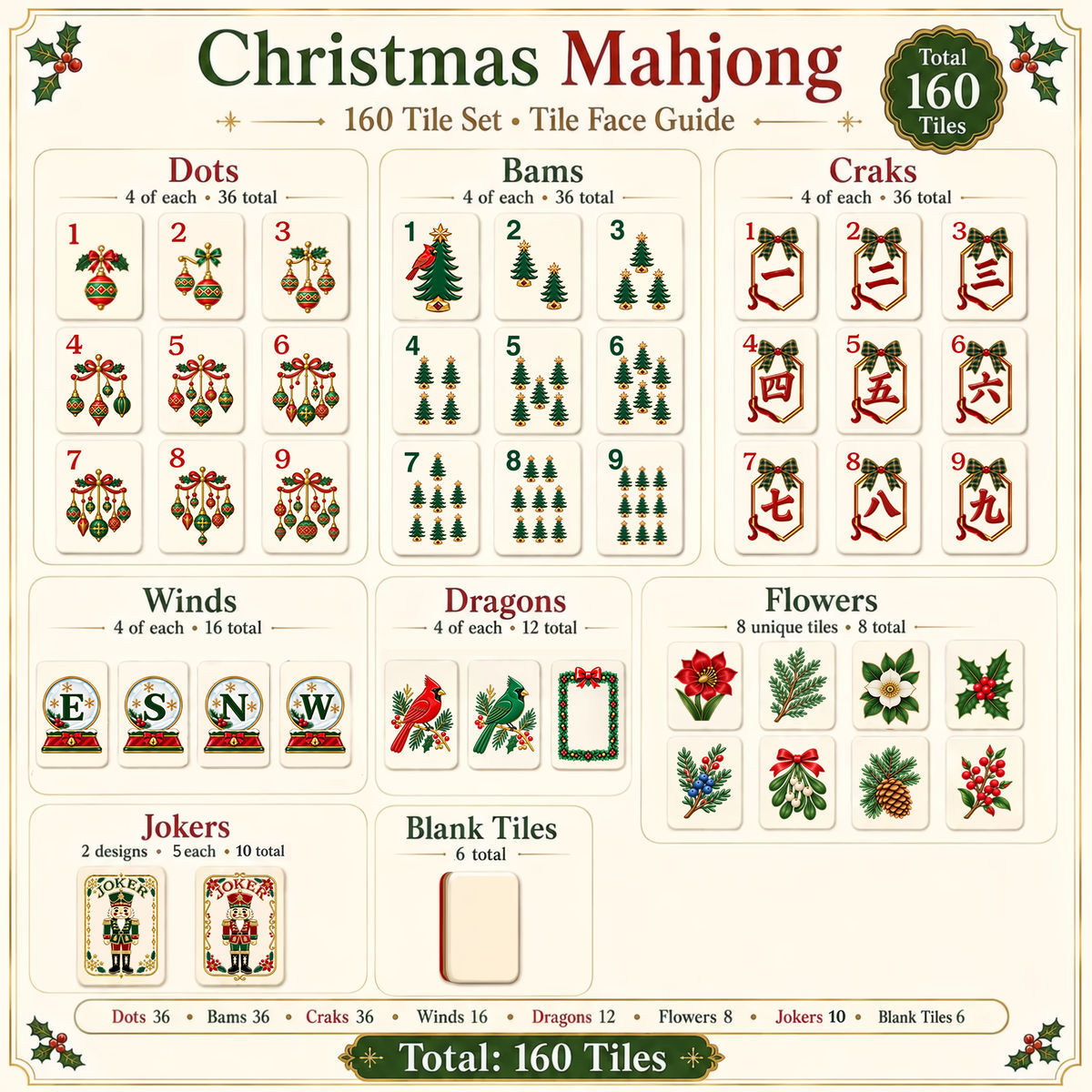
Confirm tile count. 152 playing tiles + 8 jokers = a complete American mahjong set. Anything labeled 160-tile includes spare jokers and/or blanks—never added to play.
Read the joker specification. Blank jokers let you customize; pre-printed jokers lock in a color scheme.
Verify your mat or rack will fit. Tile size variations (by roughly 1/8 inch) affect rack snugness and mat groove compatibility.
Check the case or bag. Bakelite needs basic protection; jade benefits from padding.
Ask about return or exchange policy. Not all retailers honor material-preference swaps—clarify before ordering.
Factor in storage environment. Bakelite tolerates garage or attic swings; jade prefers a climate-controlled closet.

FAQ
Is bakelite more durable than jade for travel?
Yes. Bakelite absorbs jolts and temperature swings without internal stress; jade can crack from pressure or humidity changes during transit. Always use a padded bag for jade if traveling.
Can you use bakelite and jade tiles in the same set during a game?
No. Mixing materials creates auditory and tactile inconsistency—players lose the rhythm cues they rely on for smooth, fast play. Keep sets uniform by material.
Do jade tiles smell or off-gas like plastic?
Jade is inert stone—no smell. Bakelite may have a faint chemical scent when new, which dissipates within days of opening. Neither affects gameplay or health.
How can I tell if a jade tile is cracked before I buy?
Inspect under bright light for hairline fractures, especially at edges. Ask the seller for a close-up photo of each tile or a video showing tiles stacked. Trust your eyes.
What happens if I accidentally soak a jade tile in water?
It absorbs moisture and may develop a faint discoloration or internal stress. Dry it immediately with a soft cloth and let it air out for 24 hours before storage. Minor soaking rarely causes permanent damage if dried quickly.
Are bakelite tiles loud enough to hear across a large room during play?
Yes. Bakelite's sharp click travels well and provides clear audio feedback. Jade's muted thud works fine in smaller groups but may be harder to hear in noisy settings.
Can engraved bakelite sets be customized with names or dates?
Yes. Engraved American mahjong sets in bakelite accept deep carving without structural risk. Jade can be engraved but requires more careful depth control to avoid fracturing.


View More
View More
View More
