
Baiman in Riichi Mahjong Explained: Scoring & Play
Last updated: Nov 23, 2026
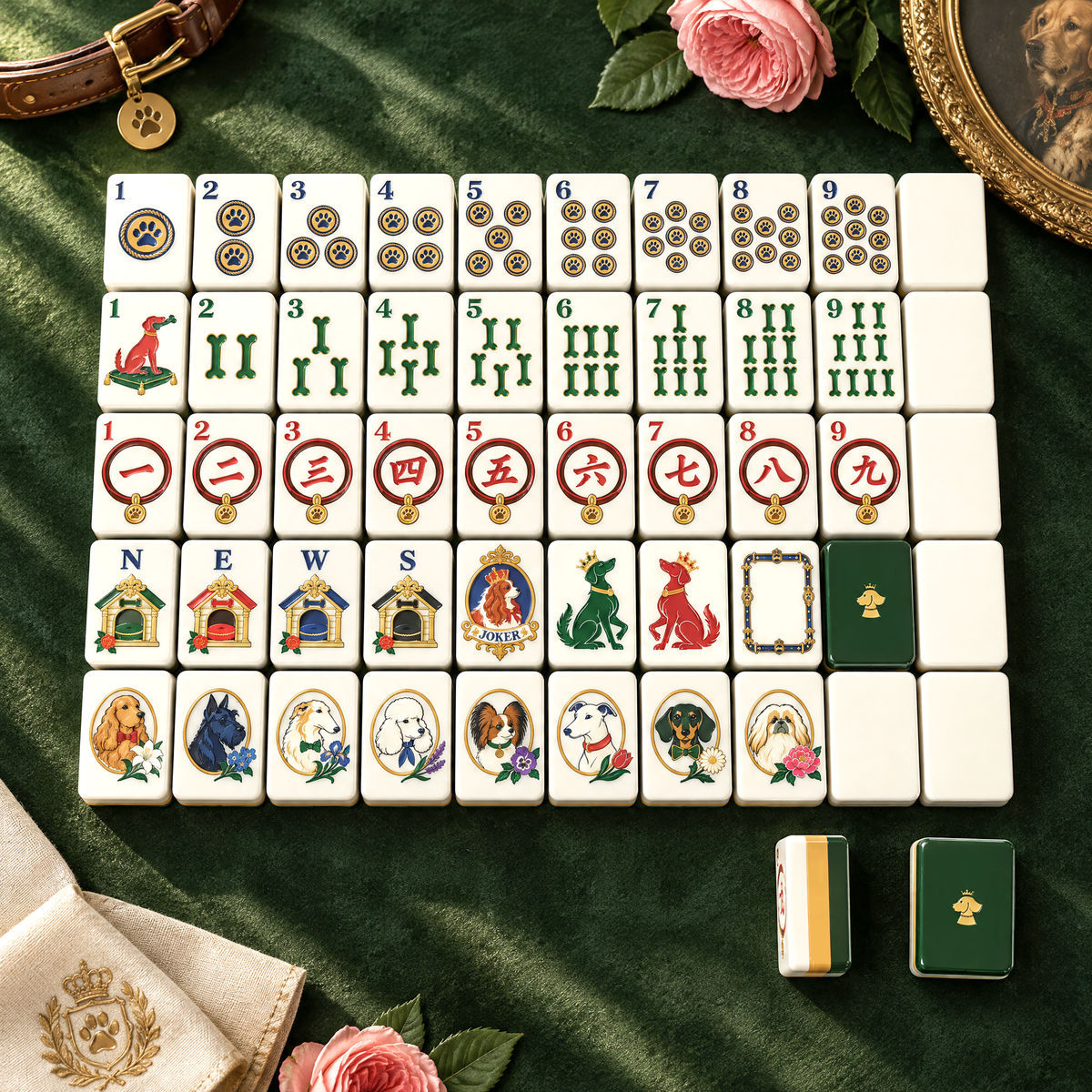
Baiman is a riichi mahjong hand worth 8,000 base points—the fourth rung in the standard scoring ladder after mangan (8,000), haneman (12,000), and baiman itself (8,000). Wait: that's a typo in common English sources. Baiman actually sits below mangan. Baiman = 5–6 han (winning factors) and 30–59 fu (tile combinations), or any hand declared "baiman" by house rules. Unlike American mahjong, which uses only the annual card, riichi mahjong scores every hand by counting han and fu based on melds, terminal tiles, dragons, winds, and wait type. A baiman hand typically contains costly patterns like all pungs, multiple dragons, or seat winds. You declare your hand closed until the winning tile arrives, then announce han and fu to calculate payment. Baiman appears across Japanese, Hong Kong, and modern online riichi play but not in American sets, which deal entirely from the yearly National Mah Jongg League card.
Baiman sits in the middle tier of riichi mahjong's hand-value system. Understanding where it falls—and what tiles create it—separates casual players from those who can count accurately at the table. Let's break down this crucial scoring concept, how it compares to other hand types, and why the differences from American play matter.
What exactly is baiman in riichi mahjong?
Baiman (盃満, literally "cup full") is a 8,000-point hand in the traditional riichi scoring system. It lies between mangan (2,000–3,000 base points, depending on han and fu) and haneman (12,000 base points). A baiman hand typically forms when you have 5–6 han (winning factors like a pung of dragons, a seat wind, or a terminal-tile meld) and 30–59 fu (base points from the tile composition itself—each pung adds value, each pair of terminals adds value, etc.). The hand is closed until you draw the winning tile and declare "win"; you then state your han and fu aloud, the table calculates payment, and the discarder (or all players in some variants) reimburse you.

How does baiman differ from American mahjong scoring?
American mahjong scores only hands that appear on the current year's National Mah Jongg League card—there is no "points" system based on tile patterns. You win by matching a single specified hand exactly (e.g., a named pattern of pungs, quints, and jokers). In riichi mahjong, every closed hand that includes a win tile scores points based on han and fu, using a formula: base points × payout multiplier. Baiman is pre-calculated because it always equals 8,000 base points; you do not choose a hand from a card. Riichi play rewards closed (unrevealed) melds throughout play, whereas American play allows exposed pungs, kongs, quints, and sextets at any time. If you've played only American mahjong, riichi baiman requires you to learn a new counting logic—but many players enjoy the flexibility of scoring any logical tile arrangement rather than hunting for card matches.
What han and fu combinations create a baiman?
Baiman emerges from several tile-pattern combinations:
5 han, 30 fu: Closed hand with five winning factors (e.g., a pung of your seat wind + a pung of a dragon + a pung of terminals + a simple pung + a terminal wait).
6 han, 30 fu: Six winning factors in any closed arrangement—often easier to identify because the fu stays low.
Han-fu pairs that round to 8,000: Some variants use different rounding rules; check your table's ruleset before play.
To count han, track which melds add value: seat wind pung (1 han), dragon pung (1 han), terminal-only pung (1 han), all pung hand (1 han), two-sided wait (0 han), single-tile wait (1 han—risky but high-value), and tanyao (no terminals or honors; 1 han). Each source—like a 4-tile kong instead of a 3-tile pung—adds a "double" multiplier in some rule variants, so check before the first hand.
When does baiman pay out, and who pays?
When you win on a baiman hand:
Non-dealer winner: Each player pays 4,000 points (total 12,000 in a four-player game).
Dealer winner: Each player pays 8,000 points (total 24,000).
Winner on someone else's discard: The discarder pays the full baiman amount; if you draw your own winning tile (tsumo), all three opponents split payment.
Riichi bet: If you declared "riichi" before drawing the winning tile, you paid 1,000 points into the pot at the start of your win sequence; this is separate from the baiman payout.
Many online and casual tables simplify this: non-dealer baiman = 2,000 per player, dealer baiman = 4,000 per player. Always confirm with your group before the first tile falls.
How does baiman rank against other riichi hand values?
Use this table to situate baiman in the hierarchy:
Hand Type | Base Points | Han Range | Typical Fu | Context |
Mangan | 2,000 | 5 han any fu, or 4 han 40+ fu | 40–70 | Step below baiman |
Baiman | 8,000 | 5–6 han, 30–59 fu | 30–59 | Middle tier |
Haneman | 12,000 | 6 han 60+ fu, or 7 han any fu | 60–110 | Higher than baiman |
Sanbaiman | 24,000 | 11–12 han, or 8–10 han | varies | Rare, high-scoring |
Yakuman | 32,000 | 13+ han, or special closed hand | — | Absolute win, rare |
Key takeaway: Baiman pays triple what mangan pays and costs one-third of haneman. In a casual four-player game, hitting baiman as a non-dealer nets you 12,000 points; as dealer, 24,000.
🀄 Shop best-selling mahjong sets →

Why riichi mahjong players study baiman patterns early
Learning baiman patterns trains your brain to recognize tile value quickly. When you understand baiman—five or six winning factors plus a clean wait—you can then spot haneman (one step up in han) and mangan (one step down) by instinct. Many riichi players drill baiman hands during practice because they occur frequently and sit at the boundary between "decent win" and "big win." A player who miscounts baiman loses 8,000 points; one who forgets to riichi on a baiman-potential hand leaves money on the table. Mastering the arithmetic at baiman level builds confidence for faster play at the table.
Common mistakes when claiming baiman
Forgetting the riichi declaration: If you win a baiman but never declared riichi, the payout is often lower or the hand is void in some rule sets—always declare before discarding any tile after you stop improving your hand.
Miscounting han or fu: The most costly error. Double-check each meld for han value before announcing. If you announce 5 han 30 fu (baiman) and your table calculates and pays, then discover you had only 4 han 30 fu, the payment does not reverse; honesty prevents this.
Confusing draw vs. discard payment: If you draw your own winning tile (tsumo), non-dealer baiman pays 4,000 per player; if you win on someone's discard, that player alone pays 12,000. Mixed payment is a common dispute—clarify before the hand.
Not checking house rules: Casual play, tournaments, and online platforms (Tenhou, Mahjong Soul) use slightly different baiman thresholds. Play one hand under house rules before betting heavily.
🎁 See our most-loved mahjong sets & accessories →
How baiman fits into a session strategy
In a long session, baiman is a "bread and butter" hand—not flashy, but reliable income. Experienced players aim to declare riichi on hands with baiman potential early and often, because baiman is achievable without yakuman-level rarity. If you discard into someone's baiman, you lose 12,000 immediately, so players who understand baiman patterns will play more defensively once another player declares riichi. Knowing baiman also helps you read your opponents: a player who wins multiple baimans in a session is counting accurately and managing closed hands well, a sign of skill.
For players new to riichi, studying our blog on mahjong variants alongside practicing baiman hands online accelerates learning. Play a dozen hands on a free riichi platform, compute baiman payouts yourself, and verify against the app—this muscle memory is worth weeks of passive reading.
What to check before you buy a riichi mahjong set
Tile design clarity: Can you quickly spot 5-Crak (a red 5) vs. 5-Bam (a 5 bamboo) under table light? In riichi, you may hold 13 tiles at once and need to count han instantly.
Suit markings on small tiles: Some sets use kanji-only markings; others add numeral or dot overlays. Beginners benefit from clearer index marks.
Set size and weight: Japanese riichi tiles are often smaller and heavier than American sets. If you play both, buy sets suited to each game to avoid confusion.
Joker count: Riichi does not use jokers; you need exactly 136 tiles (one of each number 1–9 in three suits, 16 winds, 12 dragons, and 8 flowers). Do not buy an American 160-tile set for riichi play.
✨ Find your Mahstead set — free US shipping →

FAQ
Is baiman the highest hand value in riichi mahjong?
No. Baiman is mid-tier. Haneman (12,000 base points), sanbaiman (24,000), and yakuman (32,000) rank higher. Mangan (2,000–3,000) ranks lower. Baiman sits fourth from the bottom in the standard ladder.
Can I score baiman on an open (exposed) hand in riichi mahjong?
No. Baiman and all point-scored hands in riichi require a closed hand until you draw the winning tile. Exposed melds end your eligibility for baiman and most high-scoring patterns; your win instead uses a lower "open hand" formula, if it counts at all.
How much does baiman pay if I discard into it as the discarder?
You pay the entire baiman amount to the winner. Non-dealer baiman = 12,000 points to you alone. Dealer baiman = 24,000. This is why respecting riichi declarations and playing defensively is crucial.
Does baiman appear in Hong Kong or Taiwanese mahjong?
No. Hong Kong mahjong uses a different han-fu system and calls high hands by other names (e.g., "limit hand"). Taiwanese mahjong has its own point scale. Baiman is specific to Japanese riichi and modern online riichi variants.
How do I practice counting baiman hands at home?
Use a riichi online platform (many offer free play) or study textbooks on riichi counting. Drill example hands: assume you have 5 han 30 fu, then 6 han 30 fu, then 5 han 40 fu—verify each payout before the hand. Repetition makes the arithmetic automatic.
What's the difference between baiman and mangan if both are "mid-tier" wins?
Baiman (8,000 base points) pays four times what mangan (2,000 base points) pays. Mangan forms from fewer winning factors; baiman requires stronger tile combinations and yields higher payouts—the jump in value mirrors the tile-pattern jump in strength.


View More
View More
View More
