
Automatic Mahjong Table Buying Guide: What to Know Before You Buy
Last updated: Nov 23, 2026
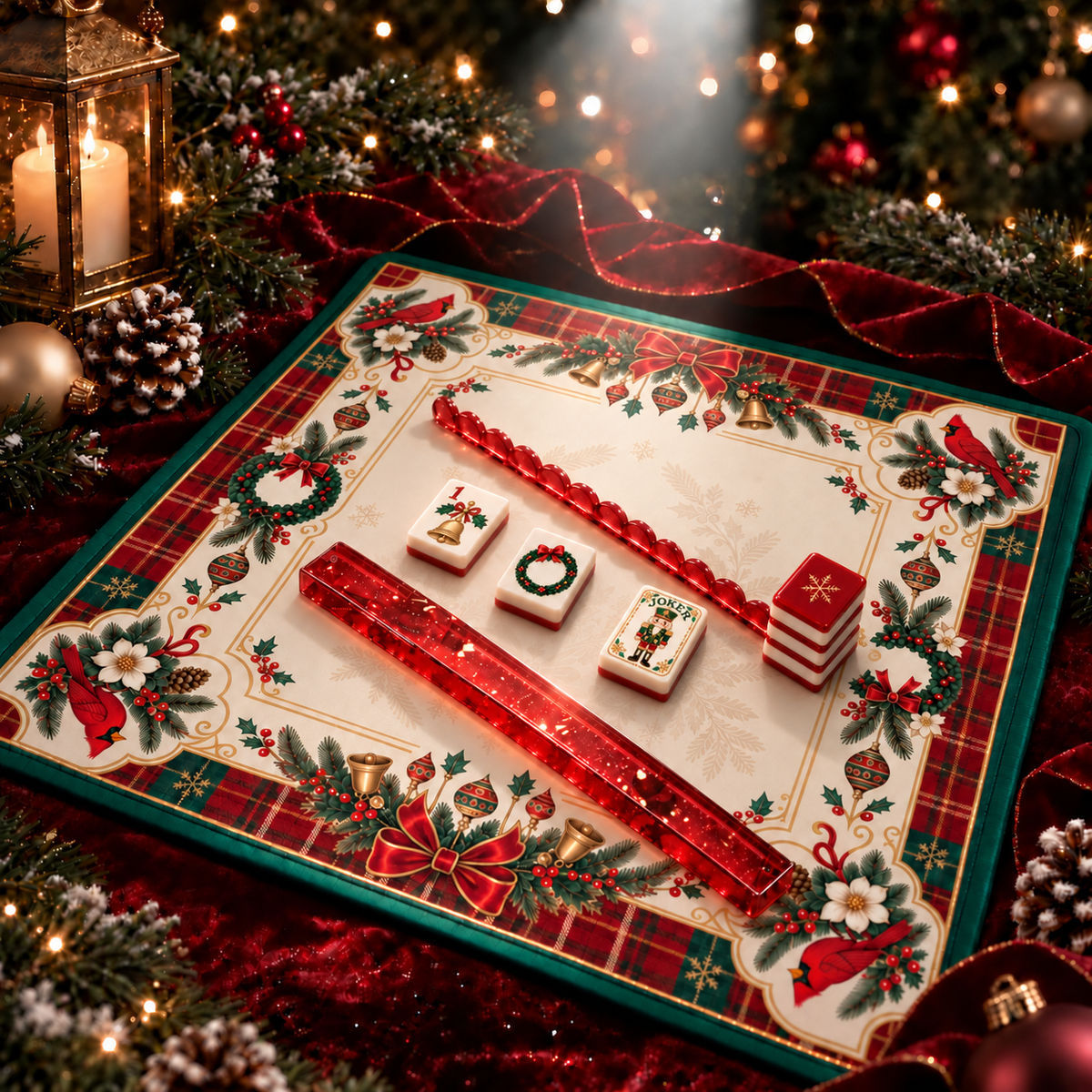
An automatic mahjong table is a motorized shuffler and dealer that handles tile mixing and distribution—useful if you host frequent games or have mobility concerns. Most models require 220-240V power, take 30–60 seconds per shuffle cycle, and cost significantly more than a traditional setup. They shuffle all 152 tiles, deal hands, and sometimes rotate the dealer seat automatically. However, they add weight (often 60+ pounds), need dedicated space, require maintenance, and change the rhythm of play—some players find the silence between rounds less social. For American home games, a quality non-motorized mat paired with engraved American mahjong sets and hand-shuffled tiles remains the standard; automatic tables appeal mainly to clubs, tournaments, or players with physical limitations. Before ordering, confirm voltage compatibility, warranty terms, and whether spare parts are available locally.
An automatic mahjong table shuffles and deals tiles by motor instead of by hand—a genuine convenience for frequent players, but not a requirement for enjoying the game. We host weekly games and rarely feel pressure to automate; the Charleston and shuffle are built into the social rhythm. That said, if you have arthritis, host daily tournaments, or manage a club where speed matters, automation can be a real asset.
What exactly does an automatic mahjong table do?
An automatic table holds all 152 playing tiles plus the 8 jokers in a motorized bin, tumbles them, and then mechanically dispenses 13 tiles to each of the four players and the remainder into a wall. Most models also rotate the dealer button and can be set to auto-cycle between rounds. Unlike a hand shuffle, which takes a minute or two of conversation and repositioning, an automatic shuffle is quick and uniform—no debate about whether tiles are truly mixed. Some models include electronic score displays or voice callouts, though these vary widely by manufacturer.
Who actually needs an automatic table, and who doesn't?
Player type | Automatic table fit | Why or why not ---|---|--- Home casual player (1–2 games/week) | No | Hand shuffle is faster to set up; a good mat works perfectly Small club or group (meets 2–3×/week) | Maybe | Helps if players have mobility issues or you want consistent shuffle speed Tournament host or high-volume club | Yes | Speeds play, reduces dealer fatigue, ensures uniform dealing over dozens of rounds Solo/duo home player | No | Many automatics require all four seats; hand shuffle is flexible Player recovering from injury | Yes | Motor does repetitive work; keeps game accessible during rehab
The honest truth: automation is a luxury, not a necessity. We've played for decades with a good mat and never felt we were missing out. But if you're running a club five nights a week, or your hand strength is limited, an automatic table eliminates a real pain point.
🀄 Shop best-selling mahjong sets →
What should you check before ordering an automatic table?
Before committing to an automatic table, verify five critical details:
Voltage and power: Most overseas models need 220–240V; US homes are 110–120V. Confirm your home electrical capacity or whether a step-down transformer is needed and safe.
Tile compatibility: Some tables are designed for a specific tile size (often Chinese or Japanese standards, not always American 1⅜" × 1⅛" tiles). Measure your tiles against the machine's specs or ask the seller for a compatibility chart.
Warranty and service: Check who repairs it if the motor fails or a dispenser clogs. Is the manufacturer local, or will you wait weeks for parts? Some brands have no US warranty at all.
Footprint and weight: Automatics are 48–60" wide, 48–60" deep, and often weigh 60–150+ pounds. Confirm your table space, and plan for delivery logistics (many require white-glove service or multiple people to unbox).
Noise and aesthetics: Motors can be loud during the shuffle cycle—a drawback if you live in an apartment or want a quieter social experience. Some models are sleek; others look industrial.
Ask the seller directly about these five points. If they deflect or are vague, move on to another brand.
How does an automatic table compare to a traditional mat setup?
A traditional setup—a quality mat, hand shuffles, and a set of engraved American mahjong tiles—costs a fraction of an automatic table and requires no electricity or maintenance. The shuffle is part of the game's tempo; many players find the tactile, social ritual essential to why they play. You can fold a mat and store it; an automatic table stays put. Hand shuffles also adapt to varying player counts (you can play with fewer tiles in a 2–3 player game; automatics often struggle with non-four-player variants).
Automatic tables do eliminate hand fatigue, ensure identical shuffle patterns every round, and appeal if you're running high-volume games or have accessibility needs. They also appeal to players who want a casino-like experience. But they're louder, heavier, more expensive, and lock you into a single footprint.
If you love the ritual and don't have mobility or volume constraints, stick with a mat. If you're running a club or have a physical limitation, an automatic table can be worthwhile—just go in with realistic expectations about cost, space, and maintenance.
🎁 See our most-loved mahjong sets & accessories →
What does maintenance look like?
Automatic tables require regular cleaning and occasional repairs. Tile dust accumulates in the shuffle bin and dispenser chutes; clogged chutes can jam the motor or misalign tiles. Most owners vacuum the interior quarterly and wipe tiles monthly. If a tile gets stuck, you may need to partially disassemble the chute system to retrieve it—minor annoyance, but a reality.
Motor brushes wear out over time and may need replacement after 5–10 years of heavy use. Gears can slip if tilted or bumped. Repair costs vary, but expect to budget 10–15% of the table's original cost annually if you're using it daily. If you're using it once a week in a home setting, maintenance is minimal; clubs that run daily games will feel the wear sooner.
We recommend keeping a spare tile set on hand in case the table damages one during shuffle—a far cheaper swap than a table repair. Our collection of replacement tiles and spares can support that.
What's the real difference between entry-level and premium automatic tables?
Entry-level automatics (if you're considering one) often have noisier motors, slower shuffle cycles, and plastic chutes that wear faster. They may not rotate the dealer button or have game-length flexibility. Premium models are quieter, shuffle faster, have metal components, offer more dealer and scoring options, and sometimes include felt or wood finishes that blend into a room decor.
However, no automatic table is "invisible"—they're all a presence. The premium feature set appeals most to clubs or venues where the table is the centerpiece, not a casual home addition. For a home player, entry-level and premium both do the job; the premium version is just louder and easier to use over time.
Neither entry-level nor premium automatic tables work well if you're a casual four-game-per-year player. For that audience, a quality mahjong mat from our collection paired with a standard tile set is the smarter choice.
✨ Find your Mahstead set — free US shipping →
Final decision: automatic table or not?
Ask yourself these three questions:
Do I play 3+ times per week, or manage a club? If no, a mat is fine. If yes, automation saves real time and fatigue over a year.
Do I have mobility or hand-strength limits that make shuffling painful? If yes, automation is worth the cost. If no, it's optional.
Do I have 50+ square feet of dedicated, climate-controlled space and reliable 220V power? If no, don't buy an automatic table. Setup will frustrate you.
If you answered no to all three, buy a best-selling mahjong set with a good mat and enjoy years of hand-shuffled games. If you answered yes to two or more, research specific models from reputable dealers in your region, ask for references from other club owners, and demand a trial period or return policy.
FAQ
Can I use American mahjong tiles in an automatic table?
Yes, if the table is designed for your tile size (typically 1⅜" × 1⅛" for American standards). Before buying, confirm with the seller that the chutes and shuffle bin are calibrated for American tiles; some imported tables assume Chinese tiles and may misalign or jam.
Do automatic tables work for 2 or 3 player mahjong?
Most do not—they're engineered for four players and a full 152-tile wall. If you play variants like 2 or 3 player mahjong, an automatic table will be awkward or unusable. Stick with a traditional mat and hand shuffles for non-standard player counts.
How often do automatic table motors fail?
In home use (1–2 games per week), motors typically last 8–15 years with minimal maintenance. In club use (daily play), expect motor wear after 5–7 years. Repair or replacement costs depend on the brand; ask the seller upfront for a service contact and estimated repair fee.
Are automatic tables louder than I expect?
Yes, for most people. The shuffle cycle is audible—a motorized rumble and clicking for 30–60 seconds. If you're in an apartment or value a quiet game, this matters. Visit a club or venue with the specific model running before you buy.
What's the best way to clean an automatic table?
Vacuum the shuffle bin and tile chutes monthly (a shop-vac works best). Wipe tiles with a dry microfiber cloth to remove dust. Never use water or solvents inside the motor housing. Check the manual for maintenance intervals specific to your model.
Can I move an automatic table to a different room?
Technically yes, but it's heavy and cumbersome. Most buyers set an automatic table in one location and leave it there. If you think you might relocate, ask the seller about disassembly and reassembly costs, or stick with a portable mat setup instead.


View More
View More
View More
