
American vs. Vietnamese Mahjong: Key Rule Differences
Last updated: Nov 23, 2026
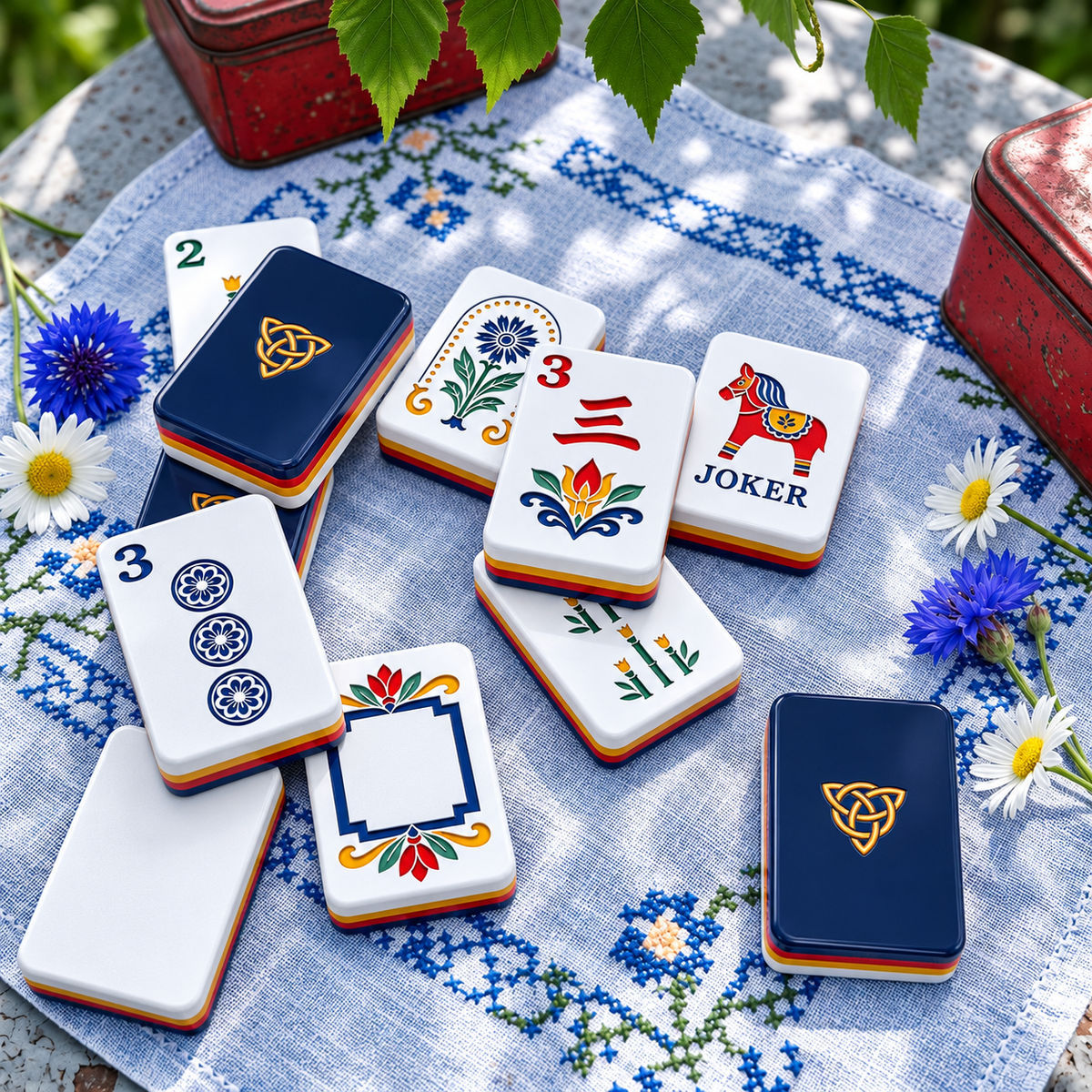
American mahjong uses 152 tiles in four suits (Bams, Craks, Dots, Winds, Dragons, Flowers, Jokers) and requires hands drawn from the current year's National Mah Jongg League card. Vietnamese mahjong, influenced by Chinese variants, typically uses 144 tiles, allows chows (sequences like 1-2-3), permits calling and exposing melds freely, and does not require a reference card—players memorize hand patterns instead. American play emphasizes the Charleston (tile-passing ritual) and joker substitution strategy; Vietnamese play is faster, less formal, and centers on speed and memory. Both are four-player games, but American mahjong's framework makes it distinct as a localized, standardized system taught through leagues and annual cards.
How many tiles does each variant use?
American mahjong uses exactly 152 tiles: three suits (Bams, Craks, Dots) numbered 1–9 with four copies each, plus 16 Winds, 12 Dragons, 8 Flowers, and 8 Jokers. Vietnamese mahjong uses 144 tiles—eliminating the Flowers and using fewer Jokers, which speeds up the game and reduces shuffling time. That four-tile difference affects draw rates: American players hold more tiles mid-game and have more options for substitution. Vietnamese games move faster because fewer jokers mean fewer ways to "fix" a weak hand on the fly.

What's the biggest rule difference: sequences vs. exposures?
American mahjong forbids chows (1-2-3 sequences). You can only expose pungs (three identical tiles), kongs (four), quints (five), and sextets (six). Vietnamese mahjong allows chows and treats them the same as pungs—you can call them from the discard and expose them on the table. This single rule spawns hundreds of different winning hand patterns in Vietnamese play versus the standardized hands listed on the American card. American players study the annual card; Vietnamese players memorize combinatorial logic and react in real time.
Do you need a reference card to play?
American mahjong absolutely requires the current year's National Mah Jongg League card. Every legal winning hand comes directly from that card; hands not on the card are not valid, even if they seem logical. This standardization lets new players join consistently and lets leagues run tournaments fairly. Vietnamese mahjong has no card. Players learn hand types by category (all Pungs, Honor-and-Knitted, Dragons, etc.) and recall them during play. Beginners struggle more with Vietnamese mahjong because the rule set is unwritten and learned by example, not from a printed reference. American mahjong feels rigid but is easier to learn; Vietnamese mahjong feels fluid but demands memory work.
How does the Charleston ritual differ?
American mahjong begins with the Charleston—a mandatory four-phase tile-passing ceremony where each player passes three tiles to the left, then three to the right, then three across, then takes three from the right. This ritual sets the tone: methodical, strategic, social. Vietnamese mahjong typically skips the Charleston or uses a simpler draw system. The Charleston is uniquely American and has no direct equivalent in Vietnamese play. It forces players to think ahead before the wall is even opened and makes the opening a social cornerstone of the game. Many Americans love the Charleston; many Vietnamese players find it unnecessary.
What about joker and wild tile rules?
American mahjong treats jokers as wild tiles that substitute for any other tile in an exposed meld or in your concealed hand. Jokers can never form a single tile by themselves or make a pair. This constraint forces strategic choices: do you use your joker now or save it for a draw later? Vietnamese mahjong also uses wild tiles, but the rules around them vary by region and household—some allow them in pairs, some don't allow them in honor tiles, some treat them more loosely. American rules are codified and uniform; Vietnamese rules are flexible and negotiated before play begins. If you're hosting American mahjong players, clarity matters: write down your joker rule before the game starts.
Aspect | American | Vietnamese |
Total tiles | 152 | 144 |
Sequences (chows) | Not allowed | Allowed |
Reference card | Required (annual) | None |
Charleston | Mandatory | Rarely used |
Joker in pairs | Never | Varies by house rule |
Hand memorization | Medium (use card) | High (memorize all) |
Game pace | Moderate | Fast |
Strategic depth | Card mastery | Pattern recognition |
Beginner friendliness | High (card guides) | Medium (steep learning) |

Why did these variants split?
American mahjong standardized in the 1920s–1930s when Chinese immigrants taught the game to American society women. The National Mah Jongg League formed to create consistent rules and sell annual cards, turning mahjong into an American pastime. Vietnamese mahjong evolved separately, rooted in Chinese regional variants (often called "Cantonese" or "Fujian" styles), and retained chows, faster play, and reliance on player knowledge rather than printed guidance. Geographic and cultural separation meant each variant optimized for its audience: American mahjong became a social hobby for organized clubs; Vietnamese mahjong remained a family and street game emphasizing speed and improvisational rule-making. Understanding this history helps you see why American and Vietnamese mahjong feel so different—they were designed for different social contexts.
🀄 Shop best-selling mahjong sets →
Can you learn both?
Yes, but expect a learning curve. The fundamentals—tile recognition, the four-player structure, pung/kong formation—transfer immediately. What doesn't transfer: hand validation (card vs. memory), strategic timing (Charleston vs. draw speed), and joker flexibility. Many players in multicultural neighborhoods play both: American mahjong with one friend group and Vietnamese mahjong with family. The best approach is to pick one and master it first, then layer the other. Start with American if you want structure; start with Vietnamese if you want speed and pattern memory. If you're hosting mixed groups, run separate games or agree on one rule set in advance.
Which should you teach a beginner?
American mahjong suits beginners because the card does the work for you. You don't memorize hundreds of hand patterns—you consult the card. This lowers the barrier to entry. Vietnamese mahjong suits players who want to develop intuition and memory. There's no crutch; you learn by playing repeatedly and internalizing patterns. For a true beginner in a North American context, American mahjong is the practical choice. You can teach them in one session and play the next day. Vietnamese mahjong requires weeks of pattern drills before they can play independently. If you're starting a game group, choose American to grow your player base faster.
🎁 See our most-loved mahjong sets & accessories →
What to check before you buy a set for cross-variant play
If you're planning to host both American and Vietnamese players, confirm your set has at least 152 clear, large tiles (so both groups can read easily). American play demands the standard 152-tile count; Vietnamese can use a set with 160 tiles and simply remove the extras before play. Check that Bams, Craks, and Dots are clearly differentiated by color and symbol—not just number—since Vietnamese players may reference tiles faster. Confirm jokers are distinct and countable. Consider a high-contrast mat designed for both daylight and evening play, since Vietnamese games often happen in home kitchens or outdoors. Engraved American sets are built to American League specs but work fine for Vietnamese play once you understand the rule differences. Don't assume a set marketed as "mahjong" is suitable for both—read the tile count and ask whether it follows American or Chinese standards.
✨ Find your Mahstead set — free US shipping →

FAQ
Can I use an American mahjong set to play Vietnamese mahjong?
Yes. Vietnamese mahjong can use 144 or 160 tiles; an American set has 152, so you'll have a few extra. Remove or ignore the extra tiles. The tile designs are identical, so no conversion needed. The rule changes are conceptual, not physical.
Is Vietnamese mahjong easier because it has fewer tiles?
No. Fewer tiles mean a tighter game, but the lack of a reference card makes it harder for beginners. You must memorize hand patterns. American mahjong feels rigid but is easier to learn because the card is your guide.
Do Vietnamese players use a Charleston?
Rarely. Vietnamese play typically uses a simpler draw method to start faster. The Charleston is an American ritual. If you're teaching Vietnamese players, skip it unless they ask.
Can I play American mahjong rules but skip the Charleston?
Not officially. The Charleston is part of the American standardized game. You can house-rule it away for speed, but you're no longer playing strict American mahjong as defined by the National Mah Jongg League.
Which variant is more popular in the US?
American mahjong dominates among organized clubs and leagues in North America. Vietnamese mahjong thrives in Vietnamese-American communities and multicultural neighborhoods. American mahjong is easier to find in books and classes.
Do joker rules differ between the two?
American rules are strict: jokers are wild, never in pairs, never as a single tile. Vietnamese rules vary by household and region—some games allow joker pairs, others don't. Agree on joker rules before play in Vietnamese games.


View More
View More
View More
