
American Mahjong vs Hong Kong Mahjong: Rules & Key Differences
Last updated: Nov 23, 2026
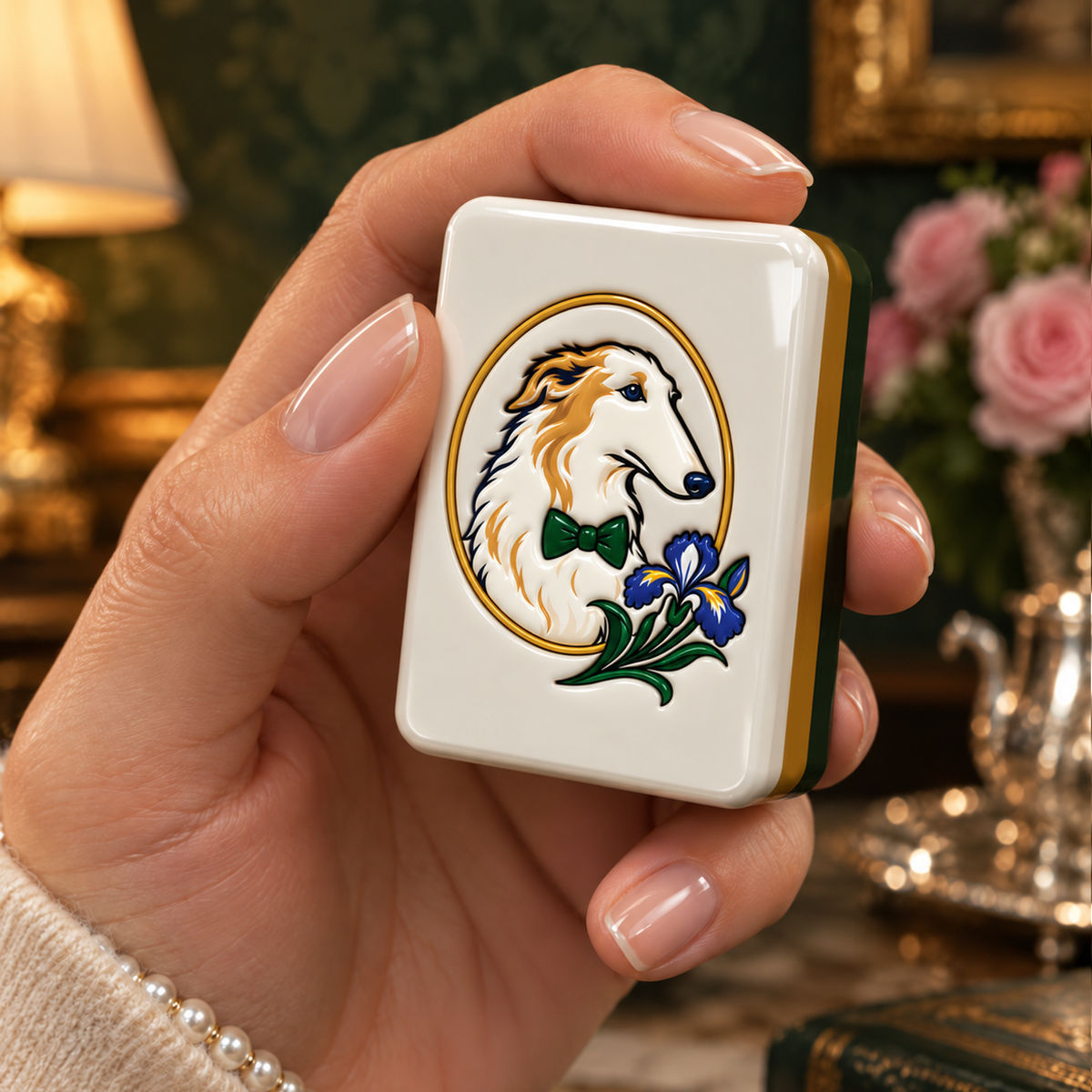
American mahjong uses 152 tiles (108 in three numbered suits, plus winds, dragons, flowers, and jokers) and draws hands only from the current year's National Mah Jongg League card—a printed sheet of legal combinations issued each spring. Hong Kong mahjong uses a smaller tile set (usually 136 tiles with no flowers or jokers) and allows players to form melds on the fly using any three or four identical tiles, or sequences like 1-2-3 of the same suit, without consulting a fixed hand list. American players cannot call or expose sequences; they expose only pungs (three identical), kongs (four identical), and special multi-tile melds. Hong Kong players can call and expose both sequences (chows) and pungs. Scoring also differs sharply: American mahjong awards points based on complexity and pattern rarity marked on the card; Hong Kong mahjong calculates points through a system of "fans" (multiples) and "base points." If you play in a Dallas-area club or with friends who learned at a table in Hong Kong or mainland China, the rule set will determine which best-selling sets and mats suit your play.
What tiles does each variant actually use?
American mahjong requires exactly 152 tiles: 108 in three suits (Bams, Craks, Dots—each numbered 1–9 with four copies), 16 winds (four each: North, East, West, South), 12 dragons (four Red, four Green, four White), eight flowers, and eight jokers. Hong Kong mahjong typically uses 136 tiles: the same three numbered suits and winds, plus dragons—but no flowers or jokers. Some Hong Kong variants add a fifth tile per suit (like an extra honor), but the core Hong Kong set omits jokers entirely, which fundamentally changes meld-calling and replacement strategy. This tile-count difference means you cannot simply swap an American set into a Hong Kong game, or vice versa. American sets sold today (including ours) contain 160 tiles—the 152 playing tiles plus spare tiles for backups—so you have a full game ready to play without hunting for lost pieces.
🀄 Shop best-selling mahjong sets →

How do winning hands work differently?
In American mahjong, every legal hand must appear on the current year's National Mah Jongg League card. Players cannot invent combinations; they must match a pattern exactly, including the number of concealed tiles, the location of exposed melds, and the suit or honor mix. A hand like "two pungs of winds, one pung of Craks, one kong, and a pair" is not valid unless that precise pattern is marked on the card. Hong Kong mahjong has no printed reference card. Instead, players form hands using an open set of rules: you need a winning pair plus four melds, where each meld is either three identical tiles (pung), three consecutive tiles of one suit (chow), or four identical tiles (kong). You call your hand immediately when you can complete it, and scoring depends on the "fans" you've collected—bonuses for all honors, all terminals, mixed suit melds, and other combinations built during play. American players study the card before the game; Hong Kong players memorize hand patterns and scoring multipliers. This means an American player sitting at a Hong Kong table will feel lost because there is no card to consult mid-game.
Can you call sequences in both games?
No. This is one of the clearest dividing lines. American mahjong forbids exposing sequences (called "chows" in other variants). You may expose pungs (three of the same tile), kongs (four of the same tile), and multi-tile special melds like quints or sextets—but never a run like Red 5–Green 6–White 7 of the same suit. Jokers cannot be used in a single tile or a pair, only within exposed multi-tile melds. Hong Kong mahjong requires sequences. A valid Hong Kong hand must include at least one chow (three consecutive tiles of a single suit), and players frequently call and expose chows during play. If you are used to Hong Kong rules, the American ban on sequences will feel restrictive at first; you must rethink hand patterns entirely. Conversely, if you learned American mahjong first, Hong Kong's reliance on sequences and the freedom to form hands without a printed list may feel chaotic. The absence of sequences in American play is why the National Mah Jongg League card lists so many exotic patterns—the game compensates for the structural constraint by rewarding unusual tile combinations.
What's the real scoring difference?
American mahjong assigns points based on hand complexity and rarity on the card. Simpler, more common patterns earn fewer points (typically 20–30); rare or difficult combinations earn more (40–60+). Bonus points come from going out "concealed" (without calling a single meld), drawing the winning tile from the wall (called winning "from the wall"), or winning on the first discard of the game ("a chicken hand"). The card lists the exact point value for each hand. Hong Kong mahjong uses a fan-based system where points stack. Base points are typically low (2–4), but fans multiply the payout: all honors pays one fan, a dragon pung pays one fan, a terminal pung pays one fan, mixed suit melds pay one fan each, going out concealed pays one extra fan, and many other bonuses exist. A hand with two fans might pay double the base; one with four fans pays quadruple. This means a single Hong Kong hand can vary in value depending on which bonuses apply, while an American hand has a fixed value printed on the card. American scoring is deterministic; Hong Kong is combinatorial. If you play casually for pride rather than money, the difference matters less; if you track winnings, American's fixed values are easier to tally.

How do the passing rituals differ?
American mahjong begins with the Charleston—a ritual tile-passing ceremony before any melds are exposed. Players pass three tiles to the right, three to the left, and three across. Then, optionally, players pass one tile to the right again. This randomizes starting racks significantly and is part of the game's social rhythm. Hong Kong mahjong typically has no formal Charleston; players draw tiles directly from the wall. Some casual Hong Kong games include a quick pass, but it is not standardized across clubs the way the Charleston is in American play. The Charleston also serves a practical purpose: it gives American players a moment to assess the card and make early strategic choices about which hands to pursue. Without it, American mahjong would feel rushed. Hong Kong's faster start reflects the fact that players are forming hands on the fly rather than hunting for a specific pattern on a printed list.
Aspect | American Mahjong | Hong Kong Mahjong | Why It Matters |
Tile Count | 152 (+ 8 jokers) | 136 (no jokers) | Affects meld-calling and replacement strategy |
Sequences Allowed? | No | Yes | American players cannot expose runs; hand patterns are fundamentally different |
Hand Reference | Fixed: current-year card | Memorized rules | American is deterministic; Hong Kong is improvisational |
Scoring | Points per hand on card | Fans (multipliers) | American is predictable; Hong Kong rewards bonus combos |
Opening Ritual | Charleston (pass 3 tiles) | Straight wall draw | American has social pacing; Hong Kong is quicker |
Best For | Groups who enjoy pattern-hunting | Players who love real-time strategy | American suits casual clubs; Hong Kong suits experienced competitive players |
Which variant should you actually learn first?
If you are brand new to mahjong, American is easier to start. The National Mah Jongg League card removes guesswork about what constitutes a legal hand; you hunt for patterns rather than memorize 50+ hand templates. You also have eight jokers to help you complete melds, which softens early mistakes. The Charleston adds a social, ritual element that many players treasure. American games also run longer (typically 45–90 minutes for four players), giving you time to adjust. Hong Kong mahjong rewards deep pattern knowledge and fast decision-making; it is better suited to players who have played casually for months or who grew up watching family members play. If you are teaching someone your first time, American with a printed card is more forgiving. If you are joining a longtime Hong Kong table, expect a steep learning curve—the game moves faster, and there is no card to anchor you. Many players enjoy both. A Dallas player might learn American at a country club on Thursday and Hong Kong with cousins on Sunday. Both are legitimate; neither is "better." Your choice depends on your community and how much time you want to invest in rules study before your first game.
🎁 See our most-loved mahjong sets & accessories →
What to check before you buy an American set
If you decide American mahjong is your game, you need a set with exactly 152 playing tiles plus jokers. All Mahstead 160-tile sets contain the full American complement. Verify the tile count on the product page; some sets sold elsewhere claim American rules but may lack the correct joker count or include blanks that belong only in Hong Kong sets. Check that tiles are readable (font size matters if you wear glasses or play at distance). Make sure the set comes with a sturdy carrying case—American sets get heavy, and tiles can chip during transport. If you are buying for a gift, consider a mat; American games benefit from a defined play surface, and a good mat with a center pocket for the card makes pattern-hunting easier. Avoid sets with painted designs that flake off; acrylic is more durable than bone or bamboo, especially for weekly play. And confirm the set includes a current or recent year's National Mah Jongg League card, or that you know how to order one separately—the card is non-negotiable.
✨ Find your Mahstead set — free US shipping →
Why the gear matters: a practical comparison
American and Hong Kong players need different support gear. American players benefit from a mahjong mat with a card pocket, which keeps the current year's hand list visible without cluttering the table. Hong Kong players typically use a simpler mat or felt surface and rely on memory, so a card pocket is less critical. American sets are heavier (8 jokers, flowers, and larger tile counts), so a well-padded travel bag is a practical investment if you move your set between homes or to a club. Hong Kong sets are lighter and more compact, so a smaller case suffices. American players often use racks with pushers to manage the larger starting hand and melds more cleanly; racks with pushers are optional but beloved by American regulars. Hong Kong players use them less frequently. If you are building a set for the first time and unsure which variant you'll play long-term, buy American—the 160-tile set is more versatile and the mat-with-card-pocket setup accommodates both casual learning and regular club play.

FAQ
Can I play Hong Kong mahjong with an American set?
No. American sets include jokers and flowers that Hong Kong mahjong does not use, and the tile counts do not match. You would have surplus tiles and no way to form standard Hong Kong hands. Use a 136-tile set designed for Hong Kong play.
Do I need the current year's National Mah Jongg League card to play American mahjong?
Yes. The card is the rulebook; without it, you cannot verify which hands are legal. You can order the card directly from the League each spring, or many sets come with one included.
Is Hong Kong mahjong harder than American?
They are different, not ranked by difficulty. American requires pattern-hunting and card study; Hong Kong requires memorizing hand templates and scoring fans. Most players find whichever they learned first easier.
Can I use jokers in Hong Kong mahjong?
No. Hong Kong mahjong has no jokers. If jokers appear in a set labeled "Hong Kong," that set is a hybrid or mislabeled, and you should check the actual rules your club uses before buying.
How do I know which variant my local club plays?
Ask before you join. Community centers, libraries, and synagogues often host American mahjong groups, especially in cities with large Chinese diaspora communities. Country clubs and recreational centers lean American. Ask whether they use a printed card and whether sequences are allowed; if yes to the card and no to sequences, it is American.
What if I want to learn both?
Start with American; the card makes it beginner-friendly. Once you are comfortable, join a Hong Kong group and ask a patient regular to mentor you through a few hands. Many experienced players know both and enjoy switching between them.


View More
View More
View More
