
American Mahjong Set Dimensions: Standard Tile Size & Layout
Last updated: Nov 23, 2026
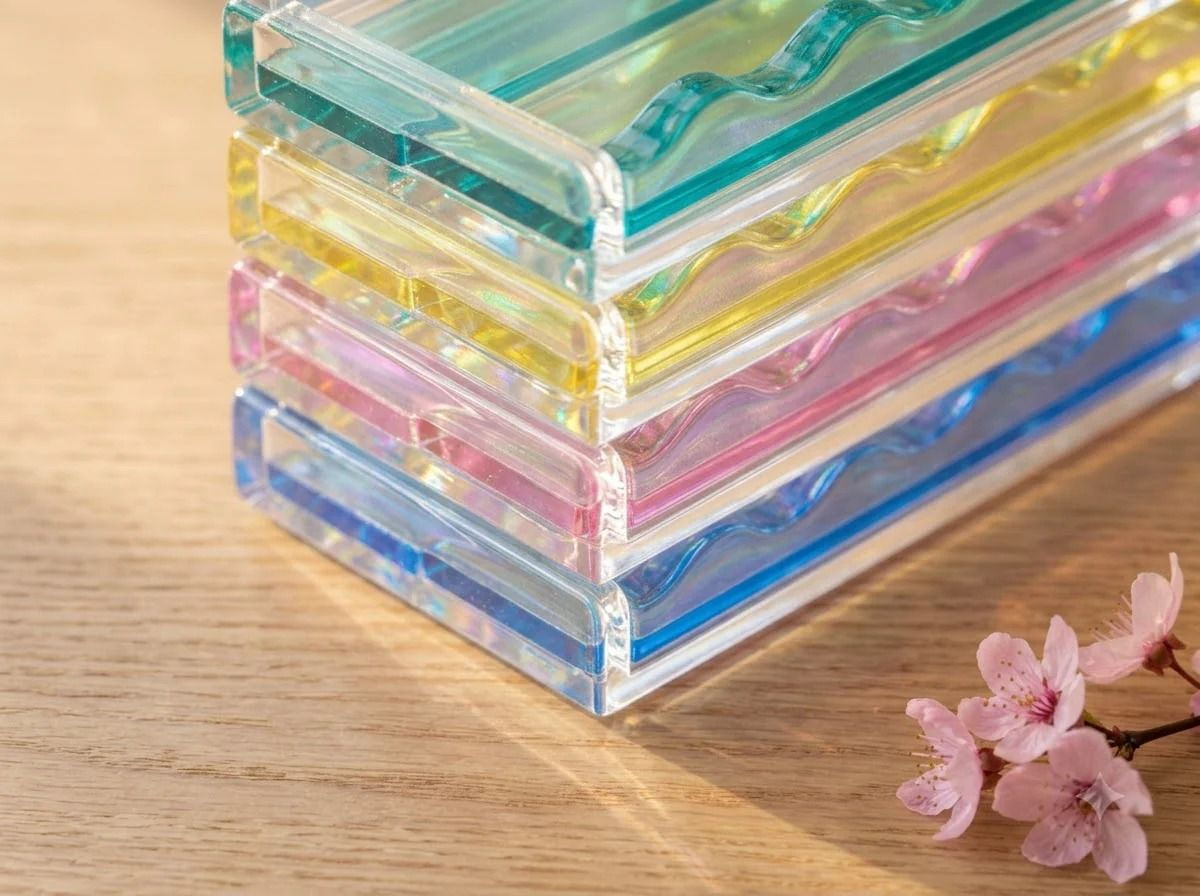
An American mahjong set contains 160 tiles total—152 tiles used in play plus 8 spare jokers. Individual tiles are roughly 1¼ inches (32 mm) long, ⅞ inch (22 mm) wide, and about ⅜ inch (10 mm) thick, designed to fit comfortably in a player's hand and stack neatly in a rack. The full set includes three suits (Bams, Craks, Dots numbered 1–9), 16 winds, 12 dragons, 8 flowers, and 8 jokers. Most players arrange tiles in four 13-tile hands per player, plus a 14-tile draw pile, laid out on a mat or table. At Mahstead we craft our sets from acrylic with clear lettering so every tile reads quickly under game lighting, and we ship sets ready to play across the US for free.
We host weekly mahjong games, and one question always comes up from players ordering their first set: "Will these tiles actually fit my hands, my mat, my racks?" Let's break down every dimension that matters—and save you the frustration of receiving tiles that don't work with your table setup.
How big is a single American mahjong tile?
American mahjong tiles are standardized at approximately 1¼ inches long by ⅞ inch wide by ⅜ inch thick. This is the industry norm for acrylic sets and ensures compatibility with racks, mats with tile pockets, and the National Mah Jongg League card layout. If you've ever held dominoes or Scrabble tiles, American mahjong tiles are slightly larger and thicker—designed to feel substantial in your hand during a 2–3 hour game. The weight and heft matter; lighter tiles slide too easily on felt mats when players bump the table. Our acrylic tiles are laser-engraved with suit symbols and numbers on both faces, so readability never depends on holding them at a perfect angle.
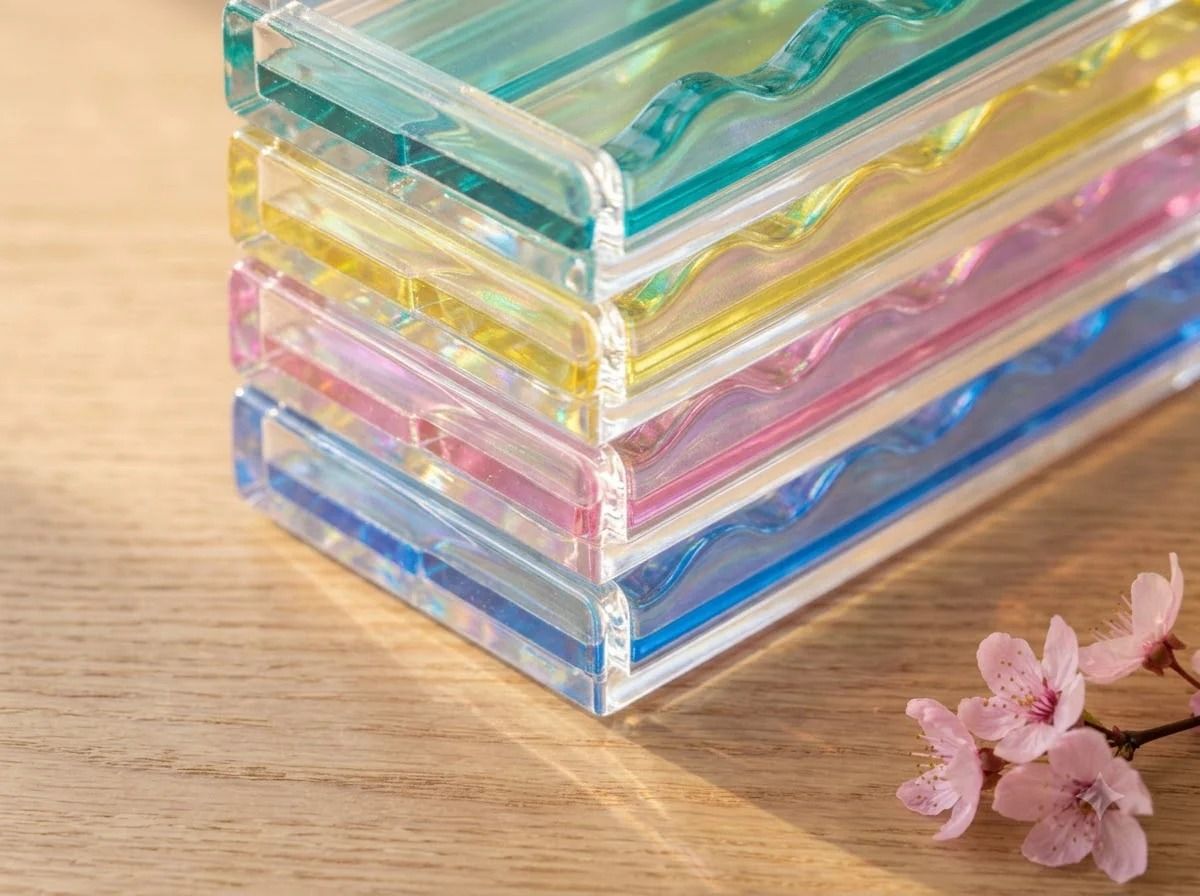
What is the total floor space needed for a complete game?
A standard mahjong mat measures roughly 27 inches × 27 inches (some are 28" × 28"), giving each of the four players about 6–7 square inches of personal space plus a central 9" × 9" area for the draw pile and discard area. The mat accommodates four racks (one per player), each about 10 inches long when closed, plus the central wall of tiles. If you're playing on a bare table without a mat, plan for a 3-foot × 3-foot minimum; cramped space leads to knocked-over racks and misdiscards. We recommend a dedicated mahjong mat because the raised tile pockets and non-slip backing prevent the chaos that happens on a slippery dining table—the felt catches tile edges and keeps them in place during the shuffle.
🀄 Shop best-selling mahjong sets →
How many tiles fit in a standard rack with pusher?
A typical mahjong rack holds 13 tiles standing upright, spaced to accommodate the 1¼" length and ⅞" width of American tiles. When fully loaded, a rack is about 10–11 inches wide, 2–3 inches tall, and 1 inch deep. Most racks also include a pusher—a small wedge that sits behind the pile to help you advance tiles forward one at a time as you draw and discard. This small tool is essential; without it, fishing a tile out from the back of your rack during rapid play is clumsy and telegraphs your next move to sharp opponents. Our racks with pushers are sized for American tiles and include the pusher integrated into the design so there's no separate piece to lose between games.
What's the difference between a 160-tile set and what you actually play with?
Every American mahjong game uses exactly 152 tiles—the same in every game, every variant. The 160-tile format includes 8 extra tiles (typically spare jokers) in case one is lost or damaged. Those 8 spares never enter the game; they stay in the box or a drawer. The 152 playing tiles break down as: 108 numbered tiles (Bams, Craks, Dots in four copies each from 1–9), 16 winds (four each of North, East, West, South), 12 dragons (four Red, four Green, four White), 8 flowers, and 8 jokers. Weight and durability matter most here—cheap plastic tiles chip or warp after a few seasons of weekly play. We use injection-molded acrylic that resists warping and stays true year after year, even in Dallas humidity.

How do dimensions affect game speed and comfort?
Larger tiles (the standard 1¼") are easier to grip, shuffle, and read under dim game-room lighting—factors that slow down careless play and reduce misdeals. Smaller tiles (sometimes found in travel sets) speed up the physical pace but increase hand fatigue and misdiscards. Player comfort during a 3-hour game is not trivial; if your fingers cramp or you're squinting at tile faces, you lose focus and make costly errors. The height of your racks also matters: racks that angle the tiles at 35–45 degrees (instead of standing them dead upright) reduce neck strain and improve your sightline across the table. This is why racks with pushers designed for American play feel more ergonomic than improvised holders or credit-card stands that some newer players try.
Dimension | Standard US Acrylic | Why It Matters |
Tile length | 1¼ inches (32 mm) | Fits standard racks & mats; hand-friendly |
Tile width | ⅞ inch (22 mm) | Allows four suits to line up; no spillage |
Tile thickness | ⅜ inch (10 mm) | Weight prevents sliding on felt; feels premium |
Rack length | 10–11 inches closed | Holds 13 tiles; fits on a mat's player area |
Mat area | 27" × 27" typical | Seats four comfortably; 3' × 3' minimum on bare table |
Game tiles used | 152 of 160 | Rest are spares; 8 extra jokers never played |
🎁 See our most-loved mahjong sets & accessories →
What to check before you buy
Acrylic vs. plastic: Acrylic tiles (our standard) are thicker, clearer, and last 10+ years of weekly play. Lighter plastic tiles feel cheap and warp after a year or two in warm climates.
Engraving legibility: Check that suit symbols and numbers are laser-etched into both faces of each tile, not glued labels. Labels peel off; engraving is permanent.
Rack compatibility: Confirm your racks are designed for 1¼" × ⅞" American tiles, not smaller Chinese export sizes. Mismatched racks mean your tiles won't stand upright.
Bag capacity: A standard mahjong bag holds the set, racks, dice, and a mat if folded. Measure your set's box before ordering a travel case; some bags are snug fits.
Mat pockets: If you buy a mat, ensure its tile pockets are sized for standard American tiles. Too-loose pockets let tiles tumble during shuffles; too-tight pockets damage tile corners.
A common mistake: ordering a set and racks separately without checking dimensions. If your racks were made for smaller tiles, your new set won't fit. Before checkout, confirm your entire setup—set, racks, mat, bag—will work together. Many players we know ordered beautiful engraved sets only to discover their old racks from 1995 were sized for Taiwanese tiles and wouldn't hold American ones.
Browse our best-selling collection for sets paired with racks, mats, and bags already sized for one another, eliminating guesswork.
Why tile size affects reading the mahjong card
The National Mah Jongg League card is refreshed every spring, and it contains every valid winning hand for that year's season. Smaller tiles make card-reading harder because you're referencing a printed card while glancing at tiny tile faces in low light. A few seconds of squinting or misreading a pung pattern costs a hand or an entire game. Standard 1¼" tiles let you quickly match a Dot or Bam or Crak to your hand without leaning forward. This is especially true if you wear bifocals or play in a room lit only by overhead fixtures (common at clubs and synagogues). We designed our acrylic tiles with clear, large suit symbols and bold numbers specifically so older players and anyone with vision challenges can play confidently.
✨ Find your Mahstead set — free US shipping →
When you're hosting: space and setup checklist
Table height: 28–30 inches (standard dining). Too low = back pain for all-day tournaments; too high = arm fatigue.
Surrounding clearance: 2 feet on all sides for players to stand, stretch, and move comfortably between games.
Lighting: Overhead + a lamp pointed at the mat. Shadows make it hard to read tile faces during rapid play.
Mat placement: Center of the table, with each player's rack zone roughly equidistant from the center. Uneven spacing leads to reach fatigue.
Spare tiles storage: Keep your 8 extra jokers in a small pouch or the set's original box, not loose on the mat. Loose spares get confused with discards and ruin a game.
Racks setup: Pre-angle each rack at 45 degrees before players arrive. Upright racks are harder on the neck; angled racks feel more professional.
FAQ
Can I use a smaller or larger American mahjong set?
No. American mahjong tiles are standardized at 1¼" × ⅞" to work with League-legal mats, racks, and cards. Smaller tiles break compatibility with standard racks; larger tiles won't fit mat pockets. Always buy 160-tile American sets, not 144- or 166-tile export variants.
How much counter or shelf space do I need to store a complete set?
A standard set box measures roughly 10" × 8" × 4". If you also store a mat (folded into thirds, about 9" × 27" × ½"), a rack, and a bag, budget 2 linear feet of shelf space. A dedicated cabinet or closet shelf is ideal; a hall closet works well.
Do my racks have to match my tiles exactly?
Yes. American-standard racks (10–11 inches long, spaced for 1¼" tiles) are not interchangeable with smaller racks designed for Chinese or compact sets. Mismatched racks mean tiles won't stand, will tip, or will fit too loosely. Always confirm your rack specifications match your tile dimensions before purchasing separately.
What is the weight of a full American mahjong set?
A 160-tile acrylic set typically weighs 3–4 pounds. Add a mat (1–2 lbs), racks (½ lb), and a travel bag (½ lb), and you're carrying about 5–7 pounds total. This is why travel bags with shoulder straps or handles are worth the investment if you move your set between homes or to a club weekly.
Can I use a mahjong set on a regular dining table without a mat?
Technically yes, but not ideally. Bare wood or laminate is slippery; tiles slide when you bump the table, and shuffling is chaotic. A mat's non-slip backing and raised tile pockets keep tiles stable and organized. If budget is tight, a plain felt table cover works better than nothing, though it won't guide tile placement like a designed mat does.
Are there different tile sizes for Chinese, Hong Kong, or Riichi mahjong?
Yes. Chinese and Riichi tiles are typically smaller (about 1 inch long) and stack differently. American mahjong tiles are unique—1¼" × ⅞"—because the rules and card layout were designed in the 1920s for that specific size. Never mix tile sets or racks across variants; American sets only work with American game rules and equipment.


View More
View More
View More
