
American Mahjong Hand Examples: Reading the Card
Last updated: Nov 23, 2026
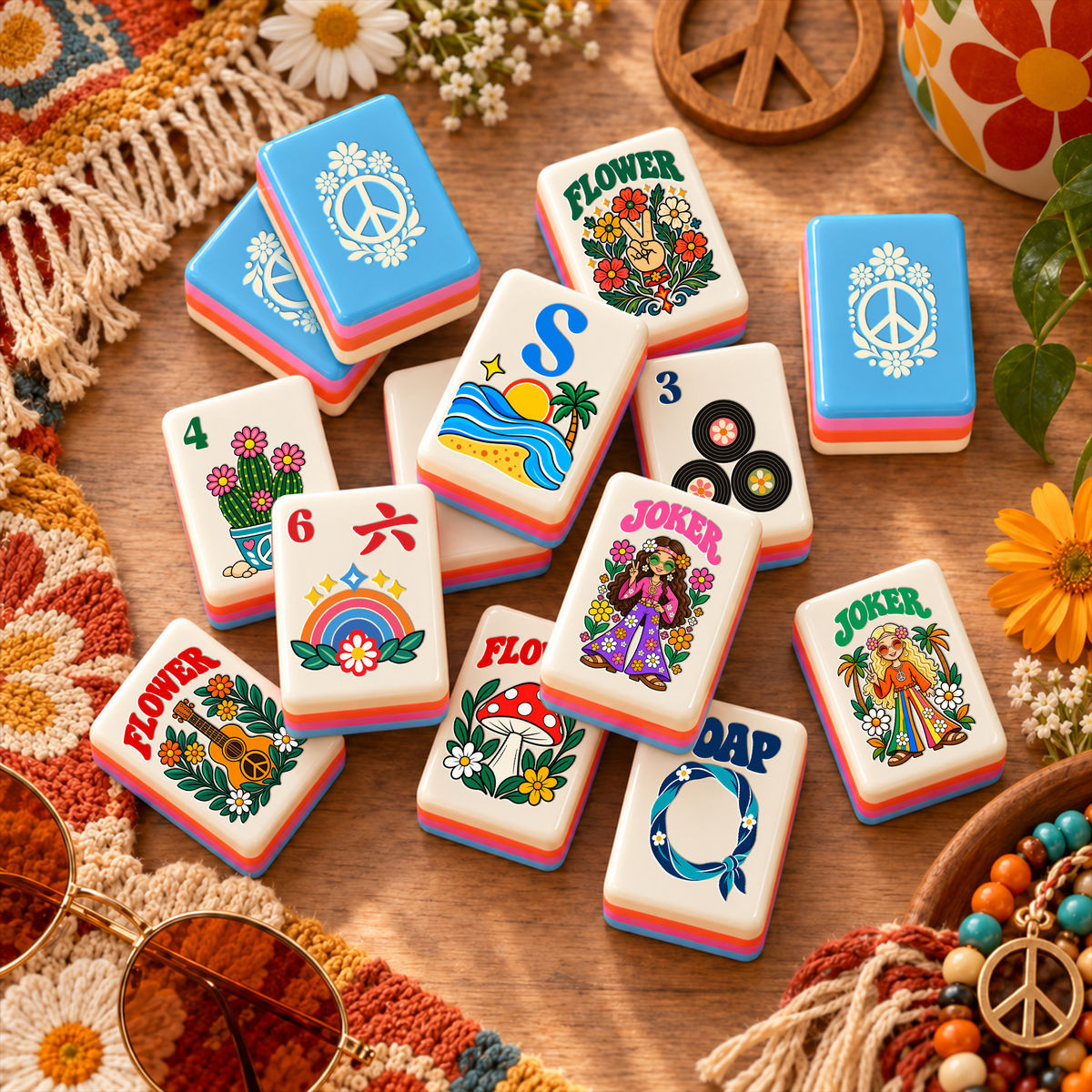
American mahjong hands are patterns of tiles you assemble to match a hand printed on the current National Mah Jongg League card (issued each spring). Every legal hand uses exactly 14 tiles: one pair (2 identical tiles) plus four sets of three (pungs), four (kongs), five (quints), or six (sextets) identical tiles. You cannot call or expose chows (sequences like 1–2–3). Jokers can substitute for any tile except a pair or a single tile. Hands vary by section on the card—some require all one suit, others mix Bams, Craks, and Dots with Winds or Dragons. A game uses 152 tiles from a standard set; at Mahstead we sell best-selling sets with 160 tiles total (152 playing + spares) so your group always has backup tiles ready.
What does "hand from the card" actually mean?
The card is your rulebook and menu combined. Every legal winning hand must exist on the current year's card—you cannot invent a hand or use one from last year's card. The card organizes hands into sections by tile type (Winds only, Dragons only, mixed suits, like-number patterns). Each section shows a photograph or diagram of the 14-tile formation. When you draw a tile and your hand matches a card section exactly, you call "Mahjong" and win the round. This constraint—only hands from the card—is what separates American mahjong from Chinese or Riichi variants, which allow any closed combination.

How do the card sections work, and why does it matter?
The card is divided into roughly 50–80 numbered sections, each showing one playable hand pattern. Sections are organized by theme: Winds-only, Dragons-only, Like Numbers, Mixed Suits, "2020s" (suited hands in specific years), Consecutive Numbers, All Honors, and more. Each section includes multiple hands (usually 4–6 variations per year). Why it matters: you must know which section to reference when you're close to winning. If you have Bams and Craks with a Wind, you'd scan Mixed Suit or Honor sections, not Dragon or Like-Number sections. This saves time and helps you avoid illegal calls. Learning the card's layout (which usually stays consistent year to year) is how experienced players draw tiles faster.
What role do jokers play in a hand, and where can't they go?
Jokers are wild—they substitute for any tile you need—except they can never fill a pair slot or stand alone as a single tile. If your hand requires two Dragons as a pair, you cannot use two jokers; you must use two actual Dragons. If a hand calls for a single tile exposed (rare), jokers cannot be that tile. Jokers can fill pung, kong, quint, or sextet slots freely. A common mistake: beginners try to use a joker as part of a pair when drawing their last tile. It's illegal. Always ensure your pair is made of two identical tiles from the wall. The National Mah Jongg League card rules specify this; jokers are never shown as pairs in any published hand.
🀄 Shop best-selling mahjong sets →
How do you spot a hand before it's complete?
Experienced players recognize patterns mid-game so they know what tiles to discard and what to hold. Look for "like numbers" (all tiles numbered 1, or all 5s, or all 8s) across multiple suits—these are often easier to build and complete fast. Watch for Pung hands (three Bams, three Craks, three Dots, three Dragons—all identical tiles) because they only need exposure, not hidden tile draws. Hands with Winds or Dragons mixed in usually take longer because you're competing for those tiles with all four players. A strategic tip: if you're two tiles away from a hand and the discard pile shows three of the four tiles you need are already gone, pivot to a different hand path—that one is dead. The best-selling sets we host games with include clear acrylic tiles that make patterns easy to spot under any lighting, crucial for reading hands quickly at a group table.
Hand Type | Tile Setup | Speed to Build | Common Mistake |
Like Numbers (all 1s or all 8s) | 4–5 identical-numbered tiles per suit + pair | Fast | Forgetting card specifies suit mix (e.g., 1 Bam + 1 Crak only, not all 1s everywhere) |
Pung (three identical, repeated 4×) | 12 identical + pair | Medium | Using jokers where card shows only actual tiles |
Mixed Suit & Honor | Bams, Craks, Dots + Wind/Dragon | Slow | Not checking which Honor (Wind/Dragon) the section requires |
Consecutive (1–2–3–4–5–6–7–8–9) | Sequential numbers in same suit, no chows allowed—sets of identical tiles only | Slow | Confusing consecutive numbers with chows (which are illegal in American mahjong) |
What mistakes do players make when calling hands, and how do you avoid them?
The most common error is misreading the card. A hand might call for "1 Bam, 1 Crak, and a pair of 1 Dots"—not four 1s mixed. Players often glance, assume, and call incorrectly, forcing a false mahjong and a penalty. Slow down: read the exact tile list on the card before calling. A second mistake is exposing sets before you're sure you can build the rest legally. In American mahjong, once you expose a pung or kong, you cannot take it back; if you later realize the hand is impossible, you're stuck. Only expose when you're very confident. Third mistake: forgetting that a pair must be actual tiles, not jokers. A hand showing a pair of Dragons requires two real Dragon tiles. If you pick up a 14th tile that's a joker, you cannot use it to complete your pair. Fourth: not tracking which tiles are in the discard pile. If a hand requires three 5 Craks and two are already discarded, and the third is still in the wall, odds of drawing it are lower—consider an alternate path. The how to play American mahjong pillar covers the full rules; refer to it when in doubt.
🎁 See our most-loved mahjong sets & accessories →
What to check before you buy a set for learning hands
If you're studying hands with a group, you need clarity and durability. Acrylic tiles are easier to read than bamboo, especially under indoor light—the colors (red, blue, green, white) contrast sharply. A set with engraved tile faces lasts longer and resists wear from shuffling. Check that your set includes 152 playable tiles plus spare jokers, so you can run a full game without stopping to swap tiles. A good mat prevents tiles from sliding and makes hand layout visible to all players. Racks with pushers let players hold tiles neatly and flip them smoothly. If you travel to games or host weekly, a carry case protects tiles and keeps everything organized.
Our pick for home and travel: mahjong sets with matching racks and mats are the fastest way to set up a proper learning table. Free US shipping means you can start practicing hands this week.
What to check before you buy:
Tile clarity: Can you read the suit (Bam, Crak, Dot) and number instantly? Acrylic beats bamboo.
Spare tiles: Does the set include extra jokers so a lost or damaged tile doesn't halt the game?
Carrying solution: Will you host weekly or travel? A mat and case compound the value.
Card access: Do you have the current year's National Mah Jongg League card? Buy or download it separately if needed.
Table size: Will you play at a home table, a folding surface, or outdoors? Mats adapt to any surface.
✨ Find your Mahstead set — free US shipping →

FAQ
Can I use an old year's card to play hands?
No. American mahjong rules require hands from the current National Mah Jongg League card issued each spring. Playing hands from a prior year is illegal and voids the game. Each year's card changes hands to keep the game fresh.
Do I need to memorize hand patterns?
Not fully. You'll learn common patterns (Like Numbers, Pungs, Mixed Suits) within weeks of weekly play. Most players keep the card on the table and reference it until muscle memory kicks in. Card literacy beats memorization.
What happens if two players call mahjong at the same time?
The player sitting in the East position (dealer) wins. If neither is East, the player closest to East going clockwise wins. Only one player can win a round.
Can I call a hand with fewer than 14 tiles?
No. Every winning hand is exactly 14 tiles: one pair plus four sets. Calling with 13 or 15 tiles is illegal. You forfeit the round and may face a penalty.
Why can't sequences (1–2–3) be used in American mahjong hands?
American mahjong only allows exposed pungs (three identical), kongs (four), quints (five), and sextets (six). Sequences require different numbers and are a feature of Chinese and Riichi mahjong, not the American card-based game.
How do I know if a hand is "dead" and I should switch paths?
If you need three copies of a tile and two are already in the discard pile, the hand is nearly impossible. If you need a specific tile and three copies are discarded, your odds drop sharply. Pivot to a different hand section on the card.


View More
View More
View More
