
American Mahjong Dice and Wall Breaking: Rules & Setup
Last updated: Nov 23, 2026
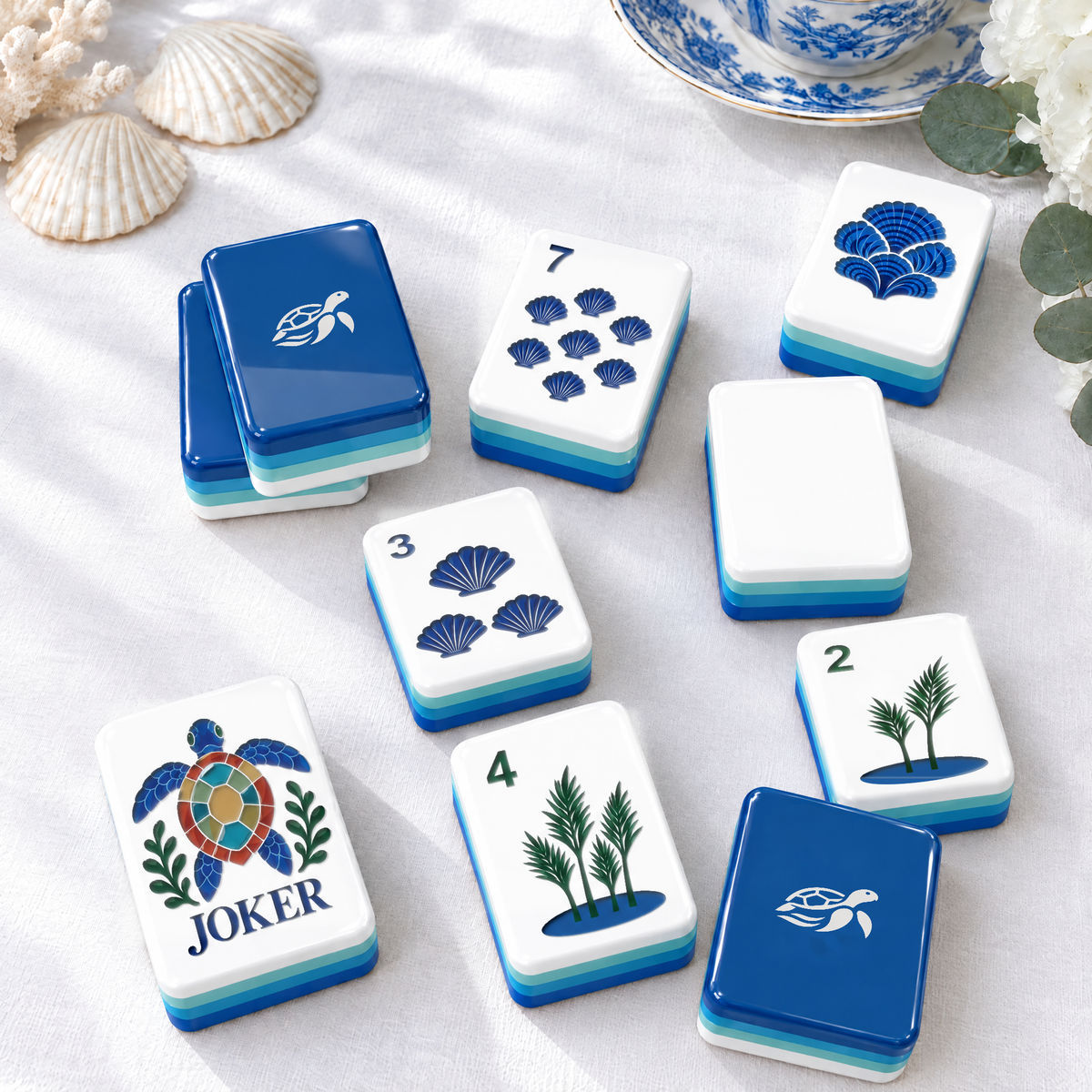
The wall break is the moment when one player rolls two dice, counts around the wall of stacked tiles, and marks where the dealer (East Wind) draws the opening hand. The player to the dealer's right rolls, adds the two dice together, then counts that many wall positions clockwise from the wall's right corner—the count wraps around if needed. Where the count lands, the dealer breaks the wall (pulls tiles from that point), and play begins. Dice show 2–12; a roll of 7 means 7 tiles over, a roll of 2 means you're in the corner. The wall contains 152 tiles stacked in pairs (38 stacks per wall side), and jokers are never used during setup. This ensures every hand starts fairly and at random. Mahstead best-selling mahjong sets include two dice—everything you need to break the wall correctly.
The wall break and dice roll determine who plays first and which tiles enter the game. Getting this right sets up a fair, efficient hand every time.
Who rolls the dice and why?
The player sitting to the dealer's right (in American mahjong, the player to the dealer's left sits out and scores second) always rolls the dice to break the wall. This tradition prevents the dealer from controlling their own starting position. The two dice are rolled simultaneously and added together. Their sum decides where in the wall the dealer will break—the wall is always counted in the same direction (clockwise from the right corner of the wall closest to the dealer's position). Any player can verify the count; no hidden rolls.

How do you count around the wall after rolling?
After rolling, look at the wall of stacked tiles in front of the dealer. The wall is built in four sides: North, East, South, and West (in American mahjong play order). The count always starts at the right corner of the wall facing the dealer's direction and moves clockwise. If you roll a 7, you count seven stack positions from right to left along that first wall side (each stack = two tiles high). If your count reaches the corner and continues, you move to the next wall side and keep counting. This wrapping continues until you land on a specific stack. The dealer then breaks (draws from) that exact point. Count aloud so all players verify fairness.
What happens at the break point?
When the count lands on a stack, the dealer reaches in and draws the top two tiles from that stack (breaking the wall by removing two tiles). The dealer places these two tiles in front of themselves and begins their opening hand. Tiles to the left of the break point (moving counterclockwise) belong to the next player (the one who rolled, or South). Tiles continue to be drawn from the break point moving left (counterclockwise). This ensures each player draws in rotation from a randomized starting point. The wall now has a visible gap where the dealer broke it—this gap moves around the wall as players draw. No jokers are used during the wall break; the joker draw happens later if a player needs it.
What are the most common mistakes when breaking the wall?
Mistake | Why it happens | How to avoid it |
Counting the wrong direction | Players forget wall count is always clockwise from the right corner | Agree on direction before breaking; point to the starting corner together |
Miscounting the sum | Distraction or arithmetic slip | Call out both dice numbers and the total aloud; let one other player verify |
Rolling from the wrong seat | Confusion about dealer position | Review player order: dealer rolls right hand (person to dealer's right, not left) |
Breaking past the dealer's wall side | Thinking the wall has no boundaries | Remember: the wall is broken from the same side the dealer faces; count stays on that wall until the corner, then wraps |
Forgetting to randomize the starting hand | Thinking position alone determines tiles | The roll is the randomization; without the roll, the same player would always get the same starting tiles |
Breaking the wall and drawing opening tiles should take 30 seconds per hand. If your group is new to the rule, do a trial break before the game starts so no one feels rushed.
🀄 Shop best-selling mahjong sets →

How does the wall break differ from Chinese or Hong Kong mahjong?
In Chinese and Hong Kong mahjong, the wall break is simpler: the dealer rolls two dice, counts that many tiles around the wall (counted by individual tiles, not stacks), and breaks at that point. No second player rolls. In American mahjong, the second player (right-hand) must roll to prevent dealer favoritism, and the count is measured by stack pairs (not individual tiles), because tiles are stacked in pairs for the opening draw. Riichi and Taiwanese mahjong also use a single roll and different tile counts. The American rule is designed to slow the process just enough to ensure genuine randomness and prevent any player from stacking their hand before the game starts. All variants aim at the same goal—a fair shuffle—but each handles it differently based on how tiles are built and played.
🎁 See our most-loved mahjong sets & accessories →
What equipment do you need to break the wall correctly?
Two standard six-sided dice are essential; most American mahjong sets include them. Some groups use decorative or weighted dice—make sure yours are fair (roll them 20 times and check for patterns; weighted dice will favor certain numbers). A level playing surface, a mat to hold the tiles, and clear space to build all four wall sides are also critical. If you play on an uneven table, the dice roll will not be fair. A mahjong mat marks the four player positions and helps you align the wall so all sides are even. Without a mat, it's easy to build a crooked wall and miscalculate the count. Good lighting and a quiet moment for the roll prevent distraction and mistakes.
What to check before you buy a set with dice
Die count: A set should include two dice (one pair); confirm this before purchase.
Die fairness: Roll each die 10 times on a flat surface and watch for bias toward any single number.
Die size: Standard dice are about half an inch (roughly 13 mm); smaller dice are hard to read, larger ones are uncomfortable to roll.
Included mat and wall space: A mat or table big enough to build a full wall (about 3 feet on each side) prevents recount errors.
Tile clarity: Make sure you can read dice numbers and tile faces from across the table; poor print quality leads to miscounts.
✨ Find your Mahstead set — free US shipping →

FAQ
What do the numbers on the dice represent in the wall break?
The two dice add up to 2–12. This sum is the number of stack positions (not individual tiles) you count around the wall from the right corner, moving clockwise. Each stack is two tiles stacked vertically, so a roll of 7 means you count over seven stacks (14 individual tiles) before breaking the wall.
Can the dealer roll their own dice to break the wall?
No. In American mahjong, the player to the dealer's right always rolls. This prevents the dealer from controlling their own hand distribution. It's a fairness rule built into the game.
What happens if the dice count lands on the same spot every hand?
It won't, because the dealer position rotates after each hand (counterclockwise around the table). A different player rolls each hand, and even if they roll the same number, the count starts from the new dealer's right corner, so the break point shifts.
Do you use jokers when rolling or breaking the wall?
No. Jokers are never used during the wall break or tile count. The wall is built from the 152 regular tiles only. Jokers enter play later if a player runs out of tiles to draw from the wall, or in drawn hands where a joker is part of the hand itself.
How do you count the wall if it's built in a spiral instead of a square?
Most groups build the wall in a square (four sides). If your group uses a spiral or line, count the same way: start at the agreed-upon end and count forward the number of stack positions shown on the dice. Always agree on the starting point and direction before breaking.
Can a player call out "reroll" if the count seems wrong?
Any player can ask for the count to be recounted aloud before the dealer breaks the wall. If the recount differs from the first count, recount again with all players watching. If the count is still disputed, reroll. The goal is fairness, not speed.


View More
View More
View More
