
American Mahjong Books for Beginners: A Real Player's Guide
Last updated: Nov 23, 2026
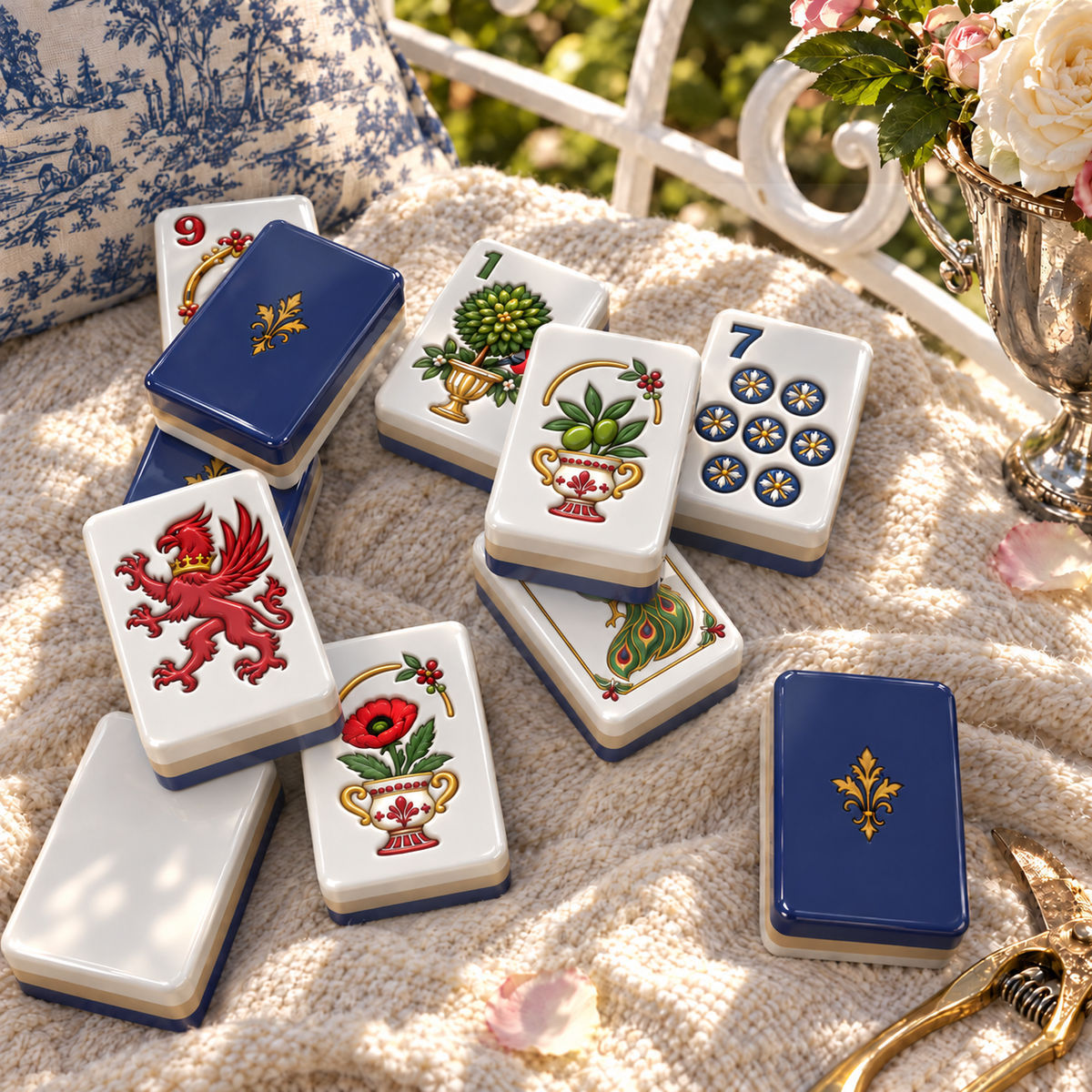
American mahjong beginners need two things: the current-year National Mah Jongg League card (issued every spring) and a supporting book that explains hand-reading, the Charleston tile-passing ritual, and scoring. The League card is not a rulebook—it's a visual catalog of legal hand patterns you must match to win. A good beginner book bridges that gap with worked examples, common errors, and step-by-step tile logic. Most players learn fastest by studying one foundational text while playing weekly games and keeping the League card at the table. We recommend starting with a book focused on hand recognition and tile management rather than advanced strategy. Budget 2–4 weeks of practice before your first game if you're learning solo; weekly play accelerates mastery dramatically. Pair any book with best-selling mahjong sets so you can drill hands at home.
What does an American mahjong rulebook actually teach?
A good beginner book teaches hand structure (how tiles group into pungs, kongs, quints, and sextets), the Charleston (the tile-passing exchange before play begins), how jokers work as wildcards, and how to score completed hands. It walks you through reading the League card—which shows every legal hand for that year as visual patterns, not words. Books differ: some emphasize hand-reading speed; others focus on defense and discarding strategy; a few combine both. The League card itself contains no instructions, only diagrams, so a book fills that crucial gap. Choose one that includes worked examples showing what tiles stay, what tiles are thrown, and why—not just rule lists.

Which books do real weekly players recommend?
Players who host regular games typically rely on three categories: (1) League-focused primers that teach hand recognition using simplified visual guides; (2) tactical books that cover mid-game decisions, discarding defense, and reading opponents; and (3) reference guides you keep at the table for quick rule lookups. Most beginners start with a primer, then pick up a tactical book after 4–6 weeks of play. No single book covers everything equally well—each has a narrow strength. Ask your regular host which book they learned from; that's often the clearest match for your play style. Books go out of date as the League card changes annually, so a 2024 or 2025 book will still teach rules correctly but may show example hands that no longer appear on the 2026 card.
How long does it take to learn from a book before your first game?
Solo study with a book alone takes 6–12 hours over 2–3 weeks before you're ready for a real game. Weekly players who studied a book say 3–4 sessions (about 2 hours each) plus one guided session with an experienced player cuts that to 10 days. The fastest learners combine book study (30 min daily, focused on hand recognition) with one "teaching game" where a seasoned player talks you through decisions. Reading the League card fluently—spotting hand patterns under time pressure—takes longer than memorizing rules; this is where book repetition and live play reinforce each other. Budget extra time if you're unfamiliar with tile symbols (Bams, Craks, Dots, winds, dragons, flowers).
What mistakes do beginners make that books can prevent?
Books that skip detail on the Charleston often leave new players confused about tile-passing order and direction. Weak explanations of joker rules lead beginners to place jokers in pairs (illegal) or in single tiles (also illegal). Many texts gloss over the rule that a pung or kong must be identical tiles—beginners sometimes try to group 1-2-3 as a "run," which doesn't exist in American mahjong. Books that don't emphasize the annual card update leave players studying outdated hand patterns. A quality beginner text prevents these by showing concrete examples: "Here's a legal pung" (three 5 Dots), "Here's illegal" (5 Dot, 5 Crak, 5 Bam), "Jokers go here and here, never in a pair." Look for books published after 2023 to ensure hand examples match the current card structure.
🀄 Shop best-selling mahjong sets →
What should a beginner book include, and what can you skip?
Feature | Why it matters | Where to find it |
Hand-pattern visuals (not just words) | Teaches fast recognition under game speed | Quality primers and strategic guides |
Charleston step-by-step with diagrams | Prevents tile-passing chaos in first games | Most rule-focused texts |
Joker placement rules + examples | Stops the most common illegal move | Foundational primers |
League card reading guide | Bridges book learning to live play | Specialized reference guides |
Scoring table with examples | Lets you verify wins and payouts | Strategic and reference books |
Defense/discard strategy | Separates beginners from intermediate players | Tactical books (read after week 2–3) |
Outdated hand examples | Wastes study time if patterns no longer exist | Avoid books older than 2023 |
Skip books that focus heavily on advanced strategy (advanced sequences, advanced blocking) before you've played 10 games live. Skip Chinese or Hong Kong mahjong books entirely if you're learning American—the rules are fundamentally different (Chinese allows sequences called "chows"; American does not). Skip books that don't explain why jokers can't be used in pairs or single tiles—this rule frustrates learners who don't understand the principle behind it.
Where do beginners find mahjong books, and are they still in print?
Most beginner books are available through online retailers, library systems, and local bookstores; a few are out of print but available used. Call your city library or community center to ask if they stock mahjong primers—many do. The most widely available English-language guides are still the classics from the 1990s and 2000s, which teach American rules accurately but show example hands from old League cards (no longer legal). If your library has a 2020–2025 edition, prioritize that; the rules haven't changed, but the hand examples will match games you'll play. Some regional mahjong clubs (check community centers, synagogues, and country clubs in your area) loan or sell copies to new players—worth asking when you find your first game.
🎁 See our most-loved mahjong sets & accessories →

Pairing your book with hands-on practice: the fastest path
Read a chapter (30 min), then drill that concept with tiles on a mat before playing live. Example: study "recognizing 2024 hand patterns" with your book, then lay out tiles matching those patterns on a mahjong mat to train your eye. Use racks with pushers to organize your practice tiles—the pusher makes it easier to see groupings and prevents hand fatigue. Host a practice game with one experienced player teaching; have your book at the table for rule lookups, but set a time limit (e.g., "we reference the book only on rules, not strategy"). Most weekly hosts say this hybrid approach cuts learning time by 40% compared to book-only study. After 4 weeks of weekly games, move the book off the table and into your bag for reference only.
What to check before you buy a beginner book
Publication year: 2023 or later if you want example hands matching the 2026 League card; older texts teach correct rules but outdated patterns.
Author experience: Look for authors listed as League-certified teachers or long-time players; avoid books written by non-players or game designers unfamiliar with American mahjong culture.
Table of contents: Confirm it covers Charleston, hand recognition, joker rules, and scoring—not just general tile combinations.
Worked examples: Flip through and count diagrams showing legal/illegal hands; fewer than 20 examples suggests weak teaching depth.
League card integration: Does the book explain how to read the League card, or does it assume you already know?
Print quality: If buying used, check that diagrams are clear and pages aren't marked up so heavily that examples are hard to follow.
✨ Find your Mahstead set — free US shipping →
A beginner's reading and play schedule
Week 1: Read primer chapters 1–2 (hand structure, Charleston); practice Charleston with tiles on a mat daily (15 min). Play one teaching game with an experienced host.
Week 2: Read chapters 3–4 (hand recognition, joker rules); drill 5 hands per day from the League card; attend one regular game as an observer or slow-play participant.
Week 3: Read chapters 5–6 (scoring, basic strategy); play two full games at regular speed; keep your book nearby for rule lookups only.
Week 4+: Play weekly; reference the book only for disputes; begin reading strategy sections; stop looking up basic rules by week 6.
This timeline assumes 1–2 hours of study daily plus one game per week. Solo learners without access to a teaching game should budget an extra 2–3 weeks.
Starting your home practice right now
To drill hands while studying a book, you need a full American mahjong set, a mat to organize tiles clearly, and racks if you plan long drill sessions. Most beginners lay tiles directly on a mahjong mat without racks for home study; racks come into play once you're hosting or playing regularly. A 160-tile set includes all tiles you need plus spares. Organize your practice space: mat in the center, book to one side, the current year's League card visible, tiles in a pile for drawing. This setup takes 5 minutes but pays off in faster learning because you're mimicking a real game layout from day one.
Final thought: your book is a bridge, not the destination
The fastest learners treat their beginner book as a stepping stone to live play, not a substitute for it. A book teaches the what and why; weekly games teach the when and how. After four weeks of games, you'll outgrow your first book naturally and may want to pick up a tactical guide focused on discard strategy and defense. By then, you'll know exactly which gaps your book left unfilled, so your second read will be far more targeted. Start with one solid primer, play consistently, and your real education—the one that makes you a real player—happens at the table.

FAQ
Can I learn American mahjong from a book alone, without playing live games?
You can learn rules from a book in 2–3 weeks, but you'll struggle under real game speed. Live play teaches pattern recognition under pressure and defensive decision-making that books can't replicate. Most solo learners who skip live games for months find their first real game stressful and slow; one teaching game early on prevents this.
Are older mahjong books (from the 1990s or 2000s) still useful if they teach the same rules?
Yes for rules, no for hand examples. The rules of American mahjong haven't changed, but the National Mah Jongg League card changes every spring. A 20-year-old book teaches the Charleston and joker rules correctly but shows hand patterns that don't exist anymore, wasting your practice time. Buy or borrow a book from 2023 onward if possible.
What's the difference between an American mahjong book and a Chinese or Hong Kong mahjong book?
Fundamental rules differ: Chinese and Hong Kong mahjong allow "chows" (sequences like 4-5-6 of the same suit); American mahjong does not. Hong Kong uses fewer tiles; Chinese scoring is based on hand difficulty rankings. If you're learning American mahjong, avoid books labeled "Chinese" or "Hong Kong"—they'll teach you wrong rules for your game.
Should I buy a book or just use free online tutorials and YouTube?
Online tutorials are helpful for visual learners and can supplement a book, but most lack the depth and structure of a good printed guide. Videos often skip the Charleston or joker rules because they're hard to film clearly. A book gives you a complete, organized reference you can flip through offline—ideal for study before your first game. Use both: book for foundation, videos for specific questions later.
When should I stop using the book at the table and play from memory?
By week 3–4 of weekly play. The book should move from the table to your bag by your 8th game. Keep it for rule disputes (e.g., "does a kong score higher than a pung?"), not for basic gameplay. If you're still referencing basic rules after 6 weeks, your book may not have taught you those concepts clearly—consider a second resource.
Do I need a physical book, or can I use a PDF or eBook instead?
Either works, but print books are easier to reference during practice at a table. PDFs on a tablet work well if you have stand or prop the device nearby. eBooks on a phone are harder to navigate mid-game but good for on-the-go study. Most players eventually own both: a printed book at home and a PDF of the current League card on their phone.


View More
View More
View More
