
9 Dot Mahjong Tile Symbol Explained
Last updated: Nov 23, 2026
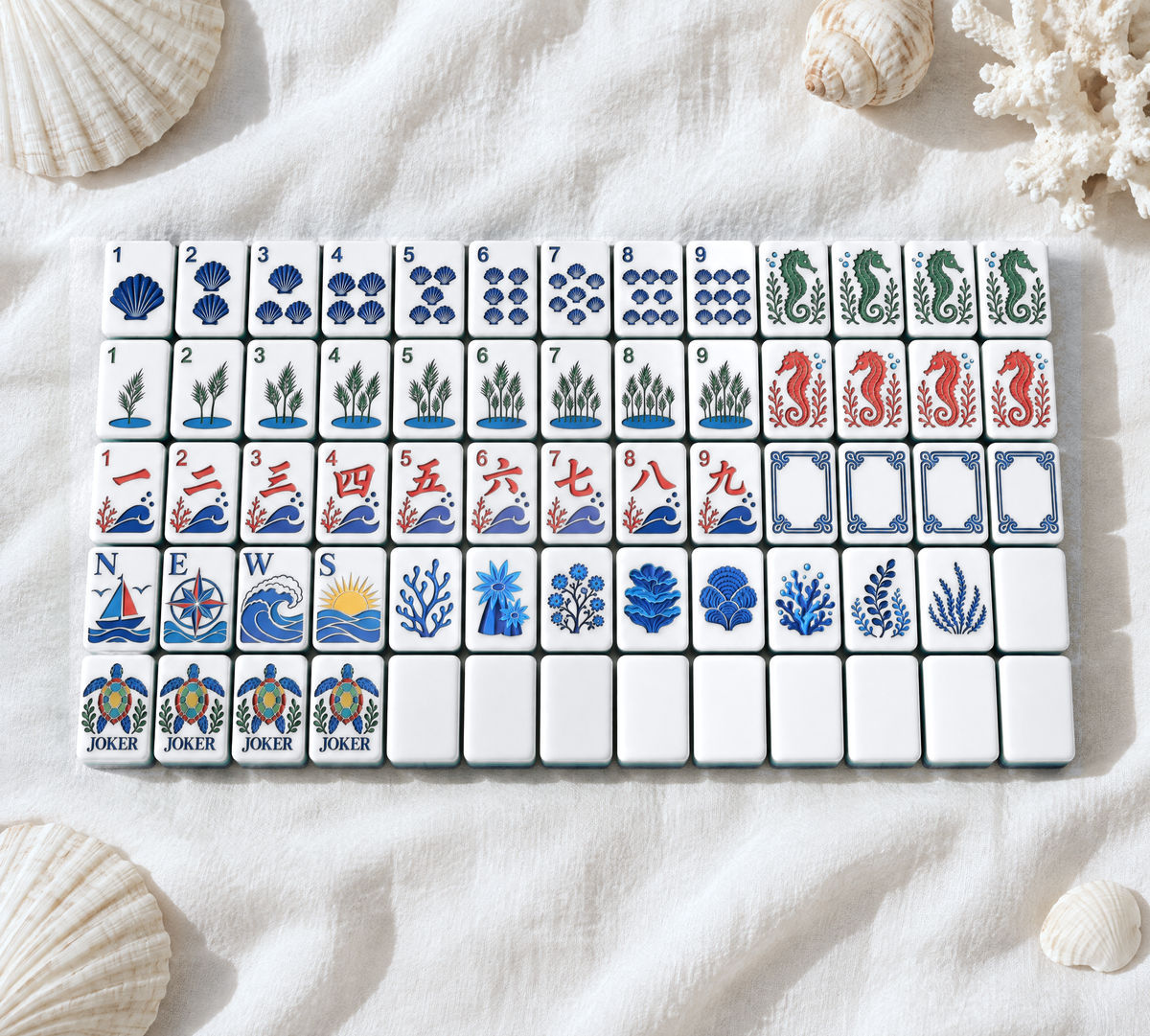
The 9 Dot (written 9D) is one of 36 tiles in the Dot suit, identifiable by nine small circles printed on its face in a 3×3 pattern. In American mahjong, you receive exactly four copies of each number per suit (108 tiles total across Bams, Craks, and Dots), plus winds, dragons, flowers, and jokers. The 9 Dot is the highest-ranked number tile in its suit; it cannot be used as a joker, cannot appear in a pair with a different number, and must be matched with identical 9 Dots to form a pung (three), kong (four), quint (five), or sextet (six) for exposure. Unlike some Asian variants that allow sequences (1-2-3), American mahjong permits only pungs or longer identical groups, so the 9 Dot works only with other 9 Dots. The symbol itself—nine circles—reflects a simple counting system that helps players quickly identify it across what's in an American mahjong set at a glance.
The 9 Dot is one of 36 tiles in the Dot suit, identifiable by nine small circles printed on its face in a 3×3 pattern. In American mahjong, you receive exactly four copies of each number per suit (108 tiles total across Bams, Craks, and Dots), plus winds, dragons, flowers, and jokers. The 9 Dot is the highest-ranked number tile in its suit; it cannot be used as a joker, cannot appear in a pair with a different number, and must be matched with identical 9 Dots to form a pung (three), kong (four), quint (five), or sextet (six) for exposure. Unlike some Asian variants that allow sequences (1-2-3), American mahjong permits only pungs or longer identical groups, so the 9 Dot works only with other 9 Dots. The symbol itself—nine circles—reflects a simple counting system that helps players quickly identify it across tiles at a glance.
🀄 Shop best-selling mahjong sets →
Where does the 9 Dot sit in the numbered suits?
American mahjong divides numbered tiles into three suits: Bams (sticks), Craks (characters), and Dots (circles). Each suit runs 1 through 9, with four copies of every number. The 9 Dot ranks as the highest number—equal in status to 9 Bam and 9 Crak—making it valuable for certain hand patterns on the current year's mahjong card. Because all three 9s exist, players sometimes build hands mixing high-value tiles from different suits, but only as separate groups, never in a sequence.

How do you identify the 9 Dot visually?
The 9 Dot displays nine small circles (or pips) arranged in a 3×3 square—three rows and three columns. This pattern makes it instantly recognizable even from across a table. Compare it to the 8 Dot (eight circles, usually in two rows of four) or the 1 Dot (a single circle in the center); the 3×3 arrangement is unmistakable. On our best-selling mahjong sets, the dot symbols are printed clearly, so even new players spot the difference in seconds during fast-paced games.
Can the 9 Dot act as a joker?
No. In American mahjong, jokers are wild tiles printed with "Joker" or a special symbol—never numbered tiles. The four copies of the 9 Dot you hold are always just 9 Dots. Jokers are reserved for filling gaps in exposed melds and cannot be used to complete a pair. This rule keeps the 9 Dot's role rigid: if you need a 9 Dot, you must draw or claim a real 9 Dot, never substitute a joker.
What hands use the 9 Dot, and why does it matter?
The current year's National Mah Jongg League card dictates which hands are legal. Because the 9 Dot is the highest number, it often appears in "like numbers" (e.g., 7-8-9 as separate pungs) or in special patterns listing the 9s from each suit grouped together. On how to read the mahjong card, you'll learn to scan for these combos. Players holding multiple 9 Dots early in a game track them carefully—if your hand needs three or four 9 Dots and you see them being discarded, your odds of winning drop fast.

What mistakes do beginners make with the 9 Dot?
New players often confuse the 9 Dot with the 8 or 1 Dot under poor lighting or when tiles are stacked at odd angles. The second mistake: assuming a 9 Dot can pair with an 8 or 7 (it cannot—only with another 9 Dot). A third trap: forgetting that the hand on this year's card is the law—just because 9 Dots exist doesn't mean a given hand requires them. For beginners learning the basics, we recommend playing under good light and handling tiles often before your first game to train your eye and fingers to read the symbols confidently.
Tile | Symbol | Count per Set | Role | Common Mistake |
9 Dot | Nine circles (3×3) | 4 | Highest in Dot suit; pungs only | Confusing with 8 Dot visually |
9 Bam | Nine sticks | 4 | Highest in Bam suit; pungs only | Pairing with a different number |
9 Crak | Nine characters | 4 | Highest in Crak suit; pungs only | Treating like a joker (illegal) |
1 Dot | One circle (center) | 4 | Lowest in Dot suit | Forgetting hand pattern matters, not just the tile |
🎁 See our most-loved mahjong sets & accessories →
Comparing the 9 Dot across American, Chinese, and Hong Kong rules
In American mahjong, the 9 Dot belongs to the Dot suit and works exclusively in identical pungs or longer melds—no sequences allowed. In Chinese and Hong Kong variants, the 9 can form a sequence (7-8-9 as one chow), and jokers may substitute more freely. Taiwanese mahjong also permits sequences and uses different dragon/wind rules. The takeaway: if you learned mahjong in Asia, American rules will feel restrictive—the 9 Dot's rigidity is a feature, not a bug, designed to simplify and speed up hand-reading at the table.
How tile quality affects reading the 9 Dot
If your tiles are scratched, faded, or poorly printed, confusing the 9 Dot with nearby numbers becomes easy during a long game when fatigue sets in. Engraved American mahjong sets offer clean, durable printing on acrylic tiles that resist wear; the symbols remain sharp for years. When you're hosting weekly games, clear visuals save arguments and slow play.
What to check before you buy:
Print clarity: Are all dots crisp and evenly spaced? Blurry or offset dots breed confusion.
Tile weight & feel: Do tiles feel balanced in your hand, or do some tilt toward a heavier side?
Lighting: Test reading tiles under your regular game lighting. What looks fine in a store may blur under a lamp at home.
Sorting speed: Shuffle a few tiles and see how fast you spot the 9 Dot. Your hands should recognize it without conscious thought.
✨ Find your Mahstead set — free US shipping →

FAQ
Why is the 9 Dot worth learning if it's just one tile among 152?
The 9 Dot appears in many hands on the annual card, especially patterns built around "like numbers" or high-value tiles. Quickly spotting it prevents you from chasing impossible melds and helps you read opponents' discards—it's a small skill with big strategic payoff over dozens of games.
Can I use a 9 Dot as part of my pair if I'm winning with all jokers elsewhere?
No. A pair in American mahjong must be two identical tiles from your hand (not exposed). The 9 Dot pair must be two 9 Dots—jokers cannot substitute. You cannot pair a 9 Dot with anything else.
How many 9 Dots are in one mahjong set?
Four. American mahjong sets contain exactly four copies of each numbered tile (1–9) in every suit (Bam, Crak, Dot), totaling 108 numbered tiles across all three suits in a 152-tile set used for play.
Does the 9 Dot rank higher than the 9 Bam or 9 Crak?
No. All three 9s rank equally within American mahjong—there is no suit hierarchy. The suit only determines which hand patterns you can build. A 9 Dot is not "better" than a 9 Bam; they are simply different and must be kept separate in melds.
If the lighting is bad at my table, what's the fastest way to confirm I'm reading the 9 Dot correctly?
Count the circles with your finger if necessary—nine dots mean 9 Dot. Ask a tablemate to confirm if you're unsure. Never guess during play; a wrong tile claim can void a hand. Good lighting and tile quality prevent this problem entirely, so invest in a quality set if you host regularly.


View More
View More
View More
