
2027 Mahjong Card Hardest Sections Explained
Last updated: Nov 23, 2026
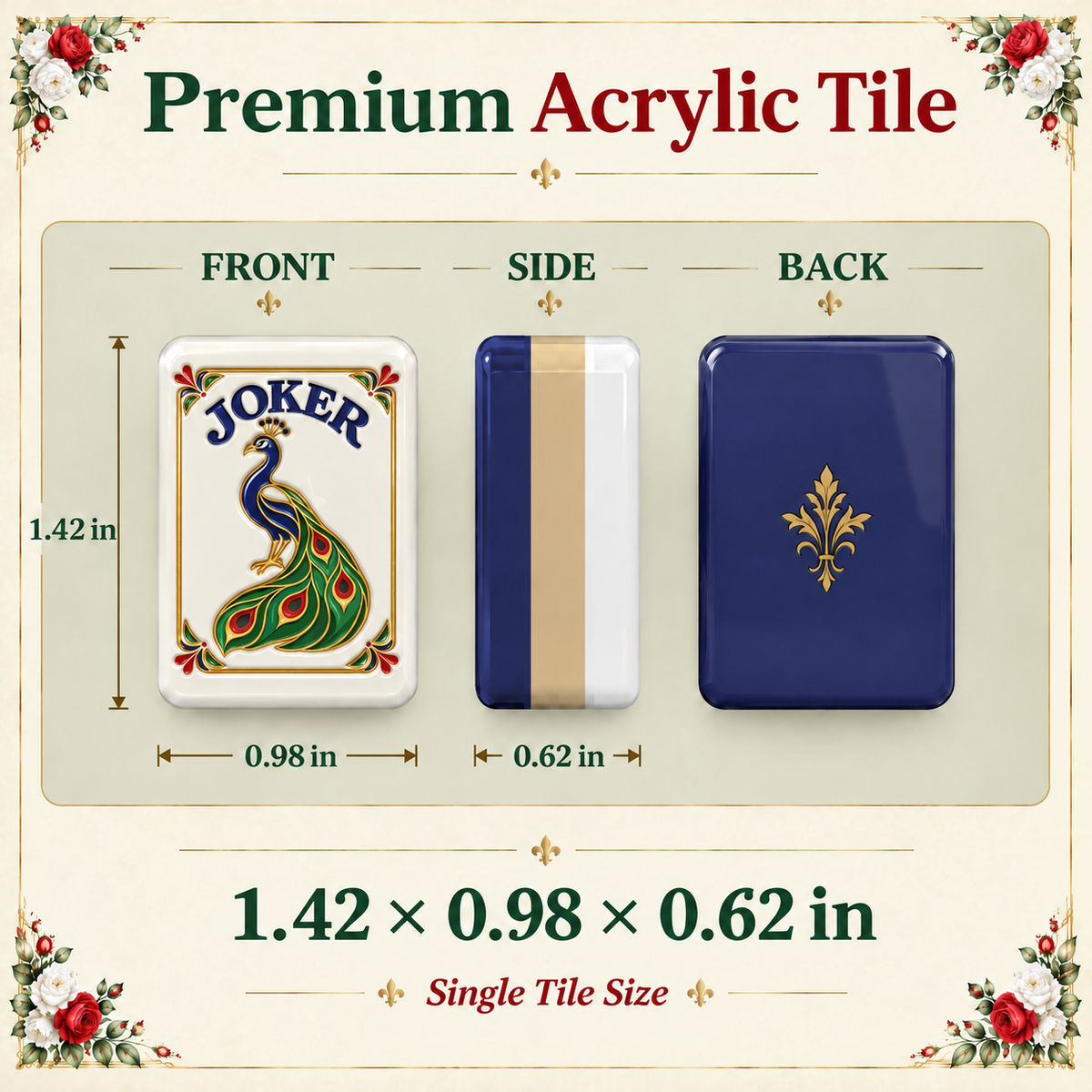
The 2027 card arranges standard hands in easy sections (all one suit, simple pungs) through intermediate (mixed suits, dragons, winds) to advanced (Bonus hands, quints, sextets). The hardest sections test your ability to spot joker placement rules, count identical tiles, and distinguish between valid hand patterns. In American mahjong, every exposed group must contain exactly matching tiles (three 5 Dots, not 1-2-3); Bonus hands add complexity by requiring specific tile combinations laid out in defined positions. Quint and sextet sections demand you read position carefully—swapping a joker's role by one spot invalidates the hand. Most table mistakes happen in these sections because players miscount jokers, forget which suit a hand requires, or confuse similar-looking patterns. We recommend keeping a best-selling mahjong set close by during practice so you can physically lay out tricky hands and see the difference. --- 🀄 Shop best-selling mahjong sets →
Why does the card divide hands into colored sections?
The card groups hands by suit count and pattern type so players can scan quickly during play. Each color—typically green, red, blue, yellow—marks a difficulty tier or hand type (Bonus, Consecutive Run, Pairs, etc.). The structure saves time: you know exactly which rows to search based on what tiles are in your hand. Without this system, scanning 200+ hand patterns would take too long. Always start by identifying what section type your hand falls into, then find your exact tile match within that color block.

What makes Bonus hands so confusing?
Bonus hands require you to arrange tiles in a specific sequence or layout to be valid, not just any grouping of pungs and pairs. Unlike standard hands where you need, say, three pungs, two pairs, and a kong in any order, a Bonus hand might demand a pung of Dragons followed by a pair of honors in a defined position. The card shows these hands with numbers or letters marking each tile's required spot. Many players misread the position markers or forget that moving a joker one place violates the hand. The pillar guide on reading your card walks through position notation step-by-step. Study one Bonus hand fully before the game starts rather than trying to decode it mid-turn.
How do you correctly count jokers in complicated hands?
Count every joker once, then verify it doesn't break the hand rules. American mahjong allows jokers in any spot except a single tile or a pair. In a hand showing "Pung 5 Dots, Kong White Dragons, Pung 1 Craks with 2 jokers, Pair 2 Bams," those two jokers must sit in the kong or the pung of 1 Craks—not split. Mark each joker's position on the card with your finger as you count. A common error: assuming a joker can float anywhere. It can't. If your hand shows four tiles (a quint with one joker), the joker fills a specific spot—usually the fifth position. Recount aloud before you declare; one misplaced joker means your hand is invalid and you don't win.
Why do quints and sextets trip up even experienced players?
Quints (5 identical tiles, one of which must be a joker) and sextets (6 identical tiles, up to two jokers) seem simple but are deceptively fragile. The card displays them in a line or grid, and the joker's exact position matters. If the card shows "5 Dots: Dot Dot Dot Dot J," the joker must be in that final slot; if you place it second, the hand is invalid. Another trap: forgetting that you may only have four copies of any tile in a standard set, so a quint always requires a joker as the fifth tile. Sextets, rarer, need up to two jokers because only four real copies exist. Draw the hand on paper before declaring; mark joker positions in a different color. This single habit eliminates most quint/sextet errors we see at the table.
Which hand patterns look similar but score differently?
Several patterns share visual overlap, especially multi-suit hands and honor combinations. A hand of "Pung 1 Bam, Pung North Wind, Pung Red Dragon, Pung 1 Dot, Pung 2 Craks, Pair White Dragon" looks similar to a "Like Numbers" hand (1 Bam, 1 Dot, 1 Crak, plus honors and a pair) but scores and tile counts completely differently. The card separates these, but a quick glance can fool you. Another trap: Consecutive Pungs (1 Bam, 2 Bam, 3 Bam, etc.) look like they allow any pung in sequence, but the suit must stay the same—all Bams, or all Craks, never mixed. Read the hand title and the tile list, not just the tiles. Use a ruler or your card holder to isolate one hand row at a time so your eyes don't drift to a similar line below.

How do section colors and layout affect your reading speed?
Card publishers use color blocks and spacing to organize hands logically, but every card's layout differs slightly. Some print with large fonts (easier for bifocals), others compact (fits more hands per page). The layout you practice with becomes your mental map—switching cards mid-season is disorienting. When you first learn a new year's card, spend 15 minutes just scanning the colors and section labels without looking up tiles. Familiarize your eyes with where "Bonus hands" sits, where "All Quints" begins, what color "Like Numbers" is. During a real game, this pre-learned map lets you navigate in seconds. If you host weekly games, investing in quality mahjong mats that hold your card flat and steady eliminates the fumbling that slows down reads.
🎁 See our most-loved mahjong sets & accessories →
Common mistakes in hard sections: a checklist
Before you declare, verify:
[ ] Every exposed tile is identical (e.g., three or four of the exact same 5 Dot, not mixed numbers).
[ ] Each joker sits in a legal position (not alone, not as a pair, not outside an exposed group).
[ ] The hand title matches your tile list (e.g., "All Honors" really contains only winds and dragons, no numbered suits).
[ ] Bonus hand position markers are met (if the card shows "1st" and "3rd," your tiles land in those spots only).
[ ] Pair tiles are identical and not jokers (a pair must be two real tiles, never two jokers or one real + one joker).
[ ] Count = 14 tiles total (often written as pung + pung + pung + pung + pair = 3+3+3+3+2).
Missing one check is how we lose games we thought we'd won.
Comparison: card sections ranked by difficulty
Section Type | Tile Count | Joker Rules | Hardest Part | Beginner Error |
All One Suit, Simple | 14 (4 pungs + pair) | Flexible | None | Forgetting one suit must dominate |
Mixed Suits, Same Numbers | 14 | Flexible | Aligning across suits | Using wrong number in one suit |
Dragons & Winds Only | 14 | Flexible | Few tiles to work with | Confusing dragon colors (Red ≠ Green) |
Consecutive Pungs (quints start) | 14–15 | 1 per quint | Sequence order | Breaking suit consistency |
Bonus Hands | 14 | Strict positions | Reading position markers | Placing joker in wrong slot |
All Quints/Sextets | 14–18 | 2–4 required | Exact joker placement | Miscounting how many jokers fit |
✨ Find your Mahstead set — free US shipping →
What to check before you buy a new card or set
If you're upgrading your setup or teaching new players, a few practical points:
Card size: Some players prefer larger print or landscape orientation. Check whether the version you're considering matches how your group reads (at a table 3 feet away, in sunlight or lamplight).
Card holder quality: A flimsy clip lets your card slip during play, forcing re-reads that cost time and focus. Mahjong racks with integrated pushers often include sturdy card holders.
Tile set clarity: Worn or poorly engraved tiles blur the distinction between similar symbols (1 Bam vs. 1 Dot, North vs. White Dragon). A fresh set with clean engravings dramatically cuts misreads in hard sections.
Card vs. set year match: Always use the card that matches your set's manufacture year. Hands and tile mixes change annually.

FAQ
Can I use last year's card with this year's tiles?
No. The card changes every year; hands and point values shift. Using a mismatched card and tiles means your declared hands may not exist in your set, causing disputes or invalid wins. Always verify card year printed on both.
What's the difference between a pung and a quint?
A pung is exactly three identical tiles (three 5 Dots). A quint is five identical tiles, requiring one joker because only four real copies exist in a standard set. Quints score higher and appear in advanced sections of the card.
Why does my joker keep getting rejected mid-play?
Jokers cannot be a single tile or a pair. If you're trying to use one joker alone or as a pair, it's illegal. Jokers fill gaps only within a pung, kong, quint, or sextet—never standalone. Check the hand layout on your card to confirm joker position before calling.
How many jokers does a standard set include, and how do I know if I have enough?
A standard 152-tile set includes 8 jokers for play. You use all 8 during a game. If you buy a set from Mahstead designed for hosting weekly games, the set contains exactly what you need; don't add extra jokers from other sets (they may not match).
If I misread a hard section and declare an invalid hand, what happens?
In most rule sets, you lose that turn and may face a penalty (often drawing and discarding a tile, losing points, or sitting out that round). Always verify before declaring, especially in Bonus, Quint, and Sextet sections. Take three seconds to double-check—it prevents costly mistakes.
What's the fastest way to learn the hard sections?
Practice laying them out with actual tiles before game night. Study one section type per week (e.g., "Bonus hands" week one, "All Quints" week two). Physically arranging tiles helps your brain recognize patterns faster than reading alone. Combine study with a quality set you enjoy using so practice feels rewarding, not tedious.


View More
View More
View More
