
1 Bam Mahjong Tile: Bird Symbol & Its Role in American Play
Last updated: Nov 23, 2026
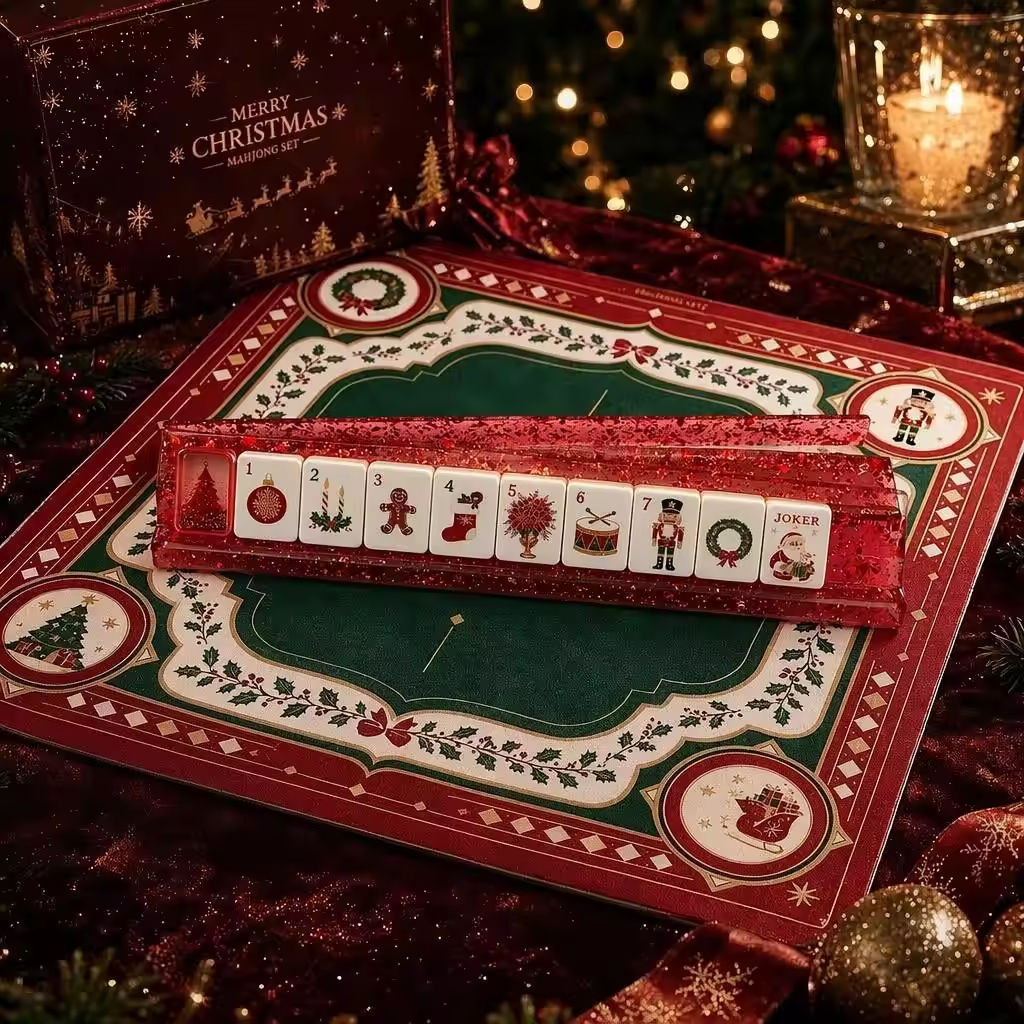
The 1 Bam is one of the 36 tiles in the Bam (stick) suit of an American mahjong set and is the only Bam numbered tile that displays a bird rather than numeric pips. In a standard 160-tile set, there are four identical 1 Bams. The 1 Bam ranks as the lowest Bam in value and appears frequently in winning hand patterns published annually on the National Mah Jongg League card. You cannot use the 1 Bam as a joker substitute in American mahjong, nor can it be split from a matched pung (three identical tiles) or higher group. Unlike some variants that accept sequences like 1-2-3, American mahjong requires exposable melds to be identical tiles only—pungs of three, kongs of four, or higher groups. Understanding the 1 Bam's role helps beginners read the card accurately and avoid costly mistakes during play.
🀄 Shop best-selling mahjong sets →
Why is the 1 Bam shown as a bird, not a number?
The bird symbol on the 1 Bam is a design tradition with roots in early Chinese mahjong art. Rather than displaying a single dot or stick like other numbered tiles, the 1 Bam features a stylized bird—often a peacock, crane, or phoenix depending on the tile set's artist. This visual distinction makes the 1 Bam instantly recognizable during fast-paced games and helps players quickly scan their rack for combinations. The bird also carries symbolic meaning in Asian culture, representing luck and good fortune. When you hold a set from our best-selling collection, you'll notice the bird immediately stands apart from the 2–9 Bams, reducing scan time and play errors.

How does the 1 Bam rank compared to other Bams?
The 1 Bam is the numerically lowest Bam tile, ranked below 2 Bams through 9 Bams in sequences and patterns. However, in American mahjong, rank matters less than exact matching: you cannot make a legal exposed meld using 1 Bam with 2 and 3 Bams because American rules forbid chows (sequences). Instead, all melds must consist of identical tiles—three or more 1 Bams together, never mixed. The card guides which Bams appear in each hand pattern, and rank becomes relevant only when interpreting hand notation on the card (e.g., "1-9 Bams" means all nine Bam tiles in one hand, not a chow). This stands in sharp contrast to Chinese or Hong Kong mahjong, where sequences like 1-2-3 are legal calls; American mahjong's restriction to identical groups makes the 1 Bam's rank a moot point in play. The National Mah Jongg League card specifies exact tile compositions for winning hands, so the 1 Bam's value is defined by its role in that year's published patterns, not by a universal ranking system.
What winning hands typically include 1 Bams?
On the annual National Mah Jongg League card, 1 Bams appear in hands ranging from simple pungs (three 1 Bams) to complex sextets (six 1 Bams) or mixed-suit patterns. Common hand types that feature 1 Bams include "Like Number" sections (where you collect matching numbers across all suits—for example, all 1s from Bams, Craks, and Dots, plus a pair), "All Honors" sections (combining winds and dragons with number tiles), and color-coded sections tied to specific tile compositions. The exact patterns change every spring when the League publishes its new card, so a 1 Bam hand valid this year may not appear next year. Beginners often struggle with identifying where 1 Bams fit because the bird symbol creates confusion—they assume it holds special power or acts as a wildcard. It does not. A 1 Bam matches only other 1 Bams, never acts as a joker, and cannot be paired with 2 Bams or any other tile in any legal American hand. Learning to read the mahjong card is the fastest way to master which 1 Bam patterns are playable each season.
🎁 See our most-loved mahjong sets & accessories →

Can you use 1 Bam as a joker or wild tile?
No—this is one of the most common beginner mistakes, and it costs games. In American mahjong, jokers are the only tiles that can substitute for missing tiles in a meld. The 1 Bam is never a joker, never a wild card, and never flexible in any way. Jokers work only in exposed pungs, kongs, quints, or sextets (not in the pair), and you can never use a joker to replace a single tile in your concealed hand. The 1 Bam follows the same rule: it is rigid and can be used only where it is explicitly called for on the current year's card. A hand that needs three 5 Dots cannot accept a joker or a 1 Bam as a substitute—you must hold the actual 5 Dots. This rule applies to all tiles equally; the 1 Bam's bird symbol makes some new players incorrectly assume it is special or magical. It is not. Every tile in your 160-tile set functions identically—either you have it or you need a joker to fill the gap. Learning this rule early prevents costly misplays at the table.
What should you check when examining 1 Bams in a new set?
When you unbox a new mahjong set, inspect all four 1 Bams for identical engraving, color, and finish. The bird symbol should be clear, centered, and match the style of the other tiles in your set. Check that the edges are smooth (not splintered or rough, which indicates manufacturing defects) and that the tile weight feels consistent across all four copies. If the tiles are acrylic, hold them up to light—they should be uniformly translucent or opaque without bubbles or cloudiness. Verify the back side is smooth and unmarked; scratches or printing errors on the back can make tiles identifiable during play, which breaks game fairness. Count all four 1 Bams before your first game; missing or damaged tiles affect hand validity. If you're playing with engraved sets with titles or personalization, confirm the engraving doesn't obscure the bird symbol or make the tile harder to read during rapid gameplay. Store 1 Bams (and all tiles) in a protective case or bag away from direct sunlight to prevent fading or warping over time.
Concern | What to Look For | Why It Matters |
Symbol clarity | Bird is sharp, centered, not faded | Quick identification during play |
Tile color | Matches other Bams and tiles in set | Prevents confusion and miscalls |
Edge finish | Smooth, not chipped or rough | Comfortable to handle; reduces wear on rack or felt |
Thickness | Consistent with all other tiles | Ensures fair shuffling and random draws |
Translucency (acrylic) | No visible bubbles or clouding | Indicates quality acrylic; affects durability |
Back surface | Smooth, unmarked, uniform | Game remains fair; tiles remain unidentifiable |
What to check before you buy:
Confirm the set includes four identical 1 Bams (all standard 160-tile sets do).
If the set is customized or engraved, verify the bird symbol remains legible.
Check reviews or product photos to confirm the 1 Bam bird is rendered clearly (some low-cost sets have blurry symbols).
Ask whether the set is acrylic, ceramic, or bamboo—each material affects durability and clarity of the bird design.
Ensure the set ships in a protective case or bag; 1 Bams are exposed to chipping during transit if poorly packaged.
✨ Find your Mahstead set — free US shipping →

FAQ
Why does the 1 Bam have a bird instead of one dot like the 1 Dot?
Tradition. Early Chinese mahjong designers gave the 1 Bam a bird symbol for visual distinction and cultural symbolism. The 1 Dot and 1 Crak show single pips, but the 1 Bam breaks the pattern intentionally—the bird makes it instantly recognizable during play and represents luck in Asian culture.
Can I use the 1 Bam to make a 1-2-3 sequence with 2 Bam and 3 Bam?
No. American mahjong forbids chows (sequences). All legal exposed melds must be identical tiles: three or more 1 Bams, never mixed numbers. This is a core rule difference from Chinese or Hong Kong variants.
If I'm one tile short and I have a joker, can the joker act as a 1 Bam?
Yes—but only in an exposed meld (pung, kong, quint, or sextet), never in your concealed hand or as your pair. The joker replaces the missing 1 Bam in the group you expose, but it cannot substitute inside the group itself; it stands in place of the missing tile.
What does the 1 Bam pair with on the mahjong card?
The 1 Bam pairs only with another 1 Bam. No other tile, including jokers, can form a pair with a 1 Bam. Pairs in American mahjong are always two identical tiles.
How many 1 Bams come in a standard mahjong set?
Four. Every standard 160-tile American mahjong set includes four identical 1 Bams, one for each player's potential draw. If a set is missing a 1 Bam or has fewer than four, it is incomplete.
Does the bird symbol on the 1 Bam change the way I play with it?
No. The bird is visual only. The 1 Bam functions identically to every other numbered tile: it matches only other 1 Bams, cannot be used as a joker, and appears in hands only as specified on the current year's National Mah Jongg League card. The symbol helps you spot it quickly, but it changes nothing about the rules.


View More
View More
View More
