
Why Do Mahjong Players Say the Tile Name?
Last updated: Nov 23, 2026
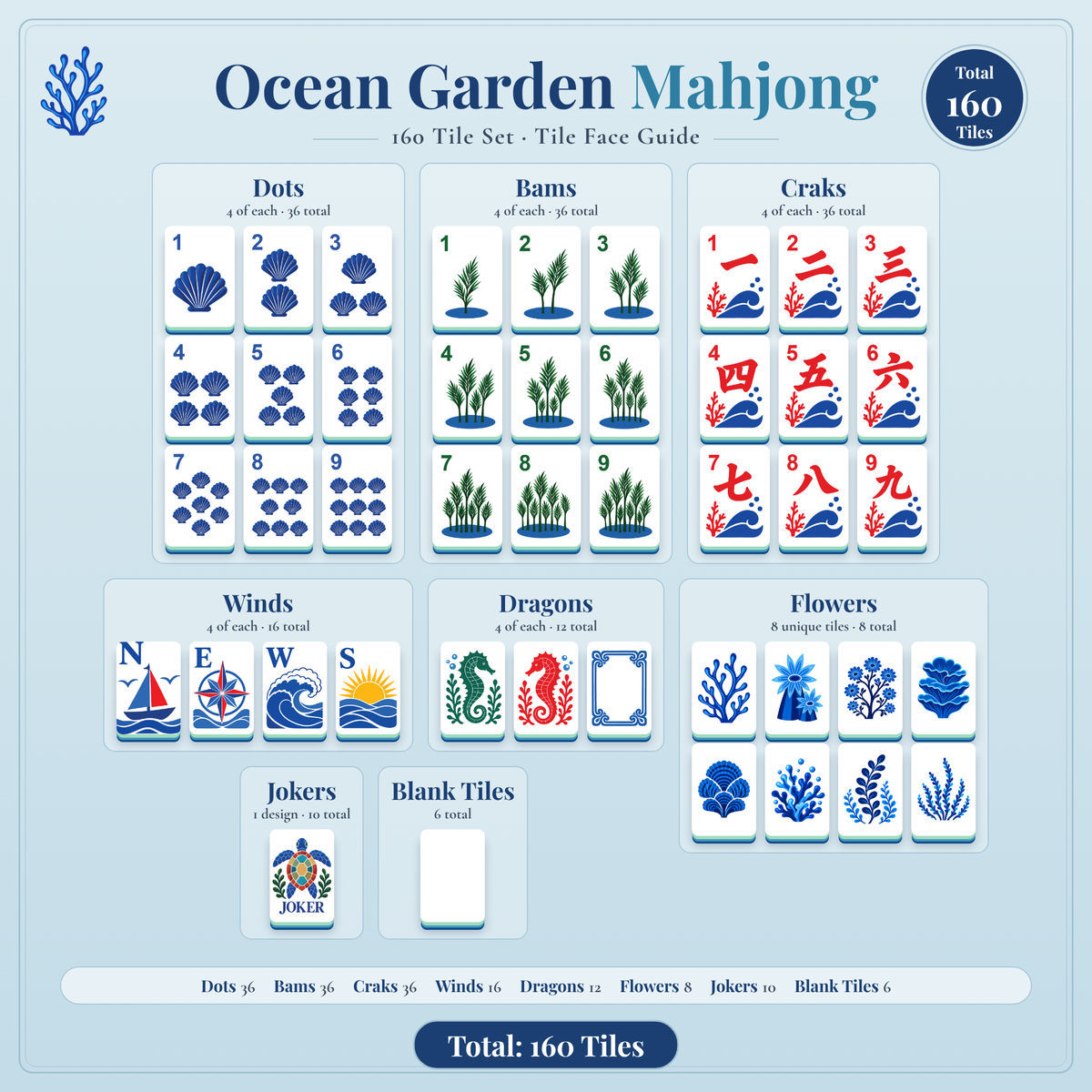
Players say the tile name aloud because American mahjong rules require a verbal discard call: when you throw a tile to the table, you must state its suit and number (e.g., "Five Dot," "East Wind," "Red Dragon"). This audible call lets all three other players hear your discard immediately, prevents silent misread errors, and signals when jokers are swapped into melded sets. In home games, players also call tile names to confirm passes during the Charleston, to announce melds aloud before exposing them, and to avoid the costly mistake of playing the wrong tile. Saying the name is not optional—it's part of the rule structure that keeps pace, fairness, and attention equal around the table. Newcomers who train with players in your local community will hear this rhythm within the first hand.
The Rule Behind the Call: Why Your Voice Matters
What does it mean to "call" a tile in American mahjong?
A tile call is the aloud announcement of a discard as it leaves your hand and lands on the table. You say the suit name (Bam, Crak, or Dot), the number (1–9), or the honor type (wind direction, dragon type) before—or as—the tile hits. This verbal declaration is not a courtesy; it's a legal requirement. The moment you name the tile, other players may immediately claim it for a pung, kong, quint, or sextet (if they hold the matching tiles), or they may pick it to complete a hand and call "Mah Jong." Without the announcement, disputes arise: did you mean to throw that tile? Did someone mishear a number? The call prevents all of this. When you skip the call, experienced players will catch it and ask you to repeat it clearly.

Why do all four players need to hear the discard announcement?
Because American mahjong is a game of simultaneous attention, not turn-based information hiding. Each player must know immediately what the discarder threw so they can decide whether to claim it or let the next player draw from the wall. If a player mishears or doesn't hear at all, play stalls, and the game loses momentum. The four-seat layout (traditionally East, South, West, North) means sound travels differently to each ear, so saying the tile name loudly and clearly—not mumbling—ensures the player across the table hears it as clearly as the neighbor to your left. This is especially true in noisy rooms, group gatherings, or when music or conversation is nearby. A common mistake is announcing too quietly or too quickly; instead, speak at conversational volume and pause one full second after you discard. This rhythm becomes automatic after a few hours of play.
How is the tile name structure spelled and pronounced?
In American mahjong, tiles have three naming formats:
Numbered suits: "One Bam," "Two Crak," "Three Dot," etc., up to "Nine" in each suit. Note that the 1 Bam shows a bird, not a pip; some players say "Bird" or "Sparrow" as shorthand, but "One Bam" is always correct and clear.
Winds: "East," "South," "West," "North" (often called "N," "S," "E," "W" in shorthand, though the full name is safer for newcomers).
Dragons: "Red Dragon," "Green Dragon," "White Dragon" (or "Soap" for the white tile, which pairs with Dots and also serves as zero in some hands). Some older players use "Red" alone or "Green" alone, but adding "Dragon" removes all doubt.
Pronunciation matters because the four players must respond quickly. If you slur "Fife Dot" and a player thinks you said "Five Crak," confusion erupts. Speak the number word clearly: "Fiiive Dot," not "Fv Dot." The same goes for winds: "South," not "Sowth" or "Sud." In casual home games, once the rhythm settles, players often abbreviate—"Fve Dot," "S Wind"—but until you're fluent, use the full name every time.
🀄 Shop best-selling mahjong sets →

When must you call a tile, and when is silence OK?
You must call aloud:
Every discard from your hand to the table (mandatory).
Every joker swap into a melded set ("I'm swapping the Joker for the Five Bam" or simply "Joker swap, Five Bam").
Every meld you expose before you lay it on the table ("Pung of Three Craks" or "Kong of East Wind").
Your Mah Jong call when you win ("Mah Jong, Five Dot," naming the winning tile).
Silence is acceptable only when:
You pick a tile from the wall and hold it in your hand (no announcement needed until you discard it).
You arrange your tiles privately; no one needs to hear tile names in your hand.
You are waiting for a discard to claim; you listen, but you don't announce anything.
A frequent mistake is calling out a tile name before you discard it—for example, saying "I'm going to throw the Five Dot" before it leaves your hand. This warns opponents and can slow the game. Instead, discard silently (hold the tile low), then announce the name as it lands. This keeps the pace brisk and fair.
How do calling mistakes happen, and how do you recover?
Calling mistakes fall into three categories:
Mishearing (most common): A player says "Four Crak," but you heard "Four Dot." Result: you may claim the wrong tile, or another player doesn't claim at all. To prevent this, pause and ask: "Did you say Crak or Dot?" The discarder repeats. There is no penalty; accuracy is the goal.
Misname (the discarder's error): You throw a tile but call the wrong name—e.g., you say "Six Bam" but meant to discard the Six Crak. A player might claim it based on your call, or the next wall draw reveals the mistake. If no one has claimed it, simply correct yourself: "Sorry, I misspoke—that's a Six Crak." Play resumes. If someone claimed it based on your incorrect call, the claim stands (integrity rule: the call is gospel once spoken).
Forgetting to call at all: You discard without saying a word. An observant player will call you out: "What tile?" You announce it then. Occasionally, if no one noticed and play moved forward, you can catch it yourself before the next player draws: "Wait—I threw a Four Dot." Speak up immediately, don't let rounds pass in silence.
Recovery is simple: speak clearly, pause, and confirm. After 5–10 hands, the rhythm feels natural.
Do Chinese, Hong Kong, or Riichi mahjong players call tiles the same way?
No. The calling convention differs by variant:
Hong Kong and Taiwanese mahjong: Tiles are named the same way in English (e.g., "Three Dot"), but discard announcements are optional in casual play; however, competitive play requires them.
Riichi (Japanese) mahjong: Tiles have Japanese names (e.g., "manzu" for Bams, "pinzu" for Craks, "souzu" for Dots, "kazehai" for winds). Players often announce discards in Japanese, though English names work in international groups. The calling rule is stricter: every discard must be announced clearly.
Chinese classical mahjong: Tile names follow Chinese suits and honor tiles; calling is mandatory in all formal and casual play. The rule is older than American mahjong's.
American mahjong's calling convention—English suit names, mandatory verbal discard, loud and clear—was designed to suit English-speaking play groups and remains unchanged since the 1920s. If you learn American first, switching to another variant's calling system is simple; the discipline of announcing transfers directly.
🎁 See our most-loved mahjong sets & accessories →
Practical Calling Tips for Your Weekly Game
Scenario | How to Call | Why It Works |
You throw a Bam | "Three Bam" (pause one second, then release) | Clear, loud, one-tile delay prevents guessing |
You swap a joker into a pung | "Joker swap, Five Crak" (say both names) | Listener knows the meld and the tile released |
You claim another player's discard | "I claim the East Wind" (optional but polite) | Signals your move clearly, speeds up play |
You pick from the wall | No call necessary | Keeps the game quiet while you arrange your hand |
You Mah Jong | "Mah Jong, Nine Dot" (name the winning tile) | Rules require you to announce the tile that won |
A player asks "What did you throw?" | Repeat the name: "Six Dot" | Acknowledges a misheard call, prevents error |
What to Check Before You Play
Before your first game, confirm these with the host or group:
Do they call tile names in English or a mix? (Most U.S. groups use English; some multi-generational groups may use Cantonese names for honors.)
Do they enforce the calling rule strictly, or is it relaxed in casual play? (Competitive play and tournament play are strict; home games may be looser.)
Do they say "I claim" when taking a discard, or do they just grab it? (Both are standard, but ask the host's preference.)
Are there house rules about joker swaps being announced? (Yes, every swap is announced aloud; this is universal.)
Ask your host for one practice hand where you go slowly and they correct your call every time. By hand three, the rhythm locks in.
✨ Find your Mahstead set — free US shipping →
If you're building a permanent home game setup, a complete mahjong set from our best-selling collection ensures all tiles are audible and visible—acrylic sets have excellent sound and size, making calls easier to hear and tiles easier to read. Pairing your set with a quality mahjong mat and racks with pushers creates a stable play surface where tile sounds carry cleanly and players arrange their hands confidently. These components work together to reduce mishearing and speed up calling accuracy.
Why Calling Matters Beyond the Rules
Saying the tile name aloud is more than a legal formality—it's the heartbeat of the game. It keeps four independent minds in sync, prevents cheating (intentional or accidental), and creates rhythm. A table where everyone calls clearly feels professional and confident, even in a living room. A table where people mumble or forget feels chaotic. After your first few hours, you'll notice that strong players call instantly and loudly; they've internalized the rule so deeply it feels like breath. Newcomers who practice calling deliberately in their first 5–10 hands will catch up just as fast. The calling rule is your friend, not a burden.
For a deeper dive into how American mahjong works and fits into beginner play, visit our guide to American mahjong for beginners. If you're curious about how the full tile set is composed and why each tile is included, our breakdown of what's in an American mahjong set explains every piece.

FAQ
What if I call the wrong tile name by accident?
Simply correct yourself immediately—"Sorry, that's a Seven Crak, not Seven Bam"—before the next player acts on it. If someone has already claimed the tile based on your call, the claim stands (the call is final once spoken). No penalty; accuracy is the priority.
Do I have to call "Mah Jong" when I win, or just the tile name?
Call "Mah Jong" first to signal the win, then name the winning tile (e.g., "Mah Jong, Green Dragon"). This tells all players the game is over and which tile completed your hand.
Is it OK to call a tile quietly so no one claims it?
No. Calling quietly or unclearly is against the rules and violates fair play. Every discard must be announced at conversational volume so all four players hear it equally. If you want to avoid losing a tile, play it strategically, not silently.
What do I say if I'm picking a tile from the wall—do I call the name before I look at it?
No. You draw silently, look at the tile in your hand, and hold it until you decide to discard it. Only then do you call the name as you throw it.
Can I use abbreviations like "N" for North or "R" for Red Dragon?
In casual home games, yes—experienced players use shorthand. But for clarity, especially in your first few games or with a new group, spell out the full name: "North Wind," "Red Dragon." It prevents misheard claims and feels more confident.
What if the table is very noisy and players can't hear my call?
Speak louder and pause longer between the discard and the next wall draw. Some groups also use a house rule where the discarder repeats the tile name if a player says "What?" before the next draw begins. If noise is chronic, suggest moving to a quieter room or turning off background music.


View More
View More
View More
