
What to Look for in a Mahjong Dice: A Player's Buying Guide
Last updated: Nov 23, 2026
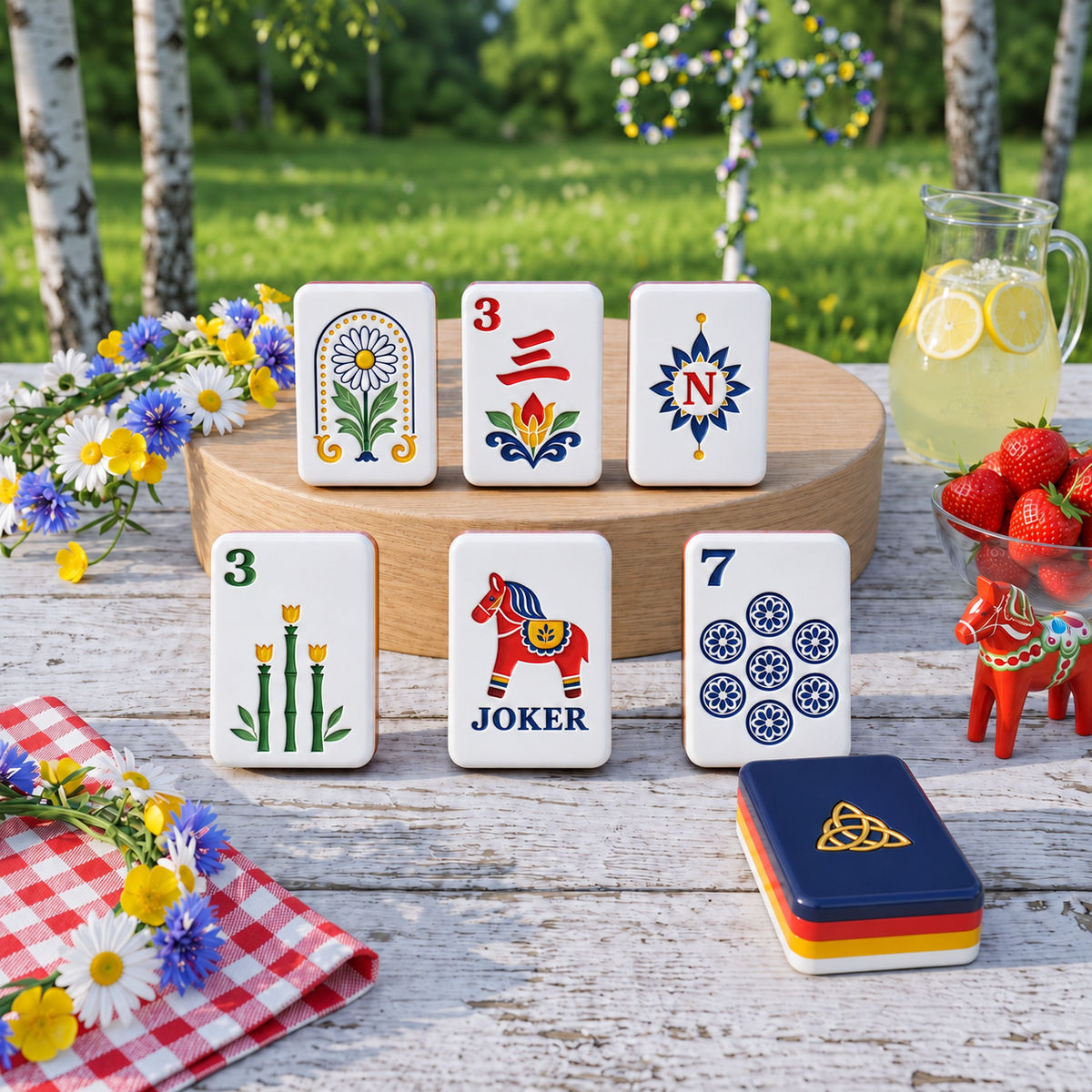
Mahjong dice are two six-sided cubes (one for direction, one for position) that players roll to determine where the wall break happens before each hand. In American mahjong, the East player rolls first; the dice total determines how many tiles down the wall to draw from. Quality matters: cheap plastic dice stick, crack, or show wear after 50 games; good ones stay smooth and readable for years. Look for solid acrylic or resin construction, clear numbering (not recessed pips), balanced weight, and edges that don't catch on felt mats. A fair roll depends on symmetry—uneven dice favor certain numbers. Mahstead includes dice with our best-selling mahjong sets, and we sell matching spare pairs so you always have backups if one gets damaged.
Why dice matter more than most players realize
Most of us grab whatever came in the set and never think about it again—until they don't roll. Worn dice develop flat spots or uneven weight distribution; one face lands face-down too often. Over 40+ hands a night, a biased die shifts who controls the wall break, subtly skewing play toward certain players. We've watched games stall because someone's dice won't separate (they stick together mid-roll), or numbers blur after ink fades. Quality dice feel substantial without being heavy, tumble smoothly across cloth, and land with confidence. The dice aren't glamorous, but they're the engine of fair play.

What material should your dice be made from?
Solid acrylic is the standard for American mahjong sets. It's durable, reads clearly in any light, and doesn't absorb moisture or smell like cheap plastic. Resin dice offer similar durability and come in more color options if you want personality at the table. Avoid hollow plastic or lightweight materials—they wear quickly and can cup or warp with heat. Acrylic and resin can also be engraved or custom-printed with logos or jokes, which matters if you're building a themed set. Feel the weight in your palm: quality dice should feel slightly substantial (not heavy enough to throw off the roll, but not so light they seem hollow). A good die sinks slowly in water rather than floating, a sign of solid construction.
How to check for balance and fairness before play
Set each die on a flat surface and spin it gently with your finger. A fair die will settle on a different face each time across several spins—if one face keeps landing down, the die is weighted or warped. Float-test in a glass of salt water: a balanced die should drift slowly without tilting to one side. Check edges: they should be crisp and even, not rounded or chipped. Examine the numbering: recessed pips (dots punched into the surface) catch lint and fade; raised or clearly painted numbers stay visible longer. Roll the pair 10 times together on your mat and watch for sticking or binding. If one die consistently rolls with one face on top, set it aside and use a backup.
✨ Find your Mahstead set — free US shipping →
How size and color affect gameplay and comfort
Standard mahjong dice are about ¾ inch (roughly 19mm) per side—large enough to roll across a mat and read instantly, small enough to grip comfortably. Smaller dice (often found in travel sets) can be tricky to read across a large table; larger ones take up mat space and may roll into tile racks. Color matters for visibility: black numbers on white, white on black, or contrasting colors (jade green, red) are fastest to read under lamplight. Colorless or translucent dice can be elegant but fade at a distance or under dim overhead lighting. If you play under spotty dining-room light, avoid pale pastels. We recommend a color scheme that matches or contrasts with your mat and set tiles for a cohesive, easy-to-read table.

Spare dice: why every host needs them
After 50 or 100 games, even quality dice start to slow. A corner gets a tiny chip, the surface micro-scratches, or the numbers thin from repeated thumbing. Rather than stop mid-game, we keep a spare pair in the same material and color. Mismatched dice distract players and raise questions about fairness. Buying a backup pair upfront—matched to your set—costs less than replacing the entire dice later and keeps games flowing. If you host weekly, two pairs is smart: one in play, one resting, so neither ages too fast.
Comparison: What Fits Your Table
Scenario | Best Choice | Why It Works |
Weekly home game, 4 players, felt mat | Solid acrylic, ¾", high-contrast color | Durable, reads fast, rolls clean on cloth |
Travel set, occasional play | Compact resin pair in case | Takes minimal space, still fair, good for weekend trips |
New player, learning game | Spare dice with set | No surprises, matches your tiles and mat |
Host with multiple sets | Color-matched pair per set | Zero confusion, easy to grab the right dice |
Themed/engraved set | Custom acrylic with logo | Personalized table presence, same durability |
What to check before you buy
Inspect the sample or product photos for:
Edge clarity: no rounded or chipped corners.
Number visibility: raised or inked dots, not recessed.
Uniform color and opacity across both dice.
A smooth surface with no bubbles, cracks, or discoloration.
Ask the seller:
Material (acrylic or resin stated clearly).
Size (verify ¾" or 19mm).
Color matching to your set (so they look intentional together).
Return policy if a die rolls unfairly in your first 5 games.
Test on arrival:
Spin test on a flat table (see "How to check for balance" section above).
Roll 10 times on your mat.
Float test in salt water if you have concerns.
If either die sticks, binds, or consistently favors a face, contact the seller for a replacement pair. Fair play starts with fair tools.
🀄 Shop best-selling mahjong sets →
Dice are small but essential—they set the tone for every hand. Invest in solid acrylic or resin, choose high-contrast colors for your table, and keep a spare pair on hand. When we host, we pair our dice with a quality mat and racks to build a table that feels intentional and plays smoothly. If you're building your first set or upgrading your game night, browse our best-selling mahjong sets, which come with dice designed to meet these standards—or choose a spare pair that matches your tiles and table aesthetic. Fair rolls, smooth play, and no mid-game surprises.
🎁 See our most-loved mahjong sets & accessories →
FAQ
Can I use regular six-sided dice in place of mahjong dice?
Technically yes, but not recommended. Regular gaming dice are often smaller, have recessed pips, and aren't optimized for rolling across a cloth mat. Mahjong dice are sized and weighted for the table size and play rhythm of the game.
How often should I replace my mahjong dice?
With weekly play, quality acrylic dice last 1–2 years before surfaces wear noticeably. Keep a spare pair to rotate in; most players don't retire dice unless they fail the float test or stick during rolls.
Do engraved or custom dice roll fairly?
Yes, if engraving is shallow and even across both faces. Deep engraving or uneven logos can create weight imbalances. Buy from a source experienced with mahjong dice so the customization doesn't affect play.
What's the difference between acrylic and resin dice?
Acrylic is the traditional standard—durable, reads clearly, and lasts years. Resin offers similar durability and often more color variety. Both are fair if manufactured symmetrically; choose based on aesthetics and availability.
Why do my dice stick together when I roll them?
Moisture or lint buildup on the surface, or uneven edges catching each other. Clean with a soft, dry cloth and store in a cool, dry place. If sticking persists, the surface may be warped—replace them.
Can dice be balanced if I sand down a heavy side?
Not reliably. Altering the surface risks creating new imbalances. It's safer and cheaper to buy a replacement pair than to DIY-fix a worn or weighted die.


View More
View More
View More
