
What Set Do You Need for Riichi Mahjong?
Last updated: Nov 23, 2026
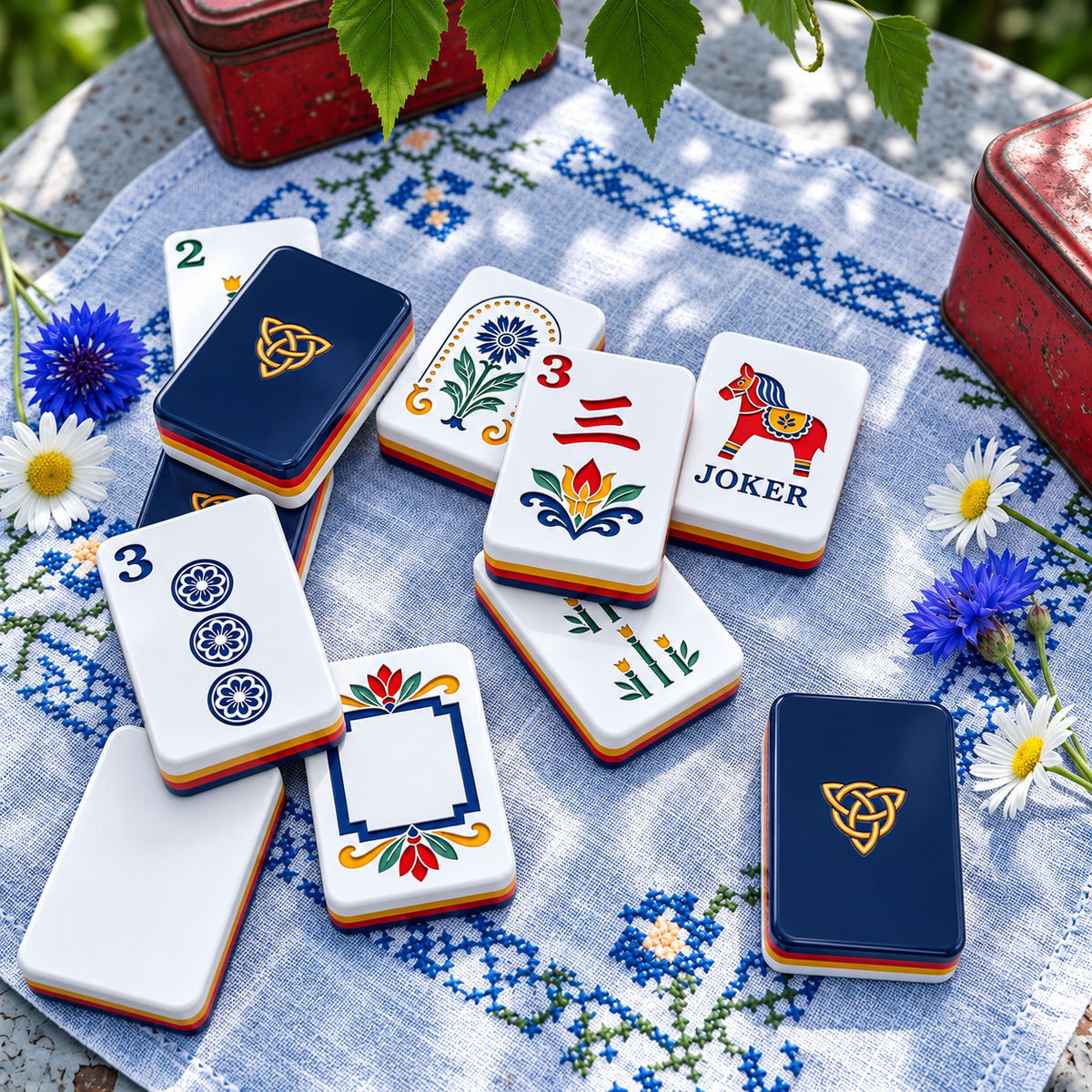
Riichi mahjong (also called Japanese mahjong) requires a 136-tile set with four copies each of: three suits (1–9 in each = 27 tiles), seven pairs of honours (winds and dragons), and 8 flower tiles—no jokers, no blanks. A riichi set plays with all 136 tiles at once, unlike American mahjong which uses 152 tiles and 8 jokers from the National Mah Jongg League card. You cannot use an American set for riichi because American sets have extra tiles and no Charlie system (discard wall). Riichi demands hand-drawn games and a knowledge of yaku (winning patterns) rather than a published card. Mahstead sells American mahjong sets only; if you want to play riichi, you'll need to source a 136-tile set from a specialist importer, or learn American mahjong first with one of our best-selling acrylic sets and return to riichi later.
Riichi mahjong and American mahjong are distinct games that happen to use tile-based strategy—but the tiles, rules, and scoring are fundamentally different. Many players assume a mahjong set is a mahjong set. That's where problems start. We're going to show you exactly what a riichi set contains, how it differs from what Mahstead makes, and whether riichi or American is the right game for you to learn first.
Why can't I use an American mahjong set for riichi?
American mahjong sets contain 152 playing tiles plus 8 jokers; riichi uses exactly 136 tiles with no jokers or blanks. American tiles include 1 Bam (often showing a bird), Flowers, and Seasons unique to that game. Riichi omits Flowers and Seasons entirely. A riichi set contains only three suits (Bams, Craks, Dots numbered 1–9), honours (four winds and three dragons), and 8 flower tiles for turn rotation. The structure is tighter, the hand sizes are smaller (13 tiles in hand at start, not 14), and the discard system works differently—riichi has a visible discard wall (River) that American players don't use. You simply cannot adapt an American set to riichi play without removing tiles and losing the integrity of both games.

What tiles are actually inside a riichi mahjong set?
A standard riichi set has 136 tiles: 108 number tiles (Bams, Craks, Dots, each 1–9, four copies per number), 16 honour tiles (four each of East, South, West, North), 12 dragon tiles (four each of Red, Green, White), and 8 flower tiles (numbered 1–4, two copies each or sometimes four unique flowers). Every tile is solid; there are no jokers, no blanks, no wild cards. The tile faces show Chinese characters and symbols unique to riichi convention—very different from the bright, game-state-tracking design of American tiles. Riichi tiles are typically smaller than American tiles and often feature bamboo, wood, or ivory-colored resin. The whole set is designed for speed and hand concealment rather than clarity of reading from across a table, which is central to American play.
Is riichi easier or harder than American mahjong to learn?
Riichi demands memorization of yaku (winning hand patterns) without a reference card—there's no published hand list like the National Mah Jongg League card used in American play. American mahjong is often called "the card game" because you consult a printed card every hand; riichi players must learn combinations through repetition and play. That said, riichi hand logic is tighter (you always need one pair plus chows or pungs), whereas American hands can be wild combinations of singletons, pairs, and exposed sets. If you're a beginner without years of play experience, American mahjong is usually easier to start with because the card removes memory burden. Many long-time riichi players say they could never switch to American; many American players find riichi's fluidity thrilling once they've mastered the yaku. The difficulty isn't absolute—it's a match between your learning style and the game's demands.
Where do I buy a riichi mahjong set?
Riichi sets are not sold at Mahstead or most American retailers; we focus entirely on American mahjong equipment. To find a riichi set, search specialist importers and online retailers that stock Asian gaming products—they will list tile counts (136 or 144, depending on variant) and materials (resin, bamboo, bone, plastic). Check that the set includes a documentation card or instruction sheet, because riichi rules and yaku vary slightly by region (Hong Kong mahjong, Taiwanese mahjong, and Japanese riichi all use similar tile counts but different hand rules). Verify the tiles are complete by counting the box or asking the seller directly—a single missing tile ruins play. Join a riichi club or meetup in your area (search libraries, community centers, and mahjong forums) to ask local players which sets they trust; riichi communities are often tight-knit and can steer you to quality suppliers you won't find by browsing alone.

Should I learn American or riichi mahjong first?
For speed and accessibility: American mahjong. You can play your first complete game in an evening with the card in hand. The rules are written down, the hand list is published yearly, and thousands of clubs meet weekly in North America. Starting with American mahjong builds tile recognition, hand-reading instinct, and discard strategy that transfers to riichi later.
For long-term depth: Riichi. The game rewards pattern memory, psychology, and risk management over many hands. If you love learning sequences and want a game you can study for years, riichi's yaku system opens up endlessly. Many riichi players become obsessed; many American players stay casual and social.
If you're undecided: Start with American. Mahstead's best-selling acrylic mahjong sets are made for American play and are affordable enough to try without a big investment. You can always buy a riichi set later if American doesn't hook you—they're not interchangeable, so you're not wasting money by learning one first.
🀄 Shop best-selling mahjong sets →
What should I check before buying a riichi set online?
When shopping for a riichi set from any seller:
Tile count: Confirm it's 136 tiles, not 144 (some variants add extra winds or blanks). Ask the seller to list the breakdown by tile type.
Material: Resin and bamboo are durable; plastic is cheap but can warp. Bone and ivory substitutes are premium but fragile.
Completeness: Some sets arrive with a few tiles missing—confirm the count before paying and take photos of the box contents.
Racks and storage: Riichi racks are narrower and taller than American racks because hands are concealed. Check if the set includes racks or if you need to buy them separately; they're not interchangeable with American equipment.
Variant rules: Ask if the set is for Japanese riichi, Hong Kong, or Taiwanese play—the tiles are the same, but some sets include instruction sheets for specific rules.
Shipping time: Riichi sets are often imported; factor in 2–4 weeks for delivery from overseas sellers.
If you're still learning American mahjong and want to add riichi later, there's no rush. Many players keep two sets: one for their weekly American game and one for occasional riichi nights with a specialist group. Our best-selling acrylic sets are designed and shipped with American players in mind, backed by Dallas-based knowledge of what works at the table.
🎁 See our most-loved mahjong sets & accessories →
Comparison: American vs. Riichi Set Essentials
Aspect | American Mahjong | Riichi Mahjong |
Tile count | 152 playing + 8 jokers | 136 total, no jokers |
Number suits | Bams, Craks, Dots (1–9, 4 each) | Same 108 tiles, identical structure |
Honours & flowers | 16 winds, 12 dragons, 8 flowers/seasons | 16 winds, 12 dragons, 8 flowers only |
Hand reference | Published card (changes yearly) | Memorized yaku patterns |
Difficulty for beginners | Easier (card-based) | Harder (memory-intensive) |
Where to buy | American retailers & Mahstead | Asian specialist importers |
Typical cost basis | Mid-range; budget to premium | Wide range depending on material |
Play speed | 30–45 min per hand (leisure) | 15–30 min per hand (faster) |
Where you'll find games | Thousands of US clubs, synagogues, country clubs | Smaller, dedicated riichi communities |
✨ Find your Mahstead set — free US shipping →

FAQ
Can I play riichi with an American mahjong set if I remove the jokers?
No. American sets have tiles riichi doesn't use (Flowers, Seasons, the 1 Bam bird design), and lack the specific honour and flower tile arrangement riichi needs. Removing jokers doesn't fix the fundamental mismatch. You need a true 136-tile riichi set.
Do I need a special mat or rack for riichi?
Yes. Riichi racks are narrower and taller because hands are held concealed; American racks are wide and short for exposed reading. Mats are similar in concept but riichi play emphasizes the River (discard wall) layout differently. You cannot swap racks between games.
How long does it take to learn riichi well enough to play in a club?
Most players can grasp basic yaku and play a full hand in 4–6 weeks of weekly play. Becoming competitive takes 6–12 months. American mahjong players often transition faster because tile recognition transfers; pure beginners should expect 2–3 months to play confidently in a casual group.
Are riichi tile designs different from American tile designs?
Yes. Riichi tiles use traditional Chinese characters and symbols; American tiles often have large numbers, bright colours, and English labels for speed of reading. Riichi tiles are also typically smaller (around 25mm vs. 30mm+) and designed for hand concealment rather than table clarity.
If I buy a riichi set now, can I sell it later if I don't like the game?
Riichi sets hold resale value in niche communities, but the market is much smaller than American mahjong. If you're unsure, start with an American set from Mahstead, where the market is large and resale is easier. You can always buy a riichi set later once you know you'll commit to it.
What's the difference between riichi, Hong Kong, and Taiwanese mahjong?
All three use similar tile counts (136–144) and omit jokers, but their yaku, scoring, and discard rules differ significantly. Riichi is Japanese; Hong Kong and Taiwanese are variants of Chinese mahjong with their own hand patterns. Buy a set matched to the specific variant your local group plays, or ask the seller which rules it's designed for.


View More
View More
View More
