
What Set Do You Need for Chinese Mahjong?
Last updated: Nov 23, 2026
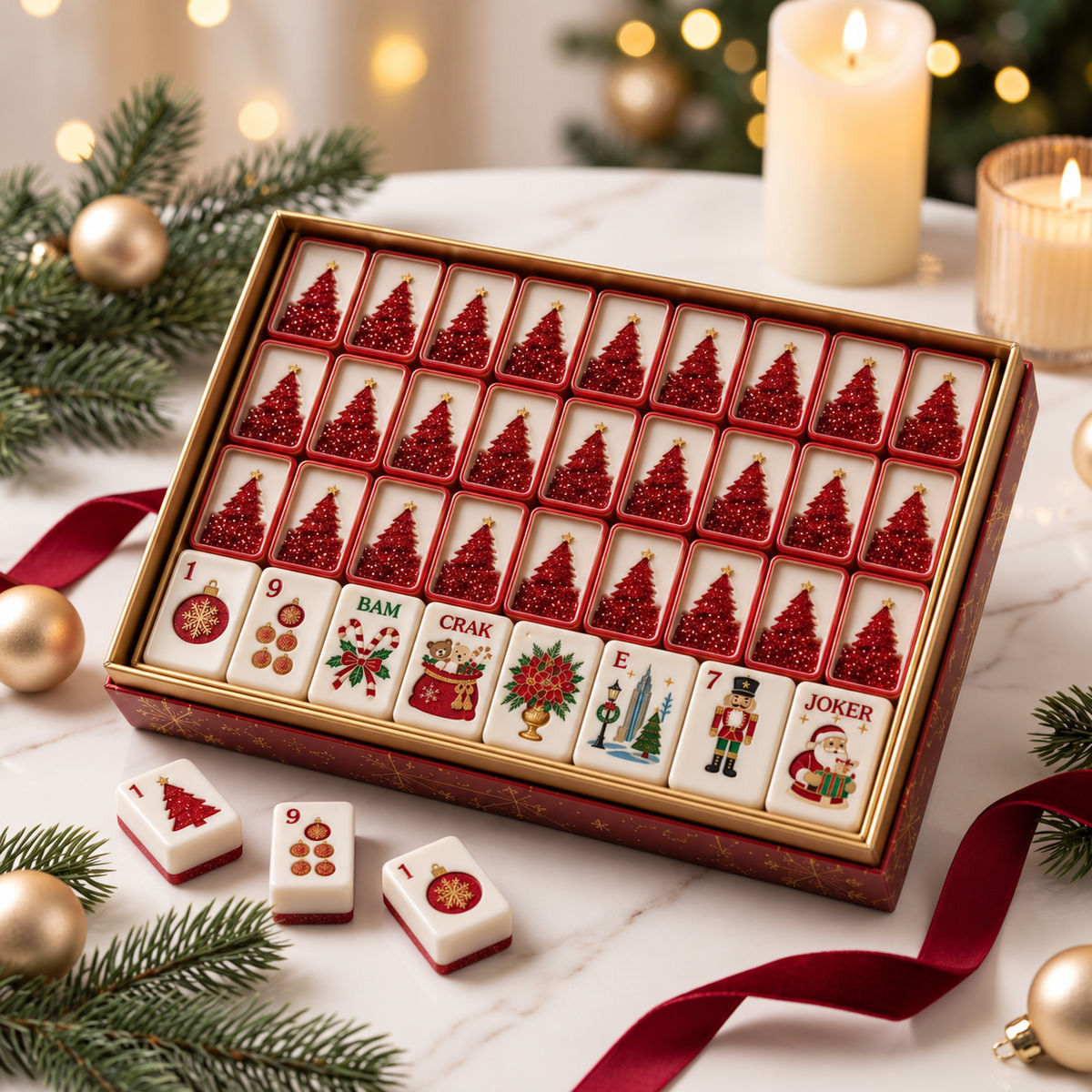
Chinese mahjong uses 144 tiles—fewer than American mahjong's 152-tile format—and includes chows (sequences), which American games forbid. Hands come from an open pool rather than a fixed card, giving players more creative freedom but less standardization. If you're learning Chinese mahjong, you'll need a 144-tile set; American players using our best-selling mahjong sets play exclusively from the National Mah Jongg League card with 152 tiles plus 8 jokers. The main decision: choose Chinese (144-tile, sequence-based) if you want classical, improvisational play, or American (152-tile, card-dependent) if you prefer structured, competitive games with fixed hand patterns. Cost and durability vary widely; acrylic tiles last decades with weekly play, while bamboo and bone age gracefully but cost more.
Why does Chinese mahjong use fewer tiles than American?
Chinese mahjong (144 tiles) evolved centuries ago in China; American mahjong (152 tiles) added winds and the joker mechanic in the 1920s–30s to increase complexity and hand variety. The 144-tile format is simpler—just four copies of each suit number (1–9 in Craks, Bams, Dots), four winds, and three dragons—making it faster to learn but also narrower in strategy range. American mahjong's extra winds and jokers require studying the annual National Mah Jongg League card and following rigid exposure rules. If you grew up playing Chinese mahjong with family, staying with 144 tiles honors that tradition; if you're entering an American club or game room, you must use 152 tiles. The tile count determines everything: hand structure, how many turns the game lasts, and what patterns are even possible.

What are the core rule differences in Chinese mahjong?
Chinese mahjong allows sequences (chows)—three consecutive numbers of the same suit, like 4-5-6 Bams. You can call and expose any chow, pung, or kong; American mahjong forbids sequences entirely and restricts exposed melds to pungs, kongs, quints, and sextets. Winning in Chinese mahjong means declaring "mahjong" when you have one winning pattern (often a pung plus sequences, or all sequences, depending on the regional rule set—Cantonese, Taiwanese, and Shanghai variants differ). American mahjong requires matching a single hand printed on that year's card. Chinese players read the river (discard pile) more actively and negotiate melds on the fly; American players must verify every hand against the card and cannot negotiate patterns. Draw mechanics also differ: Chinese games often hand back a tile to the wall after drawing from it, while American games cycle through the wall methodically. If you learned mahjong from a Chinese grandmother, expect very different flow from an American game room.
Should you buy a dedicated Chinese set, or can you use an American set?
You can play Chinese mahjong with an American 152-tile set—the extra tiles don't harm you, they simply sit unused. But if you play Chinese games weekly, a 144-tile set makes setup faster and clearer: no confusion about which tiles are active. American sets sold as 160-tile versions include spare jokers and blanks; those spares never enter play. For Chinese mahjong, a true 144-tile set has no spares and includes all four copies of each tile you need. The real choice is whether to own both (one for Chinese games, one for American games with the fixed card) or commit to one variant. We recommend dedicated sets: it speeds setup, prevents mixing tiles from different games, and signals to your players which game you're hosting. Chinese sets often feature bamboo or bone tiles with traditional engravings; American sets range from classic bone to modern acrylic, many with humorous titles. If you host both games, buy both sets—each is an investment that'll last years.
🀄 Shop best-selling mahjong sets →
How do hand patterns differ between Chinese and American mahjong?
American hands come from the current year's National Mah Jongg League card—a standardized list of roughly 70–80 valid patterns. You cannot win with a hand not on the card, and jokers follow strict rules: no joker in a single tile or pair, and no joker substitution in certain positions. Winning hands include pungs, exposed kongs, quints, and sextets, but never sequences. Chinese mahjong allows any hand that follows the player's chosen regional rules: usually "standard" (eye pair plus four melds), but also special hands like all sequences, all pungs, or honor-only patterns. Players often agree on a hand list before the game, but there's far more room for creativity and house rules. American mahjong feels tighter and more competitive because the card removes ambiguity; Chinese mahjong feels looser and more social because patterns emerge from negotiation. If you value clear rules and rank-based play, American mahjong is your game. If you prize improvisation and regional flavor, Chinese is more rewarding.

Comparison: Chinese vs. American mahjong set buying guide
Feature | Chinese (144-tile) | American (152-tile) |
Tile count | 144 (no spares) | 152 playing + 8 jokers |
Sequences allowed | Yes, encouraged | No, forbidden |
Hand source | Regional rules, player-agreed | Fixed annual card (NMJL) |
Setup time | 5–10 minutes | 10–15 minutes (Charleston ritual) |
Best for | Family tradition, social play | Competitive clubs, tournaments |
Tile materials | Bamboo, bone, plastic common | Acrylic, bone, bamboo available |
Who we serve | Returning Chinese players | American game rooms, new learners |
🎁 See our most-loved mahjong sets & accessories →
What to check before you buy a Chinese mahjong set
Variant clarity: Confirm whether you play Cantonese, Taiwanese, Shanghai, or another regional style—each has different hand rankings and bonus rules. Many sets don't specify this; ask the seller or your group's longtime player.
Tile size and thickness: Chinese sets typically use 1.25-inch tiles; American sets often run 1.3–1.5 inches for better visibility and easier shuffling. Thinner tiles (bamboo/bone) feel more authentic but wear faster; acrylic tiles are durable and visible across a table.
Spare tiles: Chinese 144-tile sets have no spares by definition. If a seller advertises "144-tile set with extras," they're either adding jokers (American-style) or blanks (non-standard). Avoid confusion: buy a true 144-tile set if you play Chinese, or an American 152-tile set if you play American.
Language and markings: Chinese sets often use simplified or traditional characters; American sets use English numerals and English suit names (Bams, Craks, Dots). If you can't read the tiles, you can't play efficiently.
Storage: A mahjong bag or case designed for 144 tiles will be tighter than one for 152; measure before purchasing. Acrylic sets ship well and stack compactly; bone and bamboo need padding to prevent chipping.
Play-testing: If possible, borrow a friend's set or visit a game room to handle tiles and feel the weight and texture. Online reviews help, but the tactile experience matters—tiles you love to shuffle are tiles you'll play with for decades.
Variants of Chinese mahjong: which ruleset matches your group?
Cantonese mahjong (Hong Kong style) emphasizes bonus scoring and uses a 3-tile scoring system; winning hand must hold an "eye" (pair) plus four melds. Drawn from a smaller pool, games move faster. Most widely played outside China.
Taiwanese mahjong mixes elements of Cantonese and Shanghai styles; often played in casual family settings. Tiles may show simplified characters. Rules vary widely by table; always clarify hand rankings before sitting down.
Shanghai mahjong uses all 144 tiles and prioritizes complex hand rankings and penalty scoring. Games tend to be slower and more strategic. Less common in North America but valued by purists.
Riichi mahjong (Japanese) is a distinct variant using 136 tiles and a different tile set (includes honor tiles but no "Red Dragon" distinction). If someone mentions Riichi, they're playing a different game entirely—don't mix tile sets.
For each variant, seek out blogs or guides specific to your ruleset; most regions have online communities that teach the exact hand rankings and bonus scoring.
✨ Find your Mahstead set — free US shipping →
The buying decision: Chinese, American, or both?
If you play once a month with family using inherited rules, buy a single 144-tile Chinese set in bamboo or bone—it honors tradition and lasts decades. If you attend a competitive American game room, you need a 152-tile American set with the annual card and jokers. If you host both games, invest in two sets: confusion on tile count kills a game mid-play. Our best-selling collections include designs for every taste—humorous titles for American sets, classic engravings for both. Acrylic tiles from our stock are durable, visible, and comfortable for weekly play; they won't chip or fade. Specialty designs like engraved titles let you personalize sets for gifts or club play. All sets ship free across the US; no hidden fees.
The real answer to "what set do you need?" is this: play the game your group already plays, use tiles that match that game's tile count, and upgrade to acrylic or quality bone if you're playing weekly. One set, one variant, played well, beats a closet full of unused sets gathering dust.

FAQ
Can I play American mahjong with a 144-tile Chinese set?
No. American mahjong requires exactly 152 tiles plus 8 jokers to play; 144 tiles is four tiles short and lacks jokers entirely. The hand card is written for that tile count. Buy a 152-tile American set if you're entering an American game room.
What's the actual difference in price between Chinese and American sets?
Prices vary by material and seller; we recommend checking current pricing on your chosen product page rather than relying on general ranges. Acrylic American sets are typically durable and affordable; bone and bamboo Chinese sets vary widely. See our best-selling collection for current options.
Do Chinese mahjong rules change by region, or is there one standard?
Chinese mahjong has at least three major regional variants (Cantonese, Taiwanese, Shanghai) with different hand rankings, bonus scoring, and penalties. Always ask your group which rules you're playing before buying a set or learning hands. Online communities often post region-specific guides.
I learned mahjong from my grandmother in Hong Kong. Should I buy a set labeled "Hong Kong" or "Cantonese"?
Look for "Cantonese" or "Hong Kong" explicitly on the product description. Both names refer to the same variant. Confirm the tile count (144) and check that the set includes all traditional tiles (Craks, Bams, Dots, winds, dragons, flowers). If unsure, ask the seller whether the set includes sequences.
Can I use the same set for both Chinese and American mahjong if I remove the extra tiles?
Technically yes, but it's confusing and error-prone. After you remove four tiles from an American 152-tile set, you're left with 148 tiles plus jokers—still not 144. You'll also lose those four tiles. Buy a dedicated 144-tile set for Chinese games and a 152-tile set for American; the clarity is worth the investment if you play both regularly.
Are there any new Chinese mahjong sets designed in the past few years that are beginner-friendly?
Yes. Modern sets often use clearer tile markings, larger numerals, and lighter colors for easier reading. Check our new arrivals for recently added designs; acrylic sets with high-contrast graphics help newer players learn tile recognition faster than traditional carved bone or bamboo.


View More
View More
View More
