
What Does the West Wind Tile Look Like in Mahjong?
Last updated: Nov 23, 2026
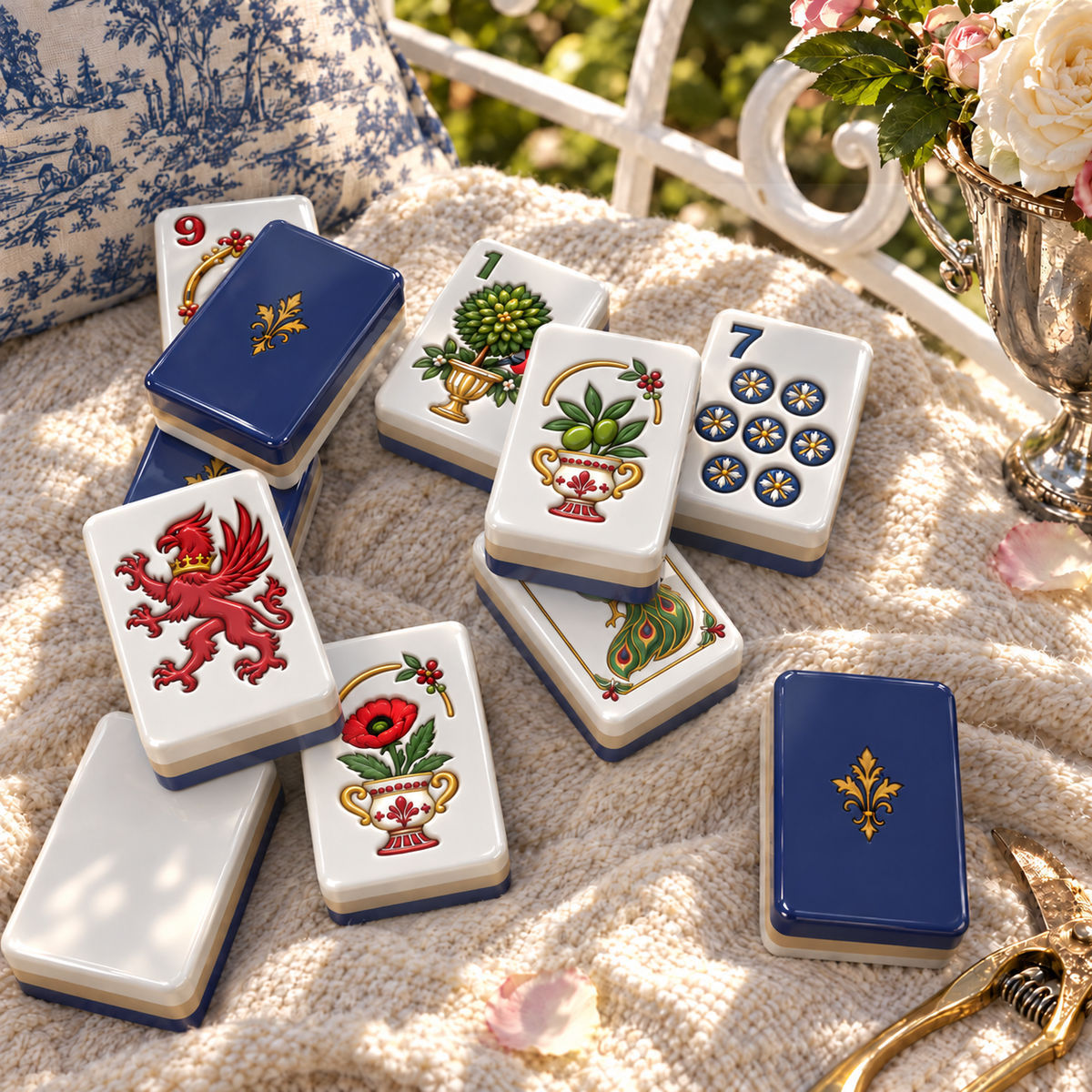
The West Wind tile shows the Chinese character 西 (xī, meaning "West") on a white or ivory background, matching the size and finish of all other honor tiles in your set. In American mahjong, West is one of four wind tiles—North, East, South, and West—each printed four times in a standard 152-tile deck. The tile has no suit designation and is never colored like Bams, Craks, or Dots; it's a standalone honor tile, similar to dragons. West Wind pairs with any suit in valid hands and can be called as part of a pung (three identical), kong (four identical), quint (five), or sextet (six). Because American mahjong hands come only from the National Mah Jongg League card, West Wind appears in specific patterns each season. When building your first best-selling mahjong set, you'll receive four West tiles among the 16 total wind tiles included. 🀄 Shop best-selling mahjong sets →
How do I spot West Wind in a crowded rack?
Look for the square honor tile shape (identical to North, East, South, and all dragon tiles) and locate the character 西 printed in the center. Most sets use the same font and size for all winds; if your tiles are engraved or custom, the depth and texture remain consistent across all four directions. On standard acrylic sets, West appears matte or glossy depending on whether jokers are visible in your rack. Unlike Bams (which often show a bamboo pattern), Craks (which display a thousand-knot or flower pattern), or Dots (simple circles), West carries only text—no decorative background. Holding the tile to light makes the character sharper; if you squint at a rack under table lamps, compare the tile to your printed reference card or a known-good example from a veteran player at your table.

Why isn't West Wind colored like the other honor tiles?
In American mahjong, winds have no intrinsic suit connection—they're "neutral" honors that work with any numeric or dragon combination. By contrast, dragons carry subtle suit links: Red is associated with Craks, Green with Bams, and White ("Soap") with Dots and serves as zero. Because winds stand apart from this suit structure, manufacturers leave all four winds plain and monochrome. This design choice also reduces confusion during fast play; when you're scanning racks or a discard pile, an unadorned wind tile is instantly recognizable as non-numeric. The convention holds across all American mahjong sets—whether acrylic, bakelite, or bone—so players can move between tables and sets without relearning the visual language.
What hands use West Wind on the NMJL card?
West Wind appears in dozens of seasonal hand patterns across the National Mah Jongg League card, which updates each spring. It may form pungs or kongs alongside like winds (three or four West tiles together), appear in quints or sextets mixed with other honor tiles, or be paired—for instance, a hand might require two West tiles as the "pair" (the two-tile ending required in every valid hand). Because the card changes yearly, the exact positions and patterns shift. Some seasons emphasize winds heavily; others feature them sparingly. Reading the card accurately is essential to calling a winning hand; if you're new to American mahjong, familiarize yourself with the layout and notation so you can locate patterns quickly during play. Our guide on how to read the mahjong card walks through the card's structure and symbols.
Can I substitute West Wind with another tile if I'm short?
No. American mahjong requires an exact 152-tile deck (plus 8 jokers) and strict tile composition: four of each number in each suit, four of each wind, four of each dragon, and eight flowers. If you're missing a West tile, you cannot substitute another wind or a blank—the hand becomes invalid and play halts. This is why owning a spare set or keeping backup jokers and blank tiles (included in Mahstead's 160-tile sets) matters. If a tile cracks, discolors, or goes missing mid-game, pull a spare from your bag. Many serious players carry a small container of replacement tiles in their travel case. Over years of weekly games, tiles do wear, fade, or chip—especially if you play outdoors or on rough surfaces.

How do West Wind tiles differ across mahjong variants?
In American mahjong, all four winds are identical in structure—plain honor tiles with text only. Chinese (Cantonese), Hong Kong, and Taiwanese mahjong also use four winds but may depict them differently: some sets add decorative borders, apply color tints, or use calligraphy styles that vary by region. Riichi (Japanese) mahjong uses winds similarly but has different hand structures and scoring. Vietnamese mahjong includes winds but follows unique rules for melds and drawing. If you're switching between American mahjong and another variant at the same table, always clarify which set is in play—don't mix tiles or reference cards. American mahjong's straightforward, monochrome wind design exists specifically to support the NMJL card's hand patterns and speed of recognition during the fast-paced calling and exposure of melds.
Aspect | American West Wind | Chinese/HK West Wind | Riichi West Wind |
Appearance | Plain character 西, no color | Often bordered or tinted; calligraphy may vary | Bordered; character style per region |
Suit link | None (neutral honor) | None (neutral honor) | None (neutral honor) |
Role in hand | Pung, kong, quint, sextet, or pair per NMJL card | Part of melds and sets per local rules | Part of melds per Riichi hand patterns |
How many in set | 4 | 4 | 4 |
Interchangeable? | No; uses only NMJL rules | No; uses only local rules | No; uses only Riichi rules |
🎁 See our most-loved mahjong sets & accessories →
What should I check before buying a set to ensure clear West Wind tiles?
Examine sample photos on the product page: zoom in on a wind tile to confirm the character is sharp, centered, and legible. If the set is engraved (not printed), run your fingertip across the tile—you should feel the grooved character without lifting your finger. For acrylic sets, hold a tile up to a lamp and check for even opacity; cloudy or yellowed tiles are harder to read quickly. Ask the seller if the winds and dragons are printed or engraved; engraved tiles last longer under heavy use and remain readable after years. If you're color-sensitive or have vision challenges, confirm the set's font size and contrast before ordering. Test a single tile or borrow a friend's set to ensure you can identify West (and all other honors) reliably during play. Mahstead's best-selling mahjong sets are designed with player readability as a core requirement; each tile is tested for legibility and durability.
What to check before you buy
Tile legibility: Zoom photos or request a sample to confirm the West character is sharp and centered.
Material durability: Engraved tiles outlast printed ones if you play weekly or daily.
Complete tile count: Verify the set includes four West tiles plus all other winds, dragons, and flowers (152 tiles total, 8 jokers).
Spare tiles: Choose a 160-tile set so you have backup jokers and blanks for inevitable wear or loss.
Card compatibility: Confirm the set is sold with (or you own) the current-year NMJL card; an older card may not match the season's hands.
✨ Find your Mahstead set — free US shipping →
More about American mahjong tiles
For a full breakdown of every tile in the set—what each suit tile looks like, how flowers differ from winds, and why jokers matter—see our guide to what's in an American mahjong set. If you're just starting out, mahjong for beginners covers tile recognition alongside basic rules and the Charleston.

FAQ
Is West Wind the same as West Dragon?
No. West Wind is a directional honor (character 西); West Dragon does not exist. The three dragons are Red, Green, and White ("Soap"), each appearing four times in the deck.
Can I use West Wind as a zero or blank tile?
No. West is a distinct honor tile with its own character. White Dragon (not West) serves as zero in some hands. Jokers and blanks are the only substitutes for missing tiles during play.
Why do some players call West Wind by a different name?
In casual American play, all four winds are usually called by their English names (West, East, North, South). Some older players or those familiar with Chinese mahjong may use Mandarin names, but at an American table following NMJL rules, English is standard.
What happens if I draw four West Wind tiles in my opening hand?
You now have a kong (four identical tiles), which you must expose to the table immediately after your draw. This prevents you from using a joker elsewhere and locks those four tiles into the exposed area of your rack.
How do I know if West Wind is part of a winning hand?
Check the current-year NMJL card. If your hand matches a published pattern that includes West as a pung, kong, quint, sextet, or pair, you've won—call "Mahjong" and show your cards. If West is not in a valid hand pattern for that season, it cannot be part of a win.
Can West Wind be part of a chow (sequence)?
No. American mahjong has no chows or sequences. All melds must be pungs (3), kongs (4), quints (5), or sextets (6) of identical tiles. Winds like West can only form these "like-tile" melds, never sequences of consecutive numbers.


View More
View More
View More
