
What Does the 9 Bam Tile Look Like in Mahjong?
Last updated: Nov 23, 2026
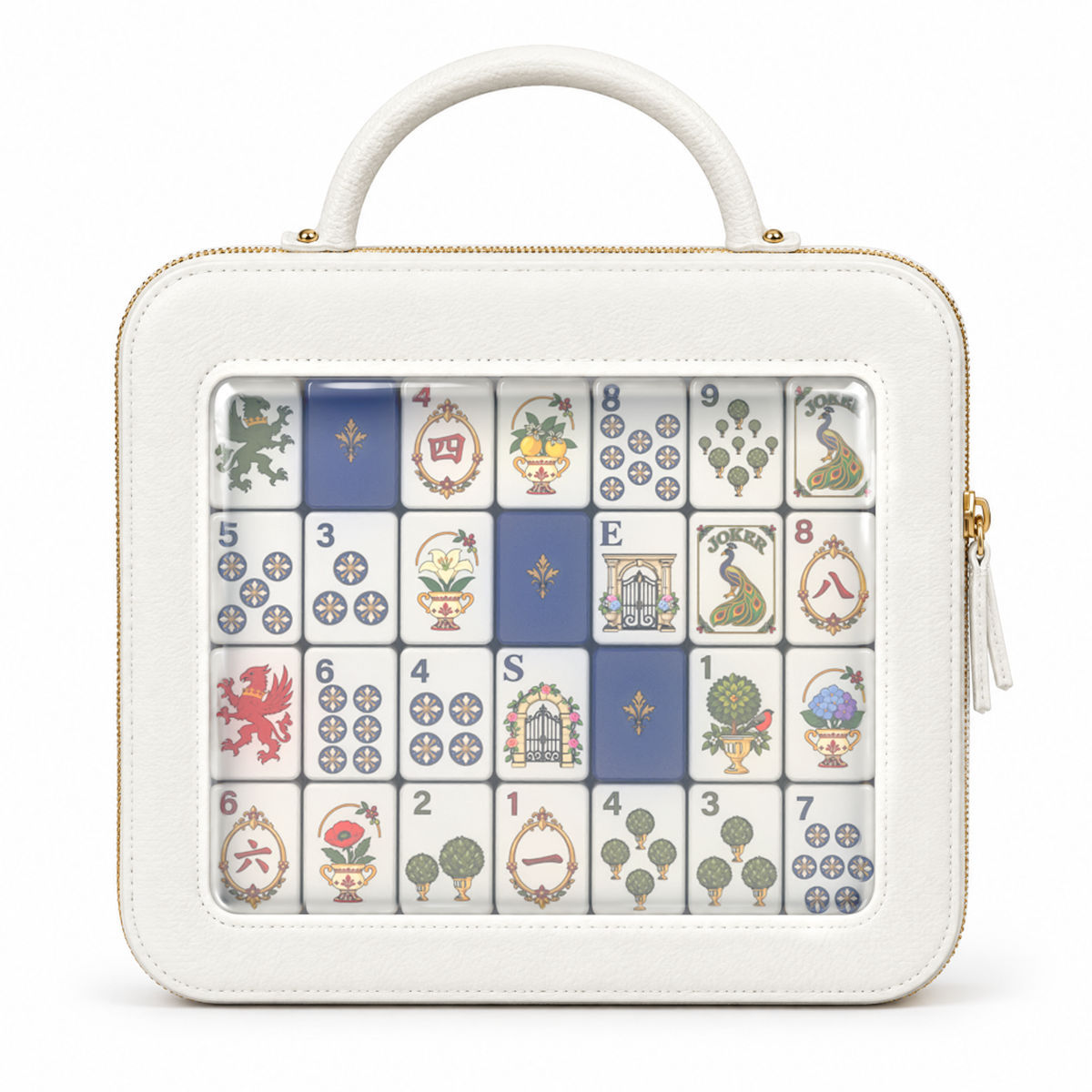
In American mahjong, the 9 Bam tile shows nine bamboo stalks printed or embossed on a single tile. The stalks are typically arranged vertically in columns, though designs vary by set manufacturer. The tile is approximately 1¼ inches square and part of the Bam suit—one of three number suits alongside Craks and Dots. Every standard 160-tile set includes four copies of the 9 Bam, and it appears frequently in hands listed on the National Mah Jongg League card. Recognizing the 9 Bam instantly helps you spot valid melds and play faster.
How do you identify the 9 Bam among other tiles?
The 9 Bam is the highest-numbered tile in the Bam suit, so it carries the most bamboo symbols on its face. Look for nine distinct stalks or marks arranged in a grid or scattered layout. The Bam suit always displays bamboo imagery (never circles like Dots, never symbols like Craks), so once you learn Bams = bamboo, the 9 Bam stands out immediately. The numeral "9" usually appears in a corner for quick reference. In most sets, the color or background tint is consistent across all Bam tiles, making them visually distinct from the other two number suits.

What is the role of the 9 Bam in American mahjong hands?
The 9 Bam, like all number tiles, combines only with identical tiles to form melds visible on the table—a pung (three 9 Bams), a kong (four 9 Bams), a quint (five 9 Bams with jokers), or a sextet (six with jokers). You cannot use the 9 Bam in sequences (chows) as you would in Chinese mahjong; American mahjong does not allow or call chows. The 9 Bam appears in many hands on the current year's card because high-numbered tiles offer flexibility in building long melds and achieving higher scores. Jokers can never appear in a single tile or a pair, so any meld using the 9 Bam must contain at least one matching natural tile.
How does the 9 Bam design vary across different tile sets?
Tile designs differ by manufacturer and material—acrylic sets display the 9 Bam with sharp, precise etching or printed graphics, while bamboo or bone sets may show hand-carved stalks with texture and shadow. Some sets use a simple grid of nine dots or marks; others arrange stalks in a more artistic or scattered pattern. The key distinction is that all Bams show bamboo imagery, all Craks show symbol marks (usually resembling a wheel or flower), and all Dots show circles. Engraved sets offer custom text or monograms but maintain the standard symbol layout for the 9 Bam face. Custom engraved sets from Mahstead include clear, legible traditional symbols so the 9 Bam remains instantly recognizable during fast-paced play.
🀄 Shop best-selling mahjong sets →
Why is the 9 Bam easier to spot than other tiles?
The 9 Bam has the most bamboo stalks in the entire Bam suit, making it visually "busier" and heavier than the 1 Bam (which shows a single stalk and often a bird). The high symbol count means the 9 Bam creates immediate visual contrast on a crowded table—your eye naturally finds dense symbol clusters faster than sparse ones. In low-light conditions common to many game nights, the clustered stalks also catch light and shadow more readily. This practical advantage makes the 9 Bam one of the first tiles beginners learn to read without hesitation.

What tiles do you confuse with the 9 Bam, and how do you tell them apart?
New players sometimes mistake the 9 Bam for the 9 Crak or 9 Dot because all three are "high number" tiles in their respective suits. The distinction is always the symbol system: Bams = bamboo stalks, Craks = geometric or wheel-like symbols (the suit name derives from "character" or Chinese symbols), and Dots = simple circles. Count the symbols; all three nines carry nine marks, but the type of mark is unique to each suit. The 9 Bam will never show circles (those are Dots) or complex symbols (those are Craks). Once you memorize that Bams are always bamboo, confusion disappears. The pillar page on what's in an American mahjong set explains all three suits in detail with side-by-side comparisons.
Quick reference: The three 9-tiles at a glance
Tile | Symbol | What it shows | Confusion risk | How to confirm |
9 Bam | Bamboo | Nine vertical stalks | Low if you know suits | Bamboo = Bam, always |
9 Crak | Character | Nine wheel/symbol marks | Medium; looks dense | Symbols ≠ bamboo ≠ circles |
9 Dot | Dot | Nine circles | Medium; abstract count | Circles = Dots, always |
What should you check before you buy a mahjong set to ensure clear 9 Bam visibility?
Before purchasing, inspect the tile finish and print quality. Acrylic tiles should have crisp, dark etching or printing so the nine bamboo stalks stand out clearly against the tile background. If the image appears faded, blurry, or too small, you'll struggle to read it during play. Ask whether the tiles include numerals in corners for quick reference—a "9" printed alongside the symbol dramatically speeds up reading. Hold a sample tile in various light conditions (bright, dim, overhead, angled) to confirm the symbols remain legible. Custom engraved sets must retain the original symbol clarity; Mahstead's acrylic tiles are engraved with precision routing, so text and symbols never blur or overlap. For casual play, standard finishes work well; for frequent hosts and serious players, prioritize sets with high-contrast acrylic or thick, bold etching.
🎁 See our most-loved mahjong sets & accessories →
What is the 1 Bam, and how does it differ from the 9 Bam?
The 1 Bam displays a single bamboo stalk, often accompanied by a stylized bird (traditionally a sparrow or phoenix in some sets). The bird imagery is the hallmark of the 1 Bam and appears in almost all American mahjong sets as a cultural homage. While the 9 Bam serves as a high-value tile used in many hands, the 1 Bam is less frequently called and appears in fewer hands on the National Mah Jongg League card each year. Both are identical in function—they form melds only with matching tiles or jokers—but their rarity and appearance differ significantly.
What to check before you buy
Symbol clarity: Inspect the nine bamboo stalks under direct light; they should be sharp and dark.
Tile size consistency: All 9 Bams should measure identically; mismatched sizes cause confusion.
Background contrast: The cream or white base should contrast strongly with the stalk color (usually black or dark brown).
Numeral presence: A corner numeral "9" accelerates recognition during quick plays.
Material finish: Acrylic should be smooth and non-glossy to reduce glare; engraved designs should not obscure the symbol.
Set completeness: Confirm the set includes four copies of the 9 Bam (and four of every other number tile).
✨ Find your Mahstead set — free US shipping →

FAQ
Can the 9 Bam be used in a sequence with the 8 Bam and 7 Bam?
No. American mahjong does not allow or call chows (sequences). The 9 Bam can only form melds with three or more identical 9 Bams, optionally with jokers. Sequences are a feature of Chinese and other Asian variants, not American mahjong.
How many copies of the 9 Bam are in a standard American mahjong set?
A standard 160-tile American mahjong set includes four copies of the 9 Bam. Every numbered tile (1–9 in each suit) appears four times, ensuring balanced play across the game.
What do I do if I cannot clearly see the 9 Bam symbols on my tiles?
If tiles are worn, faded, or poorly printed, readability suffers during play. Replace the set or ask your tile supplier about higher-contrast or larger symbol options. Custom engraved acrylic sets from Mahstead offer precision etching so symbols remain sharp through years of use.
Is the 9 Bam more valuable in scoring than the 1 Bam or other numbers?
Tile value in American mahjong depends on the hand pattern listed on the National Mah Jongg League card that year, not on the tile number itself. A hand containing 9 Bams may score higher or lower than a hand with 1 Bams, depending on rarity and hand structure. The card—not the individual tile—determines value.
Can I use a joker to represent the 9 Bam in a meld?
Yes. A joker can substitute for the 9 Bam in any meld of three or more tiles (pung, kong, quint, sextet). However, a joker can never stand alone as a single tile or as part of a pair; you must always have at least one natural 9 Bam in any meld that includes a joker.
Why does the 1 Bam show a bird but the 9 Bam does not?
The bird on the 1 Bam is a traditional design element honoring Chinese mahjong heritage. Higher-numbered tiles do not carry secondary imagery because space is needed to display the full symbol count—nine stalks take up the entire tile face.


View More
View More
View More
