
What Does the 4 Bam Tile Look Like in Mahjong?
Last updated: Nov 23, 2026
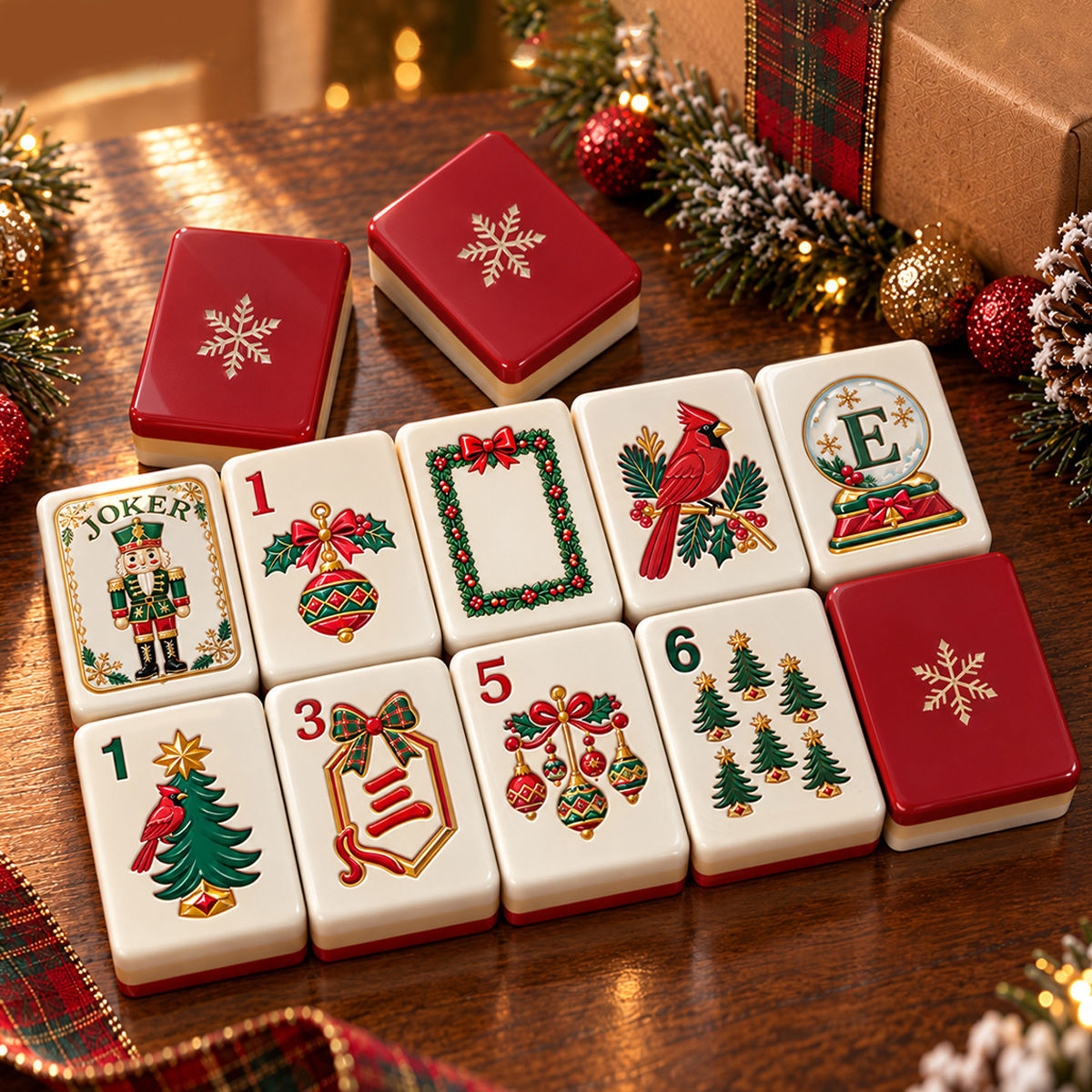
The 4 Bam tile shows four bamboo stalks arranged vertically on its face. In American mahjong, Bams are one of three numbered suits, and each Bam tile from 1 to 9 displays that many stalks. The 4 Bam is neither rare nor special—you'll see it constantly during play. It's one of four identical copies in every 152-tile set. The tile's clarity depends on your set's design and material; acrylic sets with bold engraving make the stalks unmistakable, while painted ceramic versions may show varying detail. The 4 Bam combines with other tiles to form melds on the current year's National Mah Jongg League card. Knowing exactly what each number looks like speeds up your game and prevents costly misreads.
The 4 Bam shows four bamboo stalks arranged vertically on its face. In American mahjong, Bams are one of three numbered suits, and each Bam tile from 1 to 9 displays that many stalks. The 4 Bam is neither rare nor special—you'll see it constantly during play. It's one of four identical copies in every 152-tile set. The tile's clarity depends on your set's design and material; acrylic sets with bold engraving make the stalks unmistakable, while painted ceramic versions may show varying detail. The 4 Bam combines with other tiles to form melds on the current year's National Mah Jongg League card. Knowing exactly what each number looks like speeds up your game and prevents costly misreads.
How do the three suits differ visually?
American mahjong uses three numbered suits: Bams (bamboo stalks), Craks (wheels or cracks), and Dots (circles). Bams show vertical lines; Craks display a wheel-like symbol with spokes or a cracked pattern; Dots appear as solid circles. The 4 of each suit follows the same logic—four of whatever symbol defines that suit. Learning to tell them apart instantly is essential because the suits work together in patterns on the mahjong card. When you're reading a hand or deciding whether a discard fits your plan, a split-second hesitation on suit identity costs you a turn.

What's the easiest way to spot a 4 Bam quickly?
Count the stalks. Four vertical lines = 4 Bam. No math, no guessing. In our best-selling mahjong sets, the stalks are deep-etched, so even from across the table you can count without squinting. Ceramic or painted tiles sometimes blur the lines; acrylic tiles with engraved numerals at the corner of each tile add a backup check. Beginners often confuse 4 with 5 or 6 at a glance—practice counting on a fresh set for five minutes before your first game, and you'll never mix them up again.
Which 4 Bam tiles look best for home game play?
The clearest 4 Bam tiles use bold, high-contrast designs on a solid background. Acrylic sets outperform ceramic for readability because light passes through the material and reflects off the engraved lines. Designs with corner numerals (the "4" printed in the corner) provide a secondary visual check. Ornate sets with decorative borders or colored backgrounds can obscure the stalk count, especially under poor lighting. If you host weekly games, invest in mahjong sets with clear engravings—your players will thank you when no one misreads a tile.

What role does the 4 Bam play in actual hands?
The 4 Bam appears in many hand combinations on the National Mah Jongg League card each year. It may form part of a pung (three identical 4 Bams), a kong (four 4 Bams), or a sequence-like group with other Bam numbers. Because there are four copies of the 4 Bam in every set, hands sometimes call for all four in a single game, making it a high-traffic tile. The card changes annually, so the exact hands the 4 Bam fits into shift each spring. Understanding the tile visually prepares you to spot it instantly when it's crucial to your win.
How do beginner mistakes with the 4 Bam happen?
New players often confuse Bam counts with Crak or Dot counts under pressure. They rush, glance at the number of lines without confirming the suit symbol. Others misread a 4 Bam as a 5 Bam if the tile is at an angle or partly hidden under a mat edge. Confusion escalates in fast games or when tiles are stacked carelessly in racks. Learning the basics of the mahjong set includes drilling tile recognition until it's automatic. Spend two minutes per suit before each game, and errors vanish.
Mistake | Why It Happens | How to Avoid It |
Confusing 4 Bam with 5 Bam | Rushing; poor light; similar line counts | Count stalks aloud once per suit per game |
Mistaking suit entirely | Didn't drill suits beforehand | Lay out one of each suit and name it aloud |
Misplacing 4 Bam in rack | Rack is cluttered or poorly lit | Use a mat with clear zone markings and keep racks tidy |
Miscalling tile during play | Tile is partially hidden | Place all tiles flat and fully visible on your rack |
🀄 Shop best-selling mahjong sets →
What to check before you buy a new set
Start by opening the box and laying out all four 4 Bams side by side. Hold them at arm's length under normal room light. Can you instantly count four stalks on each? If the design includes corner numerals, are they crisp? Run your fingertip over the engraved lines—do they feel deep and distinct, or shallow? Try the tiles in a mahjong rack with pushers—do they stay upright and legible? Flip through the other Bam numbers (1, 2, 3, 5, 6, 7, 8, 9) and make sure each stalk count matches the number. If all four 4 Bams look identical and identical to the pattern you expect, the set is production-quality. If one tile looks faded, cracked, or misaligned, contact the seller before your first game.
🎁 See our most-loved mahjong sets & accessories →
Testing tile clarity is especially important if you play in dimly lit rooms or outdoors. Acrylic with engraving is more resilient than ceramic paint because the design is carved into the material itself—it won't wear off or fade over years of weekly play. If you play online, you won't see physical tiles, but beginners often practice with a home set first, so clarity still matters. Read the full guide to what's in an American mahjong set to understand why consistency across all 152 tiles affects your game experience.
✨ Find your Mahstead set — free US shipping →
The 4 Bam is just one of 152 tiles you'll handle regularly. When every tile is clear and consistent, your focus stays on strategy, not on squinting or second-guessing. Whether you're a beginner learning the suits or a longtime player upgrading for better visibility, a well-designed set pays for itself in cleaner, faster games.

FAQ
Is the 4 Bam ever confused with the 14 Bam?
There is no 14 Bam. Bams number only 1 through 9. Confusion usually comes from misreading a 4 as a 5, or from unfamiliarity with the suits. Drill the count on day one and you won't hesitate again.
Do all 4 Bams in a set look identical?
Yes. Every standard American mahjong set contains four identical copies of the 4 Bam. If any of the four look different in shade, stalk clarity, or size, the set has a defect and should be replaced.
Can you use the 4 Bam as a wild card or joker?
No. In American mahjong, only joker tiles and blanks act as wild cards. The 4 Bam is always the 4 Bam—it cannot substitute for another tile, and it cannot be used in place of a joker.
What's the best lighting to see the 4 Bam clearly?
Overhead or side lighting that casts clear shadows on the tile surface works best. Avoid backlighting or glare. If you play in dim rooms, consider a mat with a light-colored surface, which improves contrast and makes stalk counts easier to spot.
Does the 4 Bam appear in beginner hands on the mahjong card?
Yes. The 4 Bam appears in hands throughout the card, from beginner to advanced difficulty. Its exact role changes every year when the National Mah Jongg League releases a new card, but you will encounter it in nearly every game.


View More
View More
View More
