
What Does the 2 Crak Tile Look Like in Mahjong?
Last updated: Nov 23, 2026
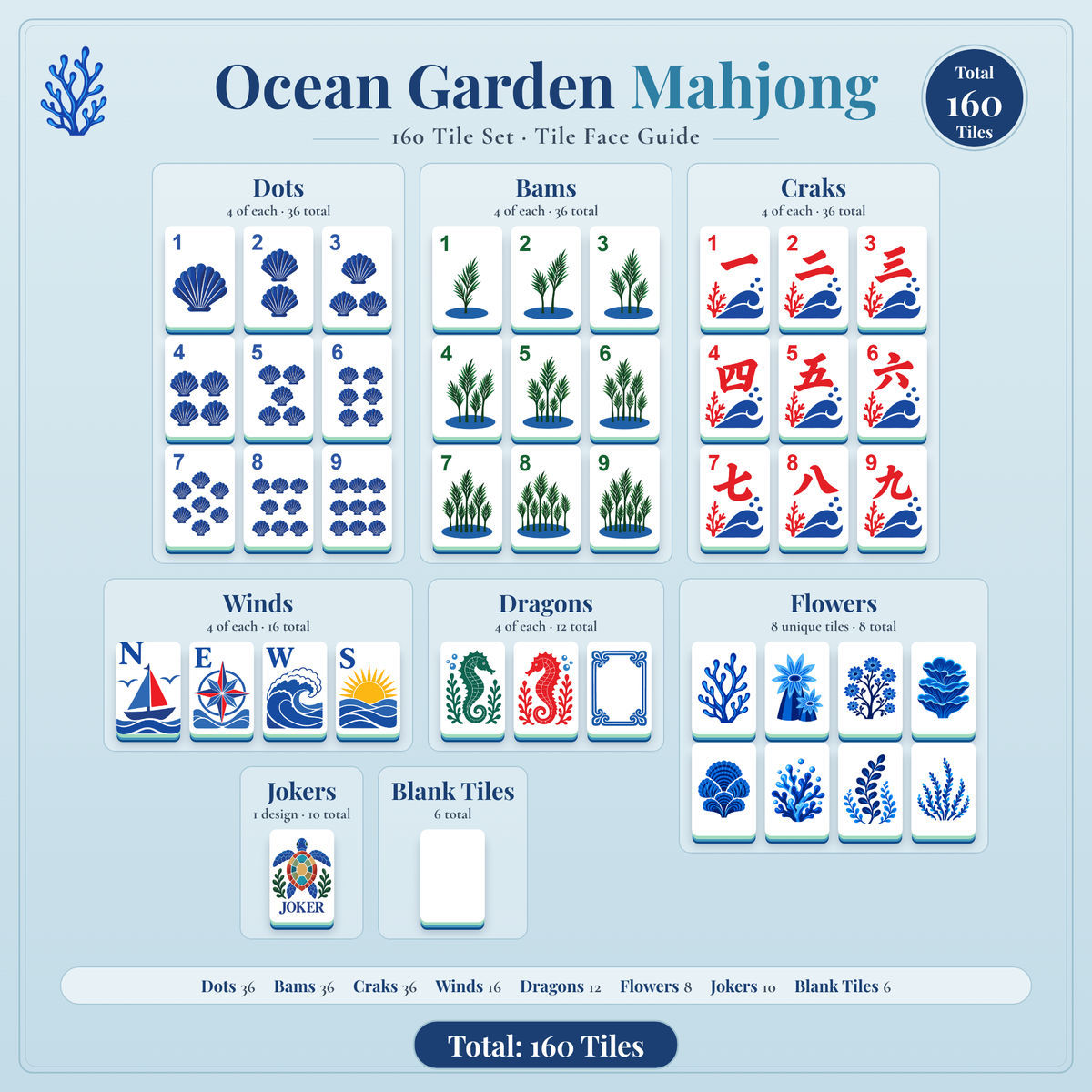
The 2 Crak tile displays two Chinese characters or symbols representing the "crak" suit, printed or embossed on an acrylic or plastic face. It's one of nine numbered tiles in the Crak suit (1–9), and you'll have four copies in any American mahjong set of 152 playing tiles. The Crak suit (also called "characters") uses a symbol that looks like a traditional Chinese ideogram; the number 2 appears prominently beside it. Unlike the 1 Crak, which often has a stylized marking, the 2 Crak is straightforward: clear numerals and suit symbols in your chosen design. When you're building your first set, clarity is everything—poor tile contrast or tiny print slows down recognition during a hand, especially under table lighting.
What's the actual design printed on a 2 Crak?
The 2 Crak shows the character 萬 (wan, meaning "ten thousand") or a stylized crak symbol plus the Arabic numeral 2. Some sets emphasize the number; others balance it with the suit symbol. The face is typically white, cream, or pale green, with black or dark red text. Engraved or embossed sets offer raised edges on each symbol, making them tactile and easier to read from across the table without lifting the tile. The back of all tiles in a set is uniform—solid colored or patterned—so no one can see your hand accidentally.

How do you tell a 2 Crak apart from a 1 Crak or 3 Crak?
The numeral 2 is the fastest way to distinguish it. The 1 Crak often has a bird or ornate design; the 3 Crak shows three craks in a row. The 2 Crak sits squarely in the middle of that range. In American mahjong, you need all nine numbered tiles in each suit plus winds, dragons, flowers, and jokers. When discarding or building your hand, scanning for the 2 quickly—not confusing it with 1 or 3—keeps the game flowing. Poor contrast between number and background causes hesitation.
Why does tile clarity matter during a real game?
Games move fast. A player might discard eight to ten tiles per turn, and you're scanning your hand of 13 tiles plus your exposure to match the National Mah Jongg League card. Squinting at a 2 Crak you thought was a 1 costs seconds and breaks focus. Under overhead lights or in a dimly lit home, tile faces that lack contrast become liabilities. Engraved tiles with raised symbols and high-contrast color combos (black on white, for example) eliminate guesswork. This is why acrylic sets designed for regular play invest in legibility over aesthetics alone.
What sets have the clearest 2 Crak markings?
Sets with bold, sans-serif numerals and bright tile backgrounds excel. Acrylic tiles, especially lighter colors, hold laser engraving or embossing well. Bamboo and bone sets can be beautiful but sometimes rely on subtle carving that fades under poor lighting. If you host weekly games or play in variable light, choose a set where the 2 Crak number is at least half an inch tall and the suit symbol contrasts sharply with the tile face. Avoid sets where the 2 is centered in a cluttered design; simpler layouts win every time during play.

What does the 2 Crak mean in scoring or strategy?
The 2 Crak is a low number tile, paired with 1 and 3 in many common hands on the mahjong card. Low Craks often appear in runs of three consecutive numbers (called Pongs in some variants, though American mahjong does not allow exposed sequences). The 2 Crak's role is contextual—it's valuable only if your current hand card calls for it. Unlike dragons or winds, which carry blanket importance, number tiles live or die by the week's hand patterns. Learning how to read this year's mahjong card teaches you which low Craks are scoreable and which are filler to discard early.
How many 2 Crak tiles come in a standard set?
Four. American mahjong uses exactly 152 playing tiles: three suits (Bams, Craks, Dots) with numbers 1–9, each repeated four times (36 tiles per suit, 108 total), plus 16 winds, 12 dragons, 8 flowers, and 8 jokers. Four copies of every numbered tile ensures that hands can form without blocking other players. If a set advertises 160 tiles, it includes spare jokers or blanks beyond the 152 playing tiles—never add spares to play.
Feature | Why it matters | What to look for |
Number size | Faster recognition during fast discards | At least half an inch tall |
Contrast ratio | Legibility under dim or overhead lighting | Black on white or dark on pale background |
Engraving or embossing | Tactile, reduces glare | Raised symbols you can feel |
Suit symbol clarity | Distinguishes Craks from Bams and Dots | Clear, uncluttered design |
Tile quantity | Matches American standard play | Four copies of every number tile |
🀄 Shop best-selling mahjong sets →
How do beginners avoid confusion with all three suits?
The three suits—Bams, Craks, and Dots—look distinct once you know them. Bams carry a stick or bamboo symbol; Craks show the ideogram 萬; Dots are small circles or pips. Beginners often mix Dots and Craks because both use symbols. A set designed for teaching or group play uses heavy contrast and large numbers. The 2 Crak, sitting in the middle of the numeric range, becomes a reference point—if you can spot a 2 Crak instantly, you're building confidence with the full tile inventory. Play a few rounds, and the suits become automatic.
What to check before you buy a mahjong set
Tile face clarity: Hold a sample (if available) or review photos under bright and dim light; numbers and suit symbols must be obvious at arm's length.
Tile material: Acrylic tiles resist fading and are washable; resin or bone require more care but offer warmth.
Contrast combination: Avoid gold text on cream or pastel backgrounds; black or dark colors on white or pale tiles work best.
Set completeness: Verify 152 playing tiles plus jokers; spare tiles (in 160-tile sets) are extras, not part of active play.
Durability: Engraved tiles outlast printed ones in high-use settings; check if your group plays weekly.
Suit symbol style: Confirm that Craks, Bams, and Dots are visually distinct—no ambiguity between any two.
🎁 See our most-loved mahjong sets & accessories →
When you're setting up for weekly games, invest in clarity. A set where the 2 Crak jumps out visually, rather than blending into the pile, keeps everyone focused on the hand, not the hunt. Engraved sets with bold numerals and high-contrast colors transform play quality—especially for groups with mixed eyesight or under non-ideal lighting. Pair your clear-marked set with a quality mat and racks to create a professional, comfortable game environment.
✨ Find your Mahstead set — free US shipping →

FAQ
Is the 2 Crak different in Chinese or Hong Kong mahjong?
Yes. Chinese mahjong uses different tiles and hand rules entirely. American mahjong is its own system: 152 tiles, the National League card, no exposed sequences. The 2 Crak design and function apply only to American play. If you're learning a regional variant, confirm your set matches that rule set.
Can I use a 2 Crak as a joker or wild tile in American mahjong?
No. In American mahjong, jokers are separate tiles—usually blank or marked "Joker." Number tiles like the 2 Crak are fixed; they cannot substitute. Only the official eight jokers (or the spares included in some sets) fill the wild-tile role.
How do I know if my 2 Crak tile is fake or misprint?
Check the numeral and crak symbol against the 1 and 3 Craks in your set. If the 2 looks different in size, color, or text style, or if it's cracked or discolored, it's likely a flaw. Buy from a reputable seller who replaces defective tiles. Mahstead sets ship with consistent, uniform tile faces.
What if I can't tell Craks from Dots under bad lighting?
Upgrade to a set with higher contrast and larger numbers. Acrylic tiles with black text on white are clearest. Pair your set with a good table mat that reflects light evenly, and ensure overhead lighting is bright enough that every tile face is readable.
Why do some sets have 2 Craks that look slightly different from each other?
Four copies of the 2 Crak should look identical. If they differ, it's a manufacturing defect—poor quality control or mixing tiles from different production runs. High-quality acrylic sets maintain exact uniformity across all four copies. Check before play, and report obvious differences to the seller.
Can I write or mark a 2 Crak tile myself if it's hard to see?
No. Marking tiles is cheating and violates American mahjong rules. Instead, replace the set with one that has clearer markings. If you're in a group that regularly struggles with visibility, consensus to upgrade is the right call—it benefits everyone.


View More
View More
View More
