
Vietnamese Mahjong Strategy: Tactics for Fast-Play Tile Games
Last updated: Nov 23, 2026
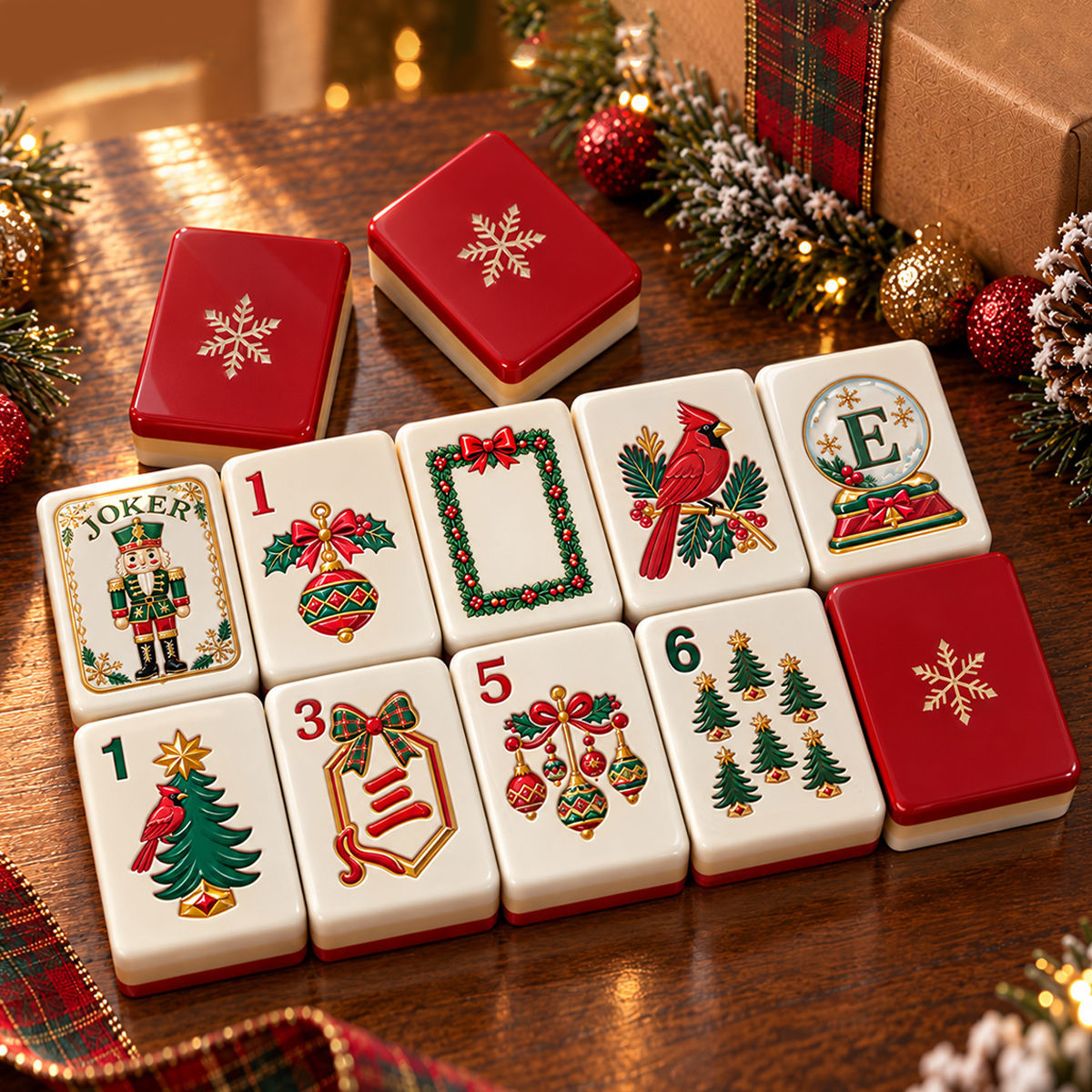
Vietnamese mahjong strategy centers on aggressive tile tracking, rapid meld recognition, and defensive pile management. The game moves faster than American mahjong because players can declare winning hands flexibly rather than matching a fixed card; success depends on remembering discards, spotting opponent patterns, and pivoting quickly between offensive and defensive plays. Jokers are typically allowed in single tiles and pairs—unlike American rules—which opens more winning paths. The game typically lasts 10–20 minutes per hand depending on player skill and tile fortune.
How does Vietnamese mahjong differ from American timing and rules?
Vietnamese mahjong plays at a noticeably quicker tempo than American mahjong. In American play, you're bound to one year's National Mah Jongg League card and must form exact hand patterns; in Vietnamese variants, winning combinations follow looser, player-agreed patterns that allow immediate adaptation. Jokers behave differently too: Vietnamese players often permit joker use in pairs and single tiles, whereas American rules forbid this entirely. The game uses 144 tiles instead of the American 152-tile count, so reshuffles happen faster and fewer "dead" tiles sit in racks. Because patterns aren't fixed to a seasonal card, players must memorize common hand families and recognize them instantly mid-game—a skill that rewards experience.
🀄 Shop best-selling mahjong sets →

What's the core offensive strategy: when to chase versus when to pass?
Aggressive tile pursuit in Vietnamese mahjong means knowing which suit or honor family to prioritize early. Watch your first 10 discards: if Bams appear frequently and Dragons appear rarely, most players likely lack Bams and have Dragon strength. Pivot your hand immediately toward the abundant suit, because you'll draw those tiles faster and competitors will struggle to block you cheaply. Never chase a hand that requires all four of one tile when opponents have already discarded two—the odds flip against you fast. Instead, look for hands that use common tiles across multiple ranges; a sequence-heavy hand beats a pung-heavy one in speed because you can complete it with more tile combinations. The core rule: pursue the suit where your first draw shows two or three matches, and abandon other suits within the first round.
How do you read opponent discard patterns to predict holdings?
Every discard reveals fear and strategy. When a player discards a high Dragon early, they likely don't need Honors and are building a single-suit hand—look for their discards to be sequential tiles they're avoiding. When someone throws a 5 Dot before any Dot sequences appear, they fear a 4–5–6 hand is forming at the table and are protecting themselves defensively. Track the order of discards: if Player A always discards from their right rack first, they're playing conservatively; if they shuffle the discard, they're strategizing. The most powerful read is the "late discard reversal"—when a player who discarded a suit early suddenly wants that suit back, they've redrawn into it and are dangerous. Count discards aloud mentally (Vietnamese players often count to 30–40 tiles before calling "ready") to estimate how many players are close to winning. Never discard a tile within two numbers of what a ready player just drew.
What tile-preservation tactics reduce losses in losing rounds?
In Vietnamese mahjong, losing rounds teach as much as wins. Keep your early discards aligned: throw all Dots first, then Craks, then Bams, so opponents struggle to read your true hand direction. This "suit grouping" defense costs you nothing and masks your switching strategies mid-round. When you sense multiple players are close to winning, stop trying to win and instead minimize your payout by building a "cheap hand"—one with few points that signals you're not threatening. Avoid holding jokers too long; jokers are visible to all and mark you as a threat, making opponents defensive. Instead, use jokers early to complete risky melds, then discard your way to a lower-value hand if winning becomes unlikely. The most overlooked tactic: throw honor tiles aggressively in the first half of the round when they're high-risk for others, then grab them back if no one needs them later.

Should you adapt strategy mid-round when your initial hand fails?
Yes—absolutely. A hallmark of Vietnamese mahjong excellence is pivoting without hesitation. If your target suit appears completely in three players' early discard piles, abandon it within three turns. Switching hands mid-round costs speed, but staying stubborn costs rounds. The pivot works best when you switch to a hand type that overlaps with your current tiles: if you were building a Bam sequence but realize Bams are locked, build a Dot/Crak hand using the high Bams as joker substitutes. Many intermediate players freeze when their plan fails; champions treat each round as a new problem. Watch which discards are flowing freely and which are choked off—flow signals safety, choking signals threat. Build toward flow. This flexibility explains why the best Vietnamese players rarely lose by more than three rounds consecutively: they don't marry their first idea.
What's the optimal strategy for the Charleston or passing phase?
In Vietnamese mahjong variants that use a Charleston (tile exchange before play), your passing strategy should assume opponents are building single-suit or honor-heavy hands. Pass defensive tiles—honor pairs and mid-range numbers (4, 5, 6)—that don't commit you if they return. Never pass three tiles of the same number unless you're certain that number will become useless in your final hand; pass three tiles of three different numbers instead, so you conserve flexibility. When receiving tiles from opponents, immediately recount your hand and reset your mental "suit priority"—sometimes three incoming Craks shift your entire game. A subtle advantage: on the final pass, watch what remains unclaimed in the center; unused, high-value honor tiles signal the game will be contested and you should build a cheap backup hand in advance.
Strategy Element | Vietnamese Priority | Why It Matters | Implementation |
Tile tracking | High | Pace is fast; losing count loses games | Count aloud to 30; reset after each discard |
Joker usage | Flexible (allowed in pairs) | More winning paths open earlier | Save one joker for emergency; use others early |
Hand pivoting | High | Stale hands lose fast | Plan backup hand by turn 3 |
Defensive discard order | Medium | Confuses opponents cheaply | Throw one suit fully before switching |
Charleston pass timing | High | Incoming tiles reshape strategy | Recount and reset priorities immediately |
🎁 See our most-loved mahjong sets & accessories →
Common mistakes that sink Vietnamese mahjong strategy
Holding jokers too long. Many newer players hoard jokers for a "perfect hand" that never comes. Jokers sit visible in your rack, telegraphing your strength and making opponents gang up on you. Use a joker within three turns of drawing it, or discard it. You lose more by broadcasting your hand than you gain by waiting.
Chasing two hands simultaneously. Trying to keep options open in Bams and Craks splits your mental focus and slows your draw speed. Pick one, pursue it hard for five turns, then switch decisively. Vietnamese pace punishes fence-sitting.
Ignoring the discard pile order. Reading the sequence, not just the tiles, tells you what each player avoided and when. Many players scan the pile as a blur; champions read it like a sentence. Reread the last 10 discards before your turn.
Staying in a losing hand. Pride costs points. If you've played four rounds and haven't drawn any of your target tiles, pivot immediately. The sunk cost is already gone.
Discarding honor tiles too early. Honors (Winds, Dragons) are rare and valuable. Throwing them in rounds one and two signals you don't need them—true or false. If false, opponents will block you ruthlessly later.
What to check before you buy a mahjong set for Vietnamese play
Verify the tile count matches your game variant: most Vietnamese sets use 144 tiles, though some regions play 152-tile American-compatible sets. Confirm acrylic durability if you play fast-paced sessions multiple times per week—ceramic tiles can crack under rapid shuffles. Check that jokers are clearly marked and easy to spot in your rack, since joker tracking is crucial. Ensure the rack system (if included) accommodates quick, silent tile rearrangement; Vietnamese players often shift tiles without audible clacking, so a smooth rack is a speed advantage. Verify mat dimensions fit your table; Vietnamese games often run smaller groups (two to three players) around compact tables, so a travel-sized mat may suit you better than a full four-player layout.
✨ Find your Mahstead set — free US shipping →
For hosting Vietnamese mahjong nights at home, our mahjong mats provide a durable, quiet playing surface that speeds up tile movement and reduces noise during rapid play. Pair them with mahjong racks with pushers for silent, smooth tile shifts—a subtle but real advantage in speed-focused games. If you're traveling to Vietnamese community centers or game nights, mahjong bags and cases protect your set and keep tiles organized between sessions, which matters when you're rotating between tables or teaching newcomers.

FAQ
Can I use American mahjong strategy in Vietnamese mahjong?
Partially. American strategy emphasizes rigid hand patterns from the seasonal card; Vietnamese strategy rewards flexibility and rapid pivoting. Tile-tracking and discard-reading skills transfer directly, but you must unlearn the "wait for the card" mindset. American players often play too slowly for Vietnamese pace.
How many points is a typical winning hand in Vietnamese mahjong?
Point systems vary by region and house rules; there's no universal standard like American mahjong's National League card. Most Vietnamese groups agree on a system before play begins. Common variants award 1–3 points per complete meld, plus bonuses for speed (winning within first 10 draws) or risk (using mostly jokers). Always confirm the scoring system with your group before your first hand.
Should I discard my highest or lowest tiles first?
Discard mid-range tiles (4, 5, 6) first to keep flexibility. High tiles (8, 9) and low tiles (1, 2) are easier for opponents to read; mid-range appears in more patterns. Throw one complete suit before switching to signal you're not pursuing it, then secretly pivot.
What's the difference between Vietnamese and Hong Kong mahjong strategy?
Hong Kong mahjong emphasizes melds called "chows" (sequences) and strict point calculations; Vietnamese variants focus on speed and simpler, flexible winning combinations. Hong Kong games are longer and more mathematical; Vietnamese games reward quick decision-making and people-reading over calculation.
How do I know if I'm playing Chinese, Vietnamese, or another regional variant?
Ask your group directly before starting. Key tells: tile count (Chinese and Vietnamese often use 144; American uses 152), joker rules (Vietnamese allows jokers in pairs; American forbids it), hand flexibility (fixed card = American; player-agreed patterns = Vietnamese or Chinese), and round speed (Vietnamese typically 10–20 minutes per hand; American 15–30). When in doubt, watch the first discard pile—if players are throwing suits in deliberate order, it's likely Vietnamese; if they're mixing freely, it's likely Chinese or Hong Kong.


View More
View More
View More
