
Three-Player Mahjong Terms & Glossary
Last updated: Nov 23, 2026
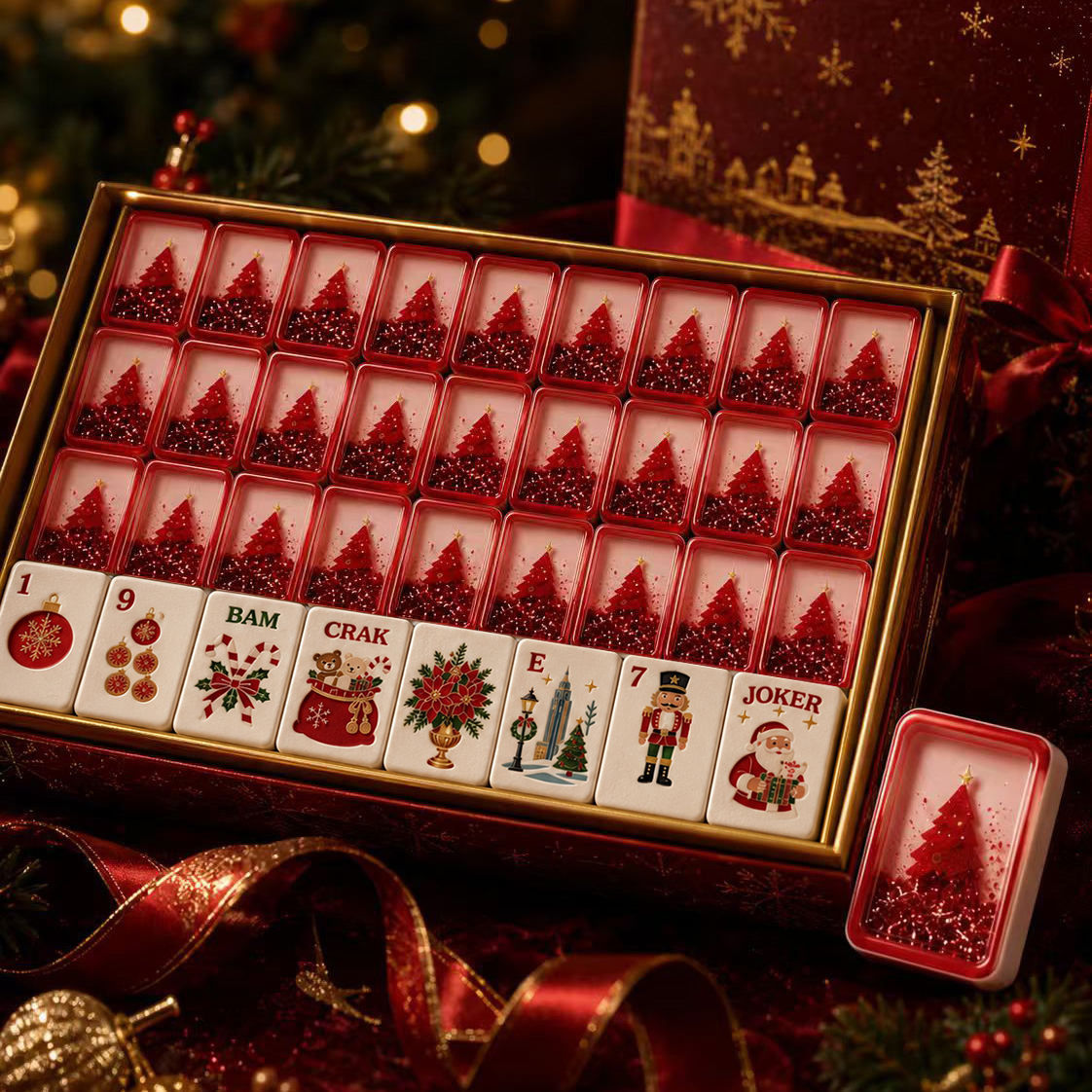
Three-player mahjong runs with three seats instead of four, eliminating one wind (usually North, so East, South, and West remain). The wall shrinks from 152 tiles to roughly 108 tiles played per hand. Terms like "pung," "kong," "quint," and "hand" stay the same, but the wall setup, tile draw order, and call patterns differ. You still use the National Mah Jongg League card framework, though the hand patterns available are narrower because fewer seats mean fewer discard options and a tighter pool. Jokers function identically—never as a single tile or pair—and the basic strategy shifts because fewer players discard fewer tiles overall. American three-player rules allow joker calls and different exposures than four-player American mahjong. If you're moving between formats, note that three-player games finish faster and require quicker tile recognition. Best-selling mahjong sets work for all variants; check that your set includes extras jokers for flexibility across formats.
What walls and winds mean in three-player?
In three-player mahjong, three of the four winds (East, South, West) remain active; North is typically removed. Each player holds one wind position, and rotation follows the same East-South-West cycle. The wall—that perimeter of face-down tiles you draw from—is built with only three sides (or a shortened fourth), and the wall is drawn from by three players only. This changes draw frequency and the rhythm of the game significantly compared to four-player rounds.
🀄 Shop best-selling mahjong sets →

How does the wall shrink, and why?
The standard American four-player wall uses all 152 tiles split equally among four sides: 38 tiles per side. In three-player, you typically remove one side or compress three sides to hold fewer tiles total—often around 108 tiles in play. Fewer tiles in circulation means the discard pile fills faster, players have fewer draws before the hand ends, and dead walls (tiles set aside before play) are proportionally smaller. The shorter timeline rewards recognizing hand patterns quickly and tracking discards more carefully.
What's a "dead wall" and why does it shrink?
The dead wall—also called the "kong box"—holds tiles reserved for drawing when you declare a kong (a set of four identical tiles). In four-player American mahjong, the dead wall holds 14 tiles. In three-player, it typically holds 10 or fewer, depending on the exact wall division rule your group uses. Fewer reserve tiles mean fewer opportunities to fish for a winning tile after a kong; hands end sooner if the live wall empties before anyone wins.

Which hand patterns are possible in a three-player game?
Since the National Mah Jongg League card was designed for four-player American mahjong, not all hand patterns on the card are legal or practical in three-player. Hands requiring specific discard sequences or patterns from four players may be impossible with three. Most three-player groups adapt by using a subset of the official card or house-rule which hands are valid. Before a game, agree on whether you're using the full card with a "skip invalid hands" rule, or a pre-filtered three-player hand list. This prevents disputes mid-game and keeps scoring clean.
What does "discard faster" mean for three-player strategy?
With only three players discarding instead of four, the tile pool turns over more quickly per round. If you need a specific tile, your wait time between seeing it discarded and drawing from the wall is compressed—fewer players means fewer turns before the wall cycles. Holding onto a tile longer is riskier because someone else may need it urgently and will call it quickly. Three-player players typically play more aggressively, call discards sooner, and plan fewer moves ahead than in four-player games. Joker management is tighter: fewer redundant tiles are in play, so jokers become harder to use without overstretching your hand.
Comparison: Key Differences Between Four-Player and Three-Player American Mahjong
Aspect | Four-Player | Three-Player | Impact |
Active winds | N, E, S, W (4) | E, S, W (3) | Fewer seats, simpler rotation |
Wall size | 152 tiles (4 × 38) | ~108 tiles (3 sides) | Game ends 25–30% faster |
Dead wall | 14 tiles | 10 or fewer | Fewer kongs possible per hand |
Discard frequency | Slower tile turnover | Rapid tile cycling | Calls must be quicker; jokers rarer |
Hand patterns | All NMJL card hands | Subset (3-player adapted) | Group must agree on valid hands |
Joker scarcity | Moderate | High | Cannot hold jokers as safely |
Glossary: Core Three-Player Terms
Call: Claiming another player's discard to complete a set (pung, kong, quint, or sextet). In three-player, calls happen faster because fewer players discard before your turn.
Dead wall: Tiles set aside before play, drawn when you declare a kong. Smaller in three-player (10 tiles instead of 14), limiting kong opportunities.
Discard pile: Tiles played face-up by each player in order. Three-player piles fill faster, making it harder to hide your strategy.
Hand: Your 13 or 14 tiles during play, arranged into sets and a pair matching a valid NMJL card pattern. Valid patterns differ between four-player and three-player variants.
Joker (wildcard): A tile that substitutes for any other tile within a set. Never used as a single tile or pair. Jokers are scarce in three-player because the overall tile supply is smaller.
Kong: A set of four identical tiles. Drawing from the dead wall after declaring a kong is possible but limited in three-player due to the shorter wall.
Pung: A set of three identical tiles. The most common exposed set in three-player, called frequently as tiles cycle quickly.
Quint: A set of five identical tiles (only possible with jokers in American mahjong). Rare in three-player due to joker scarcity.
Sextet: A set of six identical tiles (only possible with jokers). Extremely rare in three-player.
Wall: The face-down tiles arranged in a perimeter, drawn by players during play. Three-player walls are shortened to roughly 108 tiles total, built with three sides or a compressed fourth.
Wind (position): One of four cardinal directions (East, South, West, North) representing a player's seat. In three-player, North is removed; East, South, and West rotate among players each hand.
Practical Checklist: Setting Up a Three-Player Game
[ ] Confirm which variant you're playing: adapted NMJL card, house rules, or a published three-player set.
[ ] Decide which wind (usually North) is inactive.
[ ] Build the wall with three sides only, or compress a fourth side to match your tile count.
[ ] Set aside a dead wall of 10 tiles (agree on this with your group beforehand).
[ ] Place the remaining tiles as the live wall.
[ ] Assign each player an active wind: East, South, West.
[ ] Conduct the Charleston pass as you would in four-player (three passes per player, then a final return pass).
[ ] East player draws first from the wall.
[ ] Play proceeds West → South → East, or follow house direction.
[ ] Agree in advance: which NMJL hands are legal in three-player, and which hands are skipped as unplayable.
[ ] Track discards carefully—fewer tiles in circulation means faster game, more emphasis on remembering what's been played.
What to Check Before You Buy a Three-Player Mahjong Set
If you're shopping for a three-player set, look for sets labeled as American mahjong (152 tiles plus jokers) rather than sets designed only for four-player. An engraved American mahjong set with clear suit markings and wind symbols helps three players spot tiles faster during rapid play. Since three-player games are compact, a set with racks with pushers sized for 13–14 tiles per player works better than oversized racks. Check that your travel bag or case fits a 152-tile set if you're moving your game between homes; three-player groups often rotate hosting. A mahjong mat isn't strictly necessary for three players but helps define the discard zones and keeps the pace organized when tiles cycle quickly.
🎁 See our most-loved mahjong sets & accessories →
Real-World Example: Three-Player Hand Setup
You sit as East, holding 14 tiles: 2 Bams, 3 Bams, 5 Bams, 1 Crak, 4 Crak, 4 Crak, 4 Crak, 7 Crak, 2 Dot, 3 Dot, 5 Dot, Green, Green, White. You're one tile away from a hand on the NMJL card (a pung of 4 Craks, a pung of Greens, and several other sets). South discards a White joker. Because only three players are in the game, no one discards after South before West's turn; West draws, discards, then you draw. If West's discard doesn't help you, your window to draw a winning tile tightens fast. Three-player forces you to commit to a strategy sooner—hold that joker, call the White, or stay quiet and hope the live wall cycles in your favor. With 108 tiles in play instead of 152, the pressure is real.
✨ Find your Mahstead set — free US shipping →

FAQ
Can I use the same mahjong set for three-player and four-player games?
Yes. Any standard American mahjong set (152 tiles + jokers) works for both. Simply set aside the North wind pieces and adjust your wall size. No special purchase is needed for three-player play.
Is three-player mahjong officially sanctioned by the NMJL?
No. The National Mah Jongg League card is designed for four-player American mahjong. Three-player is a house-rules variant; groups adapt the card by agreement or use published three-player hand lists.
Do jokers have different rules in three-player?
No. Jokers function identically: they substitute for any tile within a set, but never as a single tile or pair. In three-player, jokers are simply rarer due to the smaller overall tile pool, so they're more valuable and harder to use safely.
How long does a three-player hand take compared to four-player?
A three-player hand typically finishes 25–30% faster because fewer tiles remain in play and discard cycles are quicker. A four-player hand might take 20–25 minutes; three-player often completes in 12–18 minutes.
What happens if everyone passes on a discard in three-player?
The discard becomes dead (unplayable for that round). If no one calls it, play continues. Three-player groups sometimes house-rule that a discard that no one calls can be replayed or buried; agree on this before the game starts to avoid confusion.
Can I play three-player mahjong with beginners?
Yes, but expect a steeper learning curve. Faster tile cycling means less time to think, and hand patterns are adapted rather than standardized. Beginners benefit from playing their first few hands on paper, tracking what's been discarded before joining a live table.


View More
View More
View More
