
Taiwanese Mahjong for Beginners: Rules, Tiles & How to Start
Last updated: Nov 23, 2026
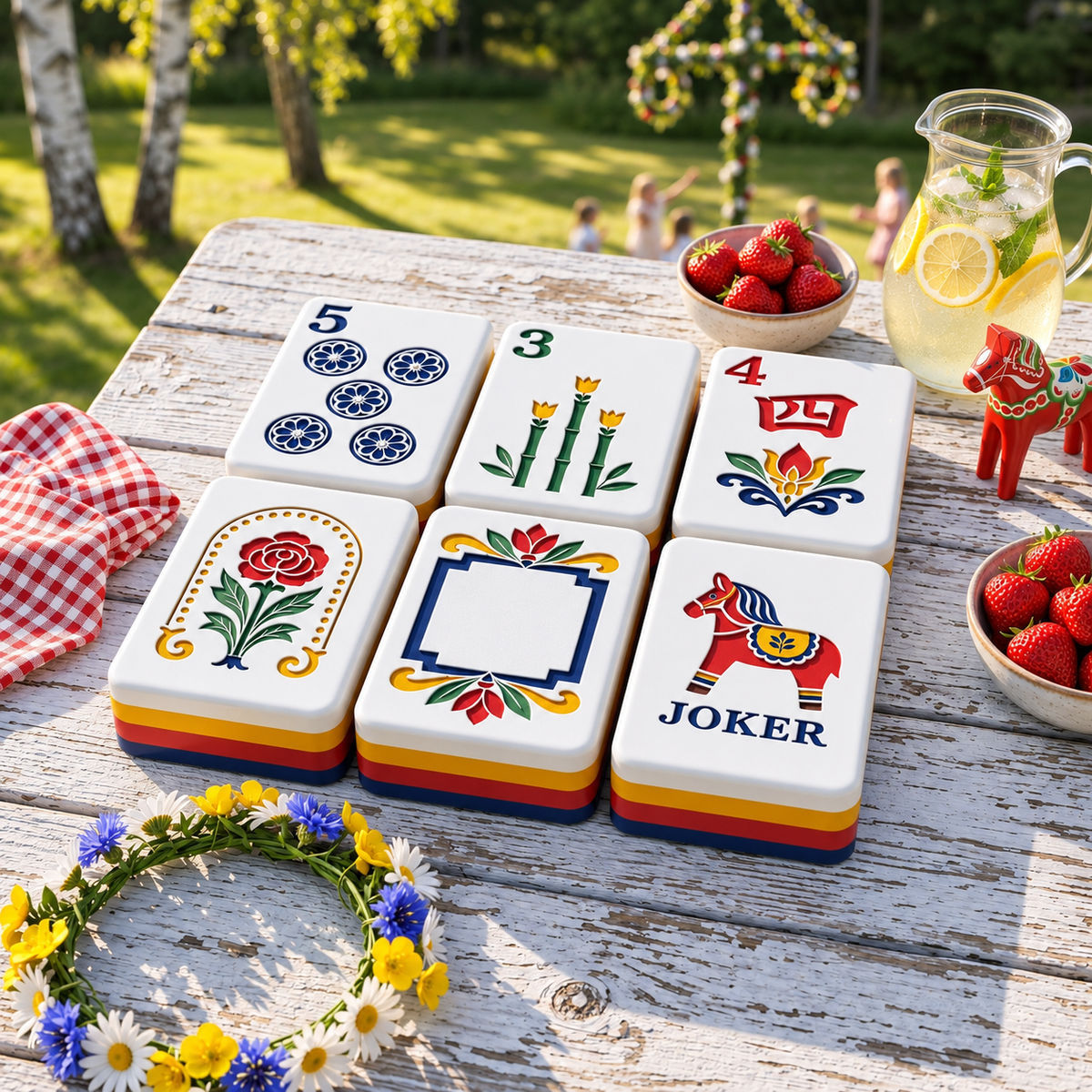
Taiwanese mahjong uses 144 tiles (three suits × 1–9 × four copies each, plus 16 winds, 12 dragons, and eight flowers), no jokers, and emphasizes chows (three consecutive numbers in one suit). Play is closed—your tiles remain hidden until you declare a winning hand. Games move faster than American mahjong because no one draws from the wall mid-round once play begins; instead, players draw one tile per turn and discard one, creating a flowing rhythm. The hand-ranking system depends heavily on pattern type and tile rarity; common hands score low, rare combinations score high. Most games use cash betting per point. You'll need a 144-tile Taiwanese set, a mat for speed and grip, and ideally racks with pushers to keep tiles organized during fast play. Expect a learning curve of 3–5 games if you know American mahjong; standing alone, plan 10–15 hours study and practice. 🀄 Shop best-selling mahjong sets →
What is Taiwanese mahjong, and how does it differ from American play?
Taiwanese mahjong is a closed-hand variant where all tiles stay hidden until someone wins. Unlike American mahjong—which uses 152 tiles, jokers, no chows, and hands from an annual card—Taiwanese uses 144 tiles, zero jokers, chows count, and patterns follow traditional ranking rules. Players draw and discard rapidly; there's no Charleston and no exposed sets except the winning hand. The pace is quicker and the betting is direct: you pay or collect per point at hand end. If you've played American mahjong, Taiwanese feels like playing a different game entirely.

Do I need special tiles for Taiwanese mahjong?
Yes. Taiwanese sets contain 144 tiles only: no blanks, no jokers, no extra spares. Each suit (Bams, Craks, Dots) runs 1–9 with four copies each (36 per suit, 108 total); 16 winds (four each: North, East, South, West) and 12 dragons (four each: Red, Green, White). Eight flowers complete the count. American-style 160-tile sets include jokers and spares—those don't belong in Taiwanese play. Source your best-selling mahjong sets carefully to confirm the tile count. A proper 144-tile set is essential; using the wrong tiles will break game rules and confuse newcomers.
What are chows, and how do I use them in a winning hand?
A chow is three consecutive tiles in one suit: 1–2–3 Bams, 4–5–6 Dots, 7–8–9 Craks, and so on. In Taiwanese mahjong, chows are primary—they're how you build most hands. Your winning hand must combine pungs (three identical tiles), kongs (four identical), and chows into a valid pattern. For example: one pung (three 5 Dots), two chows (1–2–3 Bams and 4–5–6 Bams), and a pair (two Winds). The ranking depends on the rarity and difficulty of the hand; a simple all-chow hand scores fewer points than a rare hand with all pairs or all honors (winds and dragons). Chows differentiate Taiwanese play from American mahjong, where chows are forbidden entirely.
How do I score a winning hand in Taiwanese mahjong?
Scoring in Taiwanese mahjong combines base points (determined by hand pattern) with multipliers for special conditions: going out on a self-drawn tile, winning on the discard, declaring a closed hand (all four players didn't contribute to your win), or hitting a rare hand type. Each hand type has a fixed base point value; common hands like mixed sequences score 1–2 points, while hands requiring all honors or all terminals score 8 or more. Multipliers (often called "fans") double or triple the base. Once you calculate total points, all three opponents pay you, or you pay all three if you lose. The betting is typically cash per point, so stakes scale with hand rarity. Taiwanese scoring charts are region-specific; confirm your group's ruleset before your first game because house rules vary widely across Taiwan, Singapore, and the diaspora.
What's a realistic timeline to play Taiwanese mahjong well?
If you already play American mahjong, you'll grasp Taiwanese basics in 3–5 games once you memorize chow patterns and the hand-ranking chart for your region. New players with no mahjong background need 10–15 hours: 2–3 hours studying tiles and chow sequences, 4–5 hours learning hand types via practice hands, and 5–7 hours of actual play with patient teachers. Most beginners make mistakes in their first 15 games—confusing which suit is which, miscounting sequences, or misreading hand value. Speed comes around game 20–30, when tile recognition and chow-spotting become automatic. Join a regular weekly group or find one-on-one coaching; solo study from YouTube alone slows progress by half because you'll miss live feedback on tile-reading and decision-making during the discard phase.

What equipment will set me up for success?
A proper Taiwanese set (144 tiles, no jokers) is non-negotiable. We recommend durable acrylic tiles over bamboo or plastic if you play weekly; they last years and won't warp. A mahjong mat improves grip and speeds the game—tiles slide smoothly and stay put when bumped. Racks with pushers keep your hand organized and hidden; in fast Taiwanese play, a sloppy rack slows the table and invites misdeals. A travel bag or case protects your set and makes transport easy if you rotate hosting. Dice are mandatory: two traditional six-sided dice to determine the dealer and starting wall position each round. Skip novelty tiles or mismatched sets; focus on clarity and durability—your tiles will live through hundreds of games.
🎁 See our most-loved mahjong sets & accessories →
A quick comparison: American vs. Taiwanese mahjong for first-time buyers
Feature | American Mahjong | Taiwanese Mahjong | Why It Matters |
Tile count | 152 + jokers | 144 | Taiwanese is simpler; fewer tiles = faster games |
Jokers | Yes, central to play | None | Taiwanese relies on luck and pattern reading, not wildcards |
Chows allowed? | No | Yes, required | Tile sequencing is core to Taiwanese strategy |
Hand source | Annual NMJL card | Regional ranking chart | Taiwanese hands follow traditional rankings, not rotation card |
Hands visible | Yes (exposed melds) | No until win | Taiwanese requires memory and deduction |
Speed per round | 30–60 minutes | 10–20 minutes | Taiwanese games flow fast; betting accelerates play |
Betting | Points, often social | Cash per point | Taiwanese stakes can escalate; clarify house limits |
What to check before you buy a Taiwanese set
Tile count: Confirm 144 tiles, not 160 or 152. Verify the seller lists tile contents—some "universal" sets don't include all eight flowers.
Material: Acrylic resists humidity and wear better than bamboo. Check photos for edge clarity; blurry tile faces mean low-contrast printing.
Suit characters: Ensure Bams (sticks), Craks (circles), and Dots are clearly distinct. Symbols should be crisp, not faded.
Winds and dragons: All four winds (北東南西) and three colors (red/green/white) should be present and easy to spot at a glance.
Discard pile space: Your mat or table surface should hold a discard river; Taiwanese play fills a wall of 13 tiles per player. If your mat is undersized, discards pile awkwardly.
Backup dice: Buy a second pair of dice; one will eventually disappear. Keep them with your set.
Storage: A travel bag or case prevents tiles from shifting during transport and keeps them away from dust and moisture.
✨ Find your Mahstead set — free US shipping →
Why Taiwanese mahjong is rising in popularity
Taiwanese mahjong appeals to American and Western players fatigued by the annual card rotation and rule complexity of American mahjong. The closed-hand format feels more like poker—you're reading opponents' discards, inferring what they hold, and calculating odds silently. Games end faster (10–20 minutes), so you can fit six or eight rounds into an evening instead of two or three. Betting is straightforward: one calculation at hand end, then move on. The skill floor is lower than American mahjong's memorization burden, but the skill ceiling is high—elite Taiwanese players read subtle tile patterns and betting tells to win consistently. If you want faster games, more strategy, and less card-flipping, Taiwanese is your entry point.
How to find a Taiwanese mahjong group near you
Search your local community for established Taiwanese or Cantonese clubs—often hosted at restaurants, community centers, or temples in areas with large Asian populations. Post on neighborhood social boards asking for weekly games. Some regions offer mahjong meetup groups; filter for Taiwanese or Hong Kong rules. When you find a table, arrive 30 minutes early, bring your set (or ask if the host supplies tiles), and ask a veteran to teach you hand rankings before round one. Most groups welcome beginners; don't apologize for slow play in your first session. Attend at least four sessions with the same group so you absorb their house rules and hand-reading conventions.

FAQ
Can I use an American mahjong set to play Taiwanese mahjong?
No. American sets include jokers and 152 tiles; Taiwanese uses 144 tiles with no jokers. Jokers are wildcard tiles that violate Taiwanese hand validity. Using the wrong set will create confusion and break the game's logic. Buy a dedicated 144-tile set.
How long does one round of Taiwanese mahjong take?
A single hand typically lasts 10–20 minutes depending on table speed and betting pauses. Fast, experienced tables finish in 10 minutes; slower or larger social games may stretch to 25. American mahjong rounds often run 30–60 minutes because of the drawn-out hand-building phase and card consultation.
Do I have to bet money to play Taiwanese mahjong?
No, but the game is designed around betting. Many casual tables play for low stakes (quarters or chips) or social points tracked on paper. Some groups play for no money at all, keeping score on a notepad. Clarify the stakes with your group before sitting down.
What's the hardest part of learning Taiwanese mahjong?
Memorizing hand rankings and tie-breaking rules. Unlike American mahjong, which uses a single published card, Taiwanese rankings vary by region and house rules. Your first week will involve repeatedly asking, "Does that hand count?" Bring a laminated cheat sheet to early games and don't be shy about checking.
Is Taiwanese mahjong the same as Hong Kong mahjong?
Similar but not identical. Hong Kong mahjong uses the same 144 tiles and chows, but hand rankings and scoring differ. Taiwanese tends toward simpler scoring (base points + one or two fans), while Hong Kong mahjong uses a more granular fan system. Learn the specific ruleset your table uses; don't assume.
Can I play Taiwanese mahjong with two or three players instead of four?
Not without significant rule tweaks. Taiwanese mahjong is designed for exactly four players because the discard wall and tile economics assume four draw cycles per round. Two or three-player variants exist but require house rule modifications. Stick to four-player games until you're advanced.


View More
View More
View More
