
Suji in Riichi Mahjong Explained: Discard Patterns and Reads
Last updated: Nov 23, 2026
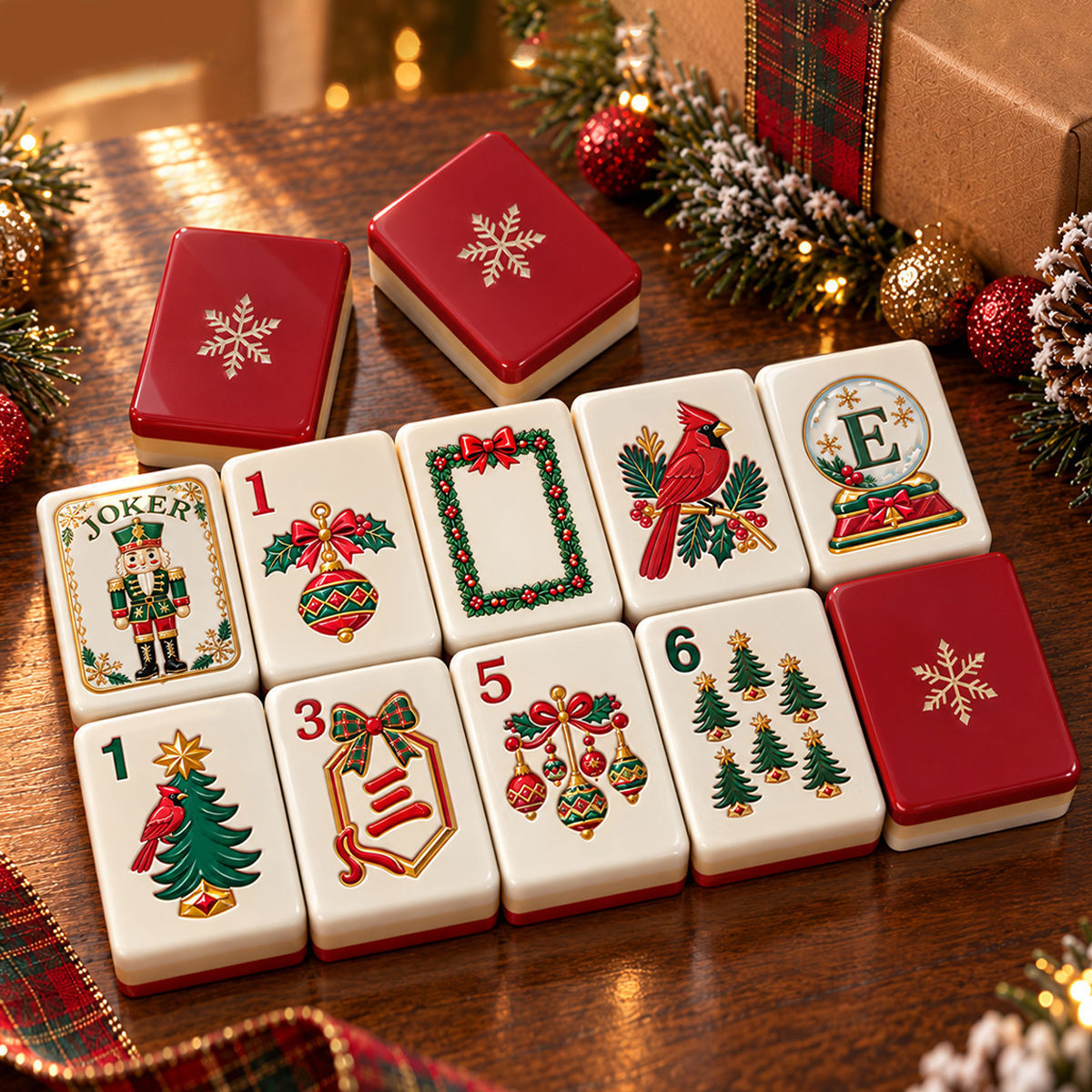
Suji (筋, "muscle" or "line") is a defensive principle in Riichi mahjong that exploits the logical gaps left when a player discards tiles from a sequence. If a player discards a 3, they likely split their 1–2–3 or 3–4–5 run; the tiles 1 and 5 remain safer to discard later. Similarly, discarding a 6 suggests 4–5–6 was broken, making 4 and 8 relatively safer. Suji is not a guarantee—it's a probabilistic pattern based on how players typically handle intermediate tiles. Used alongside other reads like tile repetition and honor sequences, suji strengthens your defense in a long game. Unlike American mahjong, which has no discard reading because hands are fixed from a card, Riichi mahjong rewards players who track discards, remember sequences, and predict tile flow. Mahstead's best-selling mahjong sets work equally well for practice—though Riichi players typically use a 136-tile Japanese set, the tile-tracking skills transfer. 🀄 Shop best-selling mahjong sets →
How does the 1–5 suji rule actually work?
When a player discards a middle tile in a sequence group, the endpoints often become safe. If your opponent discards a 4 Bam early, they likely broke either 2–3–4 or 4–5–6. The unbroken endpoint (2 or 6) stays in hand longer, but the outer tiles—1 and 7—were probably safe to discard first. This creates a "number line" where certain tiles feel statistically safer because they're off the sequence edge. Watching discard order reveals the pattern.

What is the 1–4–7 suji progression in practice?
Suji forms vertical safety zones based on nine-tile suit structure: numbers ending in 1, 4, and 7 often stay safe after middle tiles fall. Discard a 4, and 1 and 7 look less threatening. Discard a 5, and 2 and 8 rise in relative risk. A skilled Riichi player tracks which numbered tiles your opponent throws in order, then identifies which subsequent numbers remain probable in hand. This progression is not foolproof—it depends on hand shape, meld timing, and luck—but it guides defense in the absence of full information.
How do you combine suji with other defensive reads?
Suji works best layered with tile frequency, hand stage, and discard speed. If a player discards three 5s in the first twelve turns (unusual pacing), they may not hold sequences with 5 at all; suddenly, discard a 6, and the suji advantage weakens. If a player has melded two groups and suddenly speeds up discards, they're likely chasing a win, not protecting safety. If all honor tiles appeared in early discards, they're probably not in any remaining sequence—suji doesn't apply there. The strongest defense combines suji probability with observed behavior, season of the game (early vs. endgame tension), and the actual tiles already visible on the table.
Why does suji fail sometimes, and when should you ignore it?
Suji assumes rational tile ordering, but luck breaks the pattern. A player might discard a 4 not because they broke a sequence, but because they drew it late and needed it to complete a different hand shape. Early in a hand, before melds form, suji confidence is low. If someone melded two pungs (identical triples) openly, they're not building sequences, so suji barely applies. After a player declares ready (1 away from winning), they're fishing for one tile; suji stops predicting and luck dominates. Beginners over-rely on suji and lose because they ignore the live game state. Use suji as one signal among many—speed, melds, and round progress override it.
How do you practice reading suji at your home games?
Start by playing Riichi mahjong weekly with the same group: players develop habits and patterns over time, making their suji reads more reliable. Keep a scorepad nearby and annotate discard order, not just scores; after a few rounds, you'll notice tendencies. Play open—discuss reads aloud during the hand (before the discard is played) so everyone learns why certain tiles stayed safe. Use mahjong mats that give clear space for discard rows; wide, organized layouts make it easier to scan tile sequences and spot gaps. When you misread suji, ask your opponent (after the hand ends) whether your inference matched their actual hand shape. This feedback loop is how you calibrate feel over time.

Comparison: Suji in Riichi vs. Defensive Patterns in Other Variants
Variant | Read type | Basis | Reliability | Why it differs |
Riichi | Suji (sequence gaps) | Live discard order | Medium–high (70–80%) | All hands shuffle; reads compound |
Hong Kong | Similar (discard sequence) | Live tiles, melds | Medium (60–70%) | Faster pace; harder to track |
Chinese | Honor-heavy reads | Seat wind, dragon focus | Medium | Few sequences in early game |
American | None (card-based) | NMJL hand card only | 100% | All players have same hand options; no hidden info |
American mahjong removes suji entirely—every player sees the official hand card, so discard reading becomes irrelevant. Riichi, Hong Kong, and Chinese variants all reward tracking and inference because hands evolve in real time.
🎁 See our most-loved mahjong sets & accessories →
A step-by-step suji checklist for your next Riichi game
Observe the first five discards from each player; note the numbers and order (don't memorize every tile, just patterns: "early 5s," "mixed honor," etc.).
Mark any sequence gaps: if player left discards 3, then 6 later, the safe zone (1 and 7) grows.
Update after each discard: suji shifts as new information arrives; a tile you thought safe may become riskier if three of its suit-mates have fallen.
Cross-check with hand stage: early game = suji is weak; mid-game (after melds) = suji strengthens; endgame = ignore suji if someone is one tile away from winning.
Watch meld timing: a player who suddenly melds after 8 discards is locking in hand shape; their remaining discards reveal clearer patterns.
Adjust for seat position: the dealer and person to their left discard faster; their suji reads mature earlier.
Test your read aloud (before play resumes) and ask for honest feedback after the hand.
What to check before you buy for Riichi practice
Tile quality: acrylic or bone-bamboo tiles must be smooth enough to shuffle without catching; worn tiles distort your visual read of discard rows.
Suit contrast: Bams, Craks, and Dots need to feel distinct at a glance—if you squint to tell them apart, your suji tracking suffers.
Mat or cloth: a non-slip surface keeps discards in neat rows so you can scan for gaps without tiles sliding.
Set completeness: confirm your Riichi set has all 136 tiles (four suits 1–9, 16 winds, 12 dragons); American-style sets include jokers and won't work.
Discard wall space: your mat or table must hold a 12–13 tile discard row per player; cramped setups ruin suji reading.
Our pick: Riichi players at Mahstead
We recommend engraved American mahjong sets with high-contrast colors if you're transitioning from American to Riichi mahjong and want to practice on familiar-looking tiles. Pair them with a wide mahjong mat designed for organized discard rows—good lighting and clear tile spacing are non-negotiable for suji reads. If you play Riichi weekly with travel between homes, a durable mahjong bag keeps your practice set protected and consistent.
✨ Find your Mahstead set — free US shipping →

FAQ
Is suji the same as wareme (tile number spacing)?
No. Wareme focuses on which numbered tiles remain unbroken in long sequences; suji is about the gaps left after one tile from a sequence is discarded. Wareme helps you predict future melds; suji helps you avoid immediate danger.
Can you use suji if you only watch one opponent?
Not effectively. Suji relies on comparing multiple discard patterns; watching one player gives you a partial read but not the defensive strength. Track all three opponents, even casually, to build reliable suji instinct.
Does a player who melts a pung (triple) have suji patterns?
No, not for that pung. Pungs are identical tiles with no sequence structure, so suji doesn't apply. But they may still discard other suits in suji-predictable ways.
How long does it take to learn suji reading?
You can grasp the concept in one session; applying it consistently takes 10–15 games with the same players. Muscle memory comes after 30+ hours of practice.
What happens if everyone at your table knows suji?
The game becomes about disrupting expectations. Experienced players deliberately break suji patterns to confuse reads, making endgame play riskier and more tactical. This is why Riichi remains challenging at high levels.


View More
View More
View More
