
South Wind Tile in Chinese Mahjong: What It Is & How It Differs
Last updated: Nov 23, 2026
In Chinese mahjong, the South Wind tile represents one of the four cardinal directions that structure the entire game. Unlike American mahjong, where winds are simply honor tiles with equal numerical weight, Chinese mahjong assigns each player a wind-based seat and rotates that assignment after every hand. Understanding this distinction matters whether you're learning from a Chinese-speaking teacher or transitioning between regional variants.
How does South Wind determine seating in Chinese mahjong?
East Wind is always the dealer and rotates first; South is the player to the dealer's left in clockwise seating. North sits opposite the dealer; West sits to the dealer's right. After each hand, winds rotate: the player who was South becomes West, West becomes North, North becomes East, and the dealer (East) moves to South. This cycle ensures every player holds each position fairly. In American mahjong, player order is assigned at the start and does not rotate by wind; the 2026 National Mah Jongg League card never references directional seating, so winds function purely as tile ranks for hand-making.

What tiles count as South Wind in different mahjong variants?
South Wind is always one of sixteen wind tiles in any complete mahjong set: four each of North, East, South, and West. The South tile displays a Chinese character (南 in Simplified Chinese, 南 in Traditional) or an English letter "S," depending on your set's design language. Our best-selling mahjong sets include tiles marked with both traditional characters and Latin letters, so they work seamlessly whether you're playing Chinese rules in Singapore or American rules in Texas. Some older or specialty sets use regional symbols—Hong Kong sets might display a different calligraphic style—but the tile count and function remain constant: exactly four South Wind tiles per set.
🀄 Shop best-selling mahjong sets →
Why is South Wind ranking different in Chinese vs. American mahjong?
Chinese mahjong ranks East > South > West > North because East is the prevailing wind in each hand. South Wind is the second-ranking position and carries higher point value in certain winning combinations. American mahjong, by contrast, assigns all four winds identical point values; no hand pays more for including South rather than West. This reflects American mahjong's simplification in the 1920s–1930s, when rules were standardized for speed and social play. Chinese mahjong retained the traditional hierarchy from centuries of regional variants. When reading the current National Mah Jongg League card, you'll see winds listed only as suit-like tiles with no ranking order; when playing Chinese rules, consult your rulebook's point table for wind-specific bonuses tied to seating position.
Can you use South Wind tiles in pungs and kongs?
Yes, in both Chinese and American mahjong. A pung of South Winds means three identical South Wind tiles; a kong is four. In Chinese play, a pung of your own seat wind (if you are South) often scores bonus points—a "seat pung"—and a pung of the prevailing wind (East Wind during an East Wind round) scores even higher. A pung of any other wind scores a base value. American mahjong allows pungs and kongs of any wind tile but assigns them no bonus for seat or prevailing wind. Jokers cannot substitute for a single tile or a pair in American play, but they can fill a pung or kong slot to complete the fourth tile. When building your hand from the tile rack, you draw, discard, and call claimed tiles into exposed melds exactly the same way regardless of wind value—the ranking matters only for final scoring, not for formation rules.

What's the easiest way to remember all four wind tiles and their roles?
Picture the table as a compass: East (top) is always the dealer; South (left) is second in rank; West (bottom) is third; North (right) is fourth. Memorize this order once, and you'll spot seat assignments instantly. A quick reference table helps if you're new:
Seat | Wind | Role in Hand | Point Bonus (Chinese) | American Value |
Dealer | East | Starts hand, draws first | Highest | Equal |
Player 2 | South | Rotates second | Second-highest | Equal |
Player 3 | West | Rotates third | Third | Equal |
Player 4 | North | Rotates fourth | Lowest | Equal |
In Chinese play, if you are seated South and your hand includes a pung of South Wind and a pung of East Wind (prevailing), your score multiplier increases significantly. American players simply count all wind melds as fixed-value units within their hand pattern. Both systems respect the tile count: one set, four of each wind, no mixing with Bams, Craks, or Dots.
🎁 See our most-loved mahjong sets & accessories →
Which set design makes South Wind easiest to spot mid-game?
Acrylic tiles with engraved characters or embossed symbols beat painted designs because they survive shuffling and humid play sessions without fading. Mahstead's engraved American mahjong sets use deeply cut faces and bone or white acrylic bodies, so South Wind (and all honors) remain crisp under table lights. If your set includes a matching mat, you gain a defined discard area where winds stand out against the playing surface. Bamboo tiles, popular in Asia, can warp in air-conditioning; plastic sets risk cracking after years of shuffling. Color matters too: sets with warm bone tones or bright white backgrounds make the character or letter pop, while dark tiles (black, mahogany) force your eyes to work harder. If you host weekly games or play in varied climates, invest in durable acrylic—you'll read South Wind (and every tile) faster after 100 shuffles.
What should you check before buying a set for Chinese mahjong play?
Before purchasing, confirm your set includes:
Exactly 4 South Wind tiles, plus 3 more copies each of North, East, West (16 wind tiles total).
Tiles marked with either Chinese characters or English letters consistently across all honors; mixed marking styles confuse rapid play.
Acrylic or resin construction if you play weekly; bamboo requires humidity control.
A bag or case if you transport the set between venues—wind tiles are small and easy to lose in shuffling.
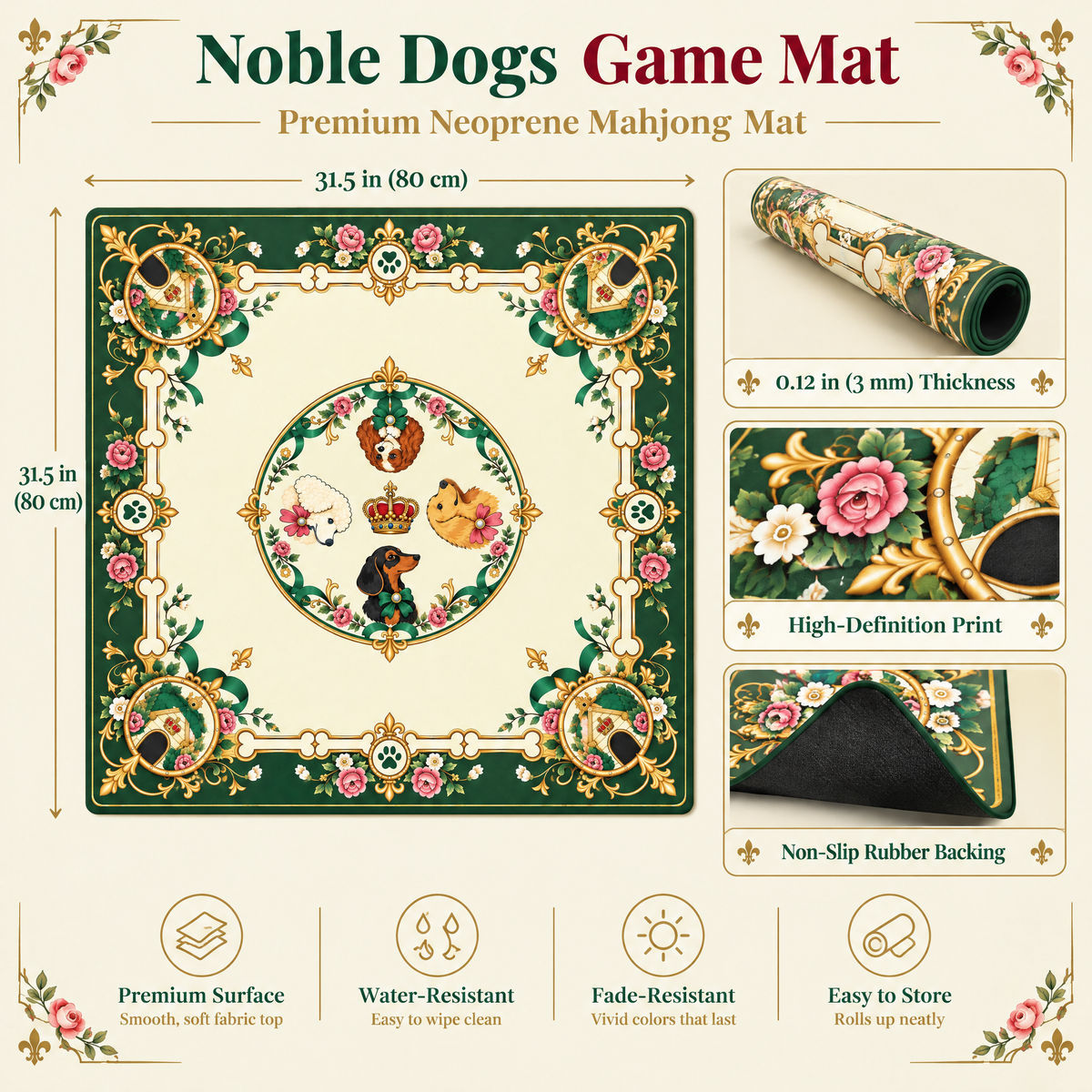
A mat with clearly defined zones if your group plays Chinese rules, because seat rotation demands an organized discard pile.
Avoid sets where wind tiles look identical to number tiles at a glance; inspect them under table light before committing. If your rulebook references "character winds" or "numbered winds," verify the seller specifies which marking system they use.
✨ Find your Mahstead set — free US shipping →

FAQ
Is South Wind always the second seat in every Chinese mahjong region?
East is always dealer (position 1) across all Chinese variants. South is player 2 in Cantonese (Hong Kong), Sichuan, and most mainland rules, but a few regional versions change the order; check your specific rulebook before your first hand.
Can I use an American mahjong set to play Chinese mahjong?
Yes. American sets contain all four winds. The rules and scoring differ, not the tiles themselves. Use the same 152-tile count and honor tile structure; just follow Chinese scoring rules and seating rotation for wind assignment.
Do winds rotate during a single hand, or only between hands?
Winds rotate between hands only. Once you sit down as South, you remain South for that entire hand. After someone wins or the hand ends, players rotate seats and wind assignments change.
Why does East Wind rank higher than South Wind in Chinese mahjong?
East is the prevailing wind for the entire hand round; that player (the dealer) controls the flow and draws first. Hierarchical ranking rewards the dealer position and adds strategic depth to long play sessions.
What if my set has winds marked only with letters (N, E, S, W) and no characters?
That set works for American mahjong perfectly and functions fine for casual Chinese play among English speakers. If you play with native Cantonese speakers or in formal clubs, request a set with traditional Chinese characters so everyone reads the tiles uniformly.
How many jokers replace wind tiles in American mahjong?
Jokers never replace wind tiles in pairs or single-tile melds in American play. Jokers can fill a pung, kong, quint, or sextet slot to complete an exposed meld, but they cannot be used alone or as a pair. If your hand requires a specific wind, you must hold that exact tile or call it from the discard pile.


View More
View More
View More
