
Singapore vs. Filipino Mahjong: Key Rules & Differences
Last updated: Nov 23, 2026
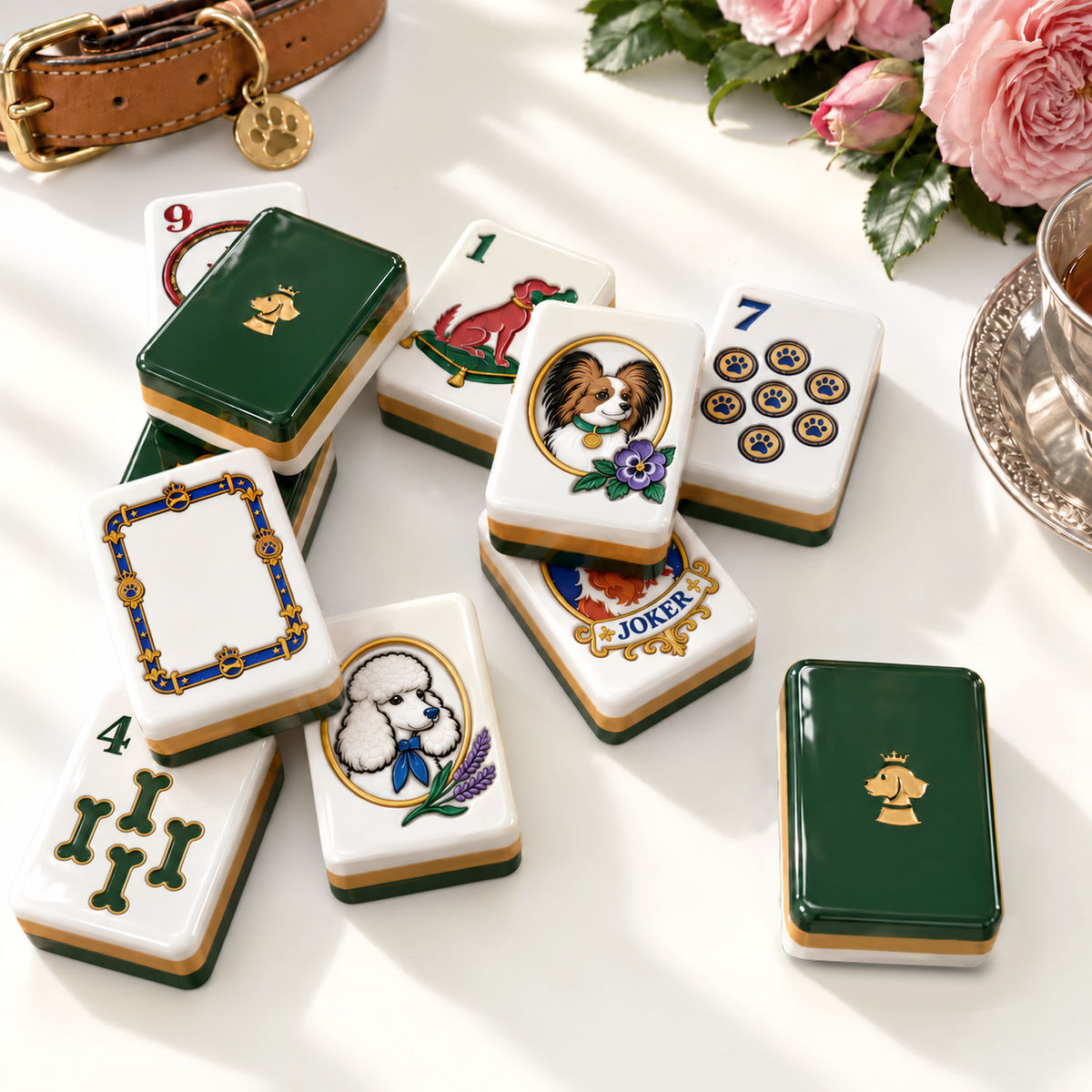
Singapore mahjong (also called Cantonese or Hong Kong–style) uses 144 tiles, plays shorter rounds, and allows chows (sequences: 1-2-3, 4-5-6, etc.)—something American mahjong strictly forbids. Filipino mahjong, also 144 tiles, shares chow play but differs in flower rules, melding speed, and scoring logic. Both are "simpler" than American mahjong: no National League card required, no Charleston pre-game ritual, and hands are read from pattern memory rather than a reference sheet. A round ends faster (often 15–20 minutes versus 30+), making them ideal for casual social play. If you host games mixing American and regional players, clarify which variant upfront; the rule sets are incompatible mid-game. Our best-selling mahjong sets are built for American play; understanding these variants helps you pick the right equipment for your table.
What is Singapore mahjong, and how does it differ from American play?
Singapore mahjong (Cantonese/Hong Kong style) uses exactly 144 tiles: three suits (Bams, Craks, Dots) numbered 1–9 with four copies each, plus four winds, three dragons (Red, Green, White), and eight flowers. American mahjong adds a White dragon variant and extra jokers, reaching 152 tiles—a structural difference that reshapes winning hands completely. Singapore forbids jokers; instead, you meld by drawing and discarding live, building chows (1-2-3, 4-5-6), pungs (three identical), and kongs (four identical) openly or concealed. Winning requires an all-chow hand, an all-pung hand, or a mixed pattern—no reference card; players memorize valid combinations. A hand finishes in 10–15 minutes; American games run 30+ because players consult the yearly card each hand. If your group plays Singapore style, a standard 144-tile set suffices; American play requires our best-selling collection with jokers and spare tiles.

How does Filipino mahjong compare to Singapore rules?
Filipino mahjong also uses 144 tiles and allows chows, but flowers are "wild" (any flower counts as any other), speeding meld completion. Singapore treats flowers as fixed (one flower = one type) or sometimes excludes them entirely from play. Filipino winning hands include "lucky" all-dragon or all-wind patterns rarely scored in Singapore. Both variants allow calling—you can claim a discarded tile mid-turn if it completes your hand—whereas American mahjong restricts calls to hand-completion only. Filipino play is louder and faster; rounds often feel like a quick family game rather than strategy. Scoring differs too: Singapore uses a point-multiplier system (doubling for each matching condition), while Filipino scoring is simpler and flatter. Both demand memorized hand patterns, not a reference card. If you're hosting Filipino players, expect rapid play and encourage experienced players to coach newcomers on local patterns before the first hand.
What tile counts and equipment do you actually need?
Singapore and Filipino mahjong require exactly 144 tiles; neither uses jokers or blanks. American mahjong needs 152 tiles plus 8 jokers, making it incompatible with regional 144-tile sets mid-game. If your group plays American only, our mahjong sets in 160-tile form (152 playing tiles + spares) work perfectly and ship free. For Singapore or Filipino games, you'll need a separate 144-tile set—most affordable online or at Asian import shops. Equipment beyond tiles matters too: both variants benefit from a soft mat to prevent wear and noise, racks with pushers to organize your hand cleanly, and a bag or case if you travel between game nights. A single American set cannot be "converted" to regional rules by removing or hiding jokers—the tile composition and hand logic are fundamentally different. Buy a dedicated regional set if that's your table's choice.
Why do some players say Singapore mahjong is "faster" than American?
Singapore mahjong completes rounds in 15–20 minutes because there is no pre-game Charleston (tile-passing ritual), no reference card to consult, and hands resolve from memory and live draws. American mahjong includes the Charleston (5+ minutes of organized passing), requires checking the National League card for valid patterns (adds 2–4 minutes per hand for new players), and scoring involves row-by-row card lookup. Singapore play is also "looser": players discard more freely, calling tiles loudly speeds discards, and error correction is minimal. American play demands card accuracy and penalties for invalid melds. If your group values speed and casual fun, Singapore or Filipino suits a weeknight meetup; American works better for clubs with structured rules and scorekeeping. Neither is "better"—they're optimized for different paces and social settings.
How do hand patterns differ between the variants?
Pattern Type | Singapore/Filipino | American | Key Difference |
Chows (sequences) | Allowed, can be called | Forbidden | Singapore/Filipino melds include 1-2-3, 4-5-6 patterns; American only uses pungs/kongs |
Flowers | Fixed or wild | Part of hand (not called) | Filipino flowers are wild; American flowers are fixed—same flower type always |
All-pung hand | Valid | Valid | Both allow three identical tiles; Singapore/Filipino score higher for all-pung |
Mixed (chow + pung) | Valid | Depends on card | Both allow mixing, but American checks yearly card; regional play uses memory |
Dragon-only hand | High-scoring | Rare on card | Filipino scores dragons highly; American treats them as standard tiles unless card specifies |
Joker usage | None | Core mechanic | American jokers substitute for any tile; regional games have no jokers at all |
This table shows why switching variants mid-session breaks the game—hand legality itself is context-dependent.
🀄 Shop best-selling mahjong sets →

What should you check before hosting a mixed group?
If your players include American, Singapore, and Filipino enthusiasts, confirm the variant before tiles touch the table. Ask: "Are we playing American (with the card), Singapore (Cantonese, no jokers), or Filipino style?" Write it down. Once you decide:
For American: use a best-selling set with 160 tiles (152 + spares), lay out the current year's National League card face-up, and run the Charleston. Rounds run 30–45 minutes.
For Singapore/Filipino: source a separate 144-tile set, skip the card and Charleston, and plan 15–20 minute rounds. Brief newer players on hand patterns before Game 1.
Never mix: don't use American jokers in a Singapore frame or skip the card mid-American hand. The scoring and meld rules will collapse.
New players learn fastest when one experienced player guides the first two hands, calling out valid melds. Keep a written scoresheet to avoid disputes. Post-game, ask players which variant they preferred; you'll spot your table's rhythm fast.
🎁 See our most-loved mahjong sets & accessories →
Scoring: how do points stack in Singapore vs. Filipino play?
Singapore mahjong uses a multiplier system: a hand starts with a base (e.g., 1 point), then you double for each "condition" met (all chows, all pungs, all honors, etc.). A hand with two conditions scores 4 points; three conditions score 8. Payments flow between all players (not just from the discarder). Filipino mahjong uses a flat scoring system: each hand type is worth a fixed amount (e.g., an all-pung hand = 8 points, a mixed hand = 2 points). The discarder usually pays all three opponents equally. American mahjong scores row-by-row off the card, with multipliers for flowers and seasons—the most intricate system. Singapore rewards strategic building (stacking conditions); Filipino rewards speed; American rewards knowing the card. If you mix players, agree on scoring before the first tile is drawn. Disagreement on payment is the top cause of table friction. Write the scoring method on a notepad and reference it aloud after every hand.
Where do Singapore and Filipino mahjong come from, and who plays them?
Singapore mahjong evolved from Cantonese/Hong Kong street play in the mid-20th century and became the standard in Singapore, Malaysia, and parts of southern China. It's faster and more social than complex regional variants, making it ideal for casual home games. Filipino mahjong arrived with Chinese immigrant communities and adapted regional rules into a family-friendly hybrid that mixes chows and fast melding. Both games are still played weekly in Singapore, the Philippines, and by diaspora communities in North America and Australia. American mahjong, by contrast, is largely a North American and European social phenomenon—it emerged in the 1920s–30s as a Westernized export with structured rules and a reference card system. If you're hosting players from Singapore or the Philippines, showing respect for their variant and learning a round or two builds goodwill. Many casual players enjoy sampling all three; others are loyal to one style and prefer not to switch mid-session.
✨ Find your Mahstead set — free US shipping →
What to check before you buy
Tile count: American play requires 152 tiles + jokers (160-tile sets); Singapore/Filipino need exactly 144. Confirm your group's variant before ordering.
Joker presence: American sets have jokers; regional sets do not. Jokers are non-negotiable for American scoring.
Size and weight: heavier tiles (bone/bamboo) suit long sessions; lighter acrylic sets are portable if you travel between game nights.
Case or bag: if your group meets in different homes, a travel-friendly bag protects tiles and speeds setup.
Mat surface: a soft mat reduces tile wear and noise—especially important for casual play where games run frequently.
Racks: racks with pushers organize your hand and prevent accidental melds, improving play flow for newer players.

FAQ
Can I play Singapore mahjong with an American mahjong set?
No. American sets include jokers and have 152 tiles; Singapore needs exactly 144 with no jokers. The tile counts and meld rules are incompatible. You'd need a separate 144-tile set.
How long does a round of Singapore or Filipino mahjong take?
Typically 15–20 minutes for experienced players. American rounds run 30–45 minutes because of the Charleston ritual and card consultation. Regional play is faster.
Do I need to learn a reference card like American mahjong?
No. Singapore and Filipino players memorize hand patterns (chows, pungs, all-honors, etc.) rather than consulting a yearly card. This makes the games more portable but requires pattern memory upfront.
What's the main rule difference between Singapore and Filipino mahjong?
Both allow chows and quick play, but Filipino flowers are "wild" (any flower substitutes for any other), while Singapore treats flowers as fixed. Filipino play is also louder and faster socially.
Which variant should a beginner start with?
If you enjoy strategy and reference materials, American mahjong is structured and card-driven. If you prefer speed and pattern memory, Singapore or Filipino suits casual nights. Try both—most players enjoy one more than the other after a few hands.


View More
View More
View More
