
Sichuan Mahjong vs. Mahjong Competition Rules: Key Differences
Last updated: Nov 23, 2026
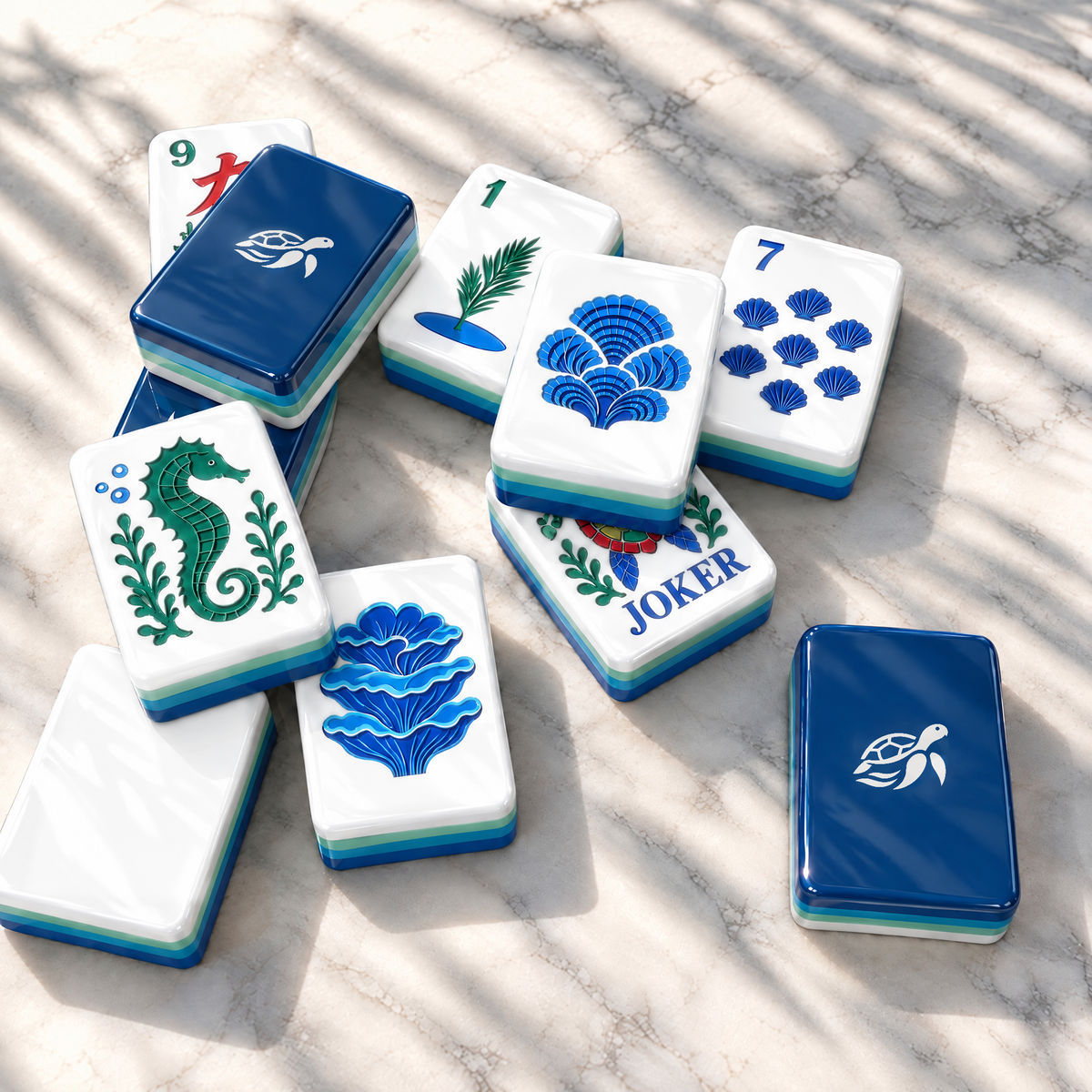
Sichuan mahjong (also called Chuan mahjong) is a regional Chinese variant played across Sichuan province and beyond, featuring 108 tiles (numbered 1–9 in three suits, four copies each), wind and dragon honors, and distinctive mechanics: players meld and score continuously; there are no jokers; hands form through fixed patterns and a unique "winning tile" draw; scoring is calculated per hand, not season-long. Unlike American mahjong—which locks hands to an annual National Mah Jongg League card, requires 152 tiles and 8 jokers, and forbids sequences (chows)—Sichuan mahjong permits chows (1-2-3, 4-5-6, etc.), allows unlimited melds, and uses a simpler 108-tile set. International competition rules (Hong Kong, Riichi, Taiwanese) also permit sequences and vary in win conditions, wind rotations, and penalty structures. The pace, tile economy, and scoring differ so markedly that learning one variant does not transfer directly to another; players switching between them must relearn pattern recognition, hand calculation, and strategic timing entirely. Mahstead specializes in American mahjong sets and accessories; if you play Sichuan or another Chinese variant, confirm your game's tile composition before purchasing.
Sichuan mahjong is a regional Chinese game with deep roots in western China's gaming culture. It plays faster than American mahjong, uses half the tiles, and rewards aggressive melding and quick hand recognition. Many players who grew up in or near Sichuan Province or have family ties to the region play it weekly; it remains popular in Chinese communities worldwide, though American mahjong dominates English-language clubs and competitive leagues.
The question isn't which is "better"—it's which game your group actually plays. This guide compares the two head-on so you can understand what you're learning, teach newcomers correctly, and avoid buying the wrong set.
What tiles does Sichuan mahjong use?
Sichuan mahjong uses 108 tiles: the three number suits (Bams, Craks, Dots), ranks 1–9, four copies each (36 tiles per suit), plus 16 wind tiles (N, E, W, S × 4 each) and 12 dragon honors (Red, Green, White × 4 each). No flowers, no seasons, no jokers. That's it. American mahjong, by contrast, plays with 152 tiles in the same three number suits and honors, plus 8 flower tiles, 8 jokers, and 8 blanks or spares—a much heavier tile economy that supports different hand structures.

How do hand patterns differ between the two games?
In Sichuan mahjong, a winning hand typically consists of four melds (each a pung, kong, or chow) plus a pair—a total of 14 tiles. The critical difference: chows are allowed and common. A chow is a sequence of three consecutive numbered tiles in the same suit (e.g., 4-5-6 Bams). You can call a chow if the discard completes it. In American mahjong, chows do not exist; you may only meld pungs (three identical tiles), kongs (four identical), quints (five), or sextets (six)—and jokers are restricted to these exposed melds only, never as a pair.
American mahjong hands come exclusively from the current year's National Mah Jongg League card, a printed reference that lists hundreds of valid combinations. Every legal hand appears on that card. Sichuan mahjong has no such card; the winning hand is defined by the pung-kong-chow-pair structure alone. This makes Sichuan mahjong far more fluid—any 14-tile combination that meets the structural rule is a win—but also demands quicker mental calculation at the table.
What scoring and payment systems do they use?
American mahjong scoring is multiplier-based and hierarchical. Each hand on the League card carries a point value (from basic to limit hands worth exponentially more). Winning players collect payments from all three opponents based on seat position (East pays double; South pays 1×; North and West pay base) or agreed-upon scoring rules for casual play. A single hand might be worth anywhere from a few base points to maximum limit.
Sichuan mahjong uses a per-hand point system with fixed point values for melds and hand composition. For example: a pung of number tiles earns fewer points than a pung of honors; a chow earns base points; drawing your own winning tile (a "draw win") often pays more than winning from a discard ("claim win"). Losers pay the winner in points, and often multiple players calculate payments if a second-place or third-place hand structure is recognized. The scoring happens faster, move-by-move, rather than at season's end.
Crucially: American mahjong is often played for prestige or tracking year-long records; Sichuan mahjong is almost always a cash or point-settlement game between players at a single session.
Can you play Sichuan mahjong with an American mahjong set?
Technically, yes—but you will have to ignore about 40 tiles (flowers, jokers, blanks) and adapt fast. An American mahjong set contains 160 playing tiles total (152 in play, 8 spares). A Sichuan game uses only 108 of those tiles. You would remove every flower, joker, and blank, leaving the three number suits (108 tiles) and the winds and dragons, then use only the first 108 tiles you draw from the rack. Many casual players do this, especially if they own a Mahstead set from the best-selling collection but want to experiment with Sichuan rules.
However, the tile sizes, weight, engraving, and racks are optimized for American mahjong's 152-tile gameplay. The rack design and pushing mechanics assume 13 tiles per player at draw time, not the different hand pacing of Sichuan mahjong. You won't damage anything, but the workflow feels clunky. A dedicated Sichuan set is smaller, faster, and cheaper.
How does the draw and play sequence differ?
American mahjong follows a strict ritual: the Charleston (tile-passing round), then each player draws 13 tiles to the rack, East discards, and play proceeds in turn order. Each player draws one tile per turn and discards one, cycling through all four players. On your turn, you draw, declare whether you can play the exposed hand on the League card, and discard. The game locks to this structure every single hand.
Sichuan mahjong is more fluid. After the initial draw (each player draws tiles in order until all hold roughly 13–14), play begins. Players can call or meld exposed tiles faster because the hand patterns are simpler and known to all. If no one calls a discard, it passes to the next player. The pace quickens because chows can be called by the next player in order, or the player across the table, depending on house rules. Some Sichuan variants allow simultaneous claiming (first call wins); others use strict turn order. There is no Charleston ceremony; the game moves straight to play.

What do competition rules for other variants require?
International mahjong competition rules (Hong Kong, Riichi, Taiwanese) sit between American and Sichuan mahjong in complexity. Hong Kong mahjong, one of the most widely played outside the US, uses 144 tiles (36 each of Bams, Craks, Dots, plus winds and dragons, but no flowers). It permits chows and follows a melds-plus-pair structure similar to Sichuan. Scoring is per-hand, calculated by multiplier and limit hands, much like American mahjong but with different multiplier values. Riichi mahjong, the Japanese variant, uses the same 144-tile base but introduces a "ready hand" (riichi) declaration that freezes your hand and carries penalties or bonuses. Taiwanese mahjong is regional and uses flowers, jokers, and bonus tiles, with scoring systems that vary by sub-variant.
All three competition rulesets share one trait: they permit and reward sequences (chows). American mahjong stands alone in forbidding chows entirely. This is not a flaw; it simply means American mahjong prioritizes face-value pattern recognition (pungs, kongs, exposed melds) over sequential thinking, which speeds up the game for social (rather than tournament) play.
Comparison Table: Game Mechanics at a Glance
Feature | Sichuan Mahjong | American Mahjong | Hong Kong Mahjong |
Tiles used | 108 (4 suits + honors, no flowers/jokers) | 152 (all suits + flowers + jokers) | 144 (4 suits + honors, no flowers) |
Chows allowed? | Yes, required for many wins | No, forbidden | Yes, required for most wins |
Hand structure | 4 melds + 1 pair | Pattern card–defined | 4 melds + 1 pair (with winning tile rules) |
Scoring system | Per-hand points; fixed values by meld type | Annual card–defined multipliers; limit hands | Per-hand multiplier system; limit hands |
Jokers in play | No | Yes (8 tiles, restricted to melds/none in pair) | No |
Winning condition | Any legal pung-kong-chow-pair structure | Must match current year's League card | Pung-kong-chow-pair + specific bonus rules |
Ritual before play | None; direct draw and play | Charleston (tile exchange round) | No Charleston; direct draw |
Typical game duration | 30–45 minutes (fast, aggressive) | 45–90 minutes (deliberate, card-driven) | 45–75 minutes (moderate pace) |
🀄 Shop best-selling mahjong sets →
What to check before you buy a set for your game
Confirm your game's tile composition: Count how many tiles your group actually plays. Does your house rule use 108 tiles (Sichuan), 144 (Hong Kong/Riichi), or 152 (American)? Never assume.
Verify whether chows are allowed: If yes, your game is not American mahjong. Ask experienced players in your group to show you a winning hand written down or described step-by-step.
Ask whether jokers are in play: American mahjong uses 8 jokers every hand. Sichuan and most other Chinese variants use zero. Hong Kong and Riichi use zero.
Check the League card requirement: If your group uses a League card, it's American mahjong, and a full 160-tile American set is the right choice. If no card is mentioned, it's likely a Chinese variant, and a dedicated 108-tile set is better suited.
Watch one complete hand: Sit in and observe. Note tile flow, meld types, winning conditions, and payment exchanges. This 20-minute investment prevents a poor purchase.
Why dedicated sets matter
A best-selling Mahstead set is built for American mahjong's 152 tiles, 8 jokers, and rack-based gameplay. The tile racks with pushers are sized and weighted for that tile count and hand management style. If you play American mahjong weekly, this is your set.
If you play Sichuan, Hong Kong, Riichi, or another non-American variant regularly, a dedicated set made for that game is worth the investment: smaller, lighter, faster, and correctly sized for your actual hand composition and play pace. Mixing sets across games leads to table confusion, lost tiles, and worn-out racks designed for a different tile load.
🎁 See our most-loved mahjong sets & accessories →
Key takeaway: Know your game, know your set
Sichuan mahjong and American mahjong are fundamentally different games masquerading under the same name. The tile count, hand structure, scoring, and pace are divergent enough that learning one teaches you almost nothing about playing the other well.
The core rule difference: American mahjong forbids chows, locks hands to an annual League card, and requires 152 tiles and 8 jokers. Sichuan mahjong allows chows, uses no card, and plays with 108 tiles and no jokers.
If you play American mahjong, invest in a proper 160-tile set sized and designed for that game's specific mechanics. If you play Sichuan or another Chinese variant, a dedicated 108-tile set is the smarter choice. Asking your group which game they actually play—and watching one full hand—takes five minutes and saves you from buying the wrong set.
✨ Find your Mahstead set — free US shipping →

FAQ
Can I play Sichuan mahjong with an American mahjong set?
Yes, technically—remove the flowers, jokers, and blanks, then use only the 108 tiles (number suits and honors). However, the rack sizing and tile weight are optimized for 152-tile American play. Casual games work; serious weekly play benefits from a proper 108-tile set.
Do I need a League card to play Sichuan mahjong?
No. Sichuan mahjong has no League card. Hands are defined entirely by structure: four melds (pung, kong, or chow) plus a pair. American mahjong requires the current year's League card for every hand; this is the defining rule difference.
Why doesn't American mahjong allow chows?
American mahjong was adapted from Chinese variants in the 1920s but simplified for Western players. Removing chows reduced the number of valid hand combinations and sped up pattern recognition at the table. It's a deliberate design choice, not a limitation—it makes the game faster and more social.
What is the fastest mahjong variant to learn?
Sichuan mahjong has a simpler winning condition (pung-kong-chow-pair structure, no card to reference) and plays in 30–45 minutes per hand, but it demands faster mental tile-reading. American mahjong is slower per hand but more predictable because every legal hand is printed on the card. Hong Kong mahjong sits in between.
If I learn American mahjong, can I play Hong Kong mahjong?
The tile handling and sitting position transfer, but you must relearn the entire hand structure, chow mechanics, and scoring. Chows are the biggest mental shift. Many players find Hong Kong mahjong harder initially because the hand patterns are less visually obvious than American pungs and kongs. Plan 10–20 hands to feel comfortable.


View More
View More
View More
