
Sichuan Mahjong vs Filipino Mahjong: Rules, Tiles & Play
Last updated: Nov 23, 2026
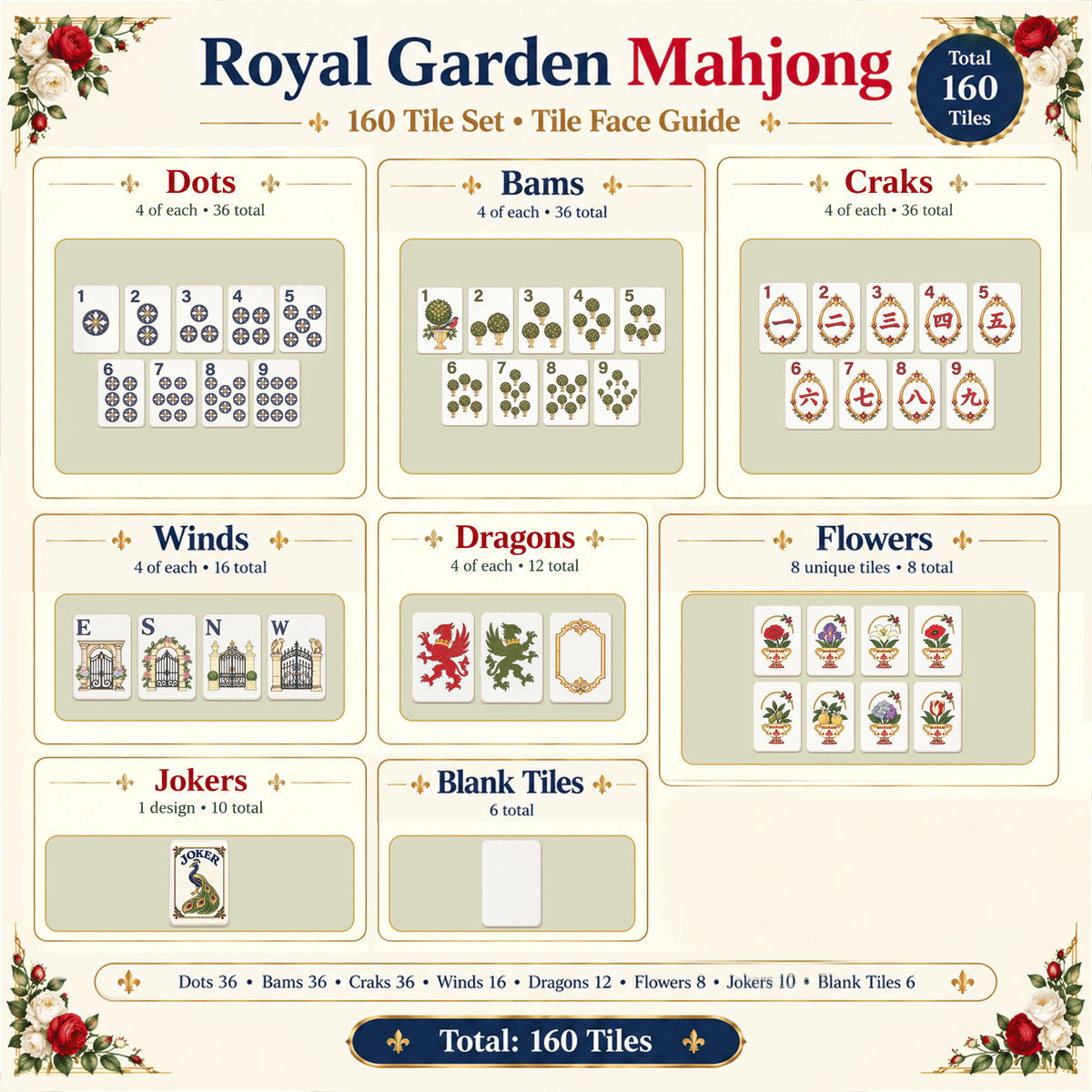
Sichuan mahjong uses 108 tiles (one suit, numbered 1–9, four copies each, plus winds and dragons) and emphasizes melds of identical sets with strict sequence rules. Filipino mahjong, also called "mahjong solitaire" in casual use, traditionally uses a similar 108-tile structure but often plays with house rules that vary by region; competitive Filipino mahjong follows rules closer to Chinese play. Both differ sharply from American mahjong, which uses 152 tiles, three suits, no sequences, and rigid hand patterns from a yearly league card. Sichuan play typically involves 3–4 players, games last 15–30 minutes per round, and scoring is calculated per hand. If you play American mahjong and want to explore variants, you'll find Sichuan demands a shift in strategy (sequences matter; suit depth varies) while Filipino play often operates on local house rules, making consistency harder. Our best-selling mahjong sets are designed for American play; exploring other variants is best done with a local community guide or imported tile sets calibrated to regional rules.
What is Sichuan mahjong, and how does it differ from American play?
Sichuan mahjong (四川麻将) is a Chinese regional variant using 108 tiles—one suit of numbered tiles (1–9, four copies each), plus winds (East, South, West, North) and dragons (Red, Green, White). Unlike American mahjong, Sichuan allows and requires sequences (chows): three consecutive numbered tiles like 3–4–5 Bamboo. No jokers exist. Winning hands combine pungs (3 identical), sequences, and a pair. Games move faster—typically 15–20 minutes per hand—and scoring resets each round rather than accumulating across a full session.
American mahjong forbids sequences entirely; all melds are identical tiles (pungs, kongs, quints, sextets). We use 152 tiles across three suits, eight flowers, 16 winds, 12 dragons, and eight jokers. Hands come only from the current year's National Mah Jongg League card. Sichuan play is far more flexible—house rules abound, but core structure is fixed. American players shifting to Sichuan must unlearn the "no chows" rule and recalibrate tile value fundamentally.

How many tiles does Filipino mahjong use, and what are the rules?
Filipino mahjong traditionally uses 108 tiles in a layout and play structure similar to Chinese variants, though regional house rules dominate. In casual or solitaire-style Filipino mahjong (common in social settings), players may use a single deck drawn from a full set to create tile-matching puzzles. Competitive Filipino mahjong, less common in the US, follows rules closer to Hong Kong or Taiwanese play—sequences allowed, 3–4 players, 16 rounds per session.
The core confusion: many casual "mahjong solitaire" games (digital, card-based, or tile-based) carry the Filipino mahjong name but are not the traditional multiplayer game. True Filipino multiplayer mahjong uses identical 108-tile structure to Sichuan but with regional scoring and hand-building tweaks. House rules in the Philippines vary by province and family; no single rulebook exists. If you encounter Filipino players in the US, clarify whether they're playing traditional competitive rules or house variants before joining—strategies differ widely.
Can you compare Sichuan, Filipino, and American mahjong in one table?
Aspect | Sichuan | Filipino (Competitive) | American |
Tile count | 108 | 108 | 152 |
Suits | 1 (Bamboo) | 1 (Bamboo) | 3 (Bam, Crak, Dot) |
Sequences allowed? | Yes (required) | Yes | No |
Jokers/wildcards | None | Varies by house rule | 8 jokers (strict rules) |
Players | 3–4 | 3–4 | 4 (strictly) |
Hand from rulebook? | Flexible | House rules | Fixed yearly card |
Game length | 15–20 min/hand | 20–30 min/hand | 30–45 min/hand |
Scoring style | Per hand | Per hand or cumulative | Cumulative per session |
Winning condition | 4 melds + pair | 4 melds + pair | Pattern from card + pair |
This table reflects mainstream regional practices; individual clubs or families may deviate significantly.
What equipment do you need to play Sichuan or Filipino mahjong?
Both Sichuan and Filipino mahjong require an 108-tile set (or a 144–152-tile set if mixing with other variants). Tiles are traditionally bamboo or bone with Chinese characters and symbols. You'll need a flat play surface, a way to organize discards, and ideally a wind indicator to track rotations and who deals each round.
For Sichuan, many players use bamboo racks (like those for American play) to hold tiles and organize melds. For Filipino social play, house rules vary—some use racks, others play tiles facedown on a mat. If you're transitioning from American mahjong and already own a mahjong mat and racks, you can adapt them, though a traditional Chinese mahjong set (with proper character labeling and smaller tile size) is often preferred for regional authenticity. Our mahjong racks with pushers were designed for American tile sizes; confirm compatibility with the 108-tile set you choose.
🀄 Shop best-selling mahjong sets →

How do winning hands, scoring, and strategy differ across these three variants?
Sichuan: A winning hand has four melds (each a pung, sequence, or kong) plus one pair. Scoring is calculated per hand, often using a point system where sequences and pungs of high-value tiles (7–9) earn more. "Going out" (winning by drawing or claiming a discard) grants bonus points. Knockouts and special hand types vary by regional house rule.
Filipino: Competitive Filipino mahjong follows a similar four-melds-plus-pair structure but scoring varies widely by province. House rules often introduce bonus conditions (e.g., specific sequences, all one suit) worth extra points. Non-competitive or solitaire-style Filipino play ignores scoring entirely and focuses on tile-matching or puzzle completion.
American: Winning requires completing a specific hand pattern from the current year's league card—never a flexible "four melds + pair" but exact tile combinations (e.g., "2 Pungs, 1 Kong, 1 Quint, 1 Pair, all Bams"). Jokers substitute for any tile except in pairs. Scoring accumulates across a full session (usually four rounds, one per player dealing). American players study the card before play; Sichuan and Filipino players rely on memory and house rules.
Strategy shifts dramatically: American players must narrow focus to one or two hand patterns per deal. Sichuan players keep options open—any sequence is valid, so discards are more fluid. Filipino players must memorize house rules and often play looser, faster hands. If you've mastered American mahjong's rigid constraint, Sichuan's flexibility can feel liberating but risky.
🎁 See our most-loved mahjong sets & accessories →
Which variant should I learn first, and where do I find players?
If you already play American mahjong, learning Sichuan or Filipino is achievable but requires unlearning tile-discarding caution and embracing sequences. Start with a patient teacher—learning from YouTube videos or rulebooks alone is slow and frustrating because regional house rules are usually not documented.
Finding players:
Sichuan: Chinese community centers, libraries with Asian cultural programs, or meetup groups in areas with large Chinese populations (Northern California, Texas, New York, Pacific Northwest). Ask directly at dim sum restaurants or mahjong supply shops; many host weekend games or can refer you to clubs.
Filipino: Filipino community centers, churches with Filipino congregations, and social meetup boards (Meetup.com, Facebook groups for "Filipino Cultural Association" or "Bayanihan" in your area). Casual house games are more common than formal clubs.
American: We run weekly games in local groups—ask community centers, synagogues, country clubs, or libraries for formal American mahjong clubs. The National Mah Jongg League website lists affiliated clubs by state.
Start with a short observation session before joining to confirm the ruleset and pace fit you.
How do you avoid confusion when switching between variants?
Confirm the ruleset before you sit. Ask: "Do sequences count? Are jokers used? How many tiles? What's the winning pattern?" Write answers down.
Use a separate tile set for each variant if possible. American sets (152 tiles) are often larger than Sichuan/Filipino (108 tiles); mixing them causes confusion. Keep your best-selling mahjong sets (American-sized, 160 tiles) clearly labeled.
Play one variant per week initially. Jumping between American, Sichuan, and Filipino in the same week scrambles memory. Master one for at least a month before switching.
Photograph or screenshot the house rules. If playing in a club, ask for written rules or take a photo of a rules card; refer to it mid-game to settle disputes.
Sit with experienced players for your first 2–3 hands. Watch discards and melds before risking money or points. Ask questions during dead time (between rounds).
Learn tile names in the local language. Sichuan players often use Mandarin names; Filipino players may use English or Tagalog shortcuts. Knowing both prevents mix-ups.
What to check before you buy a mahjong set for a new variant
Tile count: Confirm your set matches the variant (108 for Sichuan/Filipino, 152 for American).
Character labeling: Sichuan/Filipino sets use Chinese characters; American sets use Arabic numerals and suit symbols. Check the ruleset requires which.
Tile size: Regional sets vary slightly; ensure racks and mats (if purchased) accommodate the tiles.
Joker/blank content: Some 108-tile sets include jokers; many traditional Sichuan sets do not. Clarify before buying.
Language support: If learning from a rulebook or video, confirm the language matches your source material.
✨ Find your Mahstead set — free US shipping →

FAQ
Can I use an American mahjong set to play Sichuan or Filipino mahjong?
Technically yes—both use tiles—but American sets have three suits (Bam, Crak, Dot) while Sichuan/Filipino use one (Bamboo). Your extra tiles create confusion. Character labeling also differs. It's not recommended; buy an 108-tile set calibrated to the regional variant you're learning.
Is Filipino mahjong the same as mahjong solitaire?
No. Traditional Filipino multiplayer mahjong is a 3–4 player game with rules similar to Chinese variants. "Mahjong solitaire" is a computer puzzle game using tiles but no opponents. They're unrelated despite sharing the name in English casual usage.
Do Sichuan and Filipino mahjong have a yearly rulebook like American mahjong?
No. Both rely on regional house rules passed orally or through club guidelines. Competitive Filipino organizations exist but have less standardization than the American National Mah Jongg League. Always confirm house rules before playing.
How long does a game of Sichuan mahjong take?
A single hand typically runs 15–20 minutes. Most sessions play 4–8 hands, so 1–2.5 hours total. American mahjong games (4 rounds, 16 hands) run 2–3 hours and feel longer because hands are harder to complete.
Where can I buy a Sichuan or Filipino mahjong set?
Specialty Chinese mahjong shops (online or in-person in areas with large Asian communities), international tile retailers, and some Amazon sellers. Verify the tile count (108), lack of jokers (if traditional), and character labeling before purchasing. Local clubs often sell or recommend trusted suppliers.
Can I teach myself Sichuan or Filipino mahjong from online videos?
Partially. Videos help with tile names and basic hand structure, but house rules vary so widely that learning without a live teacher or club rulebook leads to mistakes. Watch videos to build familiarity, then join a club for real-game experience and correction.


View More
View More
View More
