
Luxury Mahjong Bag: How to Choose the Right One
Last updated: Nov 23, 2026
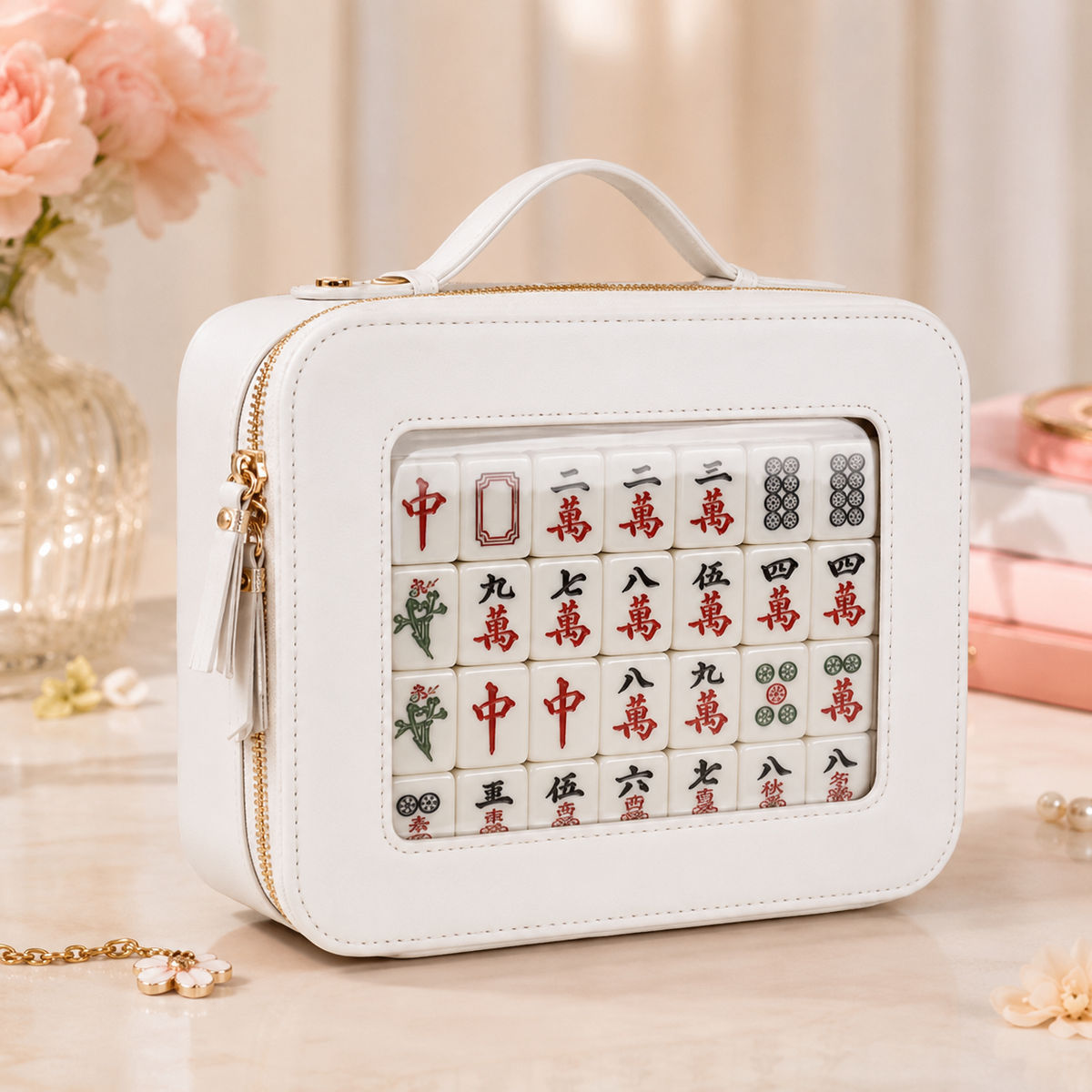
A luxury mahjong bag is a padded or rigid carrier designed to hold a full 160-tile American mahjong set, racks, a mat, and accessories without damage. At Mahstead, we offer soft fabric carriers and protective cases that fit standard acrylic sets and can store extra tiles, pushers, and scoring chips. Most luxury bags range from compact flat designs for weekly games to structured cases for frequent travelers; protection level, portability, and aesthetic matter equally to serious players. A good bag prevents tile chipping, keeps everything organized, and looks elegant enough to bring to a friend's house. Choose based on how often you transport your set, your storage space, and whether you need pockets for accessories—not every expensive bag suits every lifestyle.
A luxury mahjong bag is more than a carrier: it's an investment in protecting one of your most cherished game nights. We've hosted hundreds of Thursday games at our Dallas table, and the single biggest regret we hear is arriving with a nicked tile or a broken rack because the bag wasn't right. This guide helps you match a bag to your real needs—not just aesthetics.
What makes a mahjong bag "luxury"?
Luxury in a mahjong bag means durable materials, thoughtful compartments, and enough padding that your tiles survive a car ride or a weekend trip without damage. It's not about logos or brand names; it's about craftsmanship. A quality bag has reinforced stitching, cushioned tile storage, and dedicated slots for racks and pushers. We design our mahjong bags and cases to hold a full 160-tile set plus a mat and scoring chips in one place, so you never have to improvise padding or stack things in a way that risks rolling tiles loose.
🎁 See our most-loved mahjong sets & accessories →

Soft carrier vs. hardside case: which is right for you?
Soft fabric carriers are lighter, fit into car trunks easily, and work for players who transport their set once or twice a week on predictable routes. Hardside cases offer maximum protection and stack neatly on shelves; they're built for players who travel frequently or store their sets in shared spaces. A soft carrier typically weighs less and costs less; a rigid case absorbs more impact. If you're driving to a friend's house every Thursday, soft works. If you fly with your set or have cats in the game room, hard is the answer. Neither is wrong—your lifestyle decides.
How much storage do you actually need?
This is where most buyers go wrong. Count what travels with your set: a full American mahjong set (160 tiles), one or two mahjong mats, racks with pushers, scoring chips, wind indicators, and possibly a spare set of jokers. A compact bag fits tiles and one rack; a mid-size bag holds tiles, racks, a rolled mat, and a scorepad. A luxury oversized case accommodates two sets, mats for two tables, and extra accessories. Measure your mat when rolled: most American mahjong mats are 28 inches long when folded. A bag that claims to hold "tiles only" will frustrate you after the first trip.
Bag Type | Holds | Best For | Trade-off |
Compact soft carrier | 1 set + 1 rack | Weekly games at one location | No mat storage; light weight |
Mid-size padded bag | 1 set + mat + 2 racks | Regular players, 5–10 min drive | Moderate bulk; balanced protection |
Large structured case | 2 sets + mats + accessories | Frequent travelers; co-hosts | Heavier; takes closet space |
What materials last longest?
We see bags fail in two ways: stitching separates, and padding compresses. Luxury bags use ballistic nylon or heavy canvas on the exterior, with foam or cork padding inside. Plastic handles break; leather handles age beautifully but need care. Zippers on bags that hold 160 tiles must be industrial-grade—cheap sliders jam and strip. Interior pockets should be fabric-lined, not vinyl, so tiles don't slide. If you're buying a bag that will be in weekly use for three years, spend a little more on stitching quality; it's the part that fails first and is hardest to repair.

Design and personalization: does it matter?
Yes—if you actually enjoy looking at your bag. A luxury bag sits in your car or on a shelf, and you see it every game week. We offer mahjong bags and cases in classic solids, as well as engraved options. Some players love a minimalist look; others want their initials or a joke ("Tile Therapy" or "Mahjong Mama") on the exterior. Neither choice affects protection. But if you're more likely to bring your set to a friend's house because you love how the bag looks, that's a real benefit. A personalized bag also travels well as a gift for someone who hosts regularly.
✨ Find your Mahstead set — free US shipping →
Real-world test: what should you check before ordering?
Size confirmation: Measure your best-selling mahjong sets in its box. A 160-tile acrylic set is roughly 11 × 9 × 3 inches. If the bag advertises "fits a 160-tile set," verify it also fits the mat rolled (most modern American mats are too large for compact bags without rolling tightly). Ask the seller for interior dimensions, not just "capacity."
Compartment layout: Open the bag mentally: can you remove the mat without disturbing the tiles? Can racks and pushers be stored separately from tiles? Loose racks rattle against tiles and cause chipping.
Padding density: A luxury bag should have at least half an inch of cushioning on the bottom. Tap it with a knuckle before buying; it should feel firm, not mushy.
Handle durability: Grab the sample bag firmly. Handles should not flex excessively, and stitching at attachment points should show no gaps or loose threads.
Weather sealing: If you live in a humid climate or transport the set outdoors, check for water resistance. Acrylic tiles don't rust, but wood racks can swell if moisture seeps in.
We've tested hundreds of bags over weekly games, and the honest pattern is simple: a well-made soft carrier from a specialty mahjong supplier outlasts cheaper cases because the designer plays the game and knows what breaks. We design ours to fit our own 160-tile acrylic sets, our mats, and our pushers—so the bag grows with your collection as you add more sets or try new styles.
🀄 Shop best-selling mahjong sets →
The checklist: before you decide
How often do you transport the set? (Weekly = soft is fine; monthly+ = consider hard.)
What's your storage space? (Apartment = soft folds away; house = hard case stacks neatly.)
Do you attend tournaments or travel with the set? (Yes = prioritize impact protection.)
How many mats do you own? (One = mid-size; two or more = large case.)
Does personalization matter to you? (If yes, order that option.)
What's the warranty or return policy? (Check before ordering; a good luxury bag comes with a no-questions return if it doesn't fit your set.)
A luxury mahjong bag is an extension of the game itself. We've seen players skip weeks because their old bag was a hassle; once they had the right one, they never missed a Thursday. Your bag should make bringing your set easier, not harder. Take five minutes to match it to your real life, not an imagined perfect version of your life—and you'll love it for years.

FAQ
Can a luxury mahjong bag fit two 160-tile sets?
Only a large structured case will hold two full sets plus mats. Most mid-size luxury bags hold one set, one mat, and racks. Check interior dimensions in inches before assuming "luxury" means "everything fits."
Do I need to remove tiles before packing, or can I leave them in the original box?
Leaving tiles in the original box adds bulk and defeats the purpose of a luxury bag—which is to consolidate and protect. Unbox your tiles into the bag's compartments for efficient packing.
How do I prevent acrylic tiles from cracking inside the bag?
Use a padded tile tray or divided compartments so tiles don't slide loose during transport. A bag with half an inch of foam on the bottom is the minimum; avoid thin nylon bags.
Can a luxury mahjong bag double as a carry-on suitcase?
No. A proper mahjong bag is specialized to fit a 160-tile set, not clothing. If you need luggage function plus tile protection, buy both—a luxury bag and a small roller bag.
What's the difference between a mahjong bag and a jewelry box-style case?
A jewelry-style case is rigid, compartmentalized, and beautiful on a shelf but impractical to carry weekly. A mahjong bag is portable, padded for travel, and designed to move. Choose based on whether your set lives at one table or travels with you.
Should I buy a bag that's slightly larger than my set?
Yes. A bag with 1–2 inches of extra space allows for mat bulge, an extra scorepad, and future tiles without forcing the zipper. Undersized bags compress padding and crack zippers.


View More
View More
View More
