
Sichuan Mahjong Terms and Glossary: Rules, Hands, and Key Vocabulary
Last updated: Nov 23, 2026
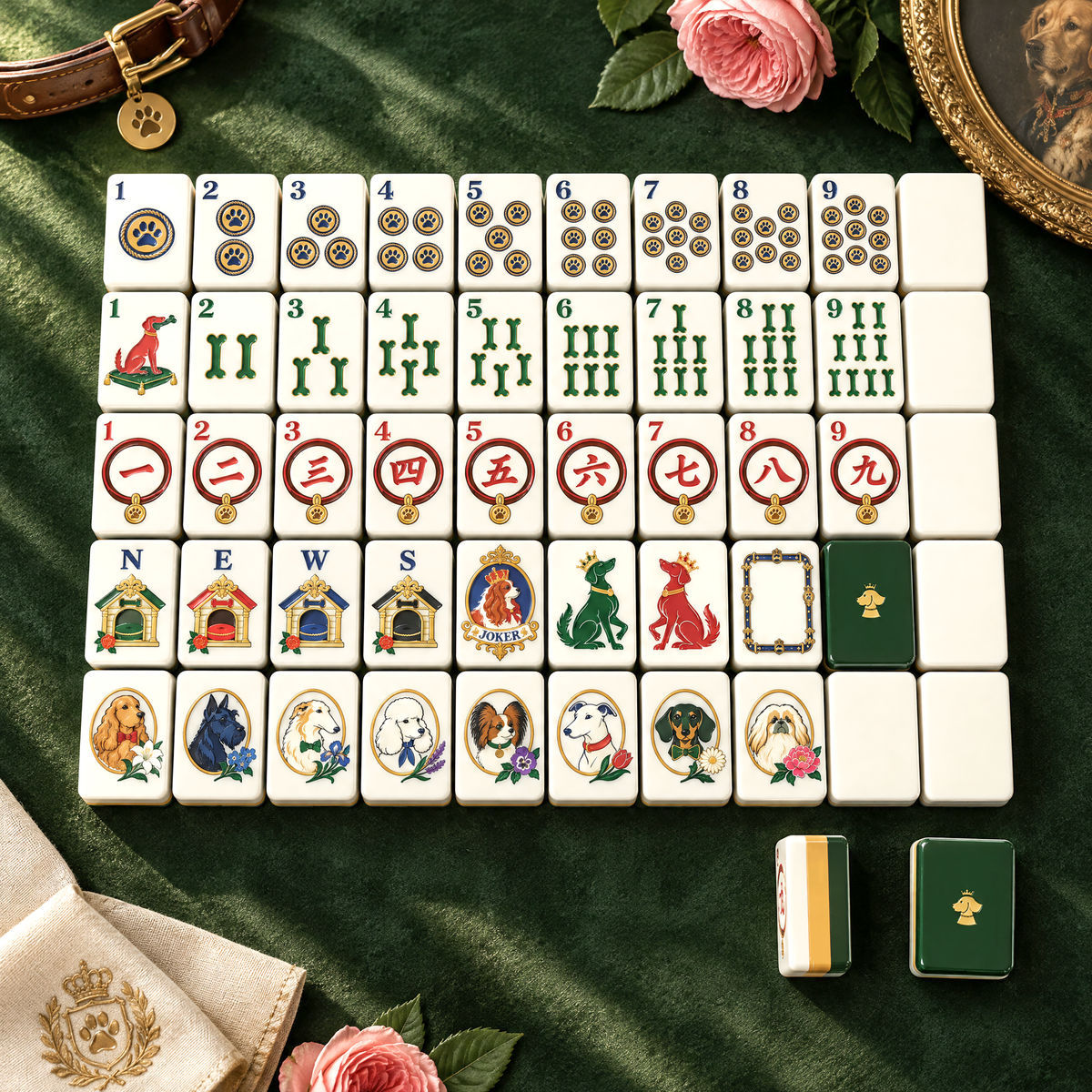
Sichuan mahjong (四川麻将) is a regional Chinese game played with 108 tiles—one suit each of Bams, Craks, and Dots (1–9, four copies each), plus 16 winds and 8 dragons—with no flowers or jokers. Rounds are faster than American mahjong and scoring is based on point multipliers rather than hand lists. Key terms include "hu" (winning hand), "pung" (pung—three identical tiles), "kong" (kong—four identical tiles), "chow" (sequence: 1-2-3 or 7-8-9 in the same suit, exposed or melded), and "tile melds" that determine hand value. Unlike American mahjong's rigid card-based hands, Sichuan allows flexible combinations and sequences; jokers and blank tiles do not exist. Scoring multiplies the base point value by factors tied to hand composition—pairs, melds, and sequences all contribute. Players discard after drawing and can "call" exposed pungs or kongs mid-round, and chows are valid exposed melds. If you host weekly games, understanding these terms helps you explain the flow quickly to newcomers and avoid rule disputes during play.
Sichuan mahjong plays like a cousin to the American game but moves much faster and feels more flexible. Instead of consulting a hand card, you build winning combinations on the fly using sequences and pungs. The vocabulary is essential: learn it well, and you'll spot winning opportunities and make decisions in real time. Below is a breakdown of the core terms, how they work together, and why the variant feels so different from what American players experience.
What does "hu" mean and how do you win?
"Hu" (胡) is the Sichuan term for a winning hand. You hu when your 14 tiles form a legal combination: one pair plus four melds (each a pung, kong, or chow). A chow is a sequence—like 3 Bam, 4 Bam, 5 Bam—that you can call openly or form in your hand. Pungs and kongs are identical-tile groups; only the pair can contain any two matching tiles. Once you hu, you stop drawing and discard ends. The win triggers scoring based on the hand's complexity and melds. Most hands score faster than American mahjong because they don't require a specific card arrangement. A simple hu with one chow and three pungs scores less than a hu with all kongs or all honor melds, which multiplies the point value.

What are "melds" and how do they differ from American tile groups?
In Sichuan mahjong, a meld is any exposed or concealed group: a pung (three identical tiles), a kong (four), or a chow (three consecutive numbered tiles in one suit). This is the core difference from American mahjong: chows are legal and can be called mid-game when another player discards the tile you need. An exposed meld sits on the table; a concealed meld stays hidden in your hand. Scoring rewards melds heavily—a pung of dragons or winds is worth more than a pung of number tiles, and a kong is worth double a pung. Chows score less but allow more hand flexibility. You can declare and expose melds as you go, or hold them hidden until you hu. The balance between exposed and hidden melds changes your final score multiplier.
How does scoring work with "hu" multipliers and base points?
Sichuan mahjong assigns a base point value, then multiplies it by factors called "fu" (符, roughly "doubles" or "increments"). A simple hu might multiply by 2; a hu with all kongs might multiply by 8 or more. The base points depend on whether you drew the winning tile yourself (higher) or called it from another player's discard (lower). Honor tiles—winds and dragons—in pungs or kongs add multiplier layers. A hand with one honor pung counts as one multiplier; two honor pungs double it again. Scoring math is quicker than American mahjong because you don't consult a card—you calculate on the fly. Example: a hu with three pungs (two honor, one number) and one chow, drawn live, might score base 2 points × 4 multipliers = 8 points. That point value then pays out from each of the three other players. Speed and transparency are the appeal—no card lookups, no long pauses.
Term | Definition | Example | Scoring Factor |
Pung | Three identical tiles | 5 Dot, 5 Dot, 5 Dot | Base +1 if honor |
Kong | Four identical tiles | Red Dragon × 4 | Base ×2 vs. pung |
Chow | Three consecutive numbers, one suit | 2 Bam, 3 Bam, 4 Bam | Base +0 (minimal) |
Hu | Winning hand (one pair + four melds) | Any legal combination | ×2 to ×16 |
Fu | Multiplier factor | Per honor tile or all-kong | Stacks on base |
What is "tingpai" and why does table awareness matter?
"Tingpai" (听牌) means you are "waiting" or "ready to hu"—your hand lacks only one tile to win. Declaring tingpai (optional but common in casual Sichuan play) signals you are close and gives other players a chance to play safer. Once you declare, you cannot draw new tiles; you can only hu if someone discards the exact tile you need. Tingpai awareness is crucial for reading the table: if two players are tingpai, the other two play defensively. Discarding honor tiles (winds and dragons) becomes risky; players tend to release number tiles. Some regional rules allow the dealer to earn bonus points if they hu while tingpai; others levy penalties if you declare tingpai falsely. Tingpai changes the game's psychology—it's faster and higher-stakes than American mahjong, where hands stay hidden longer. Tracking tingpai keeps you alive at the table.
What are "dragons," "winds," and "honor tiles" in Sichuan play?
Honor tiles are winds (East, South, West, North) and dragons (Red, Green, White). They have no numeric rank and score heavily in melds. A pung of dragons is worth more than a pung of 5 Dots; a kong of winds even more. Many Sichuan variants award bonus points for honor-heavy hands (all pungs are honor tiles) or rare hands like "all kongs." Winds and dragons are also "seat tiles"—East wind ties to the dealer, South to the player on the dealer's left, etc. In some regional rules, if you have a pung of your seat wind, it counts as an automatic multiplier. Learning which seat you occupy and tracking which honor tiles have been played helps you predict what remains in the wall. Honor tiles drive the highest-scoring hands, so they disappear from the wall first and change discarding strategy rapidly.
🀄 Shop best-selling mahjong sets →

How does tile-calling and "pung calls" work during play?
In Sichuan mahjong, you can "call" (碰) when another player discards a tile you need to complete a pung. You expose the pung on the table and immediately discard a different tile from your hand. A kong call works the same way: if you hold two identical tiles and someone discards a match, you can call and expose a kong. Unlike American mahjong, where exposed melds are rare and strictly regulated, Sichuan encourages calling to speed up the game. After you call, play continues clockwise; the next player draws from the wall. Chow calls are also allowed in many variants: if the discard completes a sequence in your hand, you can call and expose the chow. The ability to call mid-game means melds grow visibly and the hand evolves in real time. Beginners sometimes hesitate to call, fearing they'll reveal their strategy—but in Sichuan speed is paramount, and calling is the norm.
🎁 See our most-loved mahjong sets & accessories →
What is the difference between Sichuan mahjong and American mahjong?
American mahjong is hand-card-driven: you consult the National Mah Jongg League card each year to confirm a hand is legal. Sichuan mahjong is rule-driven and improvised: you learn the winning pattern (one pair, four melds) and build hands freely. American uses 152 tiles plus 8 jokers; Sichuan uses 108 tiles with no jokers. American sequences (chows) cannot be called or exposed; Sichuan embraces exposed sequences as core play. Scoring in American mahjong is binary—you either match the card or you don't—and point values vary widely by hand type. Sichuan scoring is multiplicative and transparent: base points times multipliers. American rounds are longer and more strategic; Sichuan rounds are fast and reactive. If you play American mahjong at home and want to try something quicker with looser rules, Sichuan is an excellent next step. Many players enjoy both: American for depth, Sichuan for pace.
Which tiles do I need and how does hand-reading change?
Sichuan play requires only 108 tiles—no flowers, seasons, or jokers. You use one complete suit each (nine ranks, four copies) of Bams, Craks, and Dots, plus 16 winds and 8 dragons. A 160-tile American set contains extra jokers and blank tiles that aren't used in Sichuan; if you want a dedicated Sichuan set, you can source one, but many players simply remove unused tiles and play with the core 108. Hand-reading in Sichuan is faster: instead of checking a card, you learn a few key patterns (all pungs, all chows, honor-heavy, pure suit) and spot them instantly. The reduced tile pool (no jokers to substitute) means the wall depletes faster and rounds end sooner. Some players carry a portable Sichuan set or learn to play with a partial American set as a portable alternative for travel.
What are common Sichuan mahjong terms I'll hear at the table?
Hu (胡): Win; declare and stop play.
Pung (碰): Three identical tiles; also the verb "to call" a pung discard.
Kong (杠): Four identical tiles; a kong adds to your meld count and earns a bonus draw.
Chow (吃): Sequence of three consecutive numbered tiles (e.g., 5–6–7 Bam); also the verb "to call" a chow.
Tingpai (听牌): Waiting; one tile away from winning.
Gong (杠): Variant spelling of kong (regional).
Pai (牌): Tile (generic).
Qiang (抢): "Steal" a kong discard—claim the winning tile before the kong-caller draws.
Zimo (自摸): Draw your own winning tile (self-win); scores higher than a called win.
Rong (荣): Win by calling a discard (not self-drawn).
What to check before you play Sichuan mahjong for the first time
Confirm the regional rules. Sichuan has substyles (Chengdu, Leshan, etc.) with slight scoring differences; ask your table which version they play.
Verify tile use. Ask whether your group uses all 108 core tiles or if any are removed (e.g., a few number tiles).
Clarify tingpai rules. Is declaring tingpai mandatory, optional, or forbidden? Does it trigger penalties?
Check bonus/penalty hands. Some tables award extra points for all-kong or all-honor hands; others penalize false tingpai calls.
Learn the payout structure. In most Sichuan games, the winner collects from all three opponents (not just the discarder). Confirm before betting.
Practice scoring math mentally. Sichuan speed depends on quick fu (multiplier) counting; ask for a walkthrough of one hand before you join.
✨ Find your Mahstead set — free US shipping →
Our pick for learning Sichuan mahjong at home
If you're hosting a Sichuan night for the first time, a best-selling mahjong set gives you the full 108 core tiles plus extras. Pair it with a mahjong mat to define each player's zone and reduce discarding errors. Add mahjong racks with pushers so players organize their tiles neatly and call cleanly. Many Sichuan players appreciate engraved sets for clarity at a glance—it's easier to spot honor tiles and number ranks when the art is crisp. Keep a scorepad visible and teach one practice hand aloud before money changes hands. Sichuan play rewards practice; after three games, most learners call and score fluidly.

FAQ
Can I play Sichuan mahjong with an American mahjong set?
Yes, but you'll ignore the jokers, blanks, and flowers. Use only the 108 core tiles (Bam, Crak, Dot 1–9 and honor tiles). The American card and hand list don't apply; Sichuan is freestyle pattern-matching, not card-locked.
What is the main advantage of Sichuan mahjong over American mahjong?
Speed and simplicity. No card lookups, no joker rules, no hand-list restrictions. Rounds last 15–30 minutes; a hand resolves in one or two minutes of play. Scoring is transparent (base × multipliers) and calculated aloud at the table.
Do I need to learn traditional Chinese to play Sichuan mahjong?
No. Learning a few key terms (hu, pung, kong, chow, tingpai) in Pinyin or phonetically is enough. Most casual tables explain scoring and rules in English. Osmosis and watching others play teaches the rest.
How do honor tiles (winds and dragons) affect my strategy in Sichuan play?
Honor melds score much higher than number melds. Prioritize calling honor tiles if you need them, and discard honor tiles only if you're confident other players don't have tingpai. Honor-heavy hands are premium targets.
Is Sichuan mahjong gambling-only or can I play for fun with no money?
Both. Many casual home games play for fun or low stakes. Money is not required; scoring and winning can be recorded on paper alone. The speed and interactivity appeal regardless of stakes.
How do I know when someone is bluffing about tingpai in Sichuan mahjong?
You don't, unless local rules allow a false-tingpai penalty. Watch their discarding pattern—if they discard low-value tiles after declaring, they're likely genuine. If they discard honor tiles or rare tiles, they might be misleading. Experienced players read table position and wall state.
Can I play Sichuan mahjong with fewer than four players?
Most regional rules require four. Two- and three-player variants exist but are rare and require rule modifications (adjusted tile draws, different wall depths). Stick with four players for the standard game.
What is the fastest hand to win in Sichuan mahjong?
A hu with all chows and one pair (no honor tiles, minimal fu) scores lowest and resolves fastest. An all-pung or all-kong hand takes more time to assemble but scores much higher and is more rewarding.


View More
View More
View More
