
Sichuan Mahjong Big Hand Strategy: Winning Patterns & Plays
Last updated: Nov 23, 2026
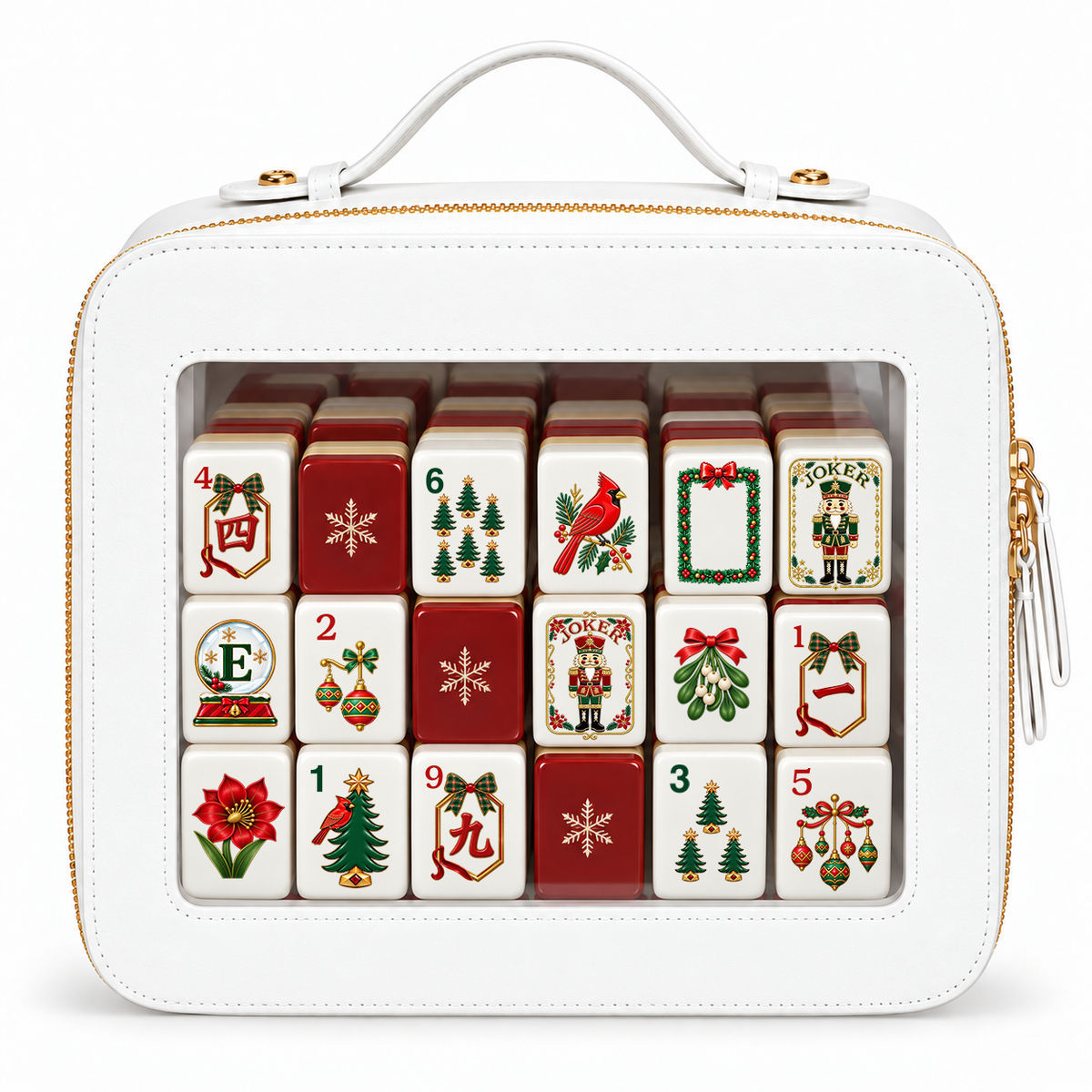
Sichuan mahjong—a Chinese regional variant played with 108 tiles (four each of Bams, Craks, Dots 1–9 plus honor tiles: winds, dragons)—emphasizes high-value combinations called "big hands" (大牌). Big hand strategy means building toward eye-catching melds—like seven pairs, all terminals, or mixed suits—rather than winning quickly on low scores. The core tactic: count your tile pool, identify which patterns are statistically within reach after the Charleston-like exchange (洗牌), and commit to that line early. Discard safe outer tiles (1s, 9s, honors you don't pair) to signal strength without bleeding information. Winning on a big hand in Sichuan often doubles or triples your base score. This strategy flips the American mahjong priority of speed to depth: you're building a hand over 8–15 rounds, not rushing to meld on turn three. Success hinges on tile memory, opponent psychology, and ruthless tile selection.
Sichuan mahjong big hand strategy is about knowing which high-value melds are reachable and committing your tile choices to that vision without telegraphing it.
In our weekly games, the players who score consistently aren't the fastest to declare—they're the ones who map their hand's DNA in the first four rounds and never deviate. This guide walks you through the framework, the psychology, and the practical checkpoints that transform a random 14 tiles into a calculated powerhouse.
What counts as a "big hand" in Sichuan?
A big hand (大牌) scores significantly more than an ordinary win—often 8 points or more versus 2–4 for a basic hand. Common big-hand patterns include: seven pairs (all doubles), all terminals and honors (no suit tiles 2–8), mixed suits with a dominant run, or all of one suit. The exact hand list depends on your table's rulebook (many regional variations exist), but the principle is universal: concentrate on patterns that yield higher base points and multipliers. In Sichuan play, you're not trying to win on your second turn; you're building toward a declared hand that earns respect and chips. Knowing your rulebook's big-hand categories before you sit down is non-negotiable—ambiguity at the table costs money and trust.

How do you identify which big hand to pursue in the first four rounds?
After the tile exchange (洗牌—the Sichuan equivalent of the Charleston, though typically faster), study your 13 starting tiles for clusters: three or four tiles that already form half a pair, a terminal run, or an honor triplet. Ask yourself: Do I have the skeleton of all terminals? Am I holding three Bams and a Green Dragon—could I pivot to that? Count your "live" honors (winds and dragons you hold at least two of); they're your anchors. Discard the tile that belongs to no emerging pattern. For instance, if you're holding 1-Bam, 9-Bam, 5-Bam, and Green Dragon ×2, all honors, and a middle Crak, that middle Crak is dead weight—lose it immediately. Within rounds 2–3, your hand shape should be obvious to you alone. Switching targets mid-game leaks information and wastes draws. A disciplined opening commit saves tiles and confusion later.
Which tiles should you discard to avoid signaling your hand?
This is the psychology layer of big hand strategy. Discard pattern matters: experienced Sichuan players read your meld intentions from your discards. To stay opaque, follow this hierarchy:
First principle: lose unmatched middle tiles (2–8 of any suit that don't pair or connect to your hand). A solo 5-Crak with no partner or run context is invisible.
Second: expose honors last—only discard a wind or dragon when you've cycled your suit dead weight.
Avoid a discard sequence that screams your goal—if you chuck three Bams in a row (1, 5, 9), observant players know you're terminal-heavy or avoiding Bams entirely.
Mix suit discards if you can: one Dot, one Crak, one Bam, then circle back. Randomness protects you.
The error we see every week: a player discards 1-Dot, 2-Dot, 3-Dot all at once. Now the table knows they're not chasing suit runs. Big hand players discard 1-Dot (no pair), then three rounds later 2-Dot (drawn fresh, no mate), then much later 3-Dot. Time gaps obscure intention. It's subtle, but in high-stakes play it's the difference between drawing your key tile and seeing an opponent block it.
How do you count live tiles to know if your big hand is still reachable?
Tile accounting is the spine of late-game big hand strategy. By round 8, keep a mental tally:
Your goal | Critical tiles you need | How to count | Red flag (stop pursuing) |
All terminals (1–9 of one suit only) | Four each of 1, 9 in your suit | When two 1-Bams are discarded, you have one, one opponent showed a pung: 0 left playable | Fewer than 2 live 1s or 9s by round 10 |
Seven pairs | Any tile in two or more sets of two | Track what's exposed in melds; if three pairs are in opponent hands, your pair sources shrink | More than 1 pair visible in melds by round 9 |
Mixed honor/suit (custom rulebook) | Depends on pattern | Write it down mid-game if memorizing is hard | You can't identify which tiles block your win |
All one suit | All nine ranks of that suit in pairs or runs | Every discard of your suit by others reduces your pool by one; math it: 9 ranks × 4 copies per suit in the wall | You've seen all four 1s or all four 9s already |
If three of your four required 1-Bams are already in opponents' hands or discarded by round 9, abandon that line. Pivot to a secondary big hand you've half-built (always have a Plan B). Chasing a dead tile is throwing rounds away.
🀄 Shop best-selling mahjong sets →

What's the difference between committing to a big hand vs. staying flexible?
Commitment means: lock your hand concept by round 4, discard everything outside it, and never waver. Flexibility means: hold a loose secondary shape for two rounds, watching the table's discards, then pivot if your first goal dies. Most players bungle this. They half-commit (calling melds that signal one goal while holding tiles for another), then panic when their main path closes.
Our rule: by round 5, you must declare your commitment silently—even just to yourself. Write it down if you're learning: "Pursuing: all 1–9 Bams + honor pair." Now every draw either feeds this hand or gets discarded. If an opponent's meld reveals a tile you desperately need is gone, you have one grace round to pivot; after that, chase your new line with the same discipline. Indecision spreads across your hand like rot—you end up with eight unrelated tiles and zero options.
The player who wins big hands in Sichuan is the one whose discard pile tells a coherent story. Your opponents are reading it; make it a story only they can't predict until you've already won.
When should you block an opponent's big hand vs. focus on your own?
Offense first: if your big hand is alive (at least 2 of each critical tile visible or in hand), pursue it without mercy. Blocking is a luxury for a player already confident they can't win. Interrupting a dangerous opponent's draw does nothing if you throw away your own win. However, if you're round 10+ and you know your hand is dead (your required tiles are gone, the math says you're done), and an opponent has been building visibly for three rounds—now you block. Discard copies of their last draw or discard to starve their melds.
The table-tested tell: if an opponent's discards are tight and ordered (signals commitment), don't fight them unless your hand is stronger. If an opponent is discarding randomly, they're either flexible or lost—leave them alone and build your own hand. Blocking wastes a draw, and in Sichuan, draws are gold. Focus on your big hand first; only block if you're certain you're out.
🎁 See our most-loved mahjong sets & accessories →
What gear helps you stay sharp during a long Sichuan session?
Big hand strategy demands focus over 8–15 rounds. A solid mahjong mat with a spacious layout keeps your tiles legible and organized; scrambled racks lead to mental errors. Racks with smooth pushers let you rearrange and count tiles silently—no fumbling, no noise that leaks hesitation to the table. A quality set with clear, distinct tile faces (engraved or bright numerals) eliminates squinting and misreads. We recommend exploring our best-selling collection to find sets with high-contrast designs; acrylic tiles with edge engravings stay readable under varied lighting, essential for a long session where concentration matters.
What to check before you sit down for Sichuan big hand play:
Confirm the table's big-hand list (which patterns qualify, which score highest).
Review your tile pool: 108 tiles, four of each? (Some Sichuan variants use 120 or 144; confirm).
Agree on meld exposure rules (can you show a pung or kong mid-hand, or only at win?).
Know the tie-breaker: if two players declare big hands on the same round, who scores?
Test your mat and racks: can you move tiles silently and arrange them in rows easily?
✨ Find your Mahstead set — free US shipping →

FAQ
How does Sichuan big hand strategy differ from American mahjong strategy?
American mahjong uses 152 tiles, requires hands from an annual card, and plays until someone wins. Sichuan uses 108 tiles, has no external card, and rewards high-value melds—so Sichuan play is longer, more psychological, and values tile memory. American play prioritizes speed; Sichuan prioritizes the hand's score and pattern complexity.
Is it ever right to discard a tile that might help your big hand, just to hide your goal?
Yes, rarely. If you've identified your big hand and one "safe" discard could mislead the table into thinking you're pursuing a different line, losing that tile is worth the misdirection—but only if you have three or more copies of it elsewhere in the wall. Sacrifice a pawn to protect the king.
What's the fastest way to tell if a big hand goal is dead by round 10?
Count how many of your four required tiles are gone (in other players' hands, visible in melds, or discarded). If three are gone, pursue a different goal. If all four are gone, your hand is mathematically impossible—fold and play defense.
Can you pursue two big hands at once, or does that always fail?
A secondary is fine (7–8 round commitment to Plan B). Trying to build three patterns at once guarantees failure: you'll have scattered tiles and no winning shape. Commit to one, shadow a second if the wall allows, never three.
How do you read an opponent's discard pile to predict their big hand before they declare?
Watch for timing and gaps. If they discard 1-Bam on turn 2, middle 5-Bam on turn 5, then 9-Bam on turn 12, they're likely pursuing all terminals (Bam suit). If they discard one honor every other round but never repeat a suit, they're building mixed suits or a pair-heavy hand. Coherent discard sequences betray coherent hands—use that.


View More
View More
View More
