
Siamese Mahjong Tile Set: What You're Actually Buying
Last updated: Nov 23, 2026
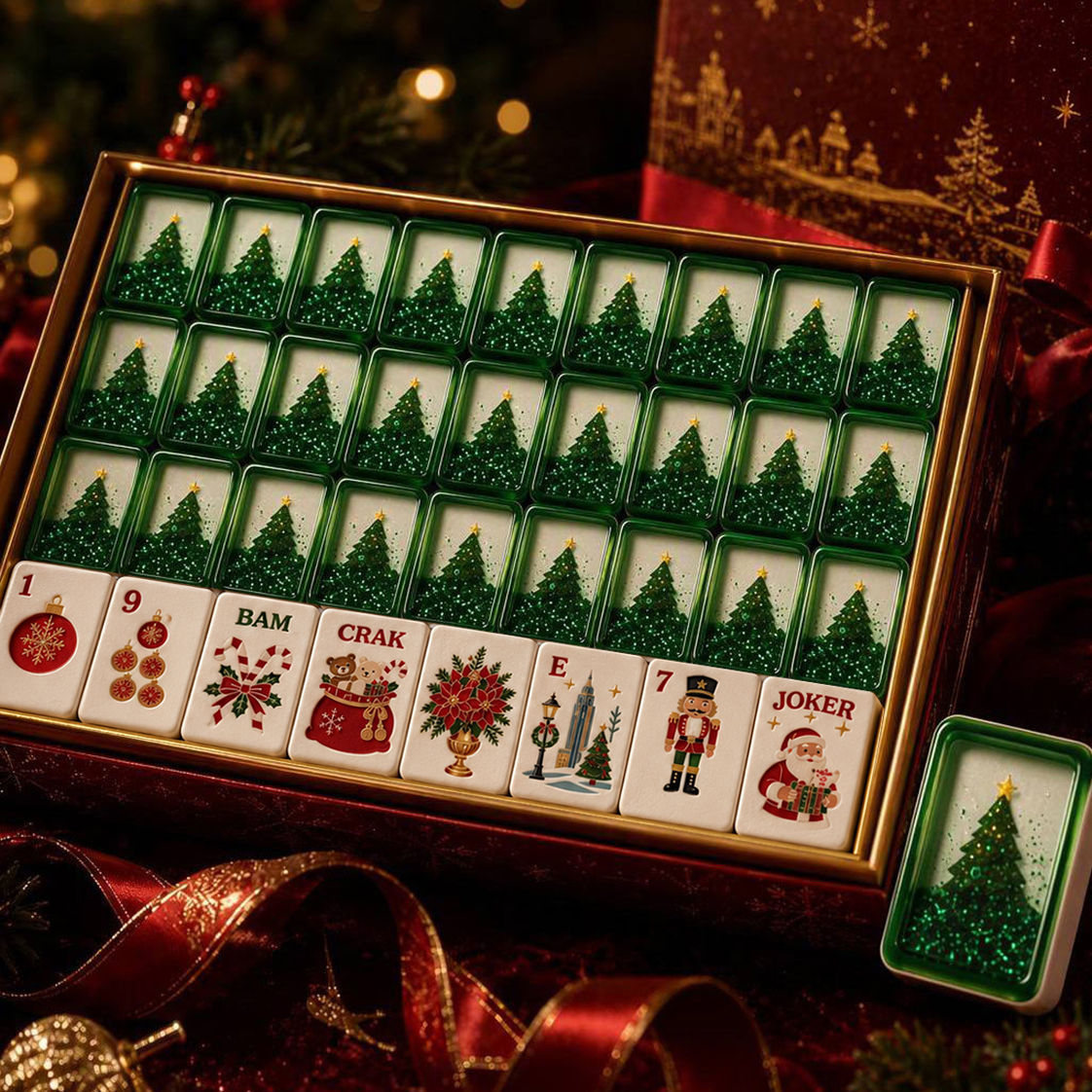
"Siamese" tiles typically refer to hand-carved or machine-pressed sets made in Thailand, identifiable by thick bamboo or wood racks, often with floral or ornamental joinery. Most are Chinese-rule sets (144 tiles: 36 of each suit plus winds, dragons, flowers) rather than American (152 tiles). Siamese sets are priced mid-range to premium depending on carving detail and materials. They're beautiful display pieces but require learning Chinese mahjong rules, which allow chows (sequences like 1-2-3 of the same suit)—a core rule that differs from American play. Before buying, confirm tile count, joker count, and whether the hand includes an English reference card; many Siamese sets ship without English instruction. Mahstead's best-selling mahjong sets use acrylic and are engineered for American rules, so if you're playing American weekly, that's your better match. 🀄 Shop best-selling mahjong sets →
What counts as a "Siamese" set, and why does it matter?
Siamese sets are typically hand-manufactured in Thailand and recognized by their wooden racks, carved tile details (often dragons or Thai motifs), and bamboo joinery. The term isn't an official mahjong standard—it's a market category. What matters is the tile count: most Siamese sets hold 144 tiles (Chinese-rule) rather than 152 (American-rule), and that changes your entire game. A 144-tile set omits the eight flowers and uses only four jokers, so hands pulled from an American NMJL card won't match. The tile face size also tends to be smaller and thicker than acrylic American sets, making them slower to shuffle and pile. Buy a Siamese set only if you already play Chinese mahjong or plan to learn it; for weekly American home games, you'll spend money on a set you can't use.

How do Siamese sets compare to American acrylic sets?
Feature | Siamese (Typical) | American Acrylic |
Tile count | 144 (Chinese-rule) | 152 (American-rule) |
Racks | Bamboo or carved wood | Acrylic or pushers included |
Jokers | 4 | 8 |
Flowers | Included in set | Separate 8-tile group |
Shuffle speed | Slow (thick, heavy tiles) | Fast (smooth, consistent tiles) |
English guide | Often missing | Always included |
Price basis | Premium materials, hand-craft | Mid-range to premium |
Learning curve | Chinese rules, chows allowed | American rules, no chows |
Best for | Display, Chinese players | Weekly American games |
Siamese sets are art objects first, game equipment second. If you're hosting American mahjong nights, the tile design matters less than rule compatibility and speed of play. Acrylic sets from our best-selling collection are engineered for shuffle, stack, and deal cycles—you'll play faster and avoid fumbling.
What rules do you actually play with a Siamese set?
Siamese sets almost always follow Chinese mahjong rules, which allow chows (runs of three consecutive numbers in the same suit, like 4-5-6 Bams). In American mahjong, chows don't exist—you form only pungs (three identical tiles), kongs (four identical), and higher groups. In Chinese play, you can call and expose sequences on the table; American play restricts exposed groups to pungs, kongs, and quints (five). Joker use is also different: American jokers can replace any tile in a pung, kong, or higher group but cannot form a pair or standalone tile; in Chinese, joker rules vary by variant. Before buying a Siamese set, research which Chinese variant you'll play (standard, Hong Kong, Taiwanese, Riichi). Many Siamese sets include no English rule card, so you'll spend time hunting guides online. If you're new to mahjong, this is a recipe for frustration.
🎁 See our most-loved mahjong sets & accessories →

Where and how do you actually buy a Siamese set?
Siamese tile sets appear on Asian import sites, specialty antique dealers, and a handful of online retailers. Shipping from Thailand or Southeast Asia can take 2–4 weeks; US-based stock is rare. Prices range widely: basic hand-painted sets start mid-range, while carved or premium woods reach luxury price points. The catch: return policies are often unclear, tile damage in transit is common, and English-language customer support may not exist. You won't know what you're getting until it arrives. Look for seller reviews on shipping care, tile quality, and completeness—ask explicitly whether jokers are included, whether an English rule guide is in the box, and what the return window is. Most Siamese sets don't qualify for "made to order" or "customizable" claims you might see elsewhere; they're stock items with minimal variation. If you're buying a Siamese set as a gift for someone already playing Chinese mahjong, this can work beautifully. For someone learning American mahjong in your home game, it's a misfire.
What should you check before ordering a Siamese set?
Tile count: Confirm 144 or 152. If it says "complete set," ask what that includes—many sellers list jokers and flowers separately.
Joker quantity: Verify joker count explicitly. Chinese variants often use four; you may need eight for some games.
English guide: Ask if an English rule card or instruction booklet ships with the set. Many Siamese sets don't. If no English guide, can you print or download one from the seller?
Rack and pusher condition: Bamboo racks are beautiful but can split or splinter with age. Check photos for damage and ask about warranty on wooden components.
Shipping and returns: Know your return window (usually 14–30 days) and whether return shipping is on you. Tile damage is common; clarify what's covered.
Tile size and weight: If you have arthritis or vision issues, confirm tile thickness and face diameter. Siamese tiles run thicker and heavier than acrylic; this can be an advantage for grip or a barrier to comfort play.
Your rule variant: If you play American mahjong weekly, stop here—buy from our best-selling collection instead. If you're learning Chinese mahjong, confirm the seller's set matches the specific variant your group plays.
✨ Find your Mahstead set — free US shipping →
When is a Siamese set the right choice—and when isn't it?
A Siamese set makes sense if:
You're already playing Chinese, Hong Kong, or Taiwanese mahjong regularly.
You want a decorative set that doubles as a game tool.
You can source an English rule guide or already know the rules inside-out.
You're comfortable with slower shuffle and thicker tiles.
A Siamese set is not right if:
You're learning American mahjong in a weekly home game.
Your group uses the annual NMJL card (requires 152 tiles, 8 jokers).
You need reliability and consistent tile shuffle speed.
You want free US shipping and straightforward returns.
You're a beginner and need clear English instruction in the box.
For American mahjong hosts, our best-selling acrylic sets are engineered to move fast and last through hundreds of hands. They include a rack with pushers, jokers, and an English guide. Siamese sets are museum-quality; acrylic sets are game-quality. Choose based on whether you're playing or displaying.

FAQ
Is "Siamese" a specific mahjong rule variant or just a geographic label?
It's geographic—a market term for sets made in Thailand. The actual rules depend on whether the set is 144-tile (Chinese-standard) or 152-tile (rare). Always ask the seller which rule variant the set is designed for, not just where it was made.
Can I play American mahjong with a Siamese 144-tile set?
No. American mahjong requires 152 tiles (three full suits × nine numbers × four copies, plus 16 winds, 12 dragons, eight flowers, eight jokers). A 144-tile set omits the flowers and uses only four jokers, so hands won't match the annual NMJL card. You'd have to rewrite hands constantly.
Why are Siamese sets usually thicker and heavier than acrylic sets?
Bamboo and wood tiles are hand-carved and naturally dense. Acrylic is injection-molded and optimized for stack speed and shuffle consistency. Thick tiles feel premium but slow down play—this is a deliberate trade-off between aesthetics and function, not a flaw.
Do Siamese sets come with English rule cards?
Not always. Many sellers don't include instruction, assuming you already play Chinese mahjong. Before buying, ask explicitly what's in the box and whether an English guide is included. If not, can you print one from the seller's website? This is a red flag for beginners.
How long does a Siamese set take to arrive if I buy from a Thailand-based seller?
Typically 2–4 weeks for standard international shipping, sometimes longer if customs processing delays. US-based resellers ship faster but charge more. Factor in shipping time when planning game nights; don't order a Siamese set one week before hosting a game you've promised American mahjong for.
What's the best way to care for a Siamese bamboo rack or wooden joinery?
Keep racks dry and store upright or flat (never folded). Avoid humid environments, which can warp bamboo. Check joinery annually for loose pegs. Wipe tiles with a dry cloth only—never soak them. Wooden racks can split with age; replacement is usually not available after purchase, so this is a long-term commitment.
Is a Siamese set a good gift for someone new to mahjong?
Only if they're already playing Chinese mahjong and want a beautiful set to keep. For someone learning American mahjong in your home game, no—buy them a compatible acrylic set from our best-selling collection so they can join your games immediately without rule confusion.


View More
View More
View More
