
Siamese Mahjong Quick Start Guide: Rules & Setup
Last updated: Nov 23, 2026
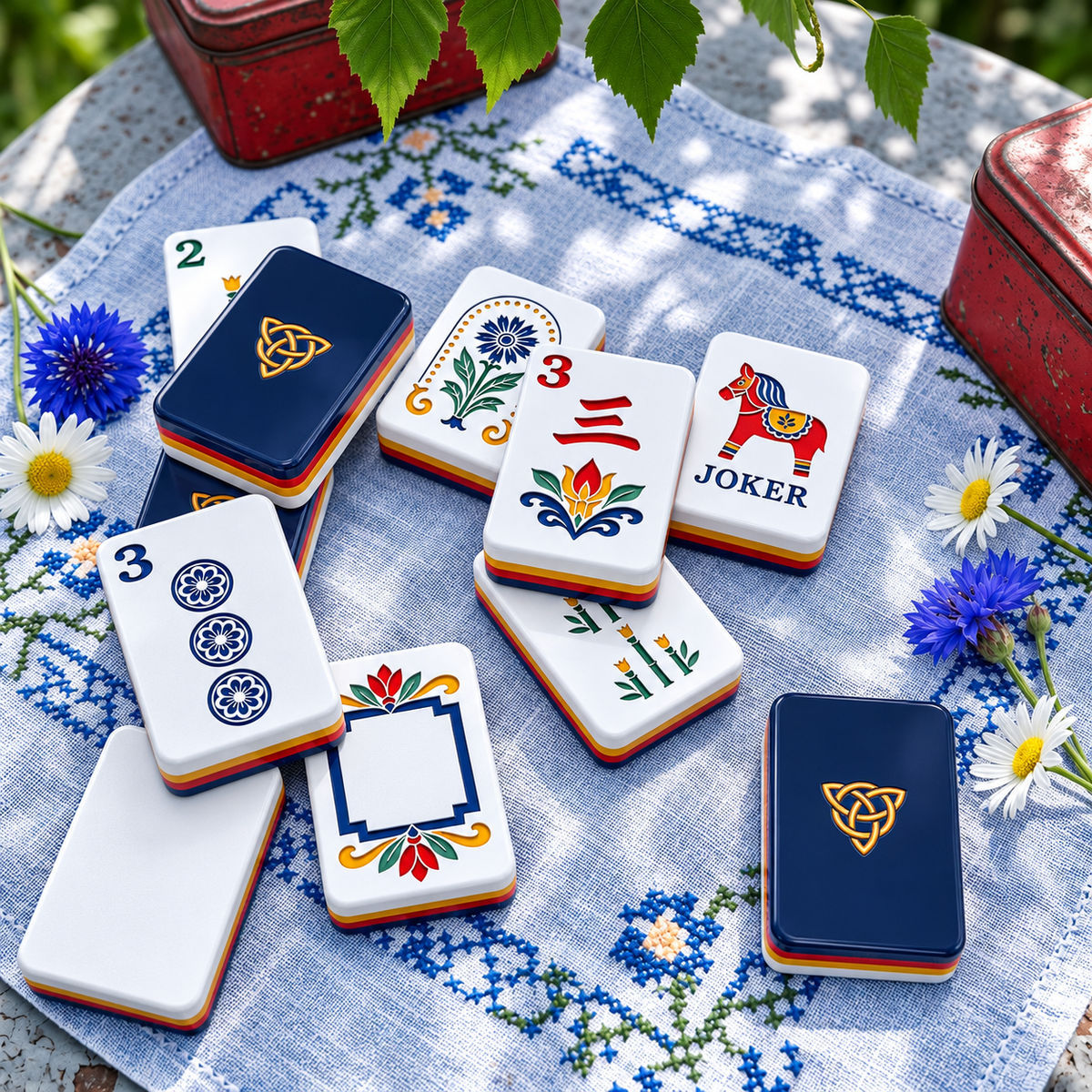
Siamese mahjong is a four-player variant combining American exposure rules (you can call and display pungs, kongs, and jokers) with Thai tile rankings and simplified hand structures. Games use a standard 152-tile set plus jokers and are played in rounds lasting 15–25 minutes per hand. Unlike American mahjong, Siamese has no annual card; instead, players memorize or reference a smaller set of legal hand patterns—typically around 30–50 combinations of pungs, kongs, and honor tiles. The game emphasizes speed and dealer rotation over complex scoring. A typical hand requires four melds (exposed or concealed) plus a pair, and winning often pays fixed points rather than variable amounts. Siamese is easier to teach than American mahjong but demands quicker decision-making at the table, making it ideal for groups seeking faster rounds with fewer rulebook interruptions. 🀄 Shop best-selling mahjong sets →
What makes Siamese different from American mahjong?
Siamese mahjong ditches the annual card requirement: instead of consulting each year's National Mah Jongg League card, Siamese players use a fixed, memorized hand list. Exposure rules mirror American play—you call and display melds openly—but scoring is simpler and dealer duties rotate after each hand regardless of winner. Siamese rounds are often 20–30% faster than American games, and there's no Charleston tile pass. The tile set is identical (152 tiles plus jokers), but hand complexity tops out lower, making learning time roughly half that of American mahjong.

How do you set up a Siamese game?
Seat four players and decide dealer order (often East, South, West, North in clockwise fashion). The dealer shuffles all 152 tiles face-down and builds a wall 38 tiles long, divided into two rows stacked two tiles high. Each player draws 13 tiles from the wall, plus a 14th for the dealer. No Charleston pass occurs; play begins immediately. Keep the remaining wall tiles (usually 38–44 tiles) face-down in the center. Unlike American mahjong, there's no pre-game tile exchange ritual—you simply draw and begin discarding within 10–15 seconds of receiving your hand.
What hand patterns should you learn first?
Beginners memorize Siamese hands in three categories: all pungs (three identical tiles per meld, with a pair), mixed melds (pung-pung-pung-pung plus pair), and honor-heavy hands (winds and dragons dominating the hand). A typical winning hand looks like: three 5-Dot pungs, one East Wind pung, and a Red Dragon pair—no sequences allowed, as in American mahjong. Start by learning 10–15 legal patterns from your group's reference sheet, then add five more each week. Most casual Siamese players know 30–40 hands by heart within four games. The key difference from American mahjong: Siamese hands ignore flower tiles and rarely reward concealed play; nearly all melds are exposed during the hand.
How does winning and drawing work?
Draw one tile from the wall each turn (unless you drew the 14th tile as dealer). If you form a complete hand—four melds plus one pair—you declare mahjong immediately. You do not have to discard; the hand is live as soon as you touch the 14th tile. Unlike American mahjong, there's no waiting for a specific discard; you win on your own draw or another player's discard if you hold a meld that completes your hand. The dealer pays all other players; non-dealers pay only the dealer. If the wall runs empty before anyone wins, the round ends and dealer passes left (or to the next player in dealer-rotation order). Most rounds end in four to eight minutes of actual play.

What mistakes do new Siamese players make?
Error 1: Keeping a pair and waiting for melds instead of building melds first. Siamese rewards fast meld exposure; hidden pairs often lose to exposed play. Build three melds visible before you think about the pair. Error 2: Calling tiles too slowly. In Siamese, other players discard quickly. If you miss a call window (usually 2–3 seconds), you cannot claim that tile. Watch the discard pile and call pung or kong the instant a discard helps you. Error 3: Discarding from your pair. Mark your pair clearly in your rack and never remove it; accidental pair loss is a wasted hand. Error 4: Confusing honor rankings. Winds rank North < East < South < West; dragons rank White < Green < Red. Memorize the order before your first game. Error 5: Playing on a mat or table without enough space. Siamese requires visible exposure of melds; use a mat with clear rack areas so all four players see your play at once.
What to Know | American Mahjong | Siamese Mahjong |
Hand source | Annual NMJL card | Fixed memorized list |
Tile pass | Charleston required | None; draw immediately |
Melds exposed | Pung, kong, quint, sextet | Pung, kong (exposure strongly rewarded) |
Sequences (chows) | Never allowed | Never allowed |
Winning draw | Opponent's discard only | Own draw OR discard |
Scoring | Variable by hand type | Fixed dealer-payment system |
Round length | 15–25 min per hand | 8–12 min average |
Joker rules | Cannot be used in pairs | Same as American |
What tiles and equipment do you need?
A standard 160-tile acrylic set from our best-selling mahjong sets collection works perfectly: it contains all 152 playing tiles plus spare jokers. Opt for a set with clear tile markings (Arabic numerals plus suit symbols) so quick discards don't cause misreads. A mahjong mat with pushable racks is highly recommended for Siamese, since fast play and open melds mean constant tile movement; a mat keeps tiles organized and prevents sliding tiles off the table. A travel bag or hard case is useful if you play in rotating homes or coffee shops. Dice are less critical in Siamese (no shuffling ritual is as elaborate as American play), but keeping them in your set avoids borrowing from other groups. All of these items ship free across the US, making it cheap to equip a four-player group with matching sets.
🎁 See our most-loved mahjong sets & accessories →
What to check before you buy
Tile clarity: Can you read all suit markings and numbers at a glance during fast play? Acrylic tiles with engraved or screen-printed suits are easiest to read under table lighting.
Rack fit: Do your rack's tile slots match your acrylic tile thickness? Tiles that slide too loosely in racks cause sloppy meld exposure.
Mat size: Does your mat provide three distinct areas (melds, hand, discard pile) for each player? A too-small mat crowns discards and melds.
Joker count: Confirm your set includes eight jokers; Siamese play uses all eight and benefits from reserves if a joker is lost mid-game.
Spare tiles: Extra blanks or jokers are useful only if you lose a tile; never add them to the 152-tile play pool.
Getting your group started
Ask 2–3 experienced Siamese players for a hand reference sheet—most groups maintain a laminated A5 card listing 30–50 legal patterns. If no one you know plays, search online Siamese mahjong forums or Thai cultural centers in your area (many public libraries and community centers host game nights). Download or print a quick-reference chart and bring it to your first game; after three rounds, you'll forget you needed it. Start with a practice hand where everyone reveals their tiles and discusses legality before playing for points. Most groups play for small stakes (small coins or chips), but many casual groups play for fun only.
✨ Find your Mahstead set — free US shipping →

FAQ
Can you play Siamese mahjong with only three players?
Siamese is designed for four players. You may adapt it to three by removing one suit's 1–3 tiles or by using house rules, but official play requires four. Some groups play two-player variants on request, but rules vary widely; confirm with your host before arriving.
Do you need the same annual card as American mahjong?
No. Siamese uses a fixed hand list that does not change yearly. You memorize or reference a single reference sheet repeatedly, unlike American mahjong, which requires the current year's card every season.
How long does a full Siamese game session last?
A typical session is four rounds (one per player as dealer), averaging 8–12 minutes per hand. A full game is often 45 minutes to an hour, much shorter than American mahjong's 90–120 minute sessions.
Can you use American mahjong tiles for Siamese?
Yes. Both games use 152 identical tiles (Bams, Craks, Dots, Winds, Dragons, Flowers, Jokers). The only difference is hand patterns and rules, not tiles. Buy a set marked with clear numerals and you'll play either variant.
What's the dealer's advantage in Siamese?
The dealer draws 14 tiles (others draw 13), goes first, and continues turning after winning. If no one wins in that round, dealer stays in place or rotates per house rules. This is a smaller edge than in American mahjong, where dealer rarely changes mid-round.
Is Siamese mahjong popular outside Thailand?
Siamese mahjong is common among Thai and Lao communities and has grown in North America and Europe as players seek faster, simpler variants. It's less standardized than American or Chinese mahjong, so rules vary by region; always confirm house rules before joining a new group.


View More
View More
View More
