
Siamese Mahjong for Beginners: Rules, Strategy & Getting Started
Last updated: Nov 23, 2026
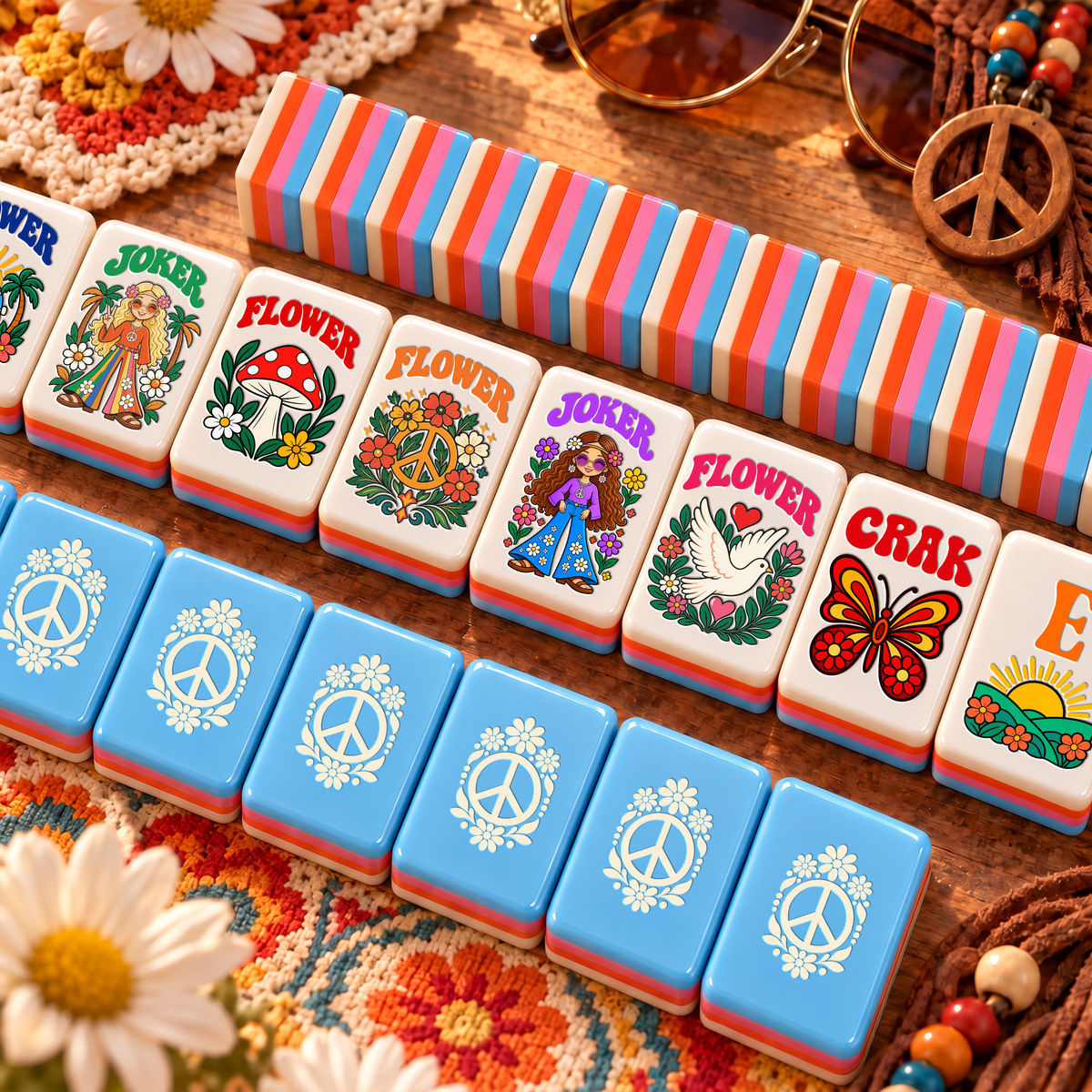
Siamese mahjong uses a 108-tile set (three suits: Bams, Craks, Dots numbered 1–9, each with four copies) plus Winds (North, East, South, West), Dragons (Red, Green, White), and Flowers—no Jokers. It's played by four players working from a common hand of exposed melds rather than individual hidden hands. Rounds are typically faster than American mahjong (10–15 minutes). The goal is to form a complete hand by claiming tiles from the discard pile or the wall. Unlike American mahjong, there's no annual card; hands follow fixed classical patterns. The game emphasizes speed and pattern recognition. You can learn the core rules in 30 minutes and play a full round in under an hour. We recommend starting with a quality best-selling mahjong set designed for smooth tile handling so you can focus on gameplay rather than struggling with equipment.
What is the core difference between Siamese and American mahjong?
American mahjong uses 152 tiles (three suits × nine numbers × four copies, plus Winds, Dragons, Flowers, and eight Jokers), requires an annually updated card for valid hands, and relies on hidden individual melds you expose only when calling. Siamese mahjong uses 108 tiles (the standard classical set: no Jokers, no blanks), plays with open melds from the start, and follows timeless patterns rather than a season-specific card. Siamese rounds often feel more intuitive because the tile count is smaller and patterns stay consistent year to year. If you've played American mahjong, Siamese will feel both familiar (suit structure, Wind/Dragon/Flower tiles) and different (no Jokers, fewer walls to track, faster tempo).

How do the tile sets actually differ—and what should you buy?
Aspect | American Mahjong | Siamese Mahjong |
Total tiles (in play) | 152 | 108 |
Suits | Bams, Craks, Dots (1–9 each, 4 copies) | Same |
Winds | 4 tiles (N/E/W/S, 1 copy each) | 4 tiles (N/E/W/S, 1 copy each) |
Dragons | 12 tiles (Red, Green, White—4 each) | 4 tiles (typically Red, Green, White, or regional variant) |
Flowers | 8 tiles (Spring–Winter, 1 each) | 0–8 (varies by regional rule) |
Jokers | 8 | 0 |
Blanks | 0 | 0 |
Card dependency | Yes (annual NMJL card required) | No (classical patterns) |
For Siamese play, you'll need a 108-tile classical set. If you already own an American set with 152 tiles, you can set aside the Jokers and play with the remaining 152—but you'll be managing extra tiles, which slows setup. A dedicated Siamese set keeps your game clean. Acrylic sets with push buttons and sturdy drawers handle frequent plays; bamboo sets look traditional but crack with rough handling over years.
🀄 Shop best-selling mahjong sets →
What are the core rules of Siamese play?
Setup: Four players sit at cardinal directions (North, East, South, West). A dealer builds a wall of 18 stacks (36 tiles per player's side) facing inward. Each player draws 13 tiles; the dealer draws 14. Players then discard one tile face-up to begin play.
Turn flow: On your turn, you either draw from the wall or claim a discard. You must then discard one tile. If another player can use your discard to complete a pung (three identical tiles), kong (four identical), or win, they call it immediately—play stops for that meld or win.
Melds: A pung is always three identical tiles (e.g., three 5 Bams). A kong is four identical. Unlike American mahjong, you expose melds as soon as you form them; there's no hidden hand waiting for a "call." This speeds up play because players can see what you're collecting.
Winning hand: A complete hand contains four melds (pung, kong, or sequence—yes, sequences (chows) are legal in Siamese mahjong) plus one pair. This differs sharply from American mahjong, which forbids sequences entirely. A sequence is three consecutive numbers in the same suit: 3–4–5 Dots, 7–8–9 Craks, etc.
Round end: The first player to complete a hand declares "Mahjong" and wins. Scoring varies by region and house rule; beginners often play for entertainment rather than points.
How do you play a real hand from start to finish?
Setup phase:
One player shuffles tiles face-down.
Deal 13 tiles to each of three players; dealer receives 14.
Players organize their tiles into suits and numbers.
Dealer discards one tile face-up to start the discard pile.
Play phase: — Player to dealer's left draws the next wall tile and immediately discards one tile (face-up, to the right of previous discard). — Each player in turn draws and discards. — If a discard completes a meld for you (e.g., you hold two 4 Craks, someone discards the third), you claim it by saying the meld type and laying down all three tiles openly in front of you. — If the discard completes your entire hand (four melds + one pair), you declare "Mahjong" and show your tiles. All players stop, verify the hand against the pattern rules, and the round ends.
Example hand in play: You hold: 1–2–3 Bams (a sequence), 4–4–4 Dots (a pung), North–North–North Winds (a pung), two Craks (a waiting pair). You need one more Crak (any number). An opponent discards a 5 Crak. You claim it, complete your pair, declare "Mahjong," and show all tiles. You win.
🎁 See our most-loved mahjong sets & accessories →

What common beginner mistakes slow down or derail Siamese games?
Forgetting the pair is always two identical tiles. New players sometimes hold pairs like "3 Dots and 3 Bams" thinking they match because both are threes. They don't. Your pair must be two 3 Dots, two East Winds, two Red Dragons—absolute twins.
Confusing sequences with American mahjong's "no chows" rule. American mahjong forbids sequences entirely. Siamese mahjong allows them (1–2–3 Dots counts as a legal meld). Many players switching variants accidentally block themselves by refusing to claim or play sequences. Sequences are legal and useful in Siamese play.
Discarding live tiles too slowly. Siamese rounds are designed to move fast. If you dawdle over which tile to discard, the game stalls. Choose before your turn starts; know which tiles are safer discards (high honor tiles like Winds and Dragons, unless another player is clearly collecting them).
Not tracking the wall count. Once fewer than four stacks remain, the wall is nearly empty. The player who draws the last wall tile (or the person who draws when the wall is exhausted) loses automatically. Beginners often don't notice this approaching threshold; keep a rough count of wall stacks remaining and anticipate a shortened endgame.
Exposing tiles too late or incompletely. When you claim a discard for a meld, lay it out fully and immediately. Hesitating or covering tiles creates ambiguity and slows verification. Clear, immediate exposure keeps the game flowing and prevents disputes.
What equipment do you actually need to play Siamese mahjong?
At minimum: a 108-tile set (Bams, Craks, Dots, Winds, Dragons, Flowers) and a flat surface. Beyond that, quality-of-life upgrades matter:
Tile quality. Acrylic tiles with engraved or stamped characters are faster to read than plain painted tiles, which fade and blur. Heavier tiles feel more substantial and resist chipping under frequent shuffling. Look for sets with consistent sizing (tiles should stack evenly without wobbling).
Racks and pushers. A mahjong rack with pushers holds 13–14 tiles and lets you organize by suit without dropping tiles or exposing them to the table. Pushers—small sticks that separate and move tiles—save your hands from strain and speed up reshuffling between rounds.
Mats. A mahjong mat defines the play area, protects your table surface, and provides a sound-dampening base so tile clicks don't disturb neighbors. Suede-backed mats grip tile bottoms, reducing accidental shuffles.
Dice (optional). Some rule sets use dice to determine the starting wall position. A pair of standard six-sided dice or custom mahjong dice work equally well.
✨ Find your Mahstead set — free US shipping →
What should you check before buying a Siamese mahjong set?
Tile count: Confirm the set contains exactly 108 tiles for classical Siamese play. Many sets marketed as "mahjong" are 144-tile Chinese variants or 152-tile American sets; verify the label or product description.
Character marking style: Are tiles engraved (characters carved into acrylic) or painted (surface design)? Engraved characters survive years of play; painted surfaces fade. Acrylic is easier to wipe clean than bamboo.
Included accessories: Does the set come with a bag or case? Loose tiles invite loss or damage during travel or storage. A padded travel bag for mahjong protects tiles and keeps sets organized.
Regional pattern differences: Some Siamese sets include eight Flowers (one of each season); others omit them. Clarify your local or household rules before ordering so you don't buy a set missing tiles you need.
Tile size and readability: Smaller tiles (under 25 mm per side) are harder to read at a distance; larger tiles (28–32 mm) suit players with vision constraints or tables farther than arm's length. Handle a sample if possible, or read reviews mentioning readability.

FAQ
Can I use an American mahjong set to play Siamese?
Technically yes if you remove the eight Jokers, leaving 144 tiles. But you'll manage clutter, and American patterns differ from classical Siamese ones. A dedicated 108-tile classical set is cleaner and worth the investment if you plan to play regularly.
Do I need to learn the National Mah Jongg League card to play Siamese?
No. The NMJL card is specific to American mahjong and changes annually. Siamese mahjong follows fixed classical patterns that never update, so no card is required. This makes Siamese easier for casual players who dislike memorizing a new card each spring.
How long does a typical Siamese mahjong game last?
One round typically runs 10–20 minutes, depending on player speed and luck. A full session of four to six rounds (including chat and tile resets) takes about 90 minutes. American mahjong rounds often run 20–30 minutes by comparison.
What's the best starting hand to aim for in Siamese mahjong?
Beginners should aim for hands with one or two simple melds (like three 1 Bams and a sequence 2–3–4 Dots) rather than rare honor-heavy hands. Simple hands appear more often and teach you the mechanics faster. As you gain confidence, pursue mixed hands blending suits and honors.
If I already play American mahjong, is Siamese mahjong easy to pick up?
Yes, the tile structure is identical (Bams, Craks, Dots, Winds, Dragons, Flowers), so you'll recognize suits and honor tiles immediately. The main shift is mental: Siamese uses sequences (legal chows), has no Jokers, exposes melds from the start, and plays faster. Most American players learn Siamese rules in one practice session.
Where can I find people to play Siamese mahjong with?
Thai cultural centers, Southeast Asian community groups, and casual game meetups often host Siamese mahjong nights. Check local libraries, community centers, or online gaming boards for regional groups. Many Thai restaurants' back rooms host standing games; ask staff if they know nearby players.
What's the difference between a pung and a sequence in Siamese?
A pung is three identical tiles: three 5 Bams, three North Winds. A sequence (or chow) is three consecutive numbers in one suit: 3–4–5 Dots, 7–8–9 Craks. Both are legal melds in Siamese mahjong. American mahjong forbids sequences entirely, so this is a key distinction if you've played American before. --- Content note: Siamese mahjong thrives on speed, pattern memory, and real-time meld exposure. The smaller tile set (108 vs. 152 for American) keeps rounds brisk and strategy intuitive. Whether you're switching from American mahjong or starting fresh, the classical tile structure means you'll recognize pieces immediately—you're just learning new rules for arrangement and play.


View More
View More
View More
