
Riichi Mahjong Yakuman Rules: Complete Guide
Last updated: Nov 23, 2026
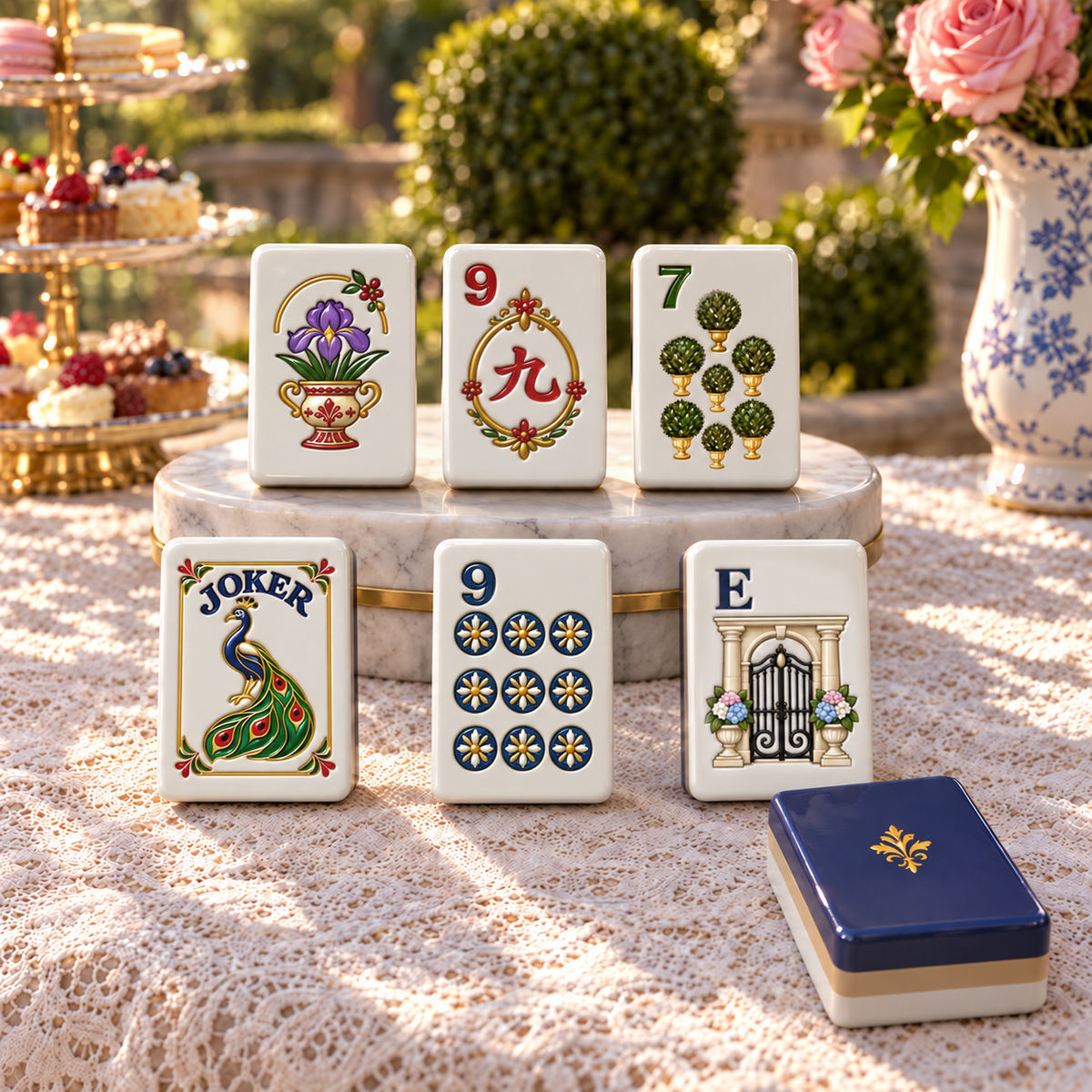
Yakuman (役満, literally "hand limit") are terminal hand patterns in riichi mahjong that pay the maximum—typically 8,000 points for a single yakuman, 16,000 for a double yakuman. Unlike American mahjong's yearly league card, riichi yakuman are defined by fixed compositional rules: all tiles from one suit (kokushi), all simples or honors (suuankou), all terminal and honor tiles (honroutou), and others. These occur rarely in casual play but frame tournament strategy. Riichi mahjong uses 136 tiles (1–9 in three suits, seven honors) plus dead wall mechanics; yakuman scoring sits atop the standard 1–7 fan system. Players studying riichi often choose best-selling mahjong sets with clear suit symbols and durable tiles to practice hand recognition under realistic play conditions.
Yakuman hands form the crown of riichi mahjong scoring. If you've learned American mahjong's yearly card system, riichi yakuman feel like a parallel universe: no seasonal limits, no joker wildcards, pure tile mathematics. We host weekly riichi nights alongside our American games, and yakuman discussions always draw the table closer—they're rare enough that spotting one builds respect.
What makes a hand yakuman instead of just high-scoring?
A yakuman isn't simply a costly hand; it's a complete pattern that satisfies one of roughly fourteen fixed conditions, each worth the game's maximum payout. In American mahjong, you score points based on the National Mah Jongg League card; in riichi, you're checking a yakuman checklist. Kokushi (thirteen orphans) requires exactly one of each terminal (1, 9) and honor tile (wind, dragon), then one more of any of those seven types—that's a 14-tile yakuman. Suuankou (four concealed pungs) means four sets of three identical tiles, all drawn without calling, plus a pair—nearly impossible in live play. Honroutou (all terminals and honors) uses only 1s, 9s, and the seven honor tiles to form four melds and a pair. Each pattern is absolute: there's no "this time we'll count it as yakuman" judgment. You either match the rule or you don't, which is why riichi yakuman strategy centers on positioning and luck rather than card reading.

Why are yakuman rare but unforgettable?
Most casual riichi games see zero yakuman across four hours of play. The mathematical probability of assembling kokushi (the most accessible yakuman) is roughly 1 in 330,000 hands, depending on discard patterns and winning conditions. When someone announces "tsumo" or "ron" and reveals kokushi, the table stops. In American mahjong, you're hunting a specific card pattern each game; in riichi, yakuman happen so rarely that players remember them months later. This rarity is why riichi leagues track yakuman separately in career statistics—they're treated as legendary moments, not routine victories. The gap between "nearly yakuman" (one tile shy) and yakuman is a full reset: no payout, no honor, back to regular scoring. That binary finality defines riichi's high-stakes feeling.
Which yakuman types show up most often in real games?
Seven yakuman account for the vast majority of real-play occurrences. Kokushi (thirteen orphans) appears most because it requires only 14 tiles and doesn't demand perfect concealment. Honroutou (all terminals/honors) comes next—four players discarding 1s and 9s throughout the hand makes this feasible. Tanyao (all simples, 2–8 only) isn't technically yakuman but is a high-fan hand that teaches similar discipline. Ryuuisou (all green, Bam 2/3/4/6/8 and Green Dragon) and chinitsu (single suit) require focus but appear in tournament play. Suuankou (four concealed pungs) and sanankou (three concealed pungs) demand luck—you need opponents to discard slowly while you hoard. Daisangen (all three dragons) is common enough in hand construction but hard to complete since dragons are fought over. Beyond these, double yakuman (two patterns stacked) and counted yakuman (yakuman + regular fan hand in one meld group) exist but rarely fire in casual settings. Riichi players spend far more time studying recognition than expecting them.
Yakuman Type | Tiles Required | Likelihood | Play Notes |
Kokushi (13 orphans) | All 1, 9, winds, dragons, one more | 1 in 330K+ | Concealment not required |
Honroutou (terminals/honors) | 1s, 9s, seven honors only | Moderate | Most practical yakuman |
Suuankou (4 concealed) | Four triplet sets, no calls | Rare | Needs opponent passivity |
Ryuuisou (all green) | Green tiles + Green Dragon | Low-moderate | Suit lock, easy to spot |
Chinitsu (single suit) | All 14 tiles one suit | Moderate | Discipline over luck |
🀄 Shop best-selling mahjong sets →
How does yakuman scoring stack with American mahjong points?
Riichi uses a completely different math. American mahjong multiplies points by character/payout (usually 4–8 times base, with jokers and sets changing payout). Riichi counts fan (repetition) and fu (base points); yakuman bypasses this—it pays a flat mangan (2,000), haneman (3,000), baiman (4,000), sanbaiman (6,000), or yakuman (8,000) depending on who won and the East/West seat. One yakuman typically pays 8,000 points for a single winner from a non-dealer; a dealer yakuman pays 16,000 from one discarder or 4,000 from each. Double yakuman (two simultaneous patterns) pays double. In American mahjong, you're matching the yearly card and multiplying by hand; in riichi, you're recognizing a yakuman shape and collecting a fixed pool. The riichi payout feels more dramatic because there's no negotiation—yakuman always pays top dollar. This is why riichi tournaments attract players who love certainty: the rules are absolute, no card updates needed.

What's the difference between yakuman and counted yakuman?
Counted yakuman add a regular hand pattern on top of a yakuman base. For example, if you achieve kokushi (yakuman) and your hand contains an extra fan (like all simples within the 1s and 9s), you score yakuman + 1 fan. Riichi purists debate whether counted yakuman is "really" double yakuman (two separate patterns) or yakuman-plus. Most tournaments allow counted yakuman as a single yakuman payout; some leagues stack it for higher prizes. Double yakuman is two distinct yakuman patterns in one completed hand—extremely rare. An example: kokushi and honroutou would theoretically stack (you have all terminals, honors, and the 1-9 orphan diversity), but in practice, these patterns exclude each other by their tile requirements. The rule exists more for edge cases and theoretical hands. What matters for casual players: know that yakuman is yakuman; anything beyond that is tournament-rule territory.
🎁 See our most-loved mahjong sets & accessories →
How do you even recognize yakuman during live play?
Speed matters. In riichi, when someone declares tsumo (self-draw) or ron (win from discard), the dealer calls "yakuman?" before flipping tiles if one's suspected. You then reveal your completed hand: the waiting player shows their hand's concealed melds and pair, then the winner reveals. Both must be face-up and verifiable in seconds. Common yakuman spots:
Kokushi: Only 1s, 9s, and honors visible; someone will shout it before completion.
Honroutou: Every visible tile is a terminal or honor—obvious by mid-game.
Suuankou: When the winner draws their own winning tile and has four closed sets visible, check immediately.
Tsumo from a dragon-heavy wall: Likely a dragon yakuman or rare combo.
Most riichi groups use a "check before discard" rule—if you suspect an opponent is building yakuman, calling sets early forces transparency. This adds a social layer American mahjong doesn't have: the table is co-verifying the hand's legality before payout.
What equipment helps riichi players learn yakuman patterns?
Riichi requires a standard 136-tile set (unlike American mahjong's 152 tiles with jokers). When you're drilling yakuman recognition, a high-contrast set with clear suit symbols is non-negotiable. Best-selling mahjong sets designed for American play work fine for riichi study, though riichi-specific tiles use slightly different character fonts. Many players drill with pen and paper, listing each yakuman type and checking off which melds they've seen in real play. A good mahjong mat keeps your hand organized during practice—especially when you're laying out hypothetical yakuman arrangements to test your recognition speed.
For serious riichi players, custom engraved mahjong sets with yakuman patterns printed in the case or a team name serve as daily practice reminders. You'll want racks with pushers to keep your tiles sorted and hidden—critical when you're concealing melds (suuankou drills). Travel players often pair a riichi set with a durable bag or case to protect tiles during yakuman study trips to tournaments.
✨ Find your Mahstead set — free US shipping →
What mistakes do new riichi players make with yakuman?
Confusing yakuman with high-fan hands. A seven-fan hand looks big but isn't yakuman—you need the exact pattern. Many beginners think "all terminals plus one big meld" is automatically yakuman.
Revealing winning yakuman too early. In riichi, concealment rules matter. If you call a meld before completing a yakuman that required four hidden sets, it collapses—no payout, just a regular win.
Miscounting which yakuman you have. Kokushi needs exactly one of each orphan tile, then one more. If you're one tile short (thirteen unique orphans, no duplicate), it's a loss, not a win.
Forgetting that yakuman = final hand. Once yakuman is declared, the hand is over. You don't score points for the yakuman plus regular fan—you take the yakuman payout (usually 8,000) and the hand ends.
Not checking dealer/seat position. A yakuman from a non-dealer in West seat pays 8,000; a dealer yakuman pays 16,000 and comes from one discarder. Missing the seat rule costs you points.
What to check before you buy a riichi mahjong set:
Tile count: Riichi uses 136 tiles, no jokers. American sets (152 tiles) are fine for practice but include extras you won't use.
Character legibility: Can you read the honor tiles (winds, dragons) in low light? Riichi yakuman drills happen at midnight tournaments.
Pung/kong visibility: Your eyes need to spot three identical tiles instantly during yakuman scanning.
Bag protection: Riichi sets travel more than American sets (tournaments, league nights). Does your set include or pair well with a protective case?

FAQ
Is yakuman the same in Chinese and Hong Kong mahjong?
No. Chinese mahjong has its own 14-tile winning patterns and fan system; Hong Kong mahjong uses limit hands (天胡, 地胡) that overlap with riichi yakuman conceptually but score differently. Riichi yakuman are specific to the Japanese variant and its strict ruleset.
Can you score yakuman and regular points in the same hand?
No. Yakuman is the ceiling. If you complete a yakuman, you collect the yakuman payout (8,000+) and the hand ends. There's no "yakuman plus bonus"—it's one or the other.
How often do yakuman appear in tournament play versus casual games?
Tournaments see slightly more yakuman because players are more skilled at positioning and discarding (creating longer rounds). Casual play might see zero yakuman in a four-hour session. Professional-level events average one yakuman per ten tables across one round.
Can a yakuman fail if another player declares ron first?
Yes. If Player A is building kokushi and Player B wins from someone else's discard before Player A completes, the hand ends immediately. Yakuman is only valid on the winning tile—no partial credit.
What's the difference between yakuman and counted yakuman in scoring?
Single yakuman pays 8,000 (non-dealer) or 16,000 (dealer). Counted yakuman (yakuman + fan) is scored as yakuman in most casual leagues—no bonus. Tournament rules vary; check your local ruleset before play.
Do I need a 136-tile riichi set to learn yakuman, or can I use an American set?
American sets (152 tiles) contain extra jokers and blank tiles. You can drill yakuman recognition using an American set, but for actual riichi play, you need a 136-tile set. Many players own both: American for weekly casual games, riichi for tournament prep.


View More
View More
View More
