
Riichi Mahjong vs. Mahjong Solitaire: Key Differences
Last updated: Nov 23, 2026
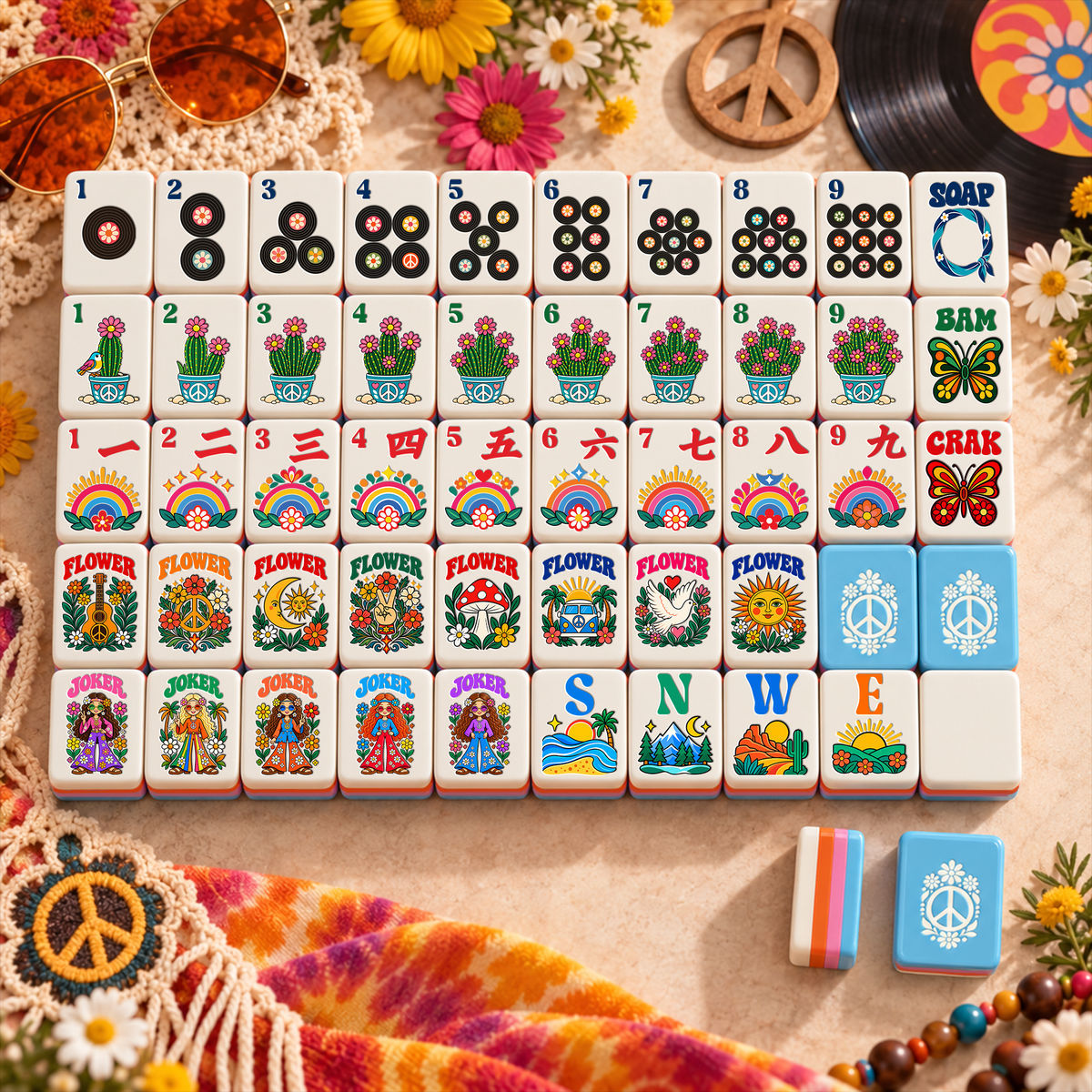
Riichi mahjong (also called Japanese mahjong) is a real-time multiplayer game using 136 tiles divided into suits, honors, and bonus tiles; players draw and discard to form melds until someone completes a legal hand, earning points based on difficulty and speed. Mahjong solitaire is a single-player matching puzzle—you flip and remove pairs of identical tiles from a preset grid until the board clears or no moves remain; it uses a standard tile set arranged in decorative patterns and has no winner, no timer, and no official scoring. Riichi requires 4 players, competition, and strategy; solitaire is meditative, rule-free, and solo. If you want a social game with opponents, buy a riichi set and learn Japanese hand combinations. If you want a relaxing puzzle on your phone or with physical tiles on a mat, solitaire is your choice. American mahjong (the game we play weekly at Mahstead) differs from both: it uses 152 tiles, fixed annual hand patterns from the National Mah Jongg League card, and the Charleston tile-passing ritual before play. 🀄 Shop best-selling mahjong sets →
What is riichi mahjong and how is it played?
Riichi mahjong originated in early 20th-century Japan and is the dominant competitive format there today. Players draw one tile per turn and discard one, working to form a complete hand of melds (groups) plus a pair. A "riichi" (pronounced "ree-chee") is a declaration that you're one tile away from winning—after riichi, you cannot change your hand and all players notice your risk. Hands follow strict patterns: no sequences (chows) mixed with pairs at random, as in American mahjong; instead, each winning hand follows one of dozens of named yaku (patterns), each worth a point value. The game ends instantly when someone wins or the wall runs out, and losers pay the winner based on the hand's yaku, the wind (round), and who was dealer.
Riichi is faster-paced and more aggressive than American mahjong. Rounds last 10–30 minutes instead of an hour. The tile pool is smaller (136 vs. 152), so luck plays less of a role and skill matters more. No jokers exist in riichi; every tile counts. If you've watched online riichi streams or played the video game Mahjong Soul, you've seen the rapid-fire discards and the tension when riichi is called.

How does mahjong solitaire differ from competitive games?
Mahjong solitaire strips away opponents, timers, and scoring entirely. You face a pre-arranged layout of tiles (often pyramid, dragon, or tower shapes) and click or tap pairs of identical tiles to remove them. The puzzle ends when you've cleared all tiles (you win) or no legal moves remain (you lose). Most digital versions let you undo moves and reset freely—there's no penalty, no audience, no rush.
Solitaire shares the tile names and artwork with riichi and American mahjong but abandons every rule about melds, sequences, and hand composition. You can pair a 1 Bam with another 1 Bam, or a Red Dragon with a Red Dragon; that's it. Online solitaire games (like on Microsoft's app or mobile versions) offer thousands of layout variations and difficulty levels, and you can play as many rounds as you want without setting up a physical board.
Solitaire is meditative, not social, and teaches you tile names without the pressure of live play. It's often people's first encounter with mahjong—a low-stakes way to get familiar with the tiles and symbols before joining a competitive game.
What tiles does each game use—and how many?
Game | Tiles | Count | Jokers | Flowers | Suits | Key Rule |
Riichi | 136 total | 4 of each type | None | 8 bonus tiles | 3 (Bam, Crak, Dot) | Closed hand until win; strict yaku patterns |
American | 152 playing + 8 jokers | 4 of each + extras | 8 used | 8 included | 3 (Bam, Crak, Dot) | Exposed melds allowed; annual card patterns |
Solitaire | 144 or 152 | Any; layout decides | Often included | Usually yes | 3 (Bam, Crak, Dot) | None—only matching pairs |
Riichi uses exactly 136 tiles: four copies each of Bams 1–9, Craks 1–9, Dots 1–9 (108 tiles), four Winds (16), three Dragons (12), and 8 Flowers. No blanks, no spares, no jokers. This fixed count ensures fair probability for every hand.
American mahjong uses 152 tiles plus 8 jokers that help you complete patterns from that year's National Mah Jongg League card. A best-selling American mahjong set typically ships as a 160-tile acrylic set: 152 tiles to play and spare tiles for replacement.
Solitaire sets vary. Most have 144 tiles (one fewer flower, sometimes), but you can play solitaire with any mahjong tile set—the layout, not the tile count, defines the game. Some digital solitaire uses 72 pairs (144 total) in a simple arrangement.
Can you switch between riichi, American, and solitaire?
Not seamlessly. Each game requires a different mental model, different tiles (riichi needs 136 exactly; American needs 152 + 8 jokers), and different opponents (or none).
Switching from riichi to American: You can transfer your tile-recognition skills and hand-reading instinct, but you must learn that American mahjong forbids chows (sequences like 1-2-3) unless they appear on the annual card, and that jokers can substitute for specific tiles—a riichi player used to a closed hand will need time to adjust to exposing melds. American play is also slower and more social.
Switching from American to riichi: You lose the crutch of the card and the joker; every hand must follow one of the 38 or so base yaku. Riichi rewards speed and memory. Many players find riichi harder at first but more rewarding.
Switching to solitaire: This is one-way mental shift. Solitaire teaches you tiles and builds pattern recognition, but doesn't teach hand composition, bidding, or pressure management. New players often use solitaire as a warm-up before a real game.
The upshot: You can play all three, but your brain must switch modes. If you host a weekly game and want both riichi and American nights, store two sets and keep the cards/rules separate.

Which game should you learn first?
If you love social games and fast rounds, start with riichi. If you prefer slower strategy with a card reference and a relaxed table, begin with American mahjong. If you're solo or hesitant about real opponents, play solitaire first—it's risk-free.
For beginners: Solitaire teaches tile names in 15 minutes. American mahjong teaches hand patterns in 2–3 hours (you'll reference the card constantly at first). Riichi takes weeks to internalize because patterns are memory-based and play is live-or-fail.
For experienced card-game players: Riichi's bidding logic (hand evaluation in real time) appeals to poker or bridge players. American mahjong's fixed patterns appeal to people who like puzzles and reference materials.
For meditative learners: Solitaire, then American if you want more. Riichi's pressure may frustrate you.
One honest note: American and riichi players rarely mix tables. They're different cultures. If you live in North America and have friends interested in mahjong, American is likelier to find a community (libraries, synagogues, senior centers often host American games). If you're in Japan or East Asia, riichi is everywhere. If you're online or playing alone, solitaire is always available.
🎁 See our most-loved mahjong sets & accessories →
What equipment do you need for each?
Riichi mahjong: A 136-tile riichi set (usually bamboo or resin; not interchangeable with American). Four players. A table with a noren (wind-break screen) or a mat to mark the discard pile. A score sheet. Optional: wall markers or score sticks. Many riichi players carry their set in a cloth pouch, not the heavy carrying bags used for American sets.
American mahjong: A 160-tile acrylic American mahjong set with the 152 playable tiles. The current year's National Mah Jongg League card (updated each spring; free online or printed). A mat or table cover to mark walls and suit positions—our mahjong mats are numbered to guide play and reduce confusion. Racks are optional but help beginners organize melds. Four players.
Solitaire: Any mahjong tile set (physical or digital). A flat surface or a screen. No partners, no scoring sheet, no card.
For a household that plays multiple formats, storage matters. A travel bag or case keeps tiles, card, and mats organized. If you switch between American and riichi, buy two sets so you're not forever converting.
What to check before you buy
How many people will play? Riichi and American both need exactly 4. Solitaire needs none. If you have 2–3 people, ask about 2–3 player variants before buying.
What format do your friends play? Ask before investing in a set. A riichi set won't help at an American table and vice versa.
Will you travel with it? Acrylic tiles are lighter than bone/bamboo. Mahstead sets ship free across the US and come in sturdy cases.
Do you want a mat? Not required but saves your table and teaches wall positions. Beginners often find a mat halves the learning curve.
Will you play once a month or weekly? Once-a-month players can borrow; weekly players should own their own set and store it properly.
✨ Find your Mahstead set — free US shipping →

FAQ
Can I use a riichi set to play American mahjong?
No. Riichi sets have 136 tiles and no jokers; American needs 152 tiles plus 8 jokers. The tile proportions and artwork also differ. You'd need a separate American set.
Is riichi mahjong harder than American mahjong?
For most new players, yes. Riichi requires memorizing dozens of hand patterns and reacting in real time. American mahjong lets you reference the annual card throughout play, so pattern memory is less crucial and play is slower. Riichi rewards speed; American rewards patience.
Can I play mahjong solitaire on my phone and then play real riichi or American?
Yes. Solitaire teaches tile names, symbols, and colors very well. But it doesn't teach melds, hand composition, or the strategy of blocking opponents—those come only from competitive play. Use solitaire as a stepping stone, not a replacement.
Do I need a mat to play mahjong?
Not legally, but it helps enormously. A mat marks walls, guides wall-breaking, and protects your table. Most American players use a mat for organized play. Riichi players often use a noren (screen) instead. Solitaire players on a computer need nothing.
Which game is played most worldwide?
Riichi is played competitively in Japan, Korea, and parts of China and is growing online globally. American mahjong is strong in the US and Canada, especially among retirees and in Jewish communities. Solitaire is available to anyone with a computer or phone. All three are thriving.


View More
View More
View More
