
Riichi Mahjong Setup: Rules, Tile Count & Table Guide
Last updated: Nov 23, 2026
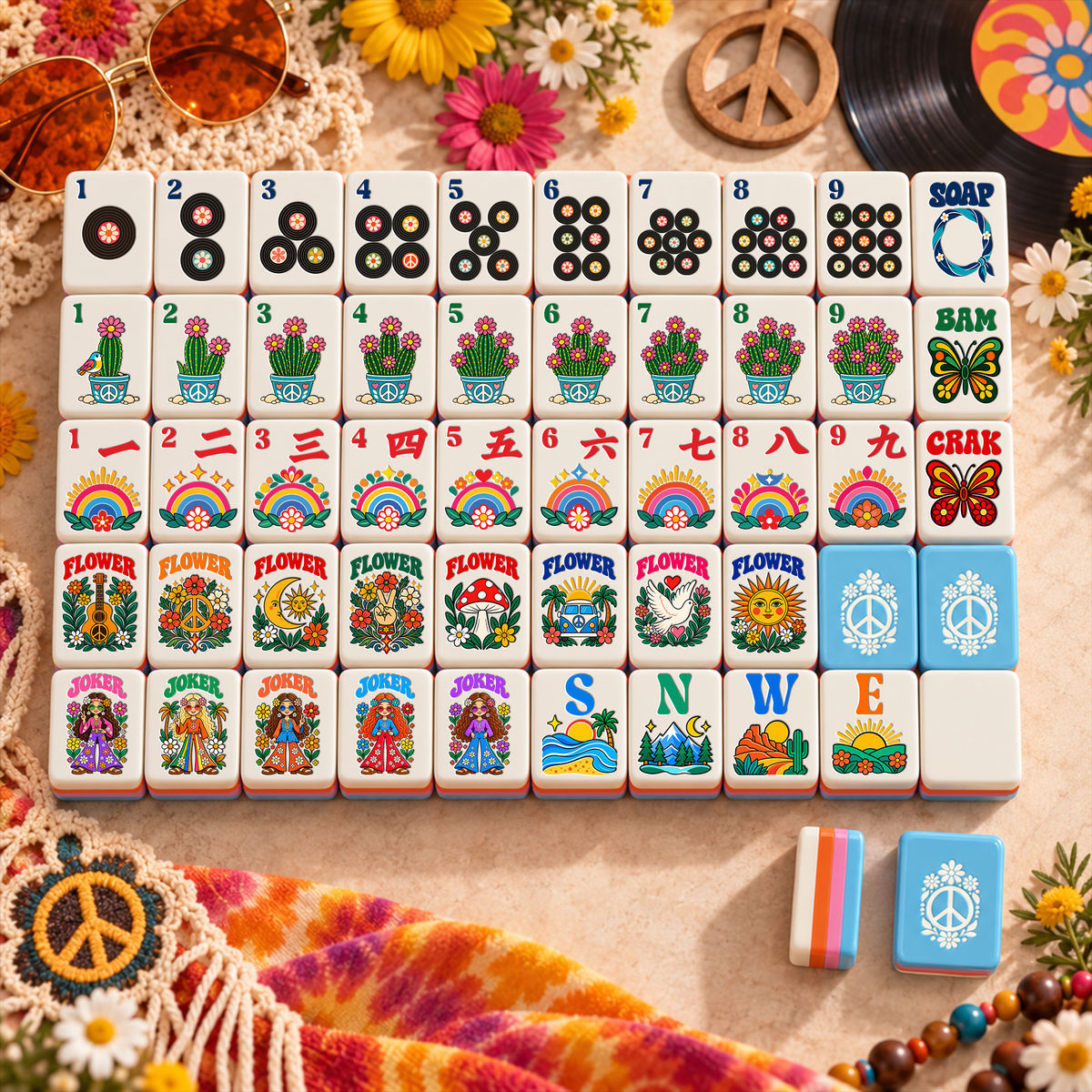
Riichi mahjong is played with exactly 136 tiles (four copies each of Bams 1–9, Craks 1–9, Dots 1–9; 16 winds in four suits; 12 dragons; and 8 flowers). Players draw and discard one tile per turn, building melds (pungs, kongs, and chows—sequences of three consecutive numbers in one suit). Unlike American mahjong, riichi has no jokers, no Charleston, and hands are not read from a seasonal card; instead, winning patterns come from a fixed ruleset. A hand ends when someone wins by completing a hand of four melds plus a pair, or when the wall runs out. Setup takes 10 minutes; a hand typically lasts 15–30 minutes. Riichi is faster-paced, strategic, and rewards hand reading over luck.
What tile count does riichi mahjong actually use?
Riichi mahjong uses exactly 136 tiles—36 in each number suit (Bams, Craks, Dots 1–9, four copies each), 16 winds (four each of North, East, South, West), 12 dragons (four each of Red, Green, White), and 8 flowers. There are no jokers in riichi; every tile is a standard honor or number piece. This 136-tile count is the universal standard worldwide and cannot vary. If you own an American mahjong set (152 tiles plus 8 jokers), you cannot play riichi with it directly—the tile compositions are incompatible.

How does riichi tile play differ from American mahjong?
In American mahjong, a player draws 13 tiles, passes three sets via the Charleston before play starts, and must match one of ~50 valid hands from the yearly National Mah Jongg League card using exposure rules (you expose completed pungs, kongs, and quints, but never chows). Jokers are wild and appear in most hands.
In riichi, all 136 tiles stay in the wall at the start; East player (dealer) draws 14 tiles while others draw 13. Play proceeds counterclockwise (or clockwise depending on house rules). Every turn, one player draws from the wall and discards one tile. Melds include pungs (three identical), kongs (four identical), and chows (three consecutive numbers in one suit, called "melds" rather than sequences). You declare "riichi" when your hand needs exactly one tile to win and you have paid a 1,000-point stake—this signals readiness and locks your discard pattern. Hands win by reaching standard patterns: all melds plus a pair, all sequences (chow hands), or special limit hands like all terminals, all honors, all one suit. No seasonal card needed. The game is deterministic but requires stronger tile-reading and probability skills.
What equipment do you need to start riichi mahjong?
You need a 136-tile riichi mahjong set (tiles only; no jokers or spares), four players, a table or mat, bamboo racks or tile holders for hand display, and optionally a score pad. Many riichi players prefer compact wood or bamboo tile sets over acrylic, because riichi is turn-based and fast—hand manipulation happens continuously. Pushers (tile-drawing sticks) are less critical in riichi than in American mahjong because chows are called and melds are shown openly, so exposure is simpler. A soft mat protects tiles and muffles noise during rapid discard play. If you play riichi regularly and have American mahjong friends, keep both sets separate; mixing them creates confusion. Our best-selling mahjong sets include American 152-tile acrylic options; riichi 136-tile sets are a specialist purchase and may require ordering from Japan or riichi-specific vendors.
How do you set up the riichi wall and initial hand?
Shuffle all 136 tiles face-down on the table. Players sit at four cardinal positions: East (dealer), South, West, North. The dealer (East) rolls two dice to determine who breaks the wall. That player (the "breaker") stacks the wall in front of them: typically 34 stacks of four tiles, three tiles high, creating a 17-tile-high wall. East draws 14 tiles from the wall in groups of four (two from the top layer, two from the second, two from the third, two from the top again—a total of four pairs). South, West, and North each draw 13 tiles in the same rotating pattern. The last tile drawn by East becomes their discard. Now East discards one tile face-up in the center (the "discard pool"). Turn order proceeds South → West → North → East. On each turn: draw one tile from the wall, then discard one tile. Melds are announced and shown immediately. Play continues until someone wins or the wall runs out (a tie, or "draw").
🀄 Shop best-selling mahjong sets →

What are the main hand-winning patterns in riichi?
Riichi has a fixed hierarchy of winning hands. The simplest: four melds (pung, kong, or chow) plus a pair (called "tanyao" if all melds are number 2–8 and the pair is also 2–8, excluding terminals 1 and 9 and honors). Special limit hands score much higher: all one suit, all honors, all sequences (no pung/kongs), dragon pungs, wind pungs, etc. Scoring involves multiplying a base point value ("fu") by a wind exponent (2^(fan)). A typical winning hand scores 1,000–8,000 points depending on melds and bonuses. Riichi declaration adds a 1,000-point payment before your turn. If an opponent calls riichi and you discard the winning tile, you pay the full hand. This penalty system makes riichi more aggressive than American mahjong, where scoring is fixed by the hand card. Learning riichi scoring takes 2–3 weeks of play; most beginners play without scoring initially and just aim to win by pattern.
Aspect | American Mahjong | Riichi Mahjong |
Tile count | 152 + 8 jokers | 136 |
Jokers | Yes (8) | No |
Charleston (pre-play passes) | Yes | No |
Hand source | National Mah Jongg League seasonal card | Fixed ruleset (same every year) |
Chows (sequences) | No calling; unpaired sequences only in hand | Yes; called and exposed openly |
Turn order | Determined by play/wind position | Always counterclockwise |
Riichi declaration | No equivalent | Yes; locks discard pattern, 1,000-point stake |
Game speed | 20–40 minutes per hand | 15–30 minutes per hand |
Skill emphasis | Card reading, luck management | Probability, tile reading, scoring |
🎁 See our most-loved mahjong sets & accessories →
Where do you find riichi-format teaching & group play?
Riichi clubs operate in major North American cities—search community centers, libraries, universities, and meetup boards for "Japanese mahjong" or "riichi mahjong." Many riichi groups are welcoming to beginners and provide a teaching set for the first session. Online platforms like Mahjong Soul and Tenhou offer free riichi play against computer or human opponents, making it easy to practice rules and scoring before playing live. Books like "Riichi Book 1" (in English) explain strategy and hand patterns. If you have friends interested in learning together, we recommend watching a teaching video, playing 5–10 online hands, and then hosting a home session with printed scoring sheets. The barrier is memorizing ~30 key hand patterns and the scoring formula; most players are competent within 6–8 weeks of casual play.
✨ Find your Mahstead set — free US shipping →
What to check before you buy a riichi mahjong set
If you're switching from American mahjong to riichi or adding riichi to your group, verify the following:
Tile count: Confirm the set has exactly 136 tiles (no jokers, no extra blanks). Do not assume a "mahjong set" is riichi—most sets sold in North America are American-format 152-tile.
Tile composition: Check that suits are labeled Bam, Crak, Dot and that you have one copy of each number 1–9 in each suit (four sets of each, 36 tiles per suit).
Weights and feel: Riichi tiles are traditionally played with heavier wood or resin (not light acrylic) because of rapid hand switching. If you prefer acrylic sets like those in our best-selling collection, test a few turns before committing.
Racks and holders: Riichi racks are often bamboo and shorter than American racks (to accommodate 13–14 tiles and chow display). Our mahjong racks with pushers are sized for American sets; confirm a riichi set's standard rack size before ordering.
Mat and storage: Riichi mats are usually smaller (to fit the 136-tile wall and discard pool). A standard mahjong mat sized for American play will still work but may feel cramped; a dedicated riichi mat is nice but not essential.
Group consensus: Before buying a full set, ask your group whether they prefer riichi or American rules. Many play both but on separate days; mixing formats on the same night confuses everyone.

FAQ
Can I use an American mahjong set to play riichi?
No. American sets have 152 tiles plus 8 jokers; riichi needs exactly 136 with no jokers. The tile distribution is incompatible. You need a dedicated 136-tile riichi set.
How long does a riichi mahjong game take?
A single hand typically lasts 15–30 minutes. A session of four hands takes 1–2 hours. Setup (shuffling, wall-building, initial deal) takes about 5 minutes before the first hand.
What's the hardest part of learning riichi for an American mahjong player?
Memorizing winning hand patterns and the scoring formula. American players are used to reading a seasonal card; riichi uses a fixed ruleset. Learning 25–30 common hand patterns and the fu/fan scoring system takes 4–6 weeks of regular play.
Do I have to declare "riichi" to win in riichi mahjong?
No. Riichi is optional. Declaring riichi locks your discard pattern and requires paying 1,000 points, but it signals you are one tile from winning and earns a scoring bonus. Most players riichi only when confident, and many casual games ignore riichi to simplify play for beginners.
Can I play riichi mahjong with fewer than four players?
Standard riichi is four-player only. Three-player and two-player variants exist but require rule modifications (removed tiles, adjusted hand size, different scoring). We recommend starting with the four-player format to learn the core game.
Where can I buy a riichi mahjong set?
Riichi 136-tile sets are sold by specialists in Japan and online vendors focused on Japanese mahjong. North American mainstream mahjong retailers, including Mahstead, specialize in American-format 152-tile sets. Check riichi community forums or online retailers for riichi-specific sets; confirm the tile count and suit labels before ordering.


View More
View More
View More
