
Riichi Mahjong Red Fives Rules: How They Work & Why
Last updated: Nov 23, 2026
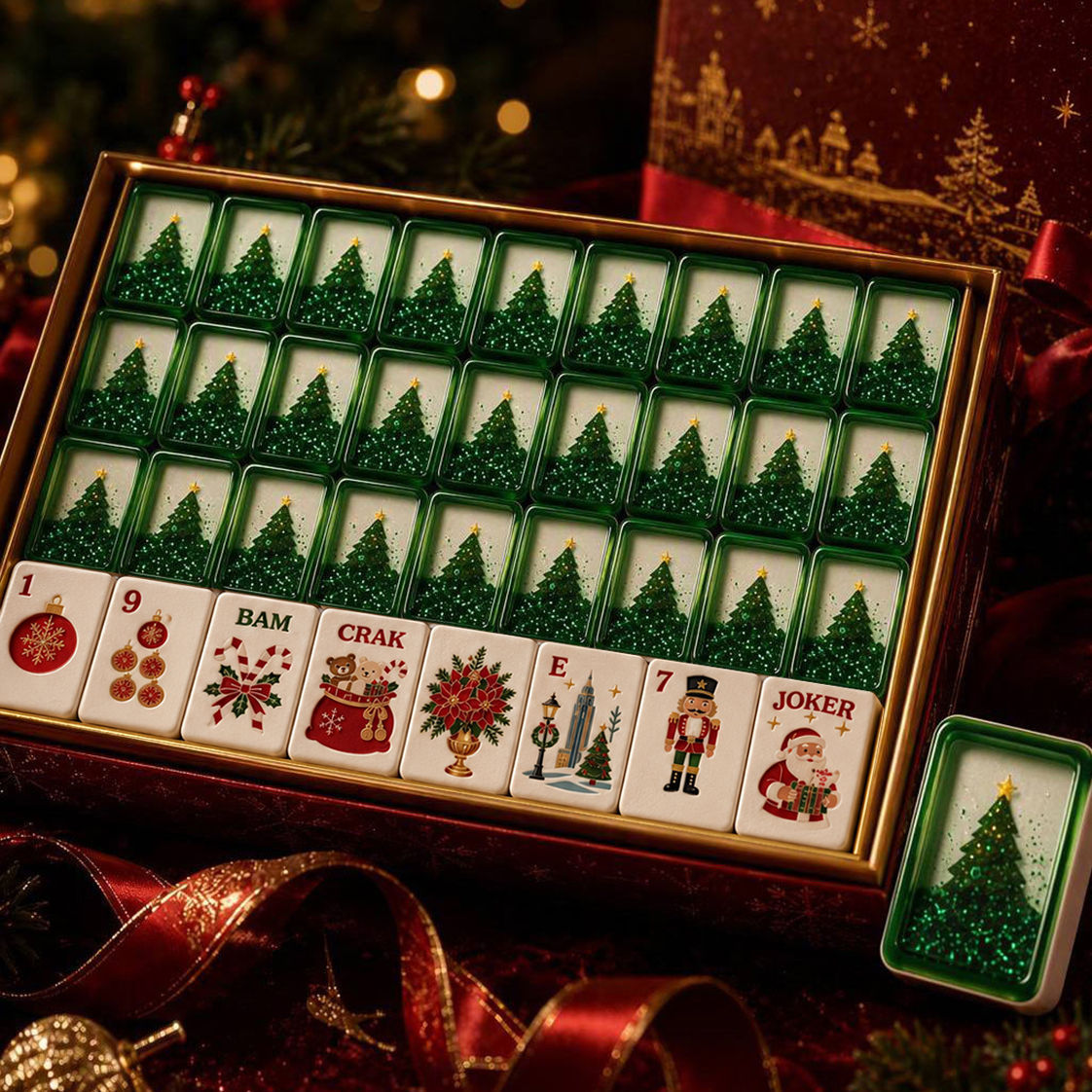
In Riichi mahjong, red fives are three specific tiles—one in each suit (5 Man, 5 Pin, 5 Sou)—that add 1 fu (point unit) each to your hand's base score when included in a completed pung, kong, or your pair. Unlike American mahjong, where all 5 Dots appear identical, Riichi sets replace one standard tile per suit with a red-colored 5 to create scoring distinction without changing hand logic. Every completed meld containing a red five automatically grants +1 fu; if your hand holds all three red fives, you earn +3 fu total. This rule applies whether you've drawn a discard (called hand) or drawn from the wall (self-drawn). The bonus triggers only if the hand wins; uncompleted sets grant nothing. Most Riichi players using acrylic sets from best-selling collections can spot red fives instantly mid-play because the color contrast reduces misread risk at a crowded table.
How do you spot red fives in a Riichi set?
Red fives look exactly like standard 5 tiles—same suit symbol, same size—but printed or painted in solid red instead of black. In a full set, only three tiles change: the 5 Man (bamboo), 5 Pin (circle), and 5 Sou (character). Spotting them takes one table session. We recommend keeping them face-up during the hand-building phase so newer players learn the visual instantly.

Do red fives work in every Riichi hand type?
Red fives add fu only when part of a winning meld—never as standalone honors or in a chow (sequence). If your hand contains a red 5 Man in a pung of 5 Men, you score +1 fu; in a chow of 4-5-6, the red 5 contributes nothing extra because Riichi rules forbid calling fu for sequences. Hands built around honor tiles (winds, dragons) never contain red fives, so they're irrelevant to your score in those patterns. This is fundamentally different from American mahjong, where color variations are cosmetic only and don't affect points at all.
🀄 Shop best-selling mahjong sets →
What's the scoring difference between Riichi with and without red fives?
A typical Riichi hand starts at 1 fu base (winning tile group always scores 1 fu minimum). Each pung or kong adds 2 fu (closed) or 1 fu (open); your pair adds 2 fu if it's a wind or dragon, 0 otherwise. If one meld contains a red five, +1 fu to the total. With three red fives in separate melds, you add +3 fu—which can push a hand from 30 points (base) into the next scoring tier and increase payout by 50–100% depending on your han count. We've seen a hand worth 2,000 points bump to 3,000 solely because a player held all three reds in live melds and won self-drawn; that's no trivial swing at a weekly table.
How do red fives compare to American mahjong tile scoring?
Aspect | American Mahjong | Riichi with Red Fives |
Tile count per number | 4 identical copies | 3 standard + 1 red per 5 |
Scoring role | Cosmetic only; no fu bonus | +1 fu per red in completed meld |
Hand type effect | All hands value equally regardless | Hands with more reds score higher in same pattern |
Visual change | None across play | Red tiles stand out mid-wall discard |
Player experience | Focus on pattern matching | Attention to fu arithmetic adds complexity |
American mahjong uses the National Mah Jongg League card (issued yearly, spring): every hand is a fixed point value based on the pattern alone. Riichi scoring is fluid: the same hand pattern scores differently if it contains one red five versus three. Riichi players must track fu constantly; American players reference a fixed card. This makes Riichi tactically tighter—you're constantly aware of whether a tile is red and what that means for your final points.
🎁 See our most-loved mahjong sets & accessories →

Why does Riichi use red fives if they only add 1 fu each?
The +1 fu per red is mathematically small but strategically huge. Accumulating fu is the path to higher hand tiers (mangan, haneman, baiman). A hand that hits 70 fu + 2 han scores triple what a 60 fu + 2 han hand does. Experienced Riichi players actively hunt red fives in their winning melds or discard fives they don't need to deny opponents the bonus. It's a subtle layer of decision-making absent from American mahjong. New Riichi players often dismiss red fives as decoration until they see a hand jump 1,000 points from including them—then the rule clicks. We've hosted players who switched from American to Riichi specifically because they liked the extra tactical dimension red fives introduced.
What to check before you buy a Riichi set:
Red dye stability: Acrylic red can fade under sunlight or spill staining. Check the product description for UV-resistant coloring.
Red tile count: Confirm the set contains exactly three red tiles (one 5m, one 5p, one 5s) and the rest are standard. No "all red fives" sets—that breaks the game.
Suit symbols clarity: Red ink over acrylic must not obscure the suit mark. Look at photos of the actual tile face, not just the set box art.
Joker quantity: Riichi sets from our collections include extras; red fives have no joker analog.
Tile feel in hand: Acrylic red fives weigh and grip identically to standard tiles—no surprises mid-play.
✨ Find your Mahstead set — free US shipping →
How Riichi differs from other mahjong variants
American mahjong forbids red fives as a rule variation—the National Mah Jongg League card doesn't reference them, and U.S. tournament play uses uniform tiles. Chinese and Hong Kong mahjong ignore color rules entirely; scoring is based on melds and luck, not tile appearance. Japanese Riichi is the only major variant where a tile's color actively changes game math. If you're hosting a mixed-variant table, clarify upfront whether you're playing Riichi (red fives active) or American/Chinese (red fives ignored). We've seen confusion kill a game's first 20 minutes—a simple house rule announcement avoids it.

FAQ
Do red fives act as wildcards or jokers in Riichi mahjong?
No. Red fives are standard tiles with a cosmetic color change. They function identically to standard 5 tiles in melds; they simply add 1 fu to your score if included. Jokers (wild tiles) are separate and never colored red in authentic Riichi sets.
Can I use red fives as blanks or substitute tiles at my weekly game?
Not in tournament Riichi—red fives must be treated as standard 5 tiles only. If your group plays casual "house rules," you can agree to treat them as wildcards, but that's non-standard and incompatible with online Riichi rankings or travel games.
Do I need a special tile rack or mat to play Riichi with red fives?
No. Red fives work with any standard mahjong rack with pushers or mat. The color just makes them easier to spot in your rack. If you prefer to conceal your hand, use a standard mat or rack and treat red fives no differently than you would any other tile during concealment.
Can I play Riichi mahjong with American mahjong tiles that have no red fives?
Technically yes—you simply won't score the +1 fu bonus. The game remains playable, but you're missing half the tile-counting element. For serious Riichi play, a set with authentic red fives (one per suit, in acrylic) is standard.
How do I teach beginners the red fives rule without slowing down the game?
Show them the three red tiles in your hand before the first game and say: "When you win with one of these in your meld, add 1 fu." Let them play a full hand, then ask them to count their fu again—usually they'll spot the difference. Repetition across three games locks the rule in. Most learners grasp it faster than the full fu-counting system itself.


View More
View More
View More
