
Riichi Mahjong Calling Strategy: When to Go Closed vs. Open
Last updated: Nov 23, 2026
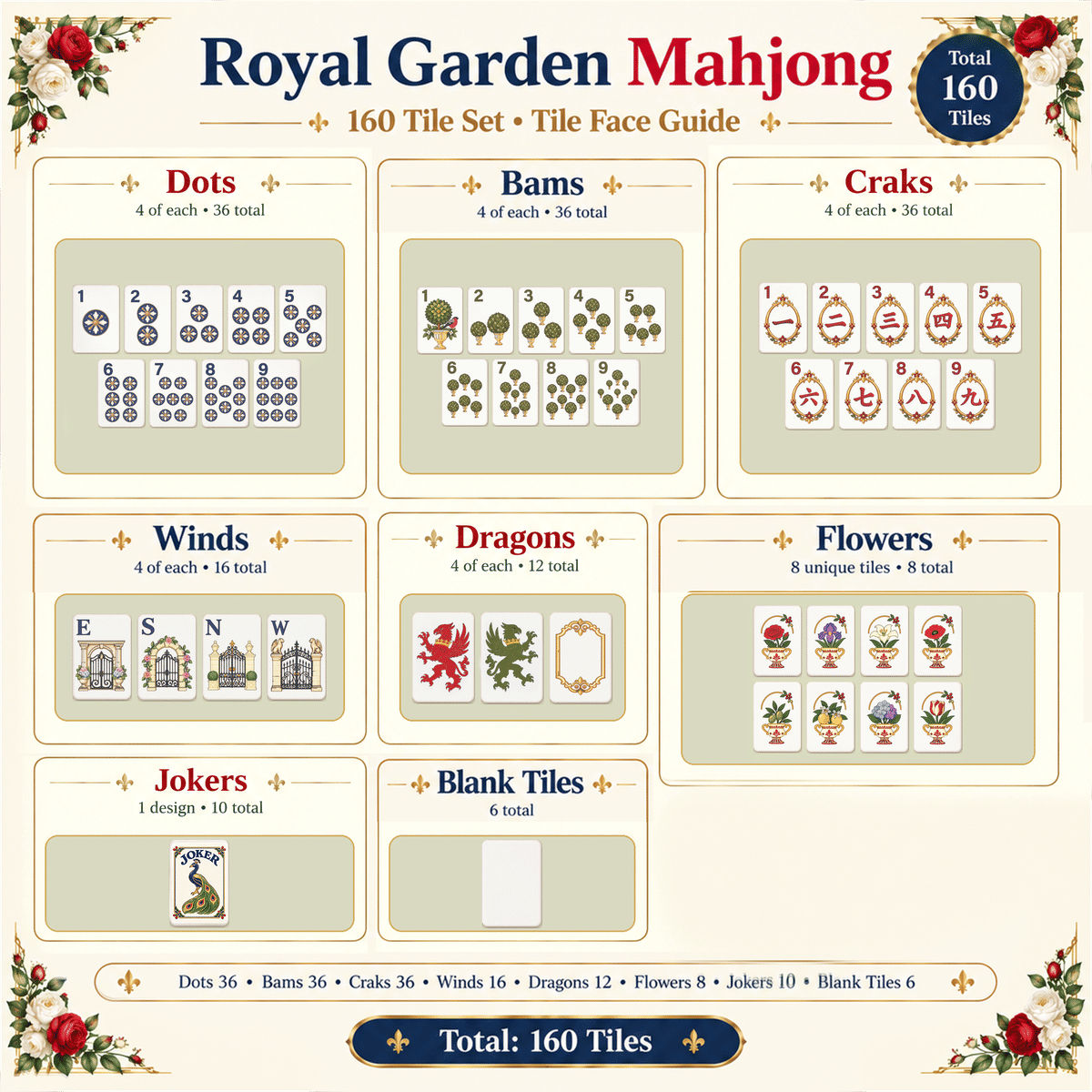
Riichi mahjong calling strategy centers on two core moments: declaring riichi (ready hand) and calling tiles from opponents' discards. You declare riichi when your hand needs exactly one tile type to win, locking in your pattern but revealing vulnerability. Calling means claiming a discarded tile to complete a set (pung, chow, or kong), which exposes your tiles but accelerates toward winning. The tension between speed and secrecy is riichi's core skill—commit early to pressure opponents, or stay concealed longer to adapt. Unlike American mahjong, which uses a printed card and draws only from the wall, riichi rewards fast reads of discard sequences, opponent betting tells, and probability. Mahstead players who've learned riichi alongside American mahjong often say the speed and psychology feel radically different; riichi demands split-second calculation and live adaptation.
Riichi mahjong—played across Japan, Korea, and competitive circuits worldwide—builds its entire strategy around the calling decision. The moment you declare readiness or claim another player's tile, you've committed publicly, and opponents adapt their play accordingly. This is the crux of riichi: knowing when visibility (speed) beats secrecy (flexibility).
What does declaring riichi actually do in your hand?
Declaring riichi means your hand has exactly one winning tile type remaining—typically one number, wind, or dragon—and you've locked that winning condition. Once declared, you cannot change your hand, and opponents know you're waiting for one specific tile or group. The payoff: your payout doubles (mangan becomes haneman). The cost: everyone folds or plays defensively. You declare riichi only when your hand is truly one tile away from a winning pattern (tenpai in Japanese), and the hand score justifies the risk.

When should you call an opponent's discard versus draw from the wall?
Calling a discard (chii, pung, or kong) wins you a tile immediately but exposes your plan to the table. Draw from the wall if you're still flexible—your hand can adapt. Call when: (1) you're one tile from winning and the discard matches, (2) you have a concrete pung or chow forming and the draw risk is higher than exposure, or (3) you need the tile frequency to be worth the information leak. Never call to fill a partial hand you could still reshape. The wall offers 68 draws; each discard from three opponents raises call value. If the player to your right has just discarded safely three times, their next discard is lower-risk to call because they're likely not building aggressively.
How do you read discard patterns to spot opponent calling risk?
Opponents telegraph their hands through discard sequences. Early discards (turns 1–4) are typically tiles they won't use—no suit emphasis yet. Mid-game discards (turns 5–10) reveal which suits and numbers they're avoiding—those are the tiles they're building with. Late-game discards are often dead tiles (too similar to numbers their opponents are collecting). If a player has discarded 1-Bam, 2-Bam, 3-Bam, 4-Bam in succession, they are not building Bams; they discarded safety first. Watch for paired discards: if they've thrown one 5-Crak and are now discarding a second 5-Crak, they don't need Craks at all. If they hesitate before discarding—especially late in the hand—they're deciding between two risky tiles; call any tile they finally discard if it helps you, because they almost certainly have no pair of that tile.
🀄 Shop best-selling mahjong sets →
Should you ever declare riichi on a hand that isn't actually tenpai?
No. Riichi requires one-tile-away status (tenpai). False riichi in friendly games is sometimes tolerated but is generally considered disrespectful and breaks the game's trust system. In league or tournament play, false riichi draws penalties or a loss of points. The temptation arises when your hand is nine tiles away and you're behind—you hope opponents play defensively so you can draw freely. Don't. Use that turn to draw defensively yourself, improve your hand, or fold if your hand is dead. Riichi is only worth calling when you've calculated at least 30–40% winning probability on the next three to five turns.

What's the difference between calling chow, pung, and kong in riichi strategy?
A chow (three consecutive numbers in one suit: 3-4-5 Dots) is cheapest in points but requires precise math—your opponents know exactly which tiles you need. A pung (three identical tiles: three 2-Bams) is mid-value and safer because multiple discarders could feed you. A kong (four identical tiles) is rare and usually signals a hand already close to winning; calling it after declaring riichi often means your win is imminent. Kong calls also freeze your tile type publicly—everyone knows you hold three of that tile and won't need more. In early hand (turns 1–6), avoid calling chows unless the hand setup is unusually tight. Mid-game (turns 7–12), pung and chow calls balance speed and safety. Late-game (turns 13+), only call if it advances you toward a declared riichi or a clear winning pattern.
Comparison: Calling Frequency by Hand Stage
Hand Stage | Best Call Type | Risk Level | Why |
Early (turns 1–4) | None (draw only) | Low | Flexibility high; no urgent patterns |
Early-mid (turns 5–8) | Pung only | Medium | Signals one suit; less specific than chow |
Mid (turns 9–12) | Chow + pung | Medium-high | Hand solidifying; speed matters |
Late (turns 13+) | Any (riichi declared) | High | Winning tile known; call anything that fits |
How does blind play (zenitsu style) change calling strategy?
In blind play (eyes closed until draw), calling strategy flips: you call more frequently because you cannot see the discard pattern and must generate winning speed through aggressive melds. The wall becomes your only information source. Once you open your eyes (typically after melds establish a hand direction), you switch to reading mode—hesitate before calling until you've scanned the discard pile for opponent patterns. Blind play teaches discipline: it forces you to trust probability over psychology. If you've called two pungs blind and haven't seen your third tile yet, the mathematical odds shift—only 2 copies remain. Call more aggressively to force a win before the wall empties.
Why do professional players stay concealed longer than beginners?
Professionals know that exposure = information for opponents. A concealed hand (no called tiles, no riichi declared) keeps opponents guessing about your winning tile, suit preference, and even your score potential. Beginners call early because it feels like progress; pros call when the pot math justifies it or when the discard intelligence is overwhelming. Pros also read dead patterns—they'll fold hands early if the discard pile shows their winning tiles already gone. If you need a 7-Dot and four opponents have already discarded a 7-Dot between them, your hand is mathematically dead; fold and save points for the next hand. Concealment buys you time to read the table, and time is a finite resource in riichi.
🎁 See our most-loved mahjong sets & accessories →
What's the fastest way to practice calling decisions?
Drill two skills separately: (1) Discard pattern recognition: online simulators (riichi city, majsoul) let you play 20 hands daily and build intuition. (2) Tenpai calculation: use training software or flash cards to recognize one-tile-away patterns instantly. Then play live with experienced players and ask why they called or didn't. Most riichi clubs run beginner sessions specifically for this—watch the discard pile openly and narrate your thinking aloud. After ten to fifteen live sessions, your calling choices will start to feel automatic.
Quick checklist before you call
[ ] Hand is tenpai (one tile away) or adds a concrete set (pung, chow, or kong)
[ ] Wall density suggests your tile is unlikely to draw naturally in next 3–5 turns
[ ] Discard sequence from caller shows they won't loop the tile back
[ ] Your call doesn't reveal a losing pattern (e.g., calling a 1-Bam when two 1-Bams are discarded)
[ ] Table position: calling from right (your draw order) is safer than left (enemy turn next)
[ ] Pot score: expected winning value exceeds information cost of exposure
✨ Find your Mahstead set — free US shipping →
If you're splitting time between American and riichi mahjong, you'll notice the calling mechanic is the biggest difference. American mahjong uses a fixed card and draws sequentially; riichi forces real-time decisions under pressure. Many of our weekly game players have upgraded their practice space with mahjong mats large enough to accommodate both rule sets side-by-side, swapping between American score sheets and riichi apps. For riichi-focused groups, a sturdy rack set with smooth pushers keeps tiles organized during rapid calling plays—the tile movement becomes muscle memory faster on quality equipment.

FAQ
Can you declare riichi if your hand has two possible winning tiles (two different numbers)?
No. Riichi requires one winning condition (tenpai: one tile type or group). If two numbers win you, you're two tiles away. Declare riichi only when exactly one tile completes a valid hand.
What happens if you call a discard and it's not the tile you actually needed?
In most riichi variants, if you call a tile you don't use (chii, pung, or kong), it's a dead call—you've essentially declared a false hand and lose points or the hand. Always verify the tile matches your declared or intended pattern before calling.
Is it ever correct to stay concealed (no calls) all the way to winning?
Yes. If your hand draws naturally and you reach tenpai without calling, your final win (menzen) pays 30% more. This is rare but valuable—the discard pile must cooperate and your wall draws must align. Advanced players stay concealed when the probability favors it.
How many tiles typically need to be discarded before calling becomes safe?
After turn 6–8, when 20–24 tiles are exposed, patterns become readable. Before turn 5, calling is usually premature unless your hand is already tenpai or the table is playing very fast (yakuhai hunting).
Does declaring riichi lock you into a single suit or can your winning tile be any number in that suit?
Riichi locks you into one tile type—e.g., "waiting for 5-Dots" or "waiting for East wind." Your hand is one specific tile away, not one suit away. Other tiles in that suit may be in your hand already.
Can you withdraw a riichi declaration if you realize you miscalculated?
No. Once riichi is declared, your hand is locked. You cannot change your pattern. This is why calculation matters—riichi is a binding commitment, not a tentative signal.


View More
View More
View More
