
Printed Mahjong Tiles: Weight, Feel & What to Expect
Last updated: Nov 23, 2026
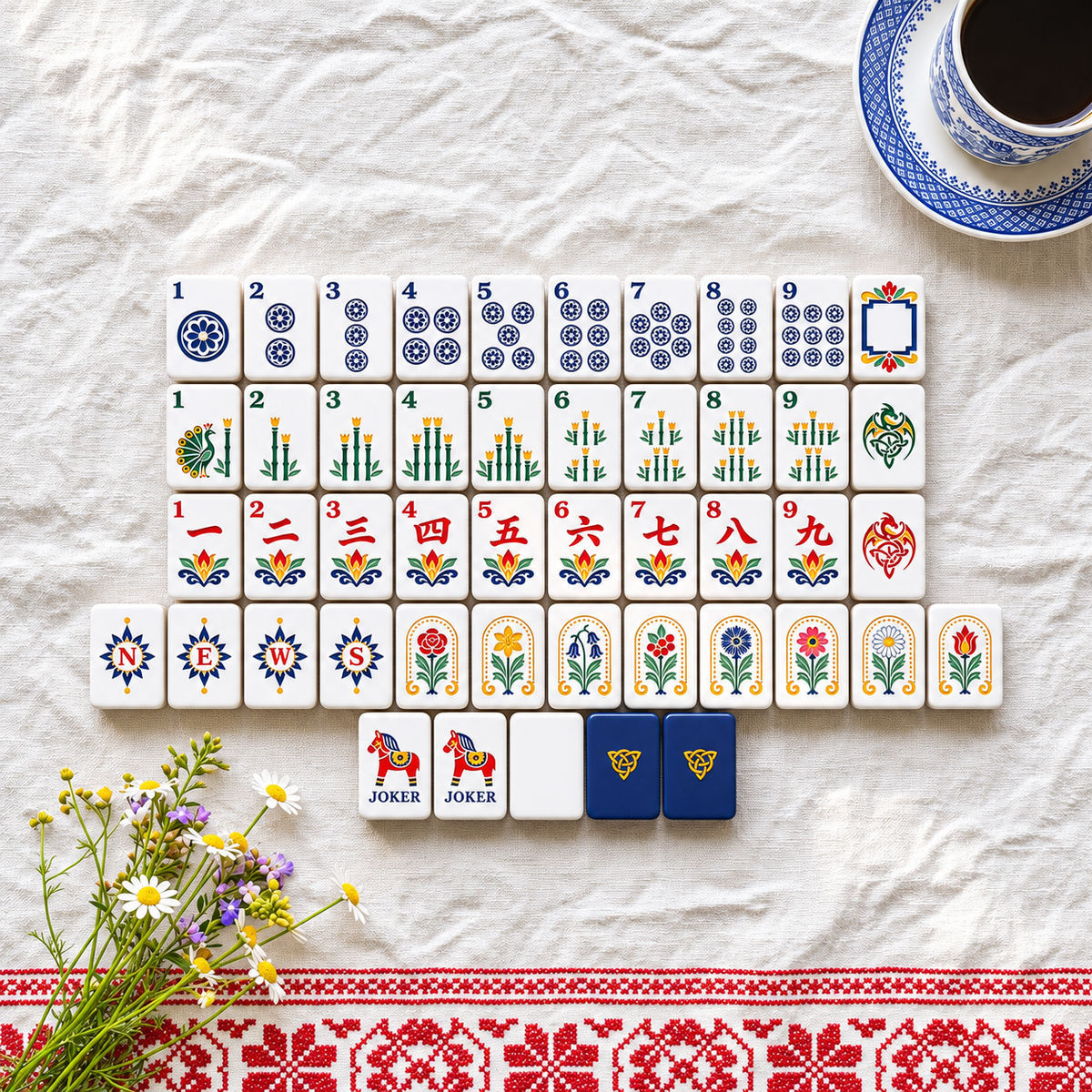
Printed acrylic mahjong tiles weigh significantly less than traditional bone-and-bamboo sets—typically 2–3 grams per tile versus 4–5 grams for bone. The lighter mass changes how tiles feel when drawn, stacked, and pushed; some players find the reduced weight faster and easier on the wrist, while others miss the heft of heavier sets. Acrylic tiles printed with vibrant designs, suit symbols, and wind/dragon characters offer excellent legibility and scratch resistance. The playing surface—matte, semi-gloss, or fully glossy—affects grip and slide on a mat, so your choice depends on whether you want tiles that grip firmly or move smoothly. At Mahstead, our Dallas workshop designs acrylic sets to balance weight, durability, and tactile feedback so your game feels responsive without fatigue.
🀄 Shop best-selling mahjong sets →
Why does tile weight matter during a long game?
Lighter tiles reduce fatigue in your hand, wrist, and forearm during a four-hour session. A full set of 160 tiles at 2–3 grams each means you're handling roughly 320–480 grams total—versus 640–800 grams for bone. That difference compounds when you're drawing, organizing your rack, and discarding. Many players who switched to acrylic report less pain after long nights, especially if they have arthritis or carpal tunnel concerns. The trade-off is tactile feedback; lighter tiles sometimes feel less "substantial," so some experienced players find them less satisfying. Test a friend's printed set before committing to a full purchase if hand feel is important to you.

How does the surface finish affect gameplay?
Matte finishes grip the mat better and reduce glare under bright lighting, creating a quieter play experience where tiles stay put. Semi-gloss and glossy finishes allow tiles to slide more freely, speeding up draws and discards—useful for faster-paced tables or competitive play. Matte tiles also hide minor dust and fingerprints better than glossy ones, so they stay visually cleaner longer. Glossy tiles photograph better for Instagram or documentation but can feel slippery on a smooth mat. Your mat's surface (neoprene, felt, or vinyl) also matters: pairing a glossy tile with a smooth mat can make tiles drift unexpectedly, while matte tiles on a textured mat stay exactly where you place them. If you're hosting regular games, test the friction between your mat and candidate tile finish before ordering a full set.
What does "printed" mean, and is it durable?
Printed tiles have designs (numbers, suit symbols, characters, honors) applied to the acrylic surface via high-resolution printing, then sealed with a protective coating. This differs from inlaid tiles, where symbols are carved and filled with paint. Printed acrylic holds up well to weekly play and typical wear; the sealing layer protects against scratches and fading. Over many years (five-plus), frequent play can dull the surface gloss or cause minor fading, but tiles remain playable. The real durability test happens on the edges: acrylic tiles can chip if dropped hard or stacked carelessly. Using a rack with pushers (rather than holding tiles in your hand for long stretches) reduces edge stress and extends the life of your set. We recommend storing tiles in a padded case for travel and a dedicated bag for home storage between sessions.
Finish Type | Grip on Mat | Ease of Sliding | Glare | Maintenance | Best For |
Matte | Excellent | Moderate | None | Low (hides dust) | Casual weekly play, long sessions |
Semi-gloss | Good | Good | Minimal | Moderate | Mixed-pace games, most tables |
Glossy | Fair | Excellent | High | High (shows fingerprints) | Fast-paced tournaments, photography |

How does acrylic weight compare to bone for your hand feel?
Bone-and-bamboo tiles (4–5 grams each) create a satisfying clack when drawn and stacked, a sound and sensation many lifelong players associate with "real" mahjong. Acrylic tiles are quieter, with a softer click, and they feel cool to the touch (bone warms slightly with handling). The lighter weight of acrylic means your hand positions tiles more easily—less muscular effort to control a tile mid-air. For players used to bone, the adjustment takes 1–2 sessions; by the third game, most don't notice the difference. Older players or those with joint sensitivity often prefer acrylic's reduced weight and softer impact on their hands. If you're introducing a newcomer to the game, acrylic's lighter feel is less intimidating than hefty bone tiles.
What should I check before buying printed tiles?
First, confirm the tile count: American mahjong uses exactly 152 playing tiles plus 8 jokers (160 total). A 160-tile set from Mahstead includes spares (extra jokers or blanks for replacing damaged tiles), so you'll never run short during a session. Second, inspect the design clarity: suit symbols (Bam, Crak, Dot) should be instantly recognizable from across the table, especially if your eyesight is age-dependent. Hold the tiles at arm's length under your home's lighting and check that numbers and honors are legible. Third, test the finish against your mat or table: borrow a single tile from a friend's set if possible and try it on your surface. Fourth, consider whether you'll use a mahjong rack with pushers—these reduce hand fatigue and protect tiles from edge damage. Finally, choose a bag or case that fits your lifestyle: a padded travel case for tournament or weekend trips, a fabric pouch for weekly home games. The best-selling collection shows popular combinations of tiles, mats, racks, and bags to simplify your choice.
🎁 See our most-loved mahjong sets & accessories →
Why do some printed sets feel cheaper than others?
Thinner acrylic (1–2mm) feels less stable and more prone to warping or chipping; quality sets use 3–4mm acrylic. Printing resolution matters too—low-res designs blur at arm's length or fade unevenly. The protective seal applied after printing affects both durability and feel; cheap finishes scratch easily or peel over time. Edge finishing (beveled, rounded, or raw) changes comfort in hand; rough edges catch on racks or fingernails. Mahstead engraved American mahjong sets use consistent acrylic gauge and sealed printing so tiles maintain crisp appearance through hundreds of games. Comparing a budget set to a mid-range one side-by-side, you'll notice the mid-range tiles have sharper detail, smoother edges, and a more uniform feel across all 160 pieces. Don't confuse weight with quality—lighter tiles are intentional, not a shortcut—but confirm the acrylic thickness and seal quality before ordering.
✨ Find your Mahstead set — free US shipping →
What to Check Before You Buy
Acrylic thickness: 3–4mm is standard; thinner tiles feel flimsy.
Design resolution: Numbers and honors must be sharp and legible at arm's length.
Finish clarity: Matte, semi-gloss, or glossy—test on your mat first if possible.
Tile uniformity: All 160 tiles should feel identical in weight and surface texture.
Edge quality: Beveled or rounded edges reduce hand fatigue; raw edges wear out faster.
Storage: Order a padded case or bag to protect your set between sessions.

FAQ
Do heavier tiles always feel more premium?
No. Printed acrylic at 2–3 grams is intentionally lighter to reduce hand fatigue. Premium acrylic focuses on design clarity, edge finish, and seal durability, not weight. Bone-and-bamboo is heavier by material, not by superior craftsmanship.
Can I mix printed tiles from different sets?
Technically yes, but not recommended. Tiles from different sets often have slightly different dimensions, thicknesses, or finishes, so they'll feel inconsistent in hand and may jam your rack or not stack evenly.
Do printed tiles get slippery over time?
Glossy and semi-gloss finishes can collect dust and oils, making them feel slicker temporarily. A quick wipe with a soft cloth restores grip. Matte finishes resist this buildup and feel more consistent session to session.
What's the best finish for a beginner?
Semi-gloss or matte. Semi-gloss balances slide speed and grip, so beginners can draw tiles smoothly without losing control. Matte hides wear longer and is forgiving if you're still learning how to handle the tiles gently.
Should I buy a rack if I'm just starting out?
Yes. A mahjong rack with pushers lets you organize tiles without holding them, reducing hand strain and protecting tile edges. It's especially helpful for long games or if you're new to tile management.
Can I repair chipped or cracked printed tiles?
Minor surface chips won't affect gameplay. Deep cracks or missing large chunks mean that tile should be replaced. Mahstead sets include spare tiles for this reason; if you need extras, contact Mahstead directly with your set details.
How often do printed tiles need cleaning?
Once every 5–10 games, depending on how often you play. Dust with a soft, dry cloth. Avoid water unless a tile has sticky residue; a barely damp cloth works, then dry immediately to prevent water spots.
Do printed tiles fade in sunlight?
UV light will fade the design over time, but this takes years of direct sunlight exposure. Store your set in a closed case or bag away from windows, and tiles will maintain their appearance indefinitely.


View More
View More
View More
