
Preppy Mahjong Racks with Pushers: How to Choose
Last updated: Nov 23, 2026
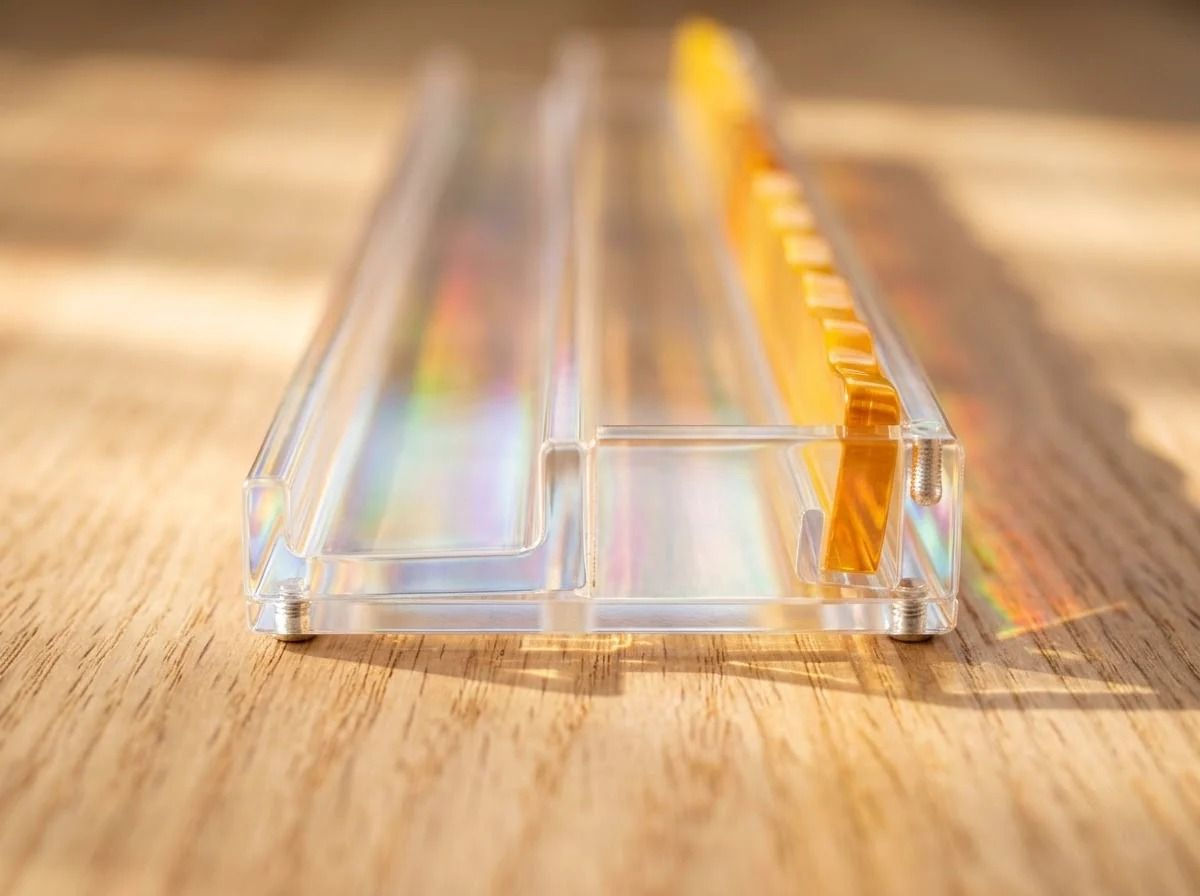
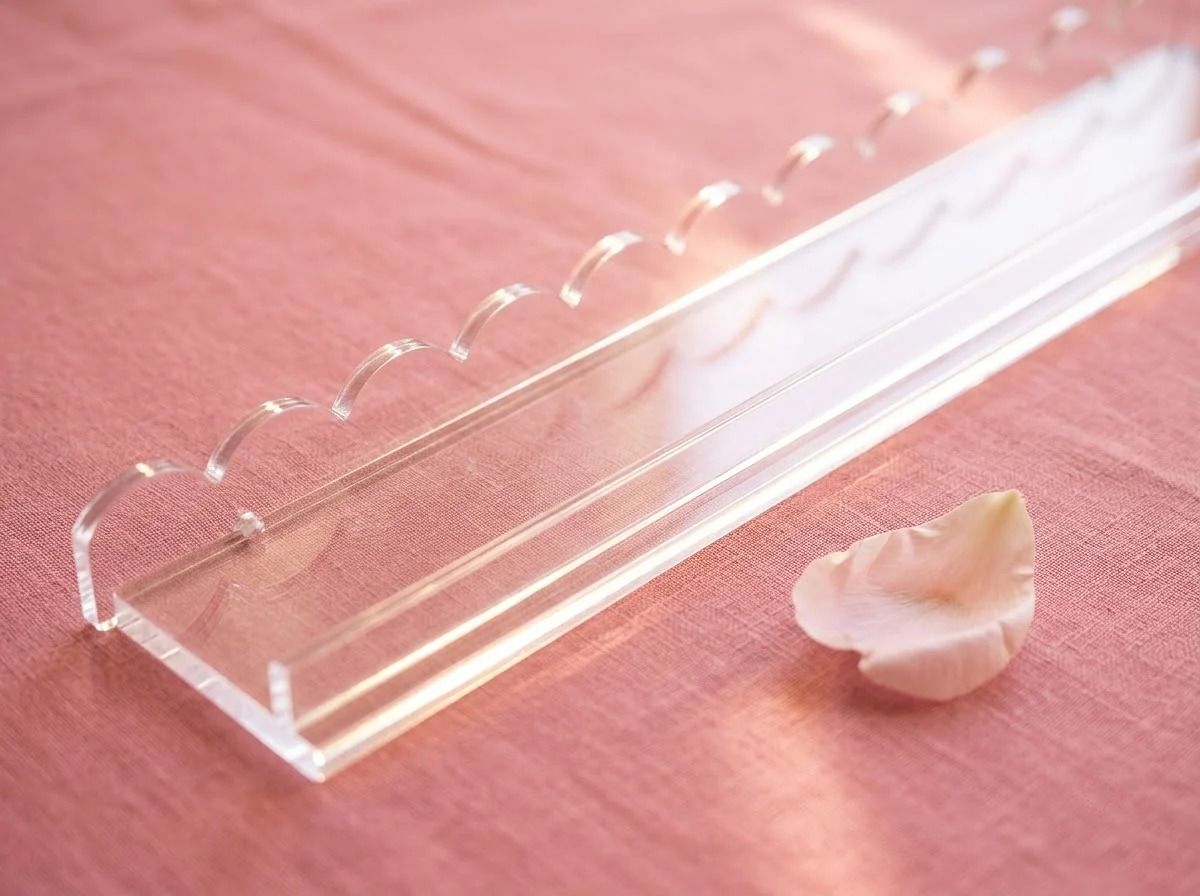
A preppy mahjong rack with pushers is a two-part organizing system: a sloped holder that displays your tiles face-down in tidy rows, plus a flat pusher stick you use to advance tiles forward as you draw or discard. American players use racks to keep all 13 tiles hidden and organized during the game; pushers let you slide tiles smoothly without touching them individually, which keeps play fast and fair. Most acrylic racks hold a full American hand plus a few jokers, stand at a 45-degree angle, and come in designs ranging from classic solid colors to engraved logos or preppy motifs. Racks are sold individually or bundled with best-selling mahjong sets, and quality acrylic racks last for years if kept dry. The pusher is usually a matching stick of acrylic or laminate; avoid pusher tips that are too thick or rough, which can snag tiles or slow your hand refresh. 🀄 Shop best-selling mahjong sets →
Why do racks matter if you're already keeping tiles face-down?
Racks serve three critical roles: they force consistent tile visibility (all players see each other's tile count at a glance), they prevent "accidental reveals" when you reach for a tile, and they make tile passing during the Charleston smooth and fair. Without a rack, a player might tilt her hand forward by accident, exposing tomorrow's discard. With a rack angled at 45 degrees, tiles sit behind the slope; you can't peek. The pusher means you never grip individual tiles with your fingers—you slide from the back, so no fumbling or hesitation signals your holding strategy to alert opponents.
What's the real difference between preppy and standard rack designs?
Standard racks are usually plain acrylic—solid colors, clear, or monochrome. Preppy racks add visual personality: pastels, gingham inlays, script monograms, or themed engravings that reflect your game group's identity. A group that meets weekly might order a set of four matching racks with each player's name or initials engraved; that's both functional and memorable. Some preppy designs also include decorative elements like gold borders or two-tone acrylic, which cost slightly more but don't affect performance. The trade-off is purely aesthetic—a plain clear rack functions identically to an engraved preppy one. Choose based on your table culture: casual home games might skip decoration; league or standing groups often invest in branded sets as group identity markers.
How do you know if a rack is actually usable in your game?
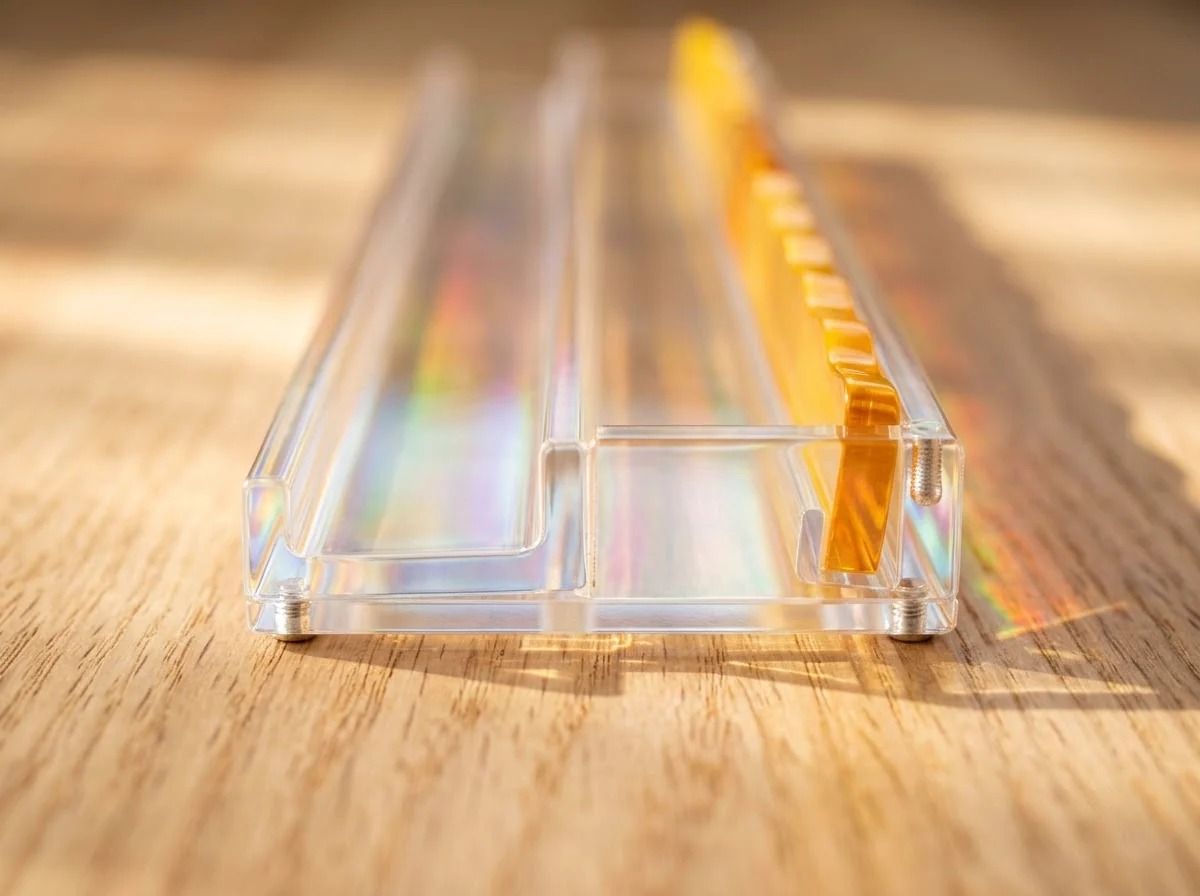
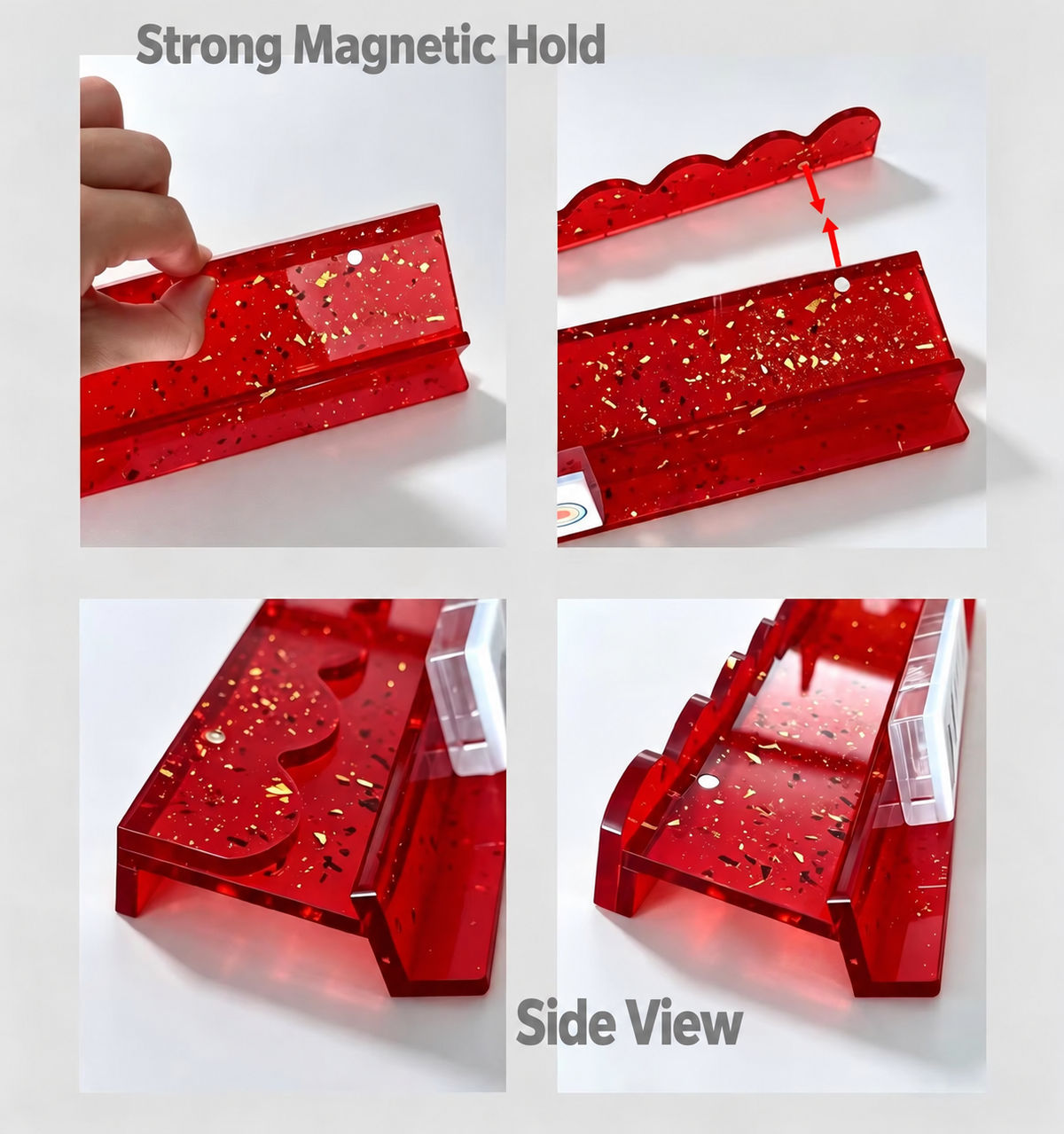
Check three specifics before buying: tile capacity (must hold at least 13 tiles plus 1–2 jokers, usually about 14 to 16 positions), pusher compatibility (the pusher should slide freely without catching on the rack walls), and angle and height (a steep slope looks elegant but can make tile access harder; 45 degrees is the standard). If the rack's pusher slot is too tight, the stick will jam or splinter tile edges. If the slope is too shallow, tiles want to slide out on their own. Test by watching videos or asking your game group if they've used that exact model. Acrylic racks from quality makers are milled precisely; budget racks sometimes have rough edges or inconsistent wall thickness that snags the pusher. See current pricing on the mahjong racks collection page and check the product photos for clear pusher-fit demonstration.
✨ Find your Mahstead set — free US shipping →
Preppy rack styles: a comparison of what's out there
Style | Best For | Visual Mark | Pusher Type | Durability Note |
Solid pastels | Casual home players, soft aesthetic | Powder blue, blush, sage solid | Matching acrylic | Very durable; never shows wear |
Engraved names | Standing groups, league players, gifts | Custom lettering or initials | Acrylic with matching engraving | Lasts decades; engravings don't fade |
Gingham or pattern inlay | Preppy aesthetic fans, Instagram-worthy tables | Pastel checks, stripes, or solids | Acrylic with design echo | Design inlaid during molding; won't chip |
Clear or smoke | Minimalist, tile-showcasing tables | Transparent or dark transparent | Clear acrylic | Shows lint; easy to clean |
Two-tone or color-blocked | Modern preppy, designer tables | Two complementary colors per rack | Acrylic, often matching both colors | No performance difference; higher visual cost |
Each style holds tiles identically and performs the same in play—the choice is 100% personal. A group might order four different colors so each player claims one by look; another group chooses matching sets for uniformity. Neither is "better."
What mistakes do most buyers make when ordering racks with pushers?
Too many or too few: Buyers sometimes assume they need one rack per player, then realize they have no "spare" for a substitute or for when one tile cracks. We recommend ordering one extra rack per four players.
Pusher friction: Ordering a rack without testing the pusher fit first means discovering mid-game that the stick is too thick or the slot is unfinished. Always ask the seller for close-up photos of the pusher-in-slot position before checkout.
Mixing old and new: If you already own racks from a previous purchase, new racks might have slightly different angles or pusher widths if they're from a different maker. Your group will notice when one player's rack feels "wrong." Stick with one source or confirm compatibility in advance.
Forgetting the pusher itself: Some sellers ship racks without pushers, expecting you to order them separately. Verify that pushers are included; replacement pushers take time to source and can delay your game night.
Ignoring tile protection: A rack only protects tiles while they're in the holder. During the Charleston and mid-game passes, tiles move hand-to-hand; a protective mahjong mat or table cover under your racks prevents tile edges from chipping when they're set down between rounds. Pair your racks with a good mat for full protection.
🎁 See our most-loved mahjong sets & accessories →
How to choose between a single set of racks and a full bundle with a set
If you already own a best-selling mahjong set and just need racks, buy racks separately—no need to duplicate tiles. If you're building your first game from scratch or upgrading, a bundled set (tiles + racks + pusher + mat + bag) is often simpler and faster than sourcing each piece. Bundles also ensure all parts fit together (tile size matches rack capacity, for example). Check whether the bundle includes a mat and bag; those pieces alone often cost as much as a "bundle discount," so you're not really paying more. Look at what collection you're ordering from—new arrivals sometimes bundle preppy racks with complementary tile sets, while basic collections let you mix and match by preference.
What to check before you buy
Tile count in the set: American play uses exactly 152 tiles + 8 jokers. Confirm the set is 160 tiles (152 playable + spares) or 166 tiles (152 playable + extra spares). Never add spare tiles to play.
Pusher included? Verify the product description explicitly lists "pusher" or "stick" as included. If only "rack" is mentioned, ask before ordering.
Rack angle: Request side-view photos showing the slope. 45 degrees is standard; steeper can be harder to use.
Dimensions: Measure your table or shelf space. Racks vary in width and footprint; a very wide rack might not fit a small table corner.
Color fast? For engraved or two-tone racks, ask if colors are UV-stable or can fade in sunlight. Acrylic racks from quality makers hold color indefinitely if kept indoors.
Free shipping: Racks ship across the US with free shipping; confirm before you check out.
FAQ
Can you use a mahjong rack with pushers in a real league game?
Yes. American league play requires racks and pushers for all official games; they're standard equipment, not optional. Some casual home games skip them, but organized play always includes them.
Do pusher sticks break or wear out?
Acrylic pushers from quality makers rarely break under normal use. They can develop rough spots if used aggressively on unfinished tile edges; a light sanding fixes this. Most players keep the same pusher for 10+ years.
Can you get a rack and pusher set for a gift?
Absolutely. Preppy racks with custom engravings make thoughtful gifts for mahjong fans. A best-selling set with engraved racks is a complete game for a new or upgrading player.
What if your rack cracks?
Acrylic racks can crack if dropped on a hard floor or sat on. One cracked rack usually means replacing it; used replacements are cheaper but require the same dimensions and pusher fit as your existing racks. Always buy a spare or have a contact for quick reorders.
Do different brands' racks work with other brands' tile sets?
Usually yes, because tile sizes are standardized in American mahjong. A slight mismatch in pusher width might occur if you mix very old and very new racks, but modern acrylic racks from established makers fit together seamlessly.
Why are preppy racks more expensive than plain ones?
Preppy designs (pastels, engravings, patterns, two-tone colors) require custom molds, hand-finishing, or a secondary molding step. Plain acrylic racks use standard molds, so they're faster and cheaper to produce. The performance is identical; price reflects design complexity, not durability.


View More
View More
View More
