
Pink Mahjong Case: How to Choose One That Actually Works
Last updated: Nov 23, 2026
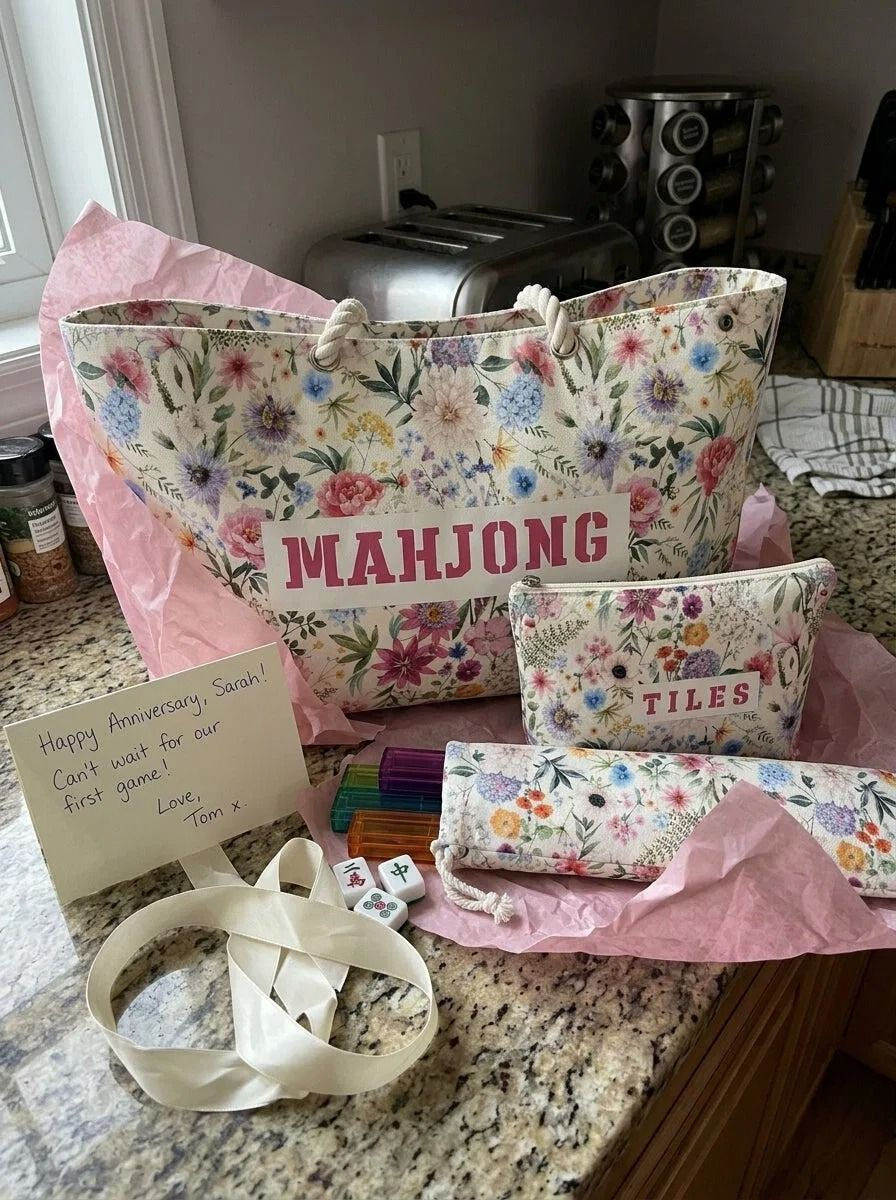
A pink mahjong case is a protective carrier designed to hold a full 160-tile American mahjong set, tiles, racks, and often a mat. Pink cases range from soft fabric pouches (good for tote-bag storage) to hard acrylic or padded shells (best for car travel and frequent moves). Most measure 12–18 inches wide and weigh 2–5 pounds empty; Mahstead cases include reinforced handles and compartments to prevent tiles from shifting. Cost varies by material and design—fabric cases are most affordable, while padded or hard-shell options cost more. Before ordering, check interior dimensions against your set's footprint, confirm compartment layout matches your racks and mats, and verify whether the case ships with spare space or requires exact packing.
Why does a pink case make sense for your mahjong setup?
Pink cases work because they're functional and personal. You're committing time and money to a 160-tile set and mats—protecting that investment is practical, not decorative. A case keeps your acrylic tiles from cracking during car rides to weekly games, guards against dust in storage, and makes setup portable so you can move from living room to kitchen without scattering a single tile. Many of us rotate hosting duties, so a case with handles and organized compartments saves setup time. Pink specifically appeals to players who want their gear to feel intentional and less clinical than generic black or beige. Function and identity are not separate choices—a case that you enjoy reaching for is one you'll actually use consistently.
🀄 Shop best-selling mahjong sets →

What size pink case do I actually need?
A full American mahjong setup requires room for 160 tiles (packed in their tray or loose), four racks with pushers, a mat (often rolled or folded), and ideally a reference card. Interior dimensions of at least 14" × 10" × 5" accommodate all of these comfortably without crushing the mat or forcing tiles into rigid positions. If you own both a fabric mat and a laminated card, you'll need slightly more depth. Check the product description for compartment breakdown: cases with one large section plus three small pockets work differently from those with tiered shelves. Measure your set's tray from corner to corner and add 1–2 inches of buffer for padding and handles. A case that's too tight creates stress on zippers and forces you to disassemble pieces every time you pack; one with breathing room protects your tiles and keeps you from dreading transport.
Fabric vs. padded vs. hard-shell: which pink case suits your life?
Case Type | Best For | Travel Scenario | What to Know |
Soft fabric (unpadded) | Home storage, short car trips | Tote in a vehicle | Lightest, least protective; mat wrinkles easily if compressed |
Padded fabric | Weekly games, occasional overnight | Carpool to host's home | Good shock absorption; pockets organized; still folds into coat closet |
Acrylic/hard-shell | Frequent moves, air travel, serious collectors | Multiple venues, multi-hour trips | Maximum protection; rigid; takes up dedicated shelf space; harder to squeeze into tight spaces |
Soft fabric cases are cheapest and pack flat when empty—ideal if you store your set at home most weeks. Padded cases strike a balance: they absorb bumps from a backseat or porch step, resist creasing better than unpadded, and still fit in a closet. Hard-shell cases win if you travel between states, host in multiple locations, or want your tiles to survive a drop. Pink hard-shell cases are rarer than fabric, so if that's your priority, check the full travel-bag collection for available options and finishes.
🎁 See our most-loved mahjong sets & accessories →
Does the case come with compartments for racks and mats, or do I pack loose?
Most protective cases include at least one interior pocket or slot system to separate tiles from accessories. A well-designed case has a main tile compartment (fitted to hold your set's tray or stack), one or two shallow pockets for small items (spare jokers, reference card, pencil), and often a flat side pocket or base layer for a rolled mat. Some cases ship with removable dividers so you can customize storage to match your set and racks. Loose packing (tiles, mats, racks all in one space) is risky: tiles slide and rattle on car trips, mat friction damages tile edges, and finding a specific rack takes time. Before buying, ask whether compartments are rigid, flexible, or customizable—rigid is best for frequent travel, flexible offers more space for bulkier mats. Check the product photos for internal layout; if the listing doesn't show compartment detail, contact the seller for clarification before checkout.
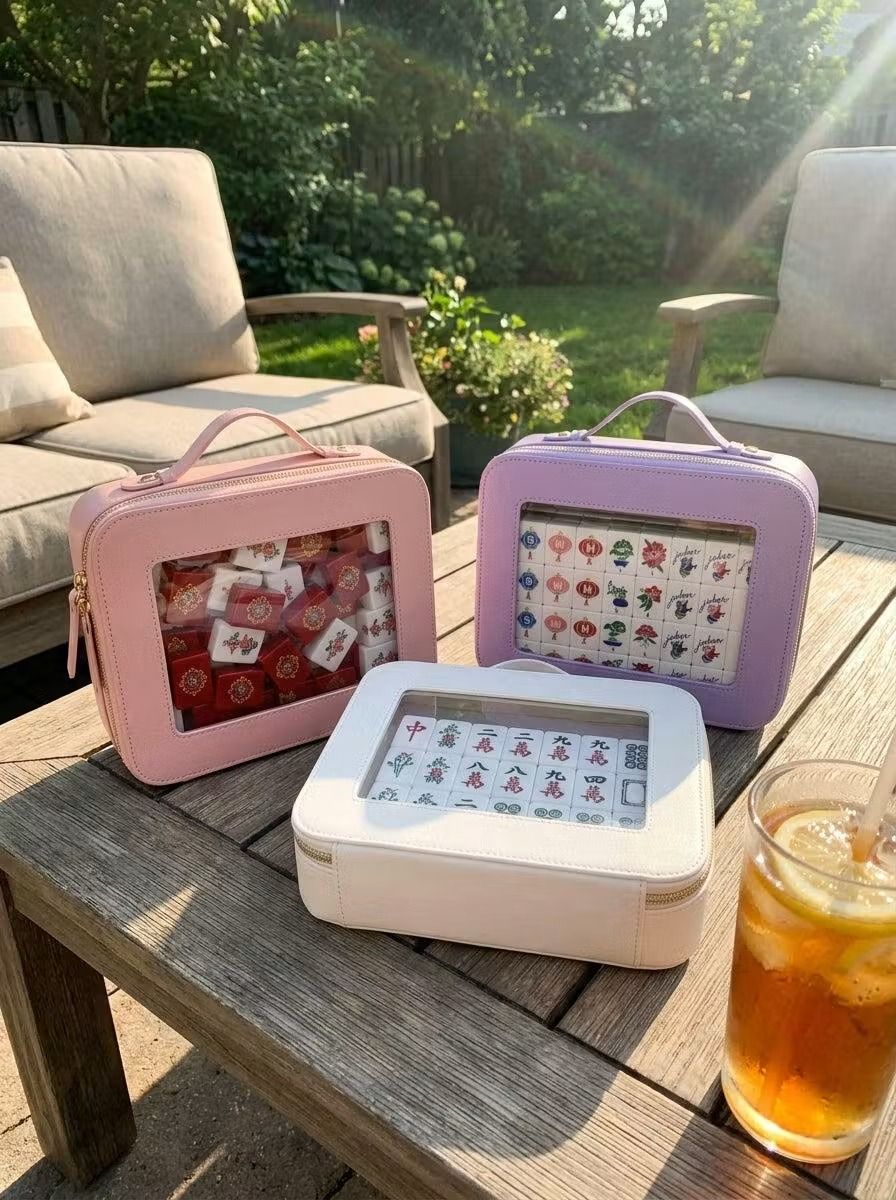
What should I check before ordering a pink mahjong case?
Interior dimensions vs. your set's footprint: Measure your tile tray (usually 10–12 inches square for a 160-tile set) and add 0.5–1 inch on each side for the case wall. If the case lists internal width but not depth, calculate by subtracting 1.5–2 inches from the external dimensions.
Zipper quality: Cheap zippers jam or split on the first humid day. Check product photos for stitching around the slider and whether the pull is reinforced plastic or metal.
Handle strength: If you're carrying a full case weekly, grab-handle stitching matters. Fabric straps should be stitched at least three rows along the seam line to avoid tearing.
Weight when empty: A light case (under 1 pound) is easier to carry but may lack padding; a heavier case (2–3 pounds) usually means better protection but becomes a burden if you transport it far.
Mat accommodation: Roll a mat and measure its diameter; confirm the case depth can accommodate it without crushing the sides.
Humidity or temperature notes: Acrylic tiles are sensitive to extreme changes. If you transport between heated and cold environments often, ensure the case provides some insulation or choose a material that doesn't trap condensation (some padded fabrics do).
How do pink cases compare to clear or neutral-colored ones?
Pink cases carry the same protective function as any other color—the difference is psychological and social. A clear case lets teammates verify your tiles are legitimate and organized before play starts, which is practical for tournament or formal settings. Neutral colors (gray, black, navy) are invisible; they disappear into car trunks and make your set feel like anyone's. Pink is intentional: it signals confidence in your gear and gives your setup personality, which many players appreciate in casual weekly games. Some of us choose pink because it matches a mat or racks we already own, creating a cohesive look. If aesthetics matter less than durability, neutral cases may age better without showing stains—but pink with quality sealing and fabric treatment can last just as long. The choice comes down to whether you want your case to fade into the background or stand out as part of your mahjong identity.
✨ Find your Mahstead set — free US shipping →
Where to find pink mahjong cases and what to verify before checkout
Start by browsing the full mahjong bags and cases collection to see what's in stock. Filter by color if the site allows, or scan product titles and photos directly. For each case you're considering, confirm the following: internal measurements are listed in inches or centimeters; material (fabric type, padding thickness, shell material) is specified; compartment layout is shown in at least one photo; and weight is stated. If a listing is vague—say, "fits standard mahjong sets" without measurements—ask the seller for exact dimensions before ordering. Pink cases in particular vary widely: some are cotton canvas, others are nylon blends, and a few are padded vinyl. Each material has different durability profiles and feel. Read the shipping policy to confirm free US shipping applies to your order and that the case ships in a protective box (not a mailer bag). Many players order a case once and keep it for years, so the upfront research pays off.

FAQ
Can I fit a full mat in a pink mahjong case along with tiles and racks?
Yes, if the case has at least 5 inches of interior depth. Roll the mat and place it flat on the case bottom, then stack tiles and racks on top. Confirm the case dimensions before ordering if your mat is thicker than standard (laminated mats are slimmer than padded ones).
Do I need a special case for an engraved set, or is any pink case fine?
Any pink case works, but engraved sets are often more precious, so opt for padded or hard-shell cases if you travel frequently. Check our engraved American mahjong sets collection to see which sets we offer, then choose a case with enough padding to match your set's value.
Will a soft pink fabric case get stained or dirty quickly?
Fabric cases show dust and minor marks; wipe them down every few months with a damp cloth and let dry completely. Avoid dark dirt or tile residue by storing your set with a loose cloth wrapping inside the case. If stains are inevitable, choose padded fabric in a darker pink or a hard-shell case instead.
How long does a pink mahjong case typically last?
Five to ten years with regular use, depending on material and how often you transport it. Quality padded fabric outlasts cheap unpadded material by years. Hard-shell cases age best if you avoid dropping them and keep them out of direct sunlight.
Can I use a pink mahjong case for travel on airplanes?
Yes, as carry-on if the case fits in the overhead bin (usually under 22 × 14 × 9 inches) or as checked luggage. Pack tiles in a hard-shell or well-padded case, and place it in your checked bag surrounded by soft items to absorb pressure. Confirm TSA or your airline has no restrictions on gaming tiles (generally none exist).
Are Mahstead cases available in pink, or just certain colors?
Check the travel-bag collection for current stock; colors and styles rotate seasonally. If pink is sold out, request an email alert from the product page or browse the new arrivals weekly.


View More
View More
View More
